
Education
Embracing Home Visits: Honoring Parents and Strengthening Communities
NNPA NEWSWIRE — This might look like encouraging positive parenting practices or helping parents develop their children’s early math and reading skills. Home visitors can also help parents find resources in their communities, like daycare, health care, and more.


Miriam Westheimer, Founder of the National Home Visiting Network and Chief Program Officer of Home Instruction for Parents of Preschool Youngers (HIPPY)
The transition to parenthood is far from easy – and even more difficult if parents don’t have support. Studies show that less than half of parents feel prepared for parenthood before the birth of their first baby, and only 18% feel confident as parents after their child arrives. While many external factors can affect a parent’s early experiences with their children, one thing is clear: new parents need support from people who understand their experiences.
Home visiting programs, like Home Instruction for Parents of Preschool Youngsters (HIPPY), can help. These successful programs redefine empowerment. Under these models, designated community members, known as home visitors, don’t “bestow” power upon parents. Instead, home visitors affirm that parents simply need support to elevate their natural abilities. To provide that support, home visitors work alongside parents and other primary caregivers in a child’s home, taking family needs into account to tailor support. This might look like encouraging positive parenting practices or helping parents develop their children’s early math and reading skills. Home visitors can also help parents find resources in their communities, like daycare, health care, and more.
Peer-to-peer engagement is a central and striking feature of home visits. Often, the home visitors are parents themselves and draw on personal experience to connect with families. This model underscores a truth too often overlooked: credentials alone do not define an educator. Instead, genuine empathy among parents can be just as — if not more — impactful. Home visiting programs use peer-to-peer knowledge sharing to build on parents’ unique understanding of their children in three key ways:
- Parents are their children’s first teachers — and can have long-term positive effects on their children’s futures. Home visitors often teach parents the basics of educational play. This form of play has demonstrable positive developmental effects on children, specifically on early literacy, math, social and emotional, and other cognitive skills. These positive effects persist even after a child’s participation in a home visiting program has been concluded. As a result of home visiting programs and parents’ educational play, children experience increased school readiness, and participants will have higher rates of both school and college attendance. Children’s younger siblings often benefit from their older siblings’ participation, as well. Over the longer term, participants will see higher lifetime earnings totals due to their increased educational attainment and better employment outcomes.
- Parents can affect change beyond their own child’s education. We need to celebrate home visiting models not just as educational tools, but also as catalysts for civic engagement. Parents gain confidence from teaching their children, which empowers them to advocate within their communities. These programs are guided by the ethos of neighbors working alongside one another — a “we,” not an “I.” Through these relationships, parents see that it’s possible to initiate change on their blocks, in their neighborhoods, and their communities. And parents can go to civic meetings, stand up, and say, “I’m a parent, and these issues matter to me.” They move beyond passive roles to become active participants in their communities, influencing local policies and championing causes that affect not only their children but also our collective future.
- Parents find new opportunities to learn and grow as both parents and professionals. But programs like HIPPY don’t just inspire parents to participate in civic engagement. They also give parents a professional path forward. Through experiences in home visiting programs, some parents unlock a passion for early childhood education, leading to work as home visitors, pre-K professionals, or even K-12 educators. These parents are then inspired to share their knowledge with other parents, and they apply for jobs and are hired to work for programs like HIPPY as part of an individual equity accelerator model. In fact, after participating in the program, home visitors often experience an increase in their educational attainment and wages in the long run. Many home visitors are also incentivized to continue their education and develop their careers, moving into nonprofit management with home-visiting partner organizations or community organizing. Home visitors invest in parents, and parents invest in their children. This kind of “triple workforce” development uplifts everybody, from kids to parents to entrepreneurs.
While becoming a parent can be challenging, programs like HIPPY can make the process easier—and empower parents in new ways. Home visiting programs are about so much more than teaching parents how to facilitate educational activities for their children. They are also powerful platforms for transforming parents into community leaders and advocates, redefining what it means to educate and engage.
HIPPY has dedicated staff, school partners, service agencies, community leaders, advocates, and families in 20 states and the District of Columbia, comprising a total of 96 HIPPY sites. HIPPY is a free program for parents of children ages 2, 3, or 4. To learn more about HIPPY, who qualifies, and where it’s available, please visit https://www.hippyus.org/








Black Press
Early Childhood Nonprofit Celebrates a Century of Success
BLACKPRESSUSA NEWSWIRE — “Our work has never been more urgent,” said NAEYC CEO Michelle Kang. “We need systems that truly value children and the people who care for and educate them. Early childhood educators are the workforce behind the workforce—skilled, dedicated professionals whose impact reaches children, families, businesses, and communities nationwide. By recognizing these educators’ expertise, investing in their compensation, and elevating their contributions, we invest in our collectiv


The National Association for the Education of Young Children (NAEYC) commemorates its 100th anniversary this year, marking a century of advocacy, innovation, and leadership in early childhood education (ECE).
Founded in 1926 as the National Association for Nursery Education, NAEYC began with a simple but powerful belief: young children deserve better, and the people who care for them deserve a voice. Today, NAEYC stands as the nation’s largest early childhood education association, with tens of thousands of members, 50 affiliates in nearly every state, more than 5,800 accredited early learning programs serving over half a million children and nearly half a million families, and nearly 180 accredited higher education programs teaching the next generation of early childhood educators.
“Our work has never been more urgent,” said NAEYC CEO Michelle Kang. “We need systems that truly value children and the people who care for and educate them. Early childhood educators are the workforce behind the workforce—skilled, dedicated professionals whose impact reaches children, families, businesses, and communities nationwide. By recognizing these educators’ expertise, investing in their compensation, and elevating their contributions, we invest in our collective future.”
A Century of Progress
Over the past 100 years, NAEYC has created the foundational infrastructure of the early childhood education field. Key milestones include:
- Publishing the first professional standards in 1929
- Collaborating to develop the Child Development Associate (CDA) credential in the 1970s
- Launching the first voluntary national accreditation system in 1985
- Establishing Developmentally Appropriate Practice guidelines in 1987 to promote each child’s optimal development and learning
- Creating the field’s first Code of Ethics in 1989
More recently, NAEYC convened Power to the Profession (2017–2020), a national collaboration of 15 organizations and 11,000+ educators that developed the “Unifying Framework,” which defines shared career pathways, qualifications, and compensation recommendations for the early childhood workforce.
A Crisis of Today
While the science is clear that high-quality early childhood education changes trajectories for children, families, and communities, today’s early childhood educators remain undervalued and under-supported. Early childhood educators currently earn a median wage of $15.41 per hour, even as families pay an average of $13,128 per year for child care.
“Families can’t afford to pay more, educators can’t afford to earn less,” said Kang. “Our entire nation suffers as parents can’t find or afford the high-quality care they need, pulling themselves out of the workforce in the process.”
A Year of Reflections and Events
As the centerpiece of its centennial commemoration, NAEYC has launched A Year of Reflections, a storytelling initiative inviting educators, families, and advocates to share the moments, mentors, and milestones that have shaped their journeys in early childhood education. Monthly themes throughout 2026—from beginnings to workforce advocacy to a vision for the future—aim to not only surface important stories and storytellers in the field but will help inform NAEYC’s next chapter.
Black Press
Homecoming Ends in Gunfire Outside FAMU: 12 Hurt, Six of Them Children
SAN FRANCISCO SUN REPORTER — Twelve people were injured, including six children, after gunfire erupted near Florida A&M University’s Bragg Memorial Stadium following a homecoming celebration on Saturday night. Authorities report that the shooting stemmed from a dispute between individuals who knew each other, leaving eleven victims with gunshot wounds and one with an ankle injury.

Twelve people were hurt, six of them children, when gunfire broke out near Florida A&M’s stadium as homecoming crowds headed home Saturday night. A 15-year-old has been charged.
TALLAHASSEE, Fla. — Homecoming is supposed to be the one weekend everybody comes back. Grandmothers in orange and green. Alumni who haven’t seen each other in twenty years. Kids on shoulders watching the band.
Saturday night, it ended in gunfire.
Twelve people were hurt in a shooting near Perry and Manatee streets, behind Florida A&M University’s Bragg Memorial Stadium, around 8 p.m. as crowds left the homecoming celebration, according to News4JAX. Eleven were shot. A twelfth hurt an ankle running from the gunfire. Six of the injured are children, including an 11-year-old.
By Sunday, five had been released from the hospital and six were still being treated, one in critical condition, CBS News reported. No one was killed.
What police say
A fight broke out first, police said, among people who knew each other. Then somebody started shooting. None of the people hit appear to have been the intended targets.
A 15-year-old was arrested and charged with multiple counts of attempted murder and possession of a firearm by a delinquent, according to CBS News. Police said more arrests are possible. The Sun-Reporter does not name minors charged with crimes.
“What should have been a weekend of celebration in our community instead became a night of fear and violence,” Tallahassee Police Chief Lawrence Revell said.
FAMU President Marva Johnson said she shares in the “outrage and profound sadness at the senseless and despicable shooting.” The university said the shooting happened near campus and that the campus remained safe.
Rattlers head football coach Quinn Gray put it plainest.
“No one should leave our celebration in an ambulance,” he wrote, “and no child should ever be caught in gunfire.”
Why it lands here
Homecoming at a historically Black college is a family reunion for the whole Black diaspora, and the Bay Area sends its share. Alumni, parents of students, kids who’ve already got their acceptance letters in mind. When something like this happens in Tallahassee, it happens to people we know.
Police are asking anyone with information or video to contact the Tallahassee Police Department.
Sources: CBS News and News4JAX. Photo: Bragg Memorial Stadium at Florida A&M University. Photo by Michael Rivera via Wikimedia Commons, CC BY-SA 4.0.
Based on reporting by San Francisco Sun Reporter.
Black History
Retirement Triggers Doctor to Pen Book for Young Audience
THE CHAMPION NEWSPAPER — After more than 35 years as a pediatric surgeon, Dr. Deborah Burton has transitioned from the operating room to the world of young adult literature. Writing under the pen name MD Burton, the retired Marietta physician recently released her debut sci-fi fantasy mystery novel, Invisible Cages: The Alynthia Quest.
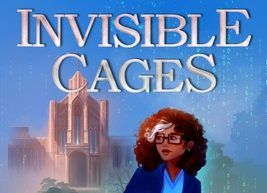
After more than 35 years as a pediatric surgeon, Deborah Burton retired but didn’t give up one of the most rewarding aspects of her career—connecting with young people.
Burton used writing and her imagination to create a young adult sci-fi fantasy mystery novel, Invisible Cages: The Alynthia Quest, under the pen name MD Burton. Her debut novel launched in early October, and Burton said she’s been delighted with the responses so far.
The novel follows Jade Babington who leads a team of resourceful friends as they join an elite organization to crack a spy network and embark on a high-tech adventure to find answers. Her quest is complicated by powers that surge through her body, and to be successful, she needs to understand her family roots, embrace her emerging talents, and step into her legacy, according to a press release.
Through the book, readers are introduced to a range of characters who work in STEM and healthcare careers which Burton hopes will inspire readers to consider pursuing careers in some of those areas.
Burton moved to Dunwoody in 1995 and ran a successful pediatric ear, nose, and throat practice in Marietta. She retired in 2021 but missed the educational moments she shared with her young patients.
“I talk to kids all the time,” said Burton, adding that she likes to share insight into the many career paths in healthcare. “I love to educate and empower.”
She said she worked on the book for five years, researching coding, microchips, and satellites.
“It was a learning journey,” she remarked.
The book explores themes of self-acceptance, girl empowerment through strong female characters, the importance of family, and STEM exposure, states the press release. Set on a fictional health complex, the novel introduces readers to healthcare careers, as well as engineering and computer science.
The author also had to delve into unique aspects of her main character.
“Jade has powers and sees auras,” she explained. “So I spent a good amount of time learning about auras, telepathy and magical realism.”
In addition, to providing insight to STEM and healthcare careers, Burton hopes the books help her teen female readers dealing with insecurities to better understand and appreciate what makes them unique and the power they possess. She also hopes it will build self-confidence.
“You have to accept who you are,” she said. “Whatever your differences are, everybody’s got them, embrace them.”
Burton said she originally planned the book to be a seven-part series but on the advice of her edit changed it to four parts.
“I know what my end goal is,” said Burton noting that she’s included Easter eggs in the first book to entice readers throughout the reading process and has a completed outline for the other books in the series. After completing an audiobook of Invisible Cages: The Alynthia Quest by the end of the year, Burton plans to start writing the next book in 2027.
On Nov. 15, a book signing is scheduled at the Politan Row food hall in Dunwoody.
The self-published book is available in eBook, paperback, and hardback formats, on Amazon, Barnes & Noble, and other online retailers.
3 total views
Based on reporting by The Champion Newspaper.
Art
Brooklyn Roots and Artistic Genius
THE POSITIVE COMMUNITY — Jean-Michel Basquiat emerged from Brooklyn to become one of the most influential artists of the late twentieth century. Born in 1960 to a Haitian father and a mother of Puerto Rican descent, his upbringing was defined by a rich blend of Caribbean cultural traditions and the linguistic diversity of New York City.

Jean-Michel Basquiat was one of the most influential artists to emerge from New York City during the late twentieth century. Born on December 22, 1960, in Brooklyn, New York, he transformed his experiences growing up in the city into a distinctive artistic language that combined painting, poetry, history, music, and social commentary. His work explored Black identity, racism, power, and the experiences of people whose stories had often been overlooked by mainstream institutions. Although his career lasted only a few years, Basquiat left a lasting mark on contemporary art.
Basquiat grew up in a family that exposed him to several cultural influences. His father, Gérard Basquiat, was born in Haiti, while his mother, Matilde Andrades, was born in New York to Puerto Rican parents. Through his parents, Jean-Michel was connected to Haitian, Puerto Rican, and broader Caribbean cultural traditions. Growing up in Brooklyn, he experienced the diversity of New York City, where different languages, communities, musical styles, and artistic expressions existed side by side. These influences would later become visible in his paintings, which frequently incorporated historical references, handwritten words, and symbols.
His mother played an important role in encouraging his early interest in art. Matilde recognized her son’s artistic ability and introduced him to museums, books, and cultural experiences. One important childhood event occurred when Basquiat was seven years old and was struck by a car while playing in the street. During his recovery, his mother gave him a copy of Gray’s Anatomy, a medical reference book that illustrated the human body in considerable detail. Its anatomical drawings influenced his lifelong interest in skeletons, skulls, and the internal structures of the human body. These images later became recurring features in his artwork.
Basquiat was one of four children born to Gérard and Matilde, although the family had experienced the loss of an older son before his birth. He had two younger sisters, Lisane and Jeanine, with whom he shared his early family life. His parents eventually separated, and his mother experienced periods of serious personal difficulties that affected the family. These circumstances formed part of a complicated childhood that included both encouragement and hardship. Although his family relationships were not always easy, his mother’s early support for his artistic interests remained an important influence on his development.
Basquiat’s upbringing was also shaped by language and cultural diversity. He grew up speaking English, French, and Spanish, reflecting the backgrounds of his parents and the environment in which he was raised. In 1974, his family moved to Puerto Rico for a period before returning to Brooklyn in 1976. These experiences exposed him to different cultural perspectives and helped establish the broad historical and cultural interests that later appeared in his work. His paintings often included words and references drawn from different languages, histories, and communities, creating a visual expression of his multicultural identity.
As a teenager, Basquiat became increasingly connected to Manhattan’s downtown art and music scenes. He eventually left home and supported himself through various activities, including selling handmade postcards and painted T-shirts. Along with his friend Al Diaz, he began creating cryptic graffiti under the name SAMO, short for “Same Old.” Their messages appeared on walls around Lower Manhattan and attracted attention for their wit, unusual phrasing, and criticism of established social and cultural conventions. This early work helped Basquiat develop a reputation as an original voice in New York’s underground creative community.
By the early 1980s, Basquiat had moved from street-based expression into the world of professional painting. His work attracted attention through exhibitions that introduced his distinctive style to collectors, critics, and fellow artists. His paintings combined bold colors, rough lines, repeated symbols, handwritten phrases, and images of human figures. Rather than following traditional expectations of polished painting, he created works that appeared energetic, fragmented, and emotionally direct. His artistic approach reflected the rhythms of New York City, where street culture, hip-hop’s emerging influence, punk music, and experimental art intersected.
A central theme in Basquiat’s work was the experience of Black people in a society shaped by racial inequality. He frequently portrayed historical figures, athletes, musicians, and other individuals whose achievements deserved recognition. Crowns appeared throughout his paintings as symbols that could suggest dignity, authority, and the importance of people who had been marginalized. His work also challenged colonialism, racism, and the unequal distribution of power. Rather than presenting history as a distant collection of events, Basquiat brought it into the present, encouraging viewers to consider whose stories were celebrated and whose were neglected.
Music was another important element of Basquiat’s creative life. He played in a band that eventually became known as Gray, exploring experimental sounds alongside his visual art. He was influenced by jazz and the broader musical culture of New York, and his paintings often possess a rhythm that resembles improvisation. Words, marks, and images seem to compete for attention while creating an overall composition. His artistic process shared something with jazz musicians who build a performance through experimentation, repetition, and unexpected changes. This connection between music and painting helped distinguish Basquiat from many of his contemporaries.
Basquiat also developed a significant relationship with Andy Warhol, one of the most recognizable artists of the twentieth century. The two artists collaborated on paintings during the 1980s, combining different approaches to imagery, color, and popular culture. Their relationship brought Basquiat into contact with an influential figure in the established art world, although it also highlighted the tensions between artistic creativity, celebrity, and commercial success. As his reputation grew, Basquiat had to navigate an industry that increasingly treated his identity and personal story as part of the appeal of his work. Nevertheless, he continued to produce paintings that expressed his individual perspective and challenged conventional ideas about art.
Despite his extraordinary success, Basquiat’s life was tragically short. He died in New York City on August 12, 1988, at just 27 years old, from an accidental drug overdose. His death ended a remarkably productive period in which he had moved from an underground artist in Brooklyn and Manhattan to an internationally recognized painter. His final years have also encouraged broader discussions about the pressures faced by young artists, the demands of celebrity, and the difficulties of maintaining personal well-being while working in a highly competitive industry. His death remains a painful reminder of the distance between public recognition and the private struggles a person may experience.
Today, Jean-Michel Basquiat’s legacy extends far beyond the galleries in which his paintings are displayed. His work is held by major museums, studied by scholars, and admired by artists across generations. His Brooklyn upbringing, Haitian and Puerto Rican heritage, family experiences, and encounters with New York’s streets all contributed to the development of an artistic vision that was unmistakably his own. Basquiat demonstrated that an artist did not need to follow traditional academic pathways to create work of lasting significance. His paintings continue to speak about identity, inequality, history, and the power of creative expression. From the streets of New York to the world’s leading museums, Basquiat remains a symbol of artistic independence and the enduring influence of Black creativity.
Based on reporting by The Positive Community.
Black Press
NCCU Snap Three – Game Losing Streak with Win over Delaware State University
NORTH CAROLINA CENTRAL UNIVERSITY – CAMPUS ECHO — North Carolina Central University snapped a three-game losing streak on Friday with a decisive 31-12 victory over Delaware State University. Despite allowing an early touchdown, the Eagles regained their composure through a strong ground game led by freshman running back Gino Addison, who recorded 214 rushing yards and two scores.

N.C. Central University snapped its three-game losing streak Friday, defeating Delaware State University 31-12.
After three consecutive losses, the Eagles entered Friday’s game determined to turn their season around. NCCU played with confidence, communicated effectively and showed greater consistency on both sides of the ball.
The Eagles’ offense struggled to maintain consistency early in the game but gradually found its rhythm, building momentum and moving the ball down the field. Despite allowing the Hornets to score an early touchdown, the Eagles remained focused and continued to fight.
Freshman running back Gino Addison recorded 214 rushing yards and two touchdowns, while sophomore running back Zion Dobson contributed 57 rushing yards and a touchdown.
Sophomore quarterback Cobey Thompkins also connected with fifth-year tight end Luke Bracey for a touchdown, adding to the Eagles’ offensive production.
Freshman specialist kicker Riley Daniels continued to deliver on extra-point attempts following touchdowns. Daniels also made an important tackle during a kickoff against the Hornets, contributing beyond his kicking duties.
The Eagles’ defense remained strong throughout the game, making it difficult for the Hornets to advance the ball and forcing them to punt multiple times.
Freshman defensive back Amari Sifford recorded two interceptions, while senior defensive lineman Zarion Walters contributed a sack to help limit Delaware State’s offensive opportunities.
The Eagles ability to maintain their composure and build momentum helped them secure the 31-12 victory over Delaware State University.
The Eagles enter next week with the record of 3-5.
NCCU will face Howard on October 31st against Howard at O’Kelly – Riddick Stadium streamed on ESPN+.
The post NCCU snap three – game losing streak with win over Delaware State University first appeared on Campus Echo Online.
Based on reporting by North Carolina Central University – Campus Echo.
Black Press
Virginia State Dominates Shaw 76-13 Behind Explosive Second-Quarter Surge
THE CAROLINIAN — Virginia State University delivered a dominant performance against Shaw University in a Central Intercollegiate Athletic Association matchup on Saturday, Oct. 17, securing a 76-13 victory. The Trojans took full control of the contest during a devastating second-quarter surge where they scored 35 unanswered points.

DURHAM, N.C. – Virginia State University delivered a commanding performance against Shaw University on Saturday, October 17, defeating the Bears 76-13 in a Central Intercollegiate Athletic Association (CIAA) football matchup. A devastating 35-0 scoring run in the second quarter helped Virginia State take control of the contest, leaving Shaw struggling to regain momentum.
Shaw showed flashes of offensive potential early in the game, highlighted by a long touchdown reception from wide receiver Reggie King Jr. (2). King celebrated the score alongside teammate Ashton Williams (54), giving the Bears an early offensive highlight despite the eventual lopsided outcome.
Wide receiver Floyd Lyles (3) also contributed to Shaw’s offensive efforts, securing a first-down reception while being defended by Virginia State cornerback Jamontae Dance-Anderson (24). However, the Bears struggled to sustain drives as Virginia State’s defense and special teams continued to create problems.
Virginia State’s offense proved difficult to contain, with quarterback Rashaan Matthews Jr. (2) extending plays with his legs and picking up a first down against the Shaw defense. Running back TJ Mordecai (21) added to the Trojans’ physical offensive attack, delivering a powerful stiff-arm against Shaw linebacker Quadir McEachin (5) during a first-half run.
The Trojans also found success through the air. Wide receiver Kevin Gayles (0) made a first-down reception against Shaw defensive backs Sean McFadden (12) and Antonio Hardge (34). Later in the first half, Gayles hauled in a touchdown reception against Shaw cornerback Antonio Cotman (2), adding to Virginia State’s growing lead.
Special teams difficulties further complicated matters for the Bears. Virginia State’s Ian Wynn (18) blocked a punt attempt by Shaw punter Jethro Ommam (84) during the first half, providing another example of the Trojans’ ability to disrupt Shaw’s game plan.
The defining stretch came in the second quarter, when Virginia State erupted for 35 unanswered points. The scoring surge created a deficit Shaw could not overcome and demonstrated the Trojans’ ability to capitalize on opportunities on both sides of the ball.
Despite individual efforts from King, Lyles and several defensive players, Shaw was unable to slow Virginia State’s offensive production. The Trojans continued to build their advantage, ultimately securing a decisive 76-13 victory.
The loss highlighted the challenges facing Shaw as the Bears continue their CIAA schedule, particularly in limiting explosive plays, protecting the football on special teams and maintaining offensive consistency.
For Virginia State, the victory showcased an explosive offensive attack and a defense capable of disrupting opposing teams, reinforcing the Trojans’ competitive presence in CIAA football.










Based on reporting by The Carolinian.


News Observer Weekly — October 28, 2026 | Top 5 Stories of the Week

The Buick Enclave’s Big Screen Has One Visibility Issue #shorts

Your Car Insurance Renewal Could Be Costing You Money #shorts

20 Years of California Climate Law: Gov. Newsom and Former Gov. Schwarzenegger Lead Milestone Celebration

Becerra Hosts Meet-and-Greet With Black Leaders in L.A.

Early Childhood Nonprofit Celebrates a Century of Success

3-Year-Old Benched for Being Too Good? Pastor Introduces Second Wife

3-Year-Old Benched for Being Too Good? Pastor Introduces Second Wife 📱

2027 Rose Queen announced

Jordan Coleman uncovers Houston food hidden gems

OP-ED: Haiti TPS: Have We Lost Sense of Humanity?

All Skinfolk Ain’t Kinfolk

Rulings Leave Questions Lingering in Nolan Wells Case

Latinas Deserve Equal Pay. Unions Help Make It Happen.

Why Black Artists Struggle to Sell Tours

Zakiya Jendayi Arrested, Locked Out of Home by Sheriff’s Deputies

A $2.1 Trillion Wellness Industry Never Built a Daily Practice for Black Children. So This Atlanta Family Did.

Oakland Awarded More than $14 Million in State Funding

OP-ED: Washington Has a Chance to Save Veterans’ Lives

Consumers and States Awarded $694 Million After Predatory Auto Lender Settles Lawsuit
News Observer Weekly — October 28, 2026 | Top 5 Stories of the Week
The Buick Enclave’s Big Screen Has One Visibility Issue #shorts
Your Car Insurance Renewal Could Be Costing You Money #shorts
3-Year-Old Benched for Being Too Good? Pastor Introduces Second Wife
3-Year-Old Benched for Being Too Good? Pastor Introduces Second Wife 📱
2027 Rose Queen announced
Jordan Coleman uncovers Houston food hidden gems

Williams Arena EMPTY vs PACKED: The HUGE Difference Gophers Need! #shorts

How to Grow a Business Without Giving Up Stability #shorts

East Side Shoutout! Sports Talk & Guest Invite! #shorts
-

 Featured1 week ago
Tamiko Armstead | 2026 Lifetime Achiever in Education
-
 Black History1 week ago
Practitioners of African Traditional Spirituality Offer Ancestral Reverence Ritual Oct. 31
-
 Art1 week ago
Kickstarter CEO Everette Taylor Shares Tips on Creating and Growing a Business
-

 Black History1 week ago
Columbus’s Oldest Businesses Still Open: 10 That Have Lasted 75+ Years
-

 Black History1 week ago
COMMENTARY: BIG MAMA SAID: Don’t Throw Away the Gift Just Because It Came Wrapped Wrong
-

 Black Press1 week ago
Black Household Wealth Plummeted 25% in Three Years, New Data Shows
