
Black Press
Early Childhood Educator Apprenticeships Offer an Answer to Childcare Shortages
BLACKPRESSUSA NEWSWIRE — Some policy experts see apprenticeships as a potential game-changer for the early educator workforce. The layers of support they provide can keep frazzled newcomers from giving up, and required coursework may cost them nothing.

By Nirvi Shah, The Hechinger Report
This story, https://hechingerreport.org/early-childhood-educator-apprenticeships-offer-an-answer-to-child-care-shortages/, was produced by The Hechinger Report, a nonprofit, nonpartisan news outlet focused on education.
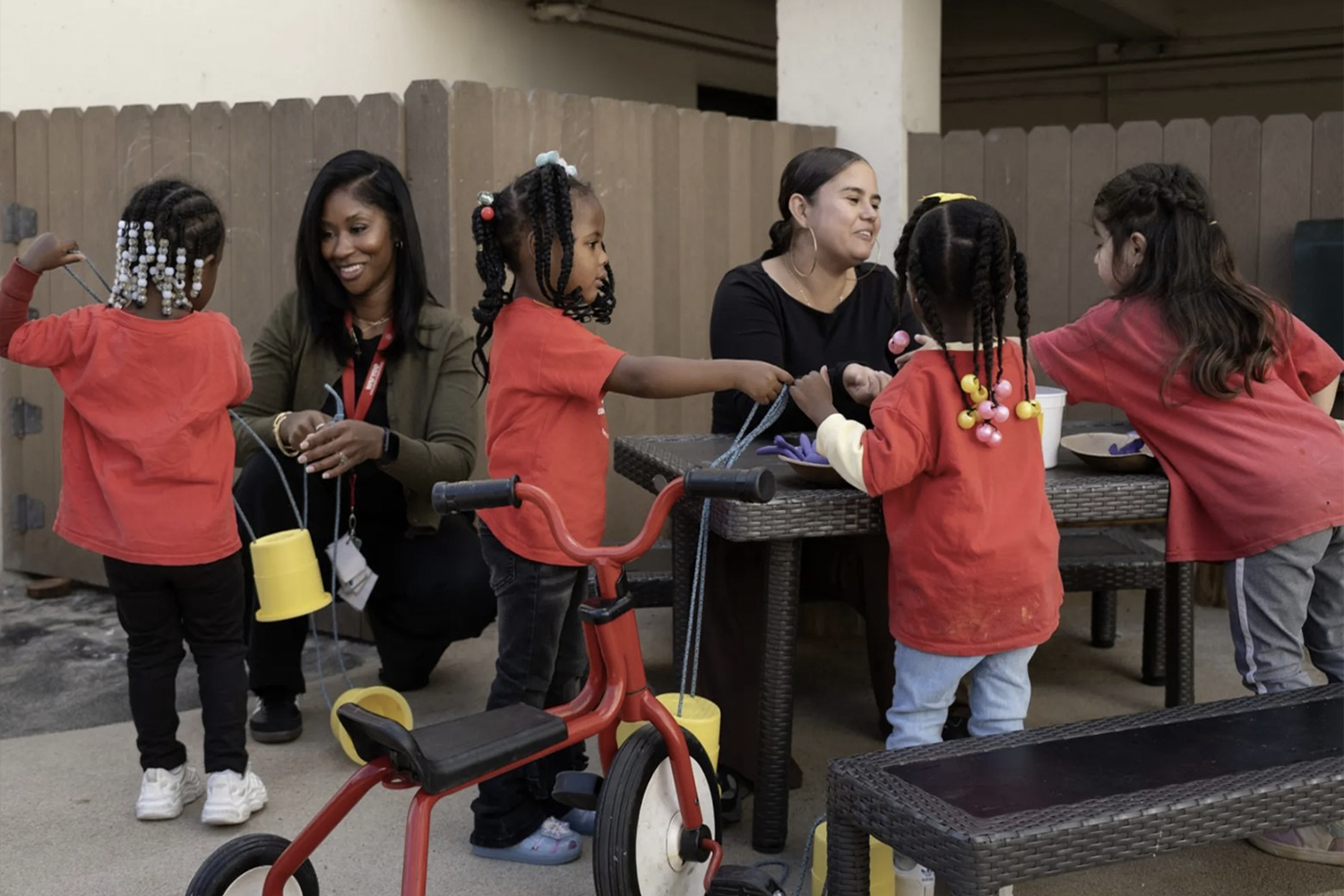
SAN FRANCISCO — In a playground outside a YMCA, Mayra Aguilar rolled purple modeling dough into balls that fit easily into the palms of the toddlers sitting across from her. She helped a little girl named Wynter unclasp a bicycle helmet that she’d put on to zoom around the space on a tricycle.
Aguilar smiled, the sun glinting off her saucer-sized gold hoop earrings. “Say, ‘Thank you, teacher,’” Aguilar prompted Wynter, who was just shy of 3. Other toddlers crowded around Wynter and Aguilar and a big plastic bin of Crayola Dough, and Aguilar took the moment to teach another brief lesson. “Wynter, we share,” Aguilar pressed, scooting the tub between kids. “Say, ‘Can you pass it to me?’”
Aguilar and Wynter are both new at this. Wynter has been in the structured setting of a child care center only since mid-August. Aguilar started teaching preschoolers and toddlers, part-time, in February.
It has been life-changing, in different ways, for them both. Wynter, an only child, is learning to share, count, and recognize her letters. Aguilar is being paid to work and earning her first college credits — building the foundation for a new career, all while learning new ways to interact with her own three kids.
Early educators are generally in short supply, and many who attempt this work quickly quit. The pay is on par with wages at fast food restaurants and big box stores, or even less. Yet unlike some other jobs with better pay, working with small children and infants usually requires some kind of education beyond a high school diploma. Moving up the ladder and pay scale often requires a degree.
What’s different for Aguilar compared to so many other people trying out this profession is that she is an apprentice — a training arrangement more commonly associated with welders, machinists, and pipefitters. Apprentice programs for early childhood education have been in place in different parts of the country for at least a decade, but San Francisco’s program stands out. It is unusually well, and sustainably, funded by a real estate tax that voters approved in 2018. The money raised is meant to cover the cost of programs that train early childhood educators and to boost pay enough so teachers can see themselves doing it for the long term.
Some policy experts see apprenticeships as a potential game-changer for the early educator workforce. The layers of support they provide can keep frazzled newcomers from giving up, and required coursework may cost them nothing. “We want it to be a position people want to go into as opposed to one that puts you in poverty,” said Cheryl Horney, who oversees the Early Learning Program that employs apprentices at Wu Yee Children’s Services in San Francisco, including the site where Aguilar works.
Aguilar, 32, is paid to work 20 hours a week at the Wu Yee Children’s Services’ Bayview Early Learning Center, tucked inside a Y in a residential neighborhood a little under a mile from San Francisco Bay. She works alongside a mentor teacher who supports and coaches her. The apprenticeship covers the online classes, designed just for her and other apprentices and taught live from City College of San Francisco, which Aguilar takes a few nights a week. She was given all the tools needed for her courses, including a laptop, which she also uses for homework and discussions with other apprentices outside of class.
After high school, Aguilar had tried college, a medical assistant program that she quit after a few months. That was more than 10 years ago. She hadn’t touched a computer in all that time. When she was enrolling her youngest daughter at another Wu Yee location, Aguilar saw a flyer about the apprenticeship program and applied. She is finding this work to be a far better fit: “This — I think I can do it. This, I like it.”
The need for more early educators is long-standing, and in recent years there’s been a push for early educators to get postsecondary training, both to support young children’s development and so the roles command higher salaries. For example, a 2007 change in federal law required at least half of teachers working in Head Start to have bachelor’s degrees in early childhood education by 2013, a goal the program met.
Despite efforts to professionalize the workforce, salaries for those who work with young children remain low: 87 percent of U.S. jobs pay morethan a preschool teacher earns on average; 98 percent pay more than what early child care workers earn. In 2022, Head Start lead teachers earned $37,685 a year on average.
Apprenticeships are seen as one way to disrupt that stubborn reality: Would-be teachers are paid while being trained for everything from entry-level roles that require a small number of college credits or training to jobs, like running a child care center, that require degrees and come with more responsibility and even higher pay. According to a June 2023 report from the Bipartisan Policy Center, a think tank, 35 stateshave some kind of early childhood educator apprenticeship program at the city, regional, or state level, and more states are developing their own programs. U.S. Department of Labor data shows that more than 1,000 early educator apprentices have completed their programs since the 2021 fiscal year. Early Care & Educator Pathways to Success, which has received Labor Department grants to help set up apprenticeship programs, estimates the numbers are far larger given its work has cultivated hundreds of apprentices in 21 states, including Alaska, California, Connecticut, and Nebraska.
These programs can be complicated to launch, however. They sometimes require painstaking work to find colleges that will provide coursework specific to local regulations and at hours that
work for apprentices who may be in classrooms much of the workday as well as tending to their own children. They require money to pay the apprentices — on top of whatever it already costs to run child care centers and pay existing staff. The apprentices also typically need other layers of support: coaching, computers, sometimes child care, and even meals for apprentices’ own kids as they study and take exams.
In San Francisco, Horney advocated for her employer to set up an apprenticeship program for staffers at its 12 Head Start centers even before the tax money became available. She recalled losing teachers to chain retailers like Costco and Walgreens where they found less stressful jobs with more generous benefits. When she arrived in San Francisco to work in the classroom, with five years of experience and a bachelor’s degree, she was paid $15 an hour. “Now the lowest salary we pay is $28.67 for any sort of educator,” she said, and the wages and apprenticeships are even drawing people from other counties and stabilizing the San Francisco early educator workforce. “It has helped immensely.”
Other parts of the country have seen success with similar initiatives.
The YWCA Metro St. Louis in Missouri, which hasn’t had a single teacher vacancy for the last two years at the child care centers it oversees, credits its apprenticeship program. In Guilford County, North Carolina, vacancies and staff turnover were a plague until recently, but an apprenticeship program for entry-level early educators has kept new teachers on the job.
Elsewhere, there is hope for those kinds of results. In the Oklahoma City area, an apprenticeship program started in 2023 just yielded its first graduate, who worked in a child care center for two years and completed a 288-hour training program. Curtiss Mays, who created the program for teachers at the group of Head Start centers he oversees, was in the midst of trying to hire 11 educators just as the first apprentice earned a credential that allows her to back up other teachers.
“It’s a pretty major project,” Mays said. “We hope it’s the start of something really good.” Mays worked with the Oklahoma Department of Labor to set up the apprenticeship program, which he said has already pulled one person out of homelessness and is helping to lure more aspiring teachers. It will pay for education all the way through a bachelor’s degree if apprentices stick with it.
Apprenticeship programs can be costly to run, but bipartisan federal legislation to support them has never gained traction. (Advocates note that apprenticeships can cost far less than a traditional four-year college degree.) Labor Department money for organizations that help set up and grow early childhood educator apprenticeships helped increase the number of apprentices in so-called registered apprenticeship programs — ones that are proven and validated by the federal agency. But some of those grants were axed by the Trump administration in May.
In San Francisco, while setting up apprenticeships was as labor-intensive as in many other places, the 2018 real estate tax provides a new and deep well of money to propel the early educator apprentice effort. The money pays for all of the things that are letting Aguilar and dozens of others in the county earn at least 12 college credits this year. In two semesters, Aguilar will have the credentials to be an associate teacher in any early education program in
California. Other apprentices across San Francisco, in Head Start centers, family-owned child care programs, and even some religious providers, can work toward associate or bachelor’s degrees using the new tax revenue to pay for it.
Children color and glue paper clothes on paper people during a classroom activity at the YMCA of the East Bay’s Richmond Parkway Early Learning Center in Richmond, Calif., a Head Start center that provides free child care. They had just read “Jesse Bear, What Will You Wear?” Credit: Emmanuel Guillén Lozano for The Hechinger Report
Long before the ballot measure across the bay in San Francisco, Pamm Shaw dreamed up the forerunner of an early educator apprenticeship program in a moment of desperation.
It was over a decade ago, and Shaw, who was then working at the YMCA East Bay overseeing a collection of Head Start centers, said her agency was awarded a grant to add spaces for about 100 additional infants. Except that her existing staff didn’t want to work with children younger than 3. So Shaw sent notices to the roughly 1,000 families with children enrolled in YMCA East Bay Head Start programs at the time and convinced about 20 people, largely parents of children enrolled in Head Start, to consider the role. She pulled together the training that would qualify the parents to become early educators — 12 college credits in six months.
The education piece, Shaw realized, was a huge draw. Some of the parents had spent 10 years working toward associate degrees on their own without completing them. Giving them the chance to earn those degrees in manageable chunks — while getting paid and receiving raises relatively quickly as their education advanced — proved a powerful recruitment tool. “It changed their lives,” Shaw said. And these new teachers had their eyes opened to how what they would be doing wasn’t just babysitting. They took away lessons they used with their own children — who in turn took notice of their parents studying. “It’s actually child care,” said Shaw. “So much happens in the first year of life that you never get to see again. Never, ever, ever.”
It changed Shaw’s life, too, and inspired many other apprenticeship programs all over. Her role morphed into fundraising to build out the apprenticeship pipeline. The program, now baked into the YMCA of the East Bay system, reflected the overall early educator workforce: It was made up entirely of women, mostly women of color, some of them immigrants, and many first-generation college students. By the time Shaw retired a few years ago, more than 500 people in the Berkeley area had completed the early educator apprenticeship program.
Erica Davis, a single mom, is one of its success stories. When she met Shaw, Davis said, she was relying on public assistance and jobs caring for other people’s children, while taking care of a daughter with significant medical needs, as well as her toddler-age son. Davis was at a Head Start dropping off paperwork for the family of a child in her care when an employee told Davis her young son might be eligible for Head Start too. He was, and as Davis enrolled him, she learned about Shaw’s apprenticeship program. Davis missed the first window to apply, but as she put it, “I was blowing their phone up. I needed to get in.”
That was 2020. By this spring, Davis will have earned her bachelor’s degree from Cal State East Bay. She works full-time at a Richmond, California, Head Start center while taking classes and supporting her kids, now in high school and elementary school. She can afford to rent a
two-bedroom apartment, owns a car, and no longer relies on state or federal assistance to pay bills. She’s on the dean’s list, and, she said proudly, she can squat 205.
“I didn’t take my education seriously,” Davis, 41, said of her younger self. “I feel like I’m playing catch-up now.” She is in her element at the YMCA of the East Bay’s Richmond Parkway Early Learning Center, reading to children, working on potty training, and leading the kids through coloring-and-pasting exercises. She has even become an informal coach for newer apprentices. The network and family feel of these apprenticeships is one of the things that helps many succeed, she said. “I have a sad story, but it turned into something beautiful.”
While Davis said she prefers the flexibility of taking classes at her own pace, other apprentices thrive in the kind of classes Aguilar attends, with a live instructor who starts off leading students in a mindfulness exercise. That is the same approach to teaching apprentices at EDvance College in San Francisco, which works exclusively with early childhood apprentices, according to its president and CEO, Lygia Stebbing.
The college provides general education classes in reading, math, and science for apprentices pursuing degrees, taught through an early childhood lens so it feels approachable and relevant. And every lesson can be applied nearly in real time, unlike other paths to degrees, in which in-person teaching experience comes only after many classes, Stebbing said. Before beginning classes, apprentices get a crash course in using technology, from distinguishing between a tablet and a laptop to using Google Docs and Zoom, “so they can jump right into things,” she said. A writing coach and other student support staff are available in the evenings, when apprentices are taking courses or doing homework. Because many of the apprentices are older than typical college students and may even have used up their federal Pell Grants and other financial aid taking courses without earning a degree, the college works with foundations and local government agencies to offset the cost of courses so graduates don’t end up in debt.
“We’ve really put the student at the center,” Stebbing said.
For Mayra Aguilar, her mentor teacher Jetoria Washington is a lifeline who can help her unstick an issue with any aspect of the apprenticeship — in the classes she takes or the classroom where she works. Taking courses online means she can be home with her own kids in the evenings. Earning money for the hours she spends in the classroom means she is not going into debt to earn the credential she needs to find a full-time job. The constellation of support has helped her shift from feeling in over her head to feeling ready to keep working toward a college degree.
And she is having fun. On the playground, one of the kids had the idea to trace another with sidewalk chalk, working on their pencil grip as much as they were playing. Except it wasn’t just the other kids: They traced Aguilar, too. When it was time to go back inside, powdery green and pink lines crisscrossed the back of her brown pants and black blouse. She wasn’t bothered.
“I love the kids,” she said. “They always make me laugh.”
Aguilar has even picked up skills that she uses with her own children, something many apprentices describe.
Now, she sometimes says to her youngest daughter, “Catch a bubble.” That’s preschool speak for “Be quiet.” When a teacher needs the toddlers’ attention, the kids hear this phrase, then fill their cheeks with air.
Most of the time, at home and at work, a brief silence follows. Then the kids look up, ready to hear what comes next.








Art
Houston’s ‘call Me Mother’ Exhibit Opens Today, Spotlighting Black Maternal Health
AFRICAN-AMERICAN NEWS AND ISSUES – DALLAS — The Health Museum in Houston today opens “The Call Me Mother Experience,” an exhibition spotlighting Black maternal health through art and personal storytelling. Curated by Houston’s first Black poet laureate, Deborah D.E.E.P. Mouton, the project originated from her own poem written during a miscarriage.


HOUSTON — A new exhibition opening Sunday, Oct. 4, at The Health Museum is bringing Black maternal health into public view through art and personal storytelling.
The Call Me Mother Experience will be on display through Feb. 28, 2027. The museum lists a preview reception today from 3 to 5 p.m. at 1515 Hermann Drive, with tickets priced at $5 for members and $15 for nonmembers.
A personal story becomes a community conversation
According to the museum, founder, curator and lead artist Deborah D.E.E.P. Mouton developed the project from a poem she wrote during a miscarriage. The installation combines films, recorded interviews, visual artwork and contributions created with community members.
Mouton, Houston’s first Black poet laureate, discussed the exhibition and her connection to its subject in an Oct. 1 appearance on KPRC’s Houston Life. The station described the project as addressing the unequal burden of pregnancy-related illness and death faced by Black women in Harris County.
An announcement distributed by the Call Me Mother Experience says the initiative will also reach community locations and faith-based organizations across Greater Houston. Those additional settings are intended to extend the conversation beyond a museum visit.
What visitors can expect
The museum says reception guests can explore the exhibit, hear the curator and meet participating artists. Reception admission includes general museum entry; refreshments are available while supplies last.
The featured image accompanying this article is an original illustrative concept, not a photograph of the exhibition or its artwork.
Sources and visitor information:The Health Museum exhibition listing; preview reception details and tickets; KPRC Houston Life; organizer announcement.
The post Houston’s ‘Call Me Mother’ Exhibit Opens Today, Spotlighting Black Maternal Health appeared first on African American News and Issues.
Based on reporting by African-American News and Issues – Dallas.
Black Press
Should You Have to Pay to Hear the Gospel?
ST. LOUIS AMERICAN — Pastor Philip Anthony Mitchell of Atlanta’s 2819 CHURCH and Tim Timberlake of Celebration Church in Jacksonville, Florida, are at the center of a social media debate. The controversy stems from ticket prices for their “Street Preachers” podcast tour, with general admission tickets reportedly costing around $60 and VIP options up to $200.

For generations, the Black church has passed the offering plate to keep the lights on, pay the preacher, help the poor and carry the Gospel beyond its walls. But what happens when the preacher leaves the sanctuary, takes a popular Christian podcast on tour — and charges admission?
That question has placed Pastor Philip Anthony Mitchell, founder and lead pastor of Atlanta’s fast-growing 2819 CHURCH, at the center of a heated social media debate.
Mitchell and Tim Timberlake, senior pastor of Celebration Church in Jacksonville, Florida, host “Street Preachers,” which its official website describes as a “raw, unfiltered podcast” committed to spreading the Gospel.
‘A brood of vipers’
The controversy began after ticket prices for the podcast’s 2026 tour circulated online. General admission tickets reportedly cost about $60 before fees, with premium options, including a VIP meet-and-greet package, priced at $200. Critics questioned whether ministers should charge people to hear the Gospel.
Others defended the pastors, arguing that Christian events require venues, transportation, security, equipment and staff.
Mitchell answered critics from the pulpit last month, calling them “a brood of vipers.” He said the podcast is a separate, personal project and that neither his church nor Timberlake’s is bankrolling it.
“Now we have decided to go on a tour to take the gospel to cities, and because that’s not funded by 2819, and it’s not funded by Celebration Church, Tim and I gotta do that with our own pockets,” Mitchell said. “It’s why there is tickets. We have to pay for venues and security and productions and staff from our own pockets.”
Mitchell called some critics “ignorant” and said they did not know that a child was healed through faith during one of the events.
“And you want to complain about a 60 ticket?” he said. “So hate on!”
Worship service vs. media event
Mitchell maintains that “Street Preachers” is an independently produced podcast tour, not a worship service, and that ticket revenue helps cover production costs.
Yet the presence of pastors, Scripture and Gospel language makes the distinction less clear to some believers.
The official tour website lists all eight 2026 stops as sold out. Promotional material announcing additional dates promised, “Better ticket options. Same Gospel. Same move of God.”
Corporate prayer gathering
The language gets to the heart of the dispute. Some Christians argue that no one should be kept outside because they cannot afford a ticket. Others say the Gospel remains free even when people pay for the venue and experience surrounding its presentation.
The paid podcast tour, however, is not Mitchell’s only large-scale gathering. On Oct. 10, 2819 CHURCH will host “ACCESS — That Powerful Hour of Prayer” at AT&T Stadium in Arlington, Texas. Admission is free.
2819 CHURCH has said 80,000 free tickets were claimed before registration reopened.
The contrast raises another question: What makes one Gospel-centered event a ministry supported by donors and another a production supported by customers?
Unfiltered preaching, youth appeal
Mitchell’s congregation, composed largely of young Black adults, grew from fewer than 200 weekly worshippers in 2023 to about 6,000, according to the church. Some worshippers arrive before sunrise to secure a place inside.
His appeal rests partly in an intense, vulnerable and raw preaching style.
“I’m preaching without watering that down, without filtering out things that we think might be too controversial,” Mitchell told The Associated Press.
That visibility has also brought scrutiny of his theology, associations, travel, security and the businesses surrounding his ministry.
But the controversy reaches beyond Mitchell and Timberlake. Christian music concerts charge admission. Seminaries charge tuition. Religious publishers sell Bibles, books and devotionals. Churches pay musicians, media teams and guest preachers. Money becomes particularly uncomfortable, however, when an event is presented simultaneously as ministry and entertainment.
Ministry vs. entertainment
Supporters should not assume every dollar collected becomes personal profit. Critics, however, question whether lower-cost seats, sponsored tickets or free admission for people who cannot pay should be part of a Gospel-centered event.
The Black church always has required resources for ministry. It also has carried a sacred responsibility to make room for people with little or nothing to give.
The sold-out “Street Preachers” tour shows people are willing to pay to attend. The free ACCESS gathering offers a different model. The challenge is preserving that open door as Christian ministry increasingly adopts the machinery — and economics — of popular entertainment.
The post Should you have to pay to hear the Gospel? appeared first on St. Louis American.
Based on reporting by St. Louis American.
Black Press
NCCU Ramping up for the 89th Ultimate Homecoming Experience
NORTH CAROLINA CENTRAL UNIVERSITY – CAMPUS ECHO — N.C. Central University is preparing for its 89th Ultimate Homecoming Experience, a week-long celebration. Thousands of students, family, friends, and alumni are expected to gather on campus for festivities including the Homecoming Countdown, parade, Miss and Mister NCCU Coronation, concerts, and the football game.

This Saturday N.C. Central University will kick off its 89th Ultimate Homecoming Experience — a week-long celebration bringing thousands of students, family, friends and alumni to campus.
This year’s festivities include the Homecoming Countdown, parade, Miss and Mister NCCU Coronation, concerts and the football game.
The number of visitors to the football game on Saturday, Oct. 10 is expected to reach at least 10,000 — O’Kelly Riddick Stadium’s capacity, with NCCU’s recent enrollment increase of more than 10,000 students.
The Eagles will face William & Mary after playing against the Campbell University’s Fighting Camels on Oct 3.
Students are already expressing excitement for the upcoming festivities.
“I’m excited for homecoming because I can meet alumni and go outside and party with my fellow eagles,” Digital Filmmaking junior Rhese Gardner said. “I’m also really looking forward to the Greek Bowl because there’s a lot going on.”
He added that even though he’s disappointed this semester’s Oil Spill was canceled, he’s still excited for the other events like the parade and concerts.
Here is a list of the week’s on-campus events:
- Oct. 3 – Homecoming Countdown
- Oct. 4 – Gospel Concert
- Oct. 5 – Coronation of Miss and Mister NCCU
- Oct. 6 – 10:40 Break
- Oct. 6 – Homecoming Experience Showcase
- Oct. 7 – Fried Chicken Wednesday
- Oct. 7 – Festival Block Party
- Oct. 7 – Late Night Breakfast
- Oct. 8 – Back to the Nest Young Alumni Mixer
- Oct. 8 – Old School Greek Stroll Off
- Oct. 8 – Hip-Hop Concert
- Oct. 9 – Step Show
- Oct. 10 – Football Game
The post NCCU ramping up for the 89th Ultimate Homecoming Experience first appeared on Campus Echo Online.
Based on reporting by North Carolina Central University – Campus Echo.
Black Press
Botham Jean’s Killer Granted Parole 7 Years After His Murder
MICHIGAN CHRONICLE — Former Dallas police officer Amber Guyger has been granted parole, seven years after her conviction for murdering Botham Jean inside his Dallas apartment. The Texas Board of Pardons and Paroles approved her release on October 1, seven years to the day after her murder conviction. Guyger was convicted in 2019 and sentenced to 10 years in prison for Jean’s 2018 death.
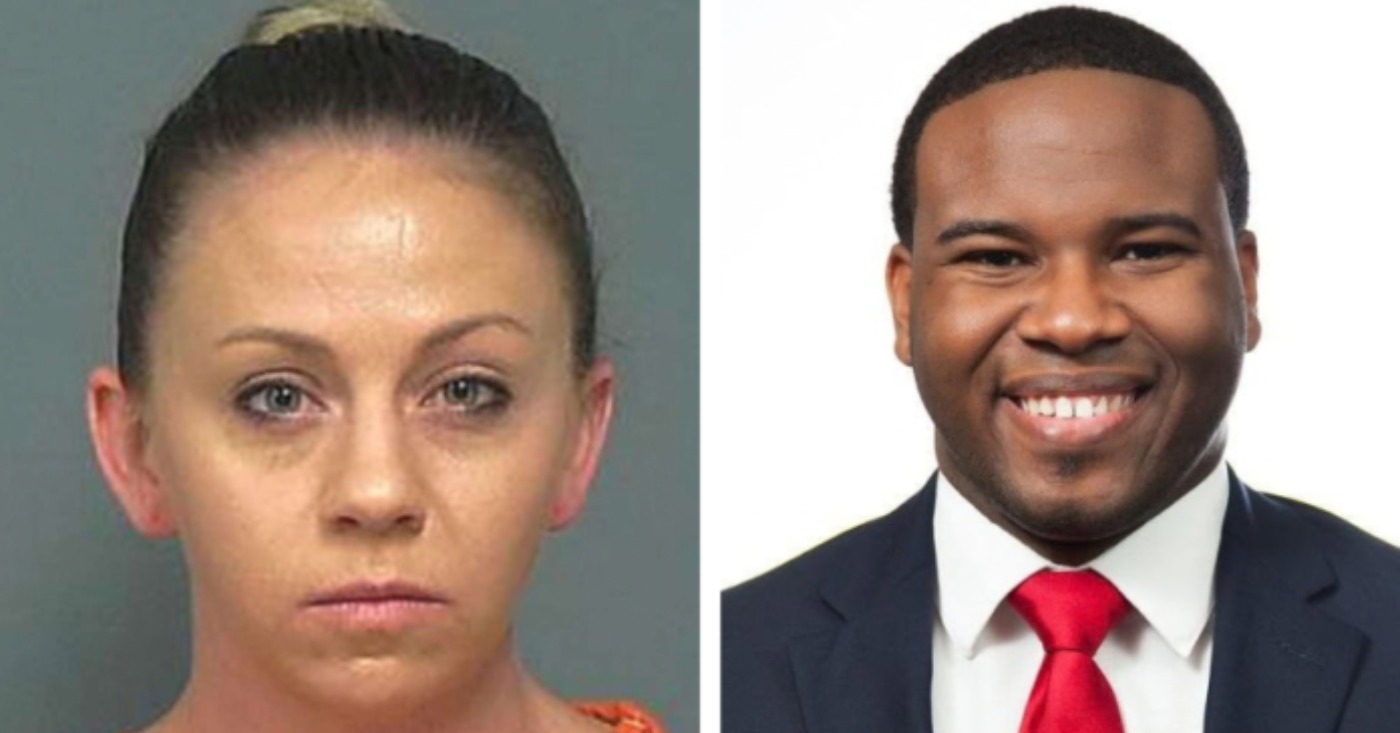
Former Dallas police officerAmber Guyger has been granted parole seven years after she was convicted of murdering her neighbor,Botham Jean, inside his Dallas apartment.
The Texas Board of Pardons and Paroles approved Guyger’s release Thursday (October 1), seven years to the day after Guyger was convicted of Jean’s murder, according to NBC News.
In 2019, a jury convicted Guyger of murder and she was sentenced to 10 years in prison for Jean’s 2018 death. Her conviction and 10-year sentence were upheld on appeal in 2022.
Geyger’s first parole request was denied in 2024, NBC Dallas-Fort Worth reported.
The Dallas Police Department fired her after the shooting. During her trial, Guyger testified that she mistakenly entered Jean’s apartment after returning home from work, believing it was her own apartment one floor below.
She said she saw Jean inside and fired her weapon because she believed he was an intruder, according to NBC News.
Jean was a 26-year-old Black man from St. Lucia who worked as an accountant. He was inside his home eating ice cream when Guyger entered and shot him, NBC DFW reported.
The parole board cited Guyger’s prison record in approving her release. According to NBC DFW, officials said she did not have a documented pattern of violent or assaultive arrests or convictions, maintained a satisfactory adjustment while incarcerated, and completed programs intended to help her obtain and maintain employment.
Jean’s family opposed the parole decision and had asked that Guyger serve her full 10-year sentence, according to NBC DFW.
Civil rights attorney Lee Merritt, who represents the family, told NBC DFW that the decision was deeply disappointing.
“They stood up again and again to ask that the full sentence be served,” Merritt said.
The Dallas Police Department told NBC DFW that the parole decision was outside its authority and that the department had no role in determining whether Guyger would be released. The department said its thoughts remained with Jean’s family and others affected by his death.
Guyger’s conviction and 10-year sentence were upheld on appeal in 2022.
A civil jury ordered Guyger to pay Jean’s family $98.6 million in damages in 2024, according to NBC DFW.
Guyger’s release date has not been announced. NBC News reported that the Texas Department of Criminal Justice will determine when she is released.
The Black Information Network is your source for Black News! Get the latest news 24/7 on The Black Information Network. Listen now on the iHeartRadio app or click HEREto tune in live.
Based on reporting by Michigan Chronicle.
Black History
Morehouse School of Medicine Fall Convocation Has Strong Ties to Nashville
TENNESSEE TRIBUNE — Morehouse School of Medicine recently held its 42nd Fall Convocation and White Coat and Pinning Ceremony, which highlighted strong connections to Nashville. Dr. Valerie Montgomery Rice, in her 12th year as president and CEO, leads the institution, which welcomed 355 new students.
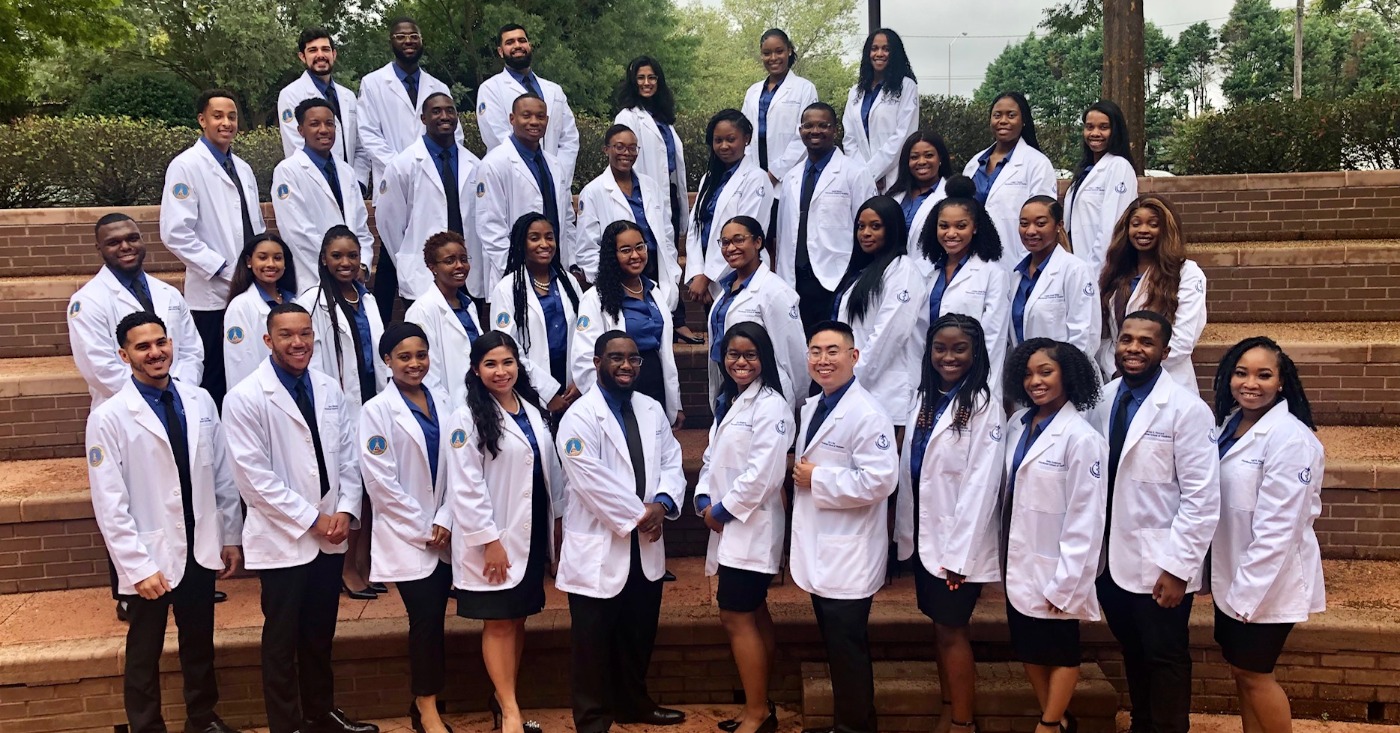
Morehouse School of Medicine held its 42nd Fall Convocation and White Coat and Pinning Ceremony on September 18, and it featured strong ties to Nashville. Dr. Valerie Montgomery Rice is completing her 12th year as president and CEO of Morehouse School of Medicine (MSM). The school boasts 355 students seeking degrees and certificates in the medical field.
“This entering class represents the future of medicine, science, public health and health care leadership,” said Valerie Montgomery Rice, MD, and FACOG. “As these students begin their journeys at Morehouse School of Medicine, they join a community grounded in excellence, service and our shared commitment to advancing health equity. We look forward to supporting their development as leaders who will transform the health and well-being of the communities they serve.”
Infectious diseases physician and scientist Dr. Barney S. Graham, MD, and PhD, served as the keynote speaker. He serves as the director of the David Satcher Global Health Equity Institute, professor of Medicine and Microbiology, Biochemistry and Immunology at Morehouse School of Medicine. He is an inventor of vaccines and monoclonal antibodies approved for human use to prevent or treat RSV, COVID-19 and Ebola. He joined MSM in 2022. He served in various positions at Vanderbilt University for 21 years.
Dr. Graham told the audience to “Embrace the Unseen” and focused on three points: Do the Best You can with what’s in front of you, Do what makes you come alive and Do the right thing even when no one is looking. He added, “Anything you do to improve mental and physical wellness and promote disease prevention will reduce health disparity by reducing the resources needed for treatment.”
His remarks commanded a roaring applause from the audience, which included his wife, Dr. Cynthia Turner Graham, and the former First Lady of Tennessee State University, Mrs. Edwina Hefner, a close friend to the family.
Based on reporting by Tennessee Tribune.
Black History
Ghana’s Ministry of Foreign Affairs Publishes Global Circle’s Vatican Reparations Call in Special Edition Alongside Heads of State
GLOBAL CIRCLE FOR REPARATIONS AND HEALING — Ghana’s Ministry of Foreign Affairs has published the Global Circle for Reparations and Healing’s submission, “From Accra to the Vatican,” in a special edition of The Ghanaian Envoy. This marks the first time a sovereign state has incorporated the Reparations Presentment to the Holy See into its official record. The 175-page edition, titled “Creating A New World,” also documents Ghana’s campaign that led to UN Resolution A/RES/80/250, which recognized the trafficking and enslavement of Africans as the gravest crime against humanity.

“From Accra to the Vatican” appears in The Ghanaian Envoy Special Edition on UN Resolution A/RES/80/250 — the first time a sovereign state has carried the Reparations Presentment to the Holy See into its official record
ACCRA, Ghana / CHICAGO, Illinois — October 7, 2026 — The Global Circle for Reparations and Healing today announced that its submission to Ghana’s Ministry of Foreign Affairs, “From Accra to the Vatican: A Call for a Global Plan of Action on Catholic Church Redress”, has been published in the Special Edition of The Ghanaian Envoy, the official newsletter of the Ministry of Foreign Affairs of the Republic of Ghana. The 175-page edition, titled “Creating A New World,” documents the Ghana-led campaign that culminated on March 25, 2026, in United Nations General Assembly Resolution A/RES/80/250, which declared the trafficking of enslaved Africans and the racialized chattel enslavement of Africans the gravest crime against humanity.
The Global Circle’s submission, authored by Co-Convener Kamm Howard, appears in Part V of the edition, “What Repair Must Now Mean,” at page 161. It shares the volume with statements by President John Dramani Mahama of Ghana, President Joseph Nyuma Boakai Sr. of Liberia, President Netumbo Nandi-Ndaitwah of Namibia, President Bassirou Diomaye Diakhar Faye of Senegal, President Carlos Manuel Vila Nova of São Tomé and Príncipe, President Emmanuel Macron of France, Prime Minister Mia Amor Mottley of Barbados, United Nations Secretary-General António Guterres, Foreign Minister Samuel Okudzeto Ablakwa, African Union Commissioner Amma Twum-Amoah, CARICOM Reparations Commission Chair Sir Hilary Beckles, Nobel Laureate Wole Soyinka, Dr. Julius Garvey, and Congressional Black Caucus Executive Director Vincent Evans, among others.
The submission traces the Global Circle’s delivery of the Reparations Presentment to the Holy See in Vatican City on July 18, 2022, the document’s subsequent use by the former Vice President of Costa Rica and the Vice President of Colombia in their engagements with Pope Francis, and the partial response contained in Pope Leo XIV’s May 2026 encyclical Magnifica Humanitas. It argues that while three of the Presentment’s seven demands have entered the Church’s official language in diluted form, four remain wholly unmet: rescission of the papal bulls that authorized African enslavement, the Church’s call upon other offending Western nations to make redress, the establishment of a joint Vatican–African Diaspora–African Papal Commission on Reparations and Healing, and a substantial financial commitment to repair. The submission asks Ghana to adopt the Presentment as the reference instrument for a Vatican track within the Accra Next Steps Commitments and to convene a first meeting of Global African reparationists toward a collective response.
“For four years the Presentment has been a civil society document carried by civil society hands,” said Kamm Howard, Co-Convener of the Global Circle and Commissioner of the National African American Reparations Commission. “Ghana has now placed it in the official record of a sovereign state, in a volume that opens with a President’s address to the General Assembly and closes by asking what repair must mean. That is not a courtesy. It is a signal to every government, every reparations commission, and every African Catholic that the claim against the Holy See belongs on the state agenda, and that the state which broke the deadlock at the United Nations is prepared to see it there.”
The significance of the publication extends beyond the Vatican file. The Presentment was created as a legal claims instrument by Howard in 2014 and first delivered to corporations and institutions in the United States, where it secured significant concessions. Its appearance in a foreign ministry’s official publication, translated and distributed in English, French, Portuguese, Spanish, and Italian, establishes the reparations presentment as a recognized instrument of international reparatory diplomacy, one that other states and descendant communities can adopt without drafting a new framework of their own. The Global Circle has described this catalytic potential as the “N’namba Effect,” after the Evanston, Illinois, reparations initiative – led by N’nanba Robin Rue Simmons – that gave municipalities across the United States the model, permission, and courage to act.
“The Vatican told us in 2022 that it moves in fifteen-year increments,” Howard added. “Ghana has just demonstrated at the United Nations that a determined state can compress that timeline to a single vote. We are asking Ghana to do for the Church what it did for the General Assembly, and we are asking Global Africa to organize behind that ask with one document, one voice, and one set of demands.”
The Global Circle has written to President Mahama and Foreign Minister Ablakwa to express its gratitude and to propose that its Vatican and Interreligious Actors Working Group lead the first meeting on a collective Vatican response under the auspices of the Government of Ghana. The Global Circle has also formally advised the Congressional Black Caucus of the publication in connection with its pending request that the Caucus recognize the Presentment as the foundational document for reparations engagement with the Roman Catholic Church and join the Government of Ghana in this global call to action.
###
About the Global Circle for Reparations and Healing
The Global Circle for Reparations and Healing was convened in 2022 to help build united global reparations front across Africa and its worldwide diaspora. In July 2022 the Global Circle delivered the Reparations Presentment to the Holy See in Vatican City. It co-organized Accra Summit I in August 2022 with the Government of Ghana and the Africa Transitional Justice Legacy Fund, and led the organization of Accra Summit II: Centering Healing Across Global Africa in March 2025 in partnership with the African Union. The Reparations Presentment to the Holy See is available in English, French, Italian, Portuguese, and Spanish at gcrh.org.
Media Contact
Global Circle for Reparations and Healing
Kamm Howard, Co-Convenor
[email protected] 773 520 0369
gcrh.org


Why A Black Bank Started From A House #shorts

Defender ONE-on-ONE: U.S. Rep. Christian Menefee

How To Manage Conflict at Work

How To Overcome Financial Setbacks and Win

How To Overcome Financial Setbacks and Win

Sports Talk: Texans vs Cowboys

Car Warranty Explained: Battery, Maintenance & Roadside #shorts

Social Media Success through Songs

2026 Voting Guide: Every Candidate and Proposition Explained!

From The Desk of The Editor 10/07/26

Latest Massacre in Haiti Reveals Cruelty U.S. Deportations

The Youngest American Killed in the Vietnam War

Booked and Unbound: The Legacy of Black Women’s Literary Circles

Passing for White, Fighting for Black America: The Courage of Walter White

OPINION: Nolan Wells’ Death One of Several Signifying Racial Terror Lives on in U.S. South

Prostate Cancer is Twice as Likely to Kill Black Men. Talking to Your Doctor Could Help Save Your Life

OP-ED: Haiti TPS: Have We Lost Sense of Humanity?

OP-ED: If AI Is the New Language of Power, Then NAN Wants Black Communities Fluent

OP-ED: How Does Your State Rank for Pre-K?

Henry O. Flipper: A Trailblazer at West Point and Beyond
Why A Black Bank Started From A House #shorts
Defender ONE-on-ONE: U.S. Rep. Christian Menefee
How To Manage Conflict at Work
How To Overcome Financial Setbacks and Win
How To Overcome Financial Setbacks and Win
Sports Talk: Texans vs Cowboys
Car Warranty Explained: Battery, Maintenance & Roadside #shorts
Social Media Success through Songs
2026 Voting Guide: Every Candidate and Proposition Explained!
From The Desk of The Editor 10/07/26
-
 Black Press1 week ago
OP-ED: Haiti TPS: Have We Lost Sense of Humanity?
-

 Black History1 week ago
Why Black Artists Struggle to Sell Tours
-

 Auto1 week ago
Consumers and States Awarded $694 Million After Predatory Auto Lender Settles Lawsuit
-

 Black Press1 week ago
TILGHMAN: Why Parents of Children with IEPs Should Know Their School Bus Driver
-

 Art1 week ago
From Ma Rainey to AI: New Technology Amplifies an Old Fight over Artist Control
-

 Black Press1 week ago
COMMENTARY: Property Is Power! What Is a Gift of Equity and What Could It Mean for Black America?
