
San Diego Voice
Earl B. Gilliam Bar Association Opposes “Birther” Judge Gary Kreep
SAN DIEGO VOICE — The Earl B. Gilliam Bar Association announces its firm opposition to the reelection of Judge Gary Kreep on November 6


Voice & Viewpoint Staff Writer
The Earl B. Gilliam Bar Association (EBGBA) announces its firm opposition to the reelection of Judge Gary Kreep on November 6 and urges all decent, fair minded San Diegans to remove him from office by refusing to vote for him. This opposition is squarely based on Judge Kreep’s unfitness for office.
EBGBA President, Andrea St. Julian, stated, “The general public should understand that the State Commission on Judicial Performance issued a “severe public censure” against Judge Kreep for having engaged in 29 acts of judicial misconduct between 2012 to 2015. This inappropriate behavior includes but is not limited to his untoward courtroom references to the physical appearance of women attorneys and his inappropriate remarks regarding ethnicity. Judge Kreep stands alone among judicial incumbents and challengers as having been rated by the San Diego County Bar Association as ‘lacking qualifications,’ the lowest possible rating any judicial candidate can receive.”
The African-American community’s concerns about Judge Kreep are amplified by the fact that he still falsely claims that President Barack Obama was born in Kenya and was not eligible to be President of the United States. President St. Julian noted that on January 21, 2013, the San Diego Branch of the NAACP wrote to Judge Kreep, advising him that he could not be a fair and impartial judge of the San Diego Superior Court and still cling to his “birther position.” Although the NAACP asked him to publicly affirm that President Obama was the legitimate President of the United States, Judge Kreep essentially refused by never responding to the letter.
EBGBA urges voters to be vigilant, and on November 6 use the power of the ballot to remove this undignified, unqualified “birther” from judicial office.
This article originally appeared in the San Diego Voice.












Black History
Isaac Cook: A Local High School Standout to Watch
SAN DIEGO VOICE AND VIEWPOINT — The 6’ 1” 185-pound Receiver posted his own numbers for his 2025 season on his X page and his production held steady. He Finished the season with 49 Receptions 1,249 Receiving Yards, 12 Touchdowns, and averaged 25.3 Yards Per Reception.

By Mike West Contributing Writer | San Diego Voice & Viewpoint
When Isaac Cook sprung into action at San Diego State’s passing tournament this past weekend, the fleet wide receiver did not disappoint. Running effortlessly like a gazelle, Cook caught 4 touchdown passes. From the looks of his highlights on his X page, the Senior from Cathedral Catholic High School is growing into his frame, and he sports a long stride that will benefit his efforts to continue his outstanding high school career.
According to Max Preps, the flashy route runner emerged onto the scene during his sophomore season in 2024. According to his tracked MaxPreps High School Profile, his sophomore numbers were 54 Receptions; 1,251 Receiving Yards; 13 Touchdowns, averaging 25 Yards Per Catch.
The 6’ 1” 185-pound Receiver posted his own numbers for his 2025 season on his X page and his production held steady. He Finished the season with 49 Receptions 1,249 Receiving Yards, 12 Touchdowns, and averaged 25.3 Yards Per Reception.
In addition, @AthleteMogul crowned Cook the top high school performer of the week for his scintillating 6 catches for 175 yards and 2 touchdowns as the Dons defeated Helix on September 24, 2025. Cook was instrumental in Cathedral Catholic’s run to the San Diego Section Division Championship appearance.
Not only is he gifted — he also clockeda 10.48 100-meter dash time in May 2025. Cook is a smooth route runner, and he is faster than he looks. He makes it easy for his quarterback to deliver a strike. Cook has strong hands and shows the capability to catch tough passes in traffic.
One of his best characteristics is that he focuses on catching the ball before shifting into high gear — he is a clutch receiver. Cook is elusive after the catch and explosive once the ball is in his hands.
Those skills were noticed throughout the West. The three-star recruit received offers from Cal, Boise State, New Mexico, Colorado State, Fresno State, Wyoming, Nevada, and Utah State before he committed to San Diego State on May 31st.
I suspect young Mr. Cook will ascend further once he graces San Diego County’s football fields this fall. Congratulations to Isaac Cook — an emerging star and part of the Mountain West’s No. 1 2027 recruiting class at San Diego State.
You can see a good sample of his highlights on his X page here.
Based on reporting by San Diego Voice & Viewpoint.
Advice
Why Timeless Materials Still Influence Today’s Remodeling Trends
SAN DIEGO VOICE & VIEWPOINT — Homeowners are opting for timeless materials like hardwood and natural stone for remodeling projects, prioritizing durability, aesthetic appeal, and long-term value over fleeting trends.


By Amy Kang
Remodeling trends influence your materials selection and the success of your home remodel. Options like hardwood flooring, natural stone countertops, and marble-inspired tile remain popular among homeowners looking to create spaces that feel both comfortable and stylish. These timeless materials also reduce the need for frequent updates, making them a cost-effective option in the long term.
Today’s homeowners aren’t letting an uncertain economy stop them from improving their homes. In fact, nearly all (91%) say they’ll proceed with their remodeling plans for 2026, per a recent U.S. Houzz report. Of homeowners planning to remodel, three in four (75%) expect to spend $10,000 or more on their projects.
As these individuals budget for home improvements, many are choosing materials that offer beauty, flexibility, and long-lasting value. This trend explains why classic materials remain the epicenter of modern home remodeling projects.
What Makes Timeless Materials Dominate Remodeling Trends?
As the name suggests, timeless materials never fade away with the trends. Here’s why:
- They are functional and durable
- They create a strong focal point
- They blend nicely with different design styles
Timeless features not only offer a marriage of form and function. They also support both traditional and modern design styles. This flexibility gives homeowners confidence that their investment will still look stylish years later.
Top examples of timeless home finishes include:
- Hardwood flooring
- Natural stone countertops
- Marble-inspired tile
- Brushed metal fixtures
- Neutral porcelain surfaces
Be the first to know about breaking news, articles, and updates.
These materials also support enduring renovation trends because they are easier to maintain over time. Consider the use of Marble Look Tile in bathrooms and kitchens, for example.
This material:
- Exudes the classic elegance of natural marble
- Requires little effort to clean and maintain
- Offers durable performance
Additionally, it fits well within both minimalist and luxury design styles.
Why Are Classic Design Materials So Valuable in Modern Homes?
Angi estimates that home remodel costs can range from $19,000 to $88,000 per square foot, depending on the room you’re upgrading and the materials you choose. Since the total cost can add up quickly, many homeowners now prefer long-term value over fleeting trends.
Timeless materials often provide:
- Increased durability
- Timeless aesthetic appeal
- Greater design flexibility
- Higher resale value
- Easier coordination with future updates
For example, hardwood flooring can complement modern furniture, farmhouse décor, or industrial-style interiors. This ability to match changing preferences makes these materials practical choices for homeowners.
How Does Traditional vs. Modern Design Influence Remodeling Choices?
Traditional design is often seen as the opposite of modern design. Yet, many modern homeowners no longer choose one style over the other. Instead, they combine modern simplicity with timeless materials to create spaces that feel practical, balanced, and inviting.
Consider brick, for example.
While it’s usually associated with a more traditional style, it can be beautifully incorporated into modern living spaces to create a unique but unified look. In the same vein, large windows can be added to a traditional-style home to bring in as much natural lighting as possible into the interior space and make the space look and feel more modern.
Why Are Neutral and Natural Finishes Growing in Popularity?
Many homeowners want to enjoy quiet luxury. Neutral and natural finishes can provide the subtle elegance needed to achieve it.
These finishes create a clean and calming environment, evoking a sense of authenticity and serenity in the room. They also allow homeowners to update furniture and décor without replacing major surfaces.
Some popular examples of natural-inspired finishes include:
- Warm beige tones
- Light oak textures
- Soft gray stone surfaces
- Matte ceramic finishes
- Cream colored porcelain tile
If you want to enjoy comfort and design flexibility, look no further than these finishes. Designers often recommend them because they help create an illusion of space in smaller rooms—that is, make rooms appear larger and brighter.
In this era of green building practices, natural finishes also align with sustainability goals. Many eco-conscious homeowners now want products that last longer and reduce waste from constant remodeling.
Hardwearing surfaces with timeless styling help meet this goal and save money by reducing the need for repairs and replacement. As homeowners continue seeking practical and attractive spaces, classic materials will likely remain the epicenter of tomorrow’s remodeling trends.
Frequently Asked Questions
Are Timeless Materials More Expensive?
Classic design materials tend to have higher upfront costs than trendy modern alternatives. However, they often offer better long-term value because they maintain both function and appearance for many years.
These durable materials can reduce repair and replacement expenses over time, making them a smart long-term investment for renovating homeowners.
Why Do Designers Recommend Neutral Colors?
Warm neutral colors complement many lighting choices, furniture styles, and decorative accents. They also make rooms feel brighter and more airy. Today’s designers recommend neutral color palettes because homeowners can refresh their spaces with small updates; no need for major renovations every few years.
Can Timeless Materials Work in Small Homes?
Timeless elegance isn’t reserved for expansive homes alone. You can use classic design materials to make your small house feel more open, organized, and luxurious.
Natural wood surfaces, marble-inspired tile, and soft stone finishes can create a clean appearance without making rooms feel cramped. Many homeowners use these materials to improve visual flow throughout compact spaces.
How Often Do Remodeling Trends Change?
The frequency of design trends varies. Some design trends change every few years, especially paint colors and decorative accents. However, foundational materials like stone, wood, and porcelain tile tend to remain popular much longer.
These surfaces adapt well to many styles, which helps them stay relevant through changing design cycles.
What Rooms Benefit Most from Timeless Materials?
Rooms that experience frequent use and have moisture issues, such as kitchens and bathrooms, can benefit greatly from timeless materials.
Areas of the home that receive high traffic, like living rooms and hallways, can also benefit from durable flooring and natural finishes. Using timeless materials helps homeowners maintain an attractive, uniform appearance throughout the home.
Timeless Materials Exude Elegance That Never Goes Out of Fashion
Today’s homeowners want improvements that remain attractive and functional long after remodeling trends shift. Timeless materials never fade away with the trends because they offer durability, flexibility, and lasting style. Natural textures, neutral finishes, and stone-inspired surfaces continue to meet (and exceed) those expectations.
Black Press
New CalFresh & Medi-Cal Rules Start Soon
SAN DIEGO VOICE & VIEWPOINT — Most people will still qualify for benefits or coverage. However, the County is urging people who currently receive CalFresh or Medi-Cal benefits to make sure their contact information is up to date through their BenefitsCal portal. Keeping this information current ensures they receive text messages, calls or mail from the County about steps needed to confirm their eligibility.

By Cassie N. Saunders, County of San Diego Communications Office | San Diego Voice & Viewpoint
Federal and state policy changes will roll out over the next few months that may impact some people in San Diego County who receive CalFresh or Medi-Cal benefits. The first of these changes starts April 1.
Most people will still qualify for benefits or coverage. However, the County is urging people who currently receive CalFresh or Medi-Cal benefits to make sure their contact information is up to date through their BenefitsCal portal. Keeping this information current ensures they receive text messages, calls or mail from the County about steps needed to confirm their eligibility.
Starting this week, CalFresh customers will receive a text message from the County with information about upcoming changes and resources. The County is here to help and will be sharing information on all upcoming changes digitally, in person and through the mail.
For details on all CalFresh and Medi-Cal changes, please visit the County’s website.
Key Dates & Changes
- April 1, 2026: Certain lawfully present noncitizens will no longer be eligible for CalFresh, including asylees, refugees, and other groups. For a full list, please visit the County’s CalFresh Eligibility Changes website.
- June 1, 2026: Some adult CalFresh recipients will be required to work 80 hours a month or participate in activities like training or volunteering to get or keep CalFresh benefits. The County will screen for exemptions that will apply to certain people, including parents or caregivers of children under 14 years of age, and other groups.
- Jan. 1, 2027: Some Medi-Cal recipients will also need to meet new work or community engagement rules to get to keep Medi-Cal.
For current customers, these changes will apply at their next renewal. Food, medical and employment resources can be found on https://211sandiego.org/food-and-health-access.
The County’s mission is to strengthen our communities – which include nearly 400,000 residents who receive CalFresh benefits and more than 800,000 who are enrolled in Medi-Cal, with innovative, inclusive and data-driven services through a skilled and supported workforce.
#BuyBlack
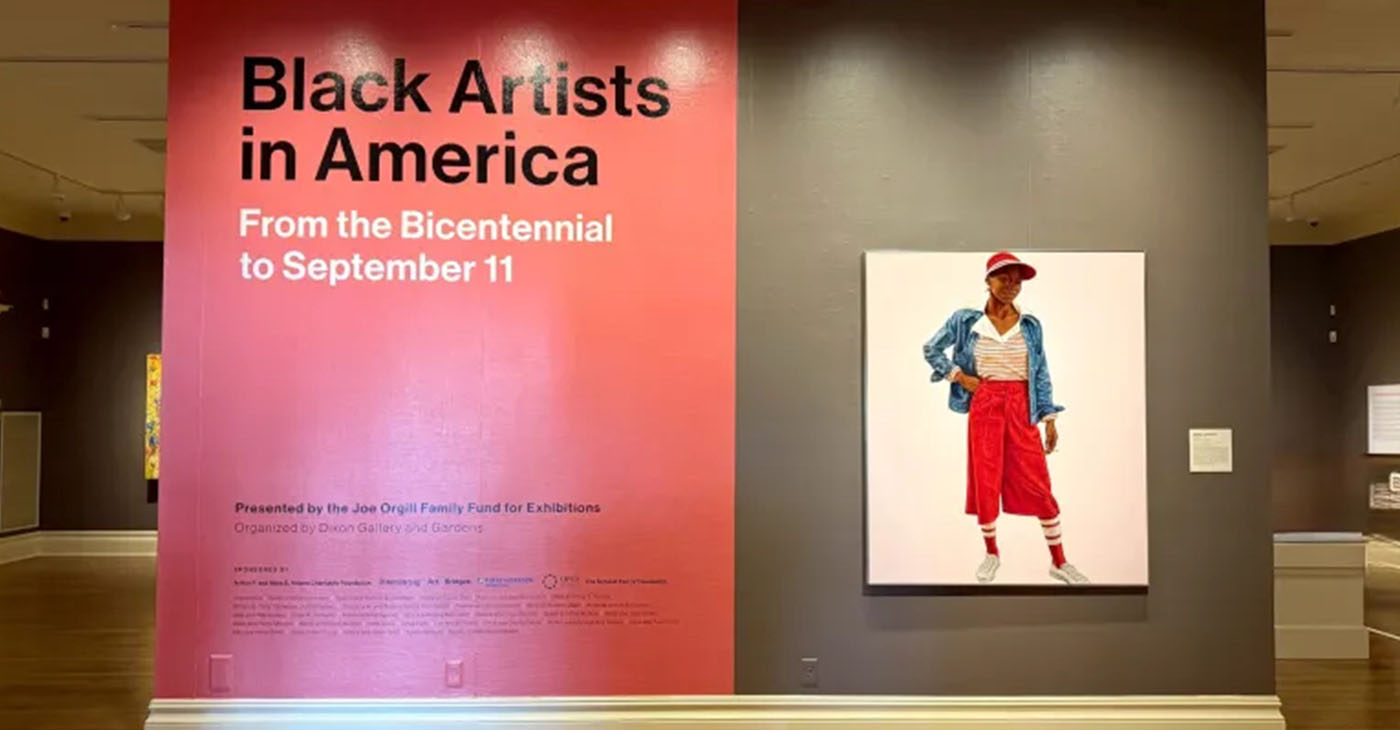
Black Artists in America, Installation Three Wraps at the Dixon Gallery and Gardens
TRI-STATE DEFENDER — With 50+ paintings, sculptures and assemblages, the exhibit features artists like Varnette Honeywood from Los Angeles, whose pieces appeared in Bill Coby’s private collection (before they were auctioned off) and on “The Cosby Show.” Also included are works by Alonzo Davis, another Los Angeles artist who opened one of the first galleries there where Black Artists could exhibit.
By Candace A. Gray | Tri-State Defender
The tulips gleefully greet those who enter the gates at the Dixon Gallery & Gardens on an almost spring day. More than 650,000 bulbs of various hues are currently on display. And they are truly breathtaking.
Inside the gallery, and equally as breathtaking, is the “Black Artists in America, From the Bicentennial to September 11” exhibit, which runs through Sunday, March 29. This is the third installment of a three-part series that started years ago and illustrates part of the Black experience through visual arts in the 20th century.
“This story picks up where part two left off,’’ said Kevin Sharp, the Linda W. and S. Herbert Rhea director for the Dixon. “This era is when we really start to see the emergence of these important Black artists’ agency and freedom shine through. They start to say and express what they want to, and it was a really beautiful time.”
With 50+ paintings, sculptures and assemblages, the exhibit features artists like Varnette Honeywood from Los Angeles, whose pieces appeared in Bill Coby’s private collection (before they were auctioned off) and on “The Cosby Show.” Also included are works by Alonzo Davis, another Los Angeles artist who opened one of the first galleries there where Black Artists could exhibit.
“Though [Davis] was from LA, he actually lived in Memphis for a decade,” said Sharp. “He was a dean at Memphis College of Art, and later opened the first gallery in New York owned and operated by black curators.”
Another featured artist is former NFL player, Ernie Barnes. His work is distinctive. Where have you seen one of his most popular paintings, Sugar Shack? On the end scene and credits of the hit show “Good Times.” His piece Saturday Night, Durham, North Carolina, 1974 is in this collection.
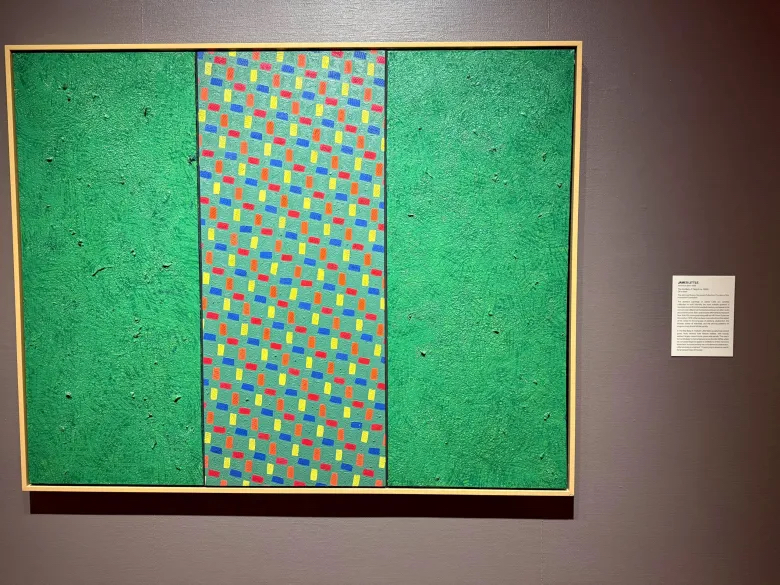
Memphis native James Little’s “The War Baby: The Triptych” is among more than 50 works featured in “Black Artists in America, From the Bicentennial to September 11” at the Dixon Gallery & Gardens, the final installment of a three-part series highlighting the impact and evolution of Black artists through 2011.
The exhibit features other artists with Memphis ties, including abstract painter James Little, who was raised in a segregated Memphis and attended Memphis Academy of Art (before it was Memphis College of Art). He later moved to New York, became a teacher and an internationally acclaimed fixture in the art world in 2022 when he was named a Whitney Biennial selected artist at the Whitney Museum of American Art in New York.
Other artists like Romare Bearden, who had a Southern experience but lived up North, were featured in all three installments.
“During this period of time, he was a major figure,” said Sharp. “He wrote one of the first books on the history of African American art during a time when there were more Black academics, art teachers, more Black everything!”
Speaking of Black educators, Sharp said the head curator behind this tri-part series and Dixon’s partner in the arts is Earnestine Jenkins, Ph.D., an art history professor at the University of Memphis, who also earned a Master of Arts degree from Memphis State University (now UofM). “We began working with Dr. Jenkins in 2018,” he said.
Sharp explained that it takes a team of curators, registrars, counterparts at other museums, and more, about three years to assemble an exhibit like this. It came together quite seamlessly, he added. Each room conjured up more jaw-dropping “wows” than the one before it. Each piece worked with the others to tell the story of Black people and their collective experience during this time period.
One of the last artists about whom Sharp shared information was Bettye Saar, who will turn 100 years old this year. She’s been working in Los Angeles for 80 years and is finally getting her due. Her medium is collages or assemblages, and an incredible work of hers is on display. She’s married to an artist and has two daughters, also artists.
The exhibit catalogue bears some of these artists’ stories, among other scholarly information.
The exhibit, presented by the Joe Orgill Family Fund for Exhibitions, is culturally and colorfully rich. It is a must see and admission to the Dixon is free.
Visit https://www.dixon.org/ to learn more.
Fun Facts: An original James Little design lives in the flooring of the basketball court at Tom Lee Park, and he makes and mixes his own paint colors.
Advice
Grief, Advocacy, and Education: A Counselor Reflects on Black Maternal Health
SAN DIEGO VOICE & VIEWPOINT — Last month healthcare leaders, birth workers, and community members gathered to honor the legacy of Charleston native Dr. Janell Green Smith, a nurse-midwife and doctor of nursing practice who died in January from childbirth complications. She had participated in more than 300 births and specialized in helping Black women give birth safely.

By Jennifer Porter Gore | Word-In-Black | San Diego Voice and Viewpoint
In 2024, the number of U.S. mothers who died as a result of pregnancy or childbirth dropped compared to 2023. But while slightly fewer Black mothers died that year, they still had three times the mortality rate of white women.
South Carolina’s rates of maternal deaths outpaced even the national rates. In fact, the state’s overall rate of maternal deaths between 2019 and 2023 was higher than all but eight states and the District of Columbia.
Last month healthcare leaders, birth workers, and community members gathered to honor the legacy of Charleston native Dr. Janell Green Smith, a nurse-midwife and doctor of nursing practice who died in January from childbirth complications. She had participated in more than 300 births and specialized in helping Black women give birth safely.
Her death shocked the community and her colleagues who are determined to address concerns about Black maternal health. The event also covered the importance of protecting mental health during grief and of men’s role in solving the maternal health crisis.
As both a therapist and a father, Lawrence Lovell, a licensed professional counselor and founder of Breakthrough Solutions, discussed ways the event’s attendees could process their grief over Green Smith’s death. He also shared ways male partners can advocate for women’s maternal health during pregnancy and childbirth.
Lovell spoke not just as a therapist but also as a father whose own family had briefly crossed paths with Green Smith. The event, he said, emerged organically from a moment of collective mourning.
Despite the grief, “it was still, like, a really beautiful event, a much-needed event, and it almost felt like we were all giving each other a collective family hug,” says Lovell.
His connection to Green Smith, Lovell says, was brief but meaningful during his wife’s pregnancy with their second child. Green Smith was practicing at the same birthing center where they had their child. She began practicing in Greenville a short time later.Even that short connection carried significance for Lovell, given the small number of Black maternal health professionals.
Lovell did not initially plan to become a mental health practitioner; he chose the career path after graduating from college, when someone suggested he consider psychology. His interest deepened when he noticed how few Black men work in mental health.
“Being Black man and playing football in college, there weren’t a lot of people that look like me talking about mental health,” says Lovell. “[I wanted] to give people that look like me an opportunity to work with someone that looks like them.”
Working with Expectant and New Parents
Lovell often counsels couples preparing for parenthood by, helping partners understand what a successful pregnancy, childbirth, and postpartum recovery look like. That often means helping women manage postpartum depression.
As a man, Lovell says, it’s “humbling” that a woman “just trusts me enough to work with me through their pregnancy or their postpartum recovery.”
In his work, Lovell has noticed how few men understand pregnancy before they experience it with their partner. Because early pregnancy symptoms are often invisible, he says, men may underestimate how much support a mom-to-be actually needs.
“Sometimes they may not realize they don’t know much about pregnancy and what to expect in those three trimesters,” Lovell says. “I tell a lot of the men that just because you can’t see [she’s pregnant] doesn’t mean that she won’t appreciate your intense support in that first trimester.”
Education about pregnancy and postpartum recovery, he says, can change how men support their partners.
Teaching Advocacy in the Delivery Room
Another major focus of Lovell’s counseling is preparing men to advocate for mothers during labor.
“Helping men understand what pregnancy looks like: what delivery is going to look like, and what are the realistic expectations that I should have of myself in postpartum,” he says.
Lovell encourages partners to be honest about their expectations for what will happen during delivery. He helps them prepare for the big day by discussing the birth plan and knowing how to quickly recognize problems. Clear communication, he says, prevents misunderstandings.
He regularly trains men to ask their partners detailed questions about their expectations during and after pregnancy. Advocacy in medical settings can be especially important and requires attention to details the mother may not be able to address.
“It’s always important to fine-tune things and truly understand what helps your partner feel most supported,” Lovell says. “Instead of guessing, you should ask.”
Lovell recalls a moment during the birth of his first child when he had to take that role.
During the delivery, “I felt like something wasn’t as sanitary as I’d like it to be,” he says. “I asked, ‘Hey, can you switch those out? Can you change your gloves?’”
Lovell has a succinct but powerful message he regularly shares with clients’ families, and he shared it with attendees at last month’s event.
“Just to believe women,” he says. “I’ve worked with different couples, and sometimes I’m not really sure that there’s enough empathy from the men.”
That includes how women express pain.
“If a woman says, ‘my pain is at a nine,’ just because how you would express yourself at a nine is different than how she’s expressing herself at [that level] doesn’t mean you shouldn’t believe her,” he says.
Empathy, he says, can change outcomes far beyond the delivery room.
“We’ve got to believe women when they’re talking about their experiences and their feelings and their pain,” he says. “I think there’s a lot that we can prevent if we empathize better.”
Black Press
COMMENTARY: Regime Change and The Roots Of U.S. Hostility With Iran
SAN DIEGO VOICE & VIEWPOINT — Those who are serious in their study of history are clear that the Cold War was a propaganda campaign to position communism and socialism as a “boogeyman” in order to justify Americans’ desire for geopolitical domination of the world. Additionally, Mosaddegh’s policy of nationalizing the oil wealth of the country was disruptive to Western oil companies that wanted unfettered access to Iran’s oil reserves.

By Dayvon Love | San Diego Voice and Viewpoint
Director of Public Policy, Leaders of a Beautiful Struggle
In 1953, the United States and other Western forces collaborated to overthrow the democratically elected president, Mohammad Mosaddegh, of Iran.
The stated rationale for pursuing regime change was based on the Cold War logic that Mosaddegh was aligning with an evil communist sphere of influence anchored by the former Union of Soviet Socialist Republics (USSR/Russia).
Those who are serious in their study of history are clear that the Cold War was a propaganda campaign to position communism and socialism as a “boogeyman” in order to justify Americans’ desire for geopolitical domination of the world. Additionally, Mosaddegh’s policy of nationalizing the oil wealth of the country was disruptive to Western oil companies that wanted unfettered access to Iran’s oil reserves.
After the overthrow of Mosaddegh, the United States installed the Shah of Iran to lead the country, which was a brutal, autocratic regime that lasted for a couple of decades. The 1979 revolution in Iran that resulted in the overthrow of the Shah and the taking of American hostages is often narrated as an act of anti-American aggression instead of a response to the U.S. imposition of a brutal regime on the people of Iran. In other words, the 1979 Iranian revolution and the anti-American sentiments expressed over the years by Iranian leadership is a response to U.S. imperialist aggression toward the sovereignty of the Iranian people and the larger Muslim world.
U.S. Secretary of State Marco Rubio gave a speech a few weeks ago in Munich, Germany, which provides a clear underlying logic for U.S. military strikes against Iran. He said:
“…For five centuries, before the end of the Second World War, the West had been expanding – its missionaries, its pilgrims, its soldiers, its explorers pouring out from its shores to cross oceans, settle new continents, build vast empires extending out across the globe,” Rubio said. “But in 1945, for the first time since the age of Columbus, it was contracting. Europe was in ruins. Half of it lived behind an Iron Curtain and the rest looked like it would soon follow. The great Western empires had entered into terminal decline, accelerated by godless communist revolutions and by anti-colonial uprisings that would transform the world and drape the red hammer and sickle across vast swaths of the map in the years to come … .”
The luxuries and quality of life that Western civilization enjoys are based on the colonial relationship it has with the so-called Third World, which is largely non-White and poor. People who are self-respecting will rise up to challenge the social order that causes its own degradation.
Additionally, in a November 1979 interview with journalist Mike Wallace, the Ayatollah Khomeini (leader of Iran) committed to (and delivered on this commitment) releasing Black and women hostages. His rationale for releasing Black hostages was that we are an oppressed group in America and not responsible for the aggression toward their people. This is a recognition of the global system of domination that bolsters White political and economic domination of the world.
It is also important to acknowledge the role that Israel has played in encouraging U.S. military aggression toward Iran.
Israel considers itself to be a cultural descendant of Western civilization. The state of Israel serves as a proxy for maintaining U.S. geopolitical domination of the muslim world and the Palestinian people have been casualties of U.S. maintenance and support of the settler colonial project of the state of Israel. Israel has been urging the U.S. to take a more aggressive stance toward Iran to advance its own military domination of the region.
The current administration’s capitulation to Israeli political leadership’s urging to enact regime change in Iran is a further acknowledgement of how important Israel is as an instrument of American imperialism. This current military strikes against Iran by the Trump administration is another example of the White nationalist political agenda of the Republican Party.
What must be acknowledged is that the military-industrial complex that funds both political parties must be directly confronted and ultimately dismantled. America currently invests $1 trillion a year of our tax dollars to maintain America’s role as the policeman of the world.
Democrats in the upcoming midterms need to be forced to engage in a radical change in American foreign policy that does not legitimize military aggression toward people defending their sovereignty. Democrats need to be forced to pursue a policy that divests from the $1 trillion military budget and puts those resources in the hands of the masses of people in this society who have been victimized by the global system of White supremacy.
Dayvon Love serves as director of public policy for Leaders of a Beautiful Struggle (LBS), a Baltimore-based grassroots think-tank.


History of Black-Owned Banks: Why They Were Needed #shorts

Terresa Hardaway on Blackbird Revolt and Black Garnet Books – MSR On the Radar

Black History Fun Fact: Dr. Patricia Bath invented a laser device that helped improve cataract

Building Wealth, Inspiring Hope & Celebrating Our Legacy

Style Takes Center Stage at the 39th Annual Salute to Excellence in Education

Car Review: Seat Comfort & Dashboard Glare Issues #shorts

134 Black-Owned Banks Founded: See How Many Remain Today! #shorts

Dr. Earleen Patterson’s 30 Year Legacy of Education and Service at SIUE

Latinas Deserve Equal Pay. Unions Help Make It Happen.

Defender ONE-on-ONE: U.S. Rep. Christian Menefee

Latest Massacre in Haiti Reveals Cruelty U.S. Deportations

The Youngest American Killed in the Vietnam War

Booked and Unbound: The Legacy of Black Women’s Literary Circles

Passing for White, Fighting for Black America: The Courage of Walter White

OPINION: Nolan Wells’ Death One of Several Signifying Racial Terror Lives on in U.S. South

Prostate Cancer is Twice as Likely to Kill Black Men. Talking to Your Doctor Could Help Save Your Life

OP-ED: Haiti TPS: Have We Lost Sense of Humanity?

OP-ED: If AI Is the New Language of Power, Then NAN Wants Black Communities Fluent

OP-ED: How Does Your State Rank for Pre-K?

Henry O. Flipper: A Trailblazer at West Point and Beyond
History of Black-Owned Banks: Why They Were Needed #shorts
Terresa Hardaway on Blackbird Revolt and Black Garnet Books – MSR On the Radar
Black History Fun Fact: Dr. Patricia Bath invented a laser device that helped improve cataract
Building Wealth, Inspiring Hope & Celebrating Our Legacy
Style Takes Center Stage at the 39th Annual Salute to Excellence in Education
Car Review: Seat Comfort & Dashboard Glare Issues #shorts
134 Black-Owned Banks Founded: See How Many Remain Today! #shorts
Dr. Earleen Patterson’s 30 Year Legacy of Education and Service at SIUE
Defender ONE-on-ONE: U.S. Rep. Christian Menefee

Unlock Your Best Auto Loan: Ask These Questions! #shorts
-
 Black Press1 week ago
OP-ED: Haiti TPS: Have We Lost Sense of Humanity?
-

 Black History1 week ago
Why Black Artists Struggle to Sell Tours
-

 Auto1 week ago
Consumers and States Awarded $694 Million After Predatory Auto Lender Settles Lawsuit
-

 Black Press1 week ago
TILGHMAN: Why Parents of Children with IEPs Should Know Their School Bus Driver
-

 Art1 week ago
From Ma Rainey to AI: New Technology Amplifies an Old Fight over Artist Control
-

 Black Press1 week ago
COMMENTARY: Property Is Power! What Is a Gift of Equity and What Could It Mean for Black America?
