
Crime
Cosby Attorneys List 11 Problematic Rulings for Appeals Court
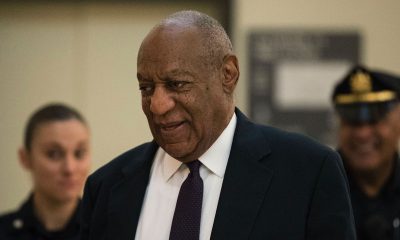
NNPA NEWSWIRE — In a new court filing seeking to win Cosby’s release from prison and overturn his conviction, Cosby’s lawyers, Brian W. Perry and Kristen L. Weisenberger, identified 11 of the most problematic rulings by O’Neill before and during the trial and at sentencing.


By Stacy M. Brown, NNPA Newswire Correspondent
@StacyBrownMedia
Bill Cosby’s attorneys are confident that there are significant legal (and more importantly, appealable) issues stemming from his trial last spring on aggravated sexual assault.
The responsibility for what they believe to be problematic rulings and errors and oversight rest squarely on the shoulders of Montgomery County, Pa., Judge Steven T. O’Neill.
In a new court filing seeking to win Cosby’s release from prison and overturn his conviction, Cosby’s lawyers, Brian W. Perry and Kristen L. Weisenberger, identified 11 of the most problematic rulings by O’Neill before and during the trial and at sentencing.
- Montgomery County Judge Steven T. O’Neill abused his discretion, erred, and infringed on Cosby’s constitutional rights by failing to excuse juror No. 11 where evidence was introduced of the juror’s inability to be fair and impartial. Specifically, a prospective juror testified that Juror No. 11 prejudged guilty prior to the commencement of trial. Moreover, the trial judge abused its discretion, erred and infringed upon Cosby’s constitutional rights by refusing to interview all jurors who were in the room with juror No. 11 to ascertain whether they heard the comment (“We can all go home, he’s guilty”) and, if so, the impact that the comment had on them.
- O’Neill abused his discretion, erred, and infringed on Cosby’s constitutional rights in allowing Dr. Barbara Ziv to testify as an expert witness pursuant to the Pennsylvania statute regarding an offense that occurred 12 years prior to the conception of that statute, and in violation of Cosby’s rights under the fifth and sixth amendments of the U.S. Constitution, and under Pennsylvania law where it notes that the statute is unconstitutional and not retroactive in application.
- O’Neill abused his discretion, erred, and infringed on Cosby’s constitutional rights by failing to disclose the judge’s biased relationship with former Montgomery County District Attorney Bruce Castor. O’Neill confronted Castor for, in his opinion, exploiting an extra-marital affair in order to gain a political advantage in their 1999 race for Montgomery County District Attorney. Castor’s conduct as District Attorney in 2005, however, was a material and dispositive issues in the Cosby case; specifically, a significant question arose as to whether Castor agreed in 2005 that the Commonwealth would never prosecute Cosby for the allegations involving Andrea Constand and whether he relayed that promise to Cosby’s attorneys. Cosby’s attorneys argued that the Commonwealth was precluded from prosecuting Cosby due to Castor’s agreement to never prosecute Cosby for the Constand allegations. The trial court erred in failing to disclose its bias against Castor, and in O’Neill failing to recuse himself, prior to determining the credibility of Castor and whether he made the agreement with Cosby. O’Neill similarly erred in failing to disclose his bias or recuse himself prior to ruling upon the admissibility of the defendant’s civil deposition, where the trial court was again determining the credibility of Castor.
- The court abused its discretion, erred, and infringed on Cosby’s constitutional rights in denying a petition for a Writ of Habeas Corpus filed on Jan. 11, 2016, and failing to dismiss the criminal information where the state, in 2005, promised to never prosecute Cosby for the Constand allegations. Moreover, given the agreement that was made by the Commonwealth in 2005 to never prosecute Cosby and Cosby’s reliance thereon, the state was also estopped from prosecuting Cosby.
- O’Neill erred in permitting the admission of Cosby’s civil deposition as evidence at trial in violation of the Due Process Clause of the state and federal Constitutions and in violation of Cosby’s right against self-incrimination. Moreover, the prosecution was [barred by law] from arguing the admission of the civil deposition at trial, as Cosby gave this deposition testimony in reliance on the promise by Castor that Cosby would never be prosecuted for the Constand allegations.
- The court abused its discretion, erred, and infringed on Cosby’s constitutional rights in admitting five prior “bad act” witnesses. The witness’ allegations were too remote in time and too dissimilar to the Constand allegations to fall within the proper scope of the law. Further, during the first trial the court allowed one prior bad act witness; however, after that trial resulted in a mistrial, O’Neill allowed prosecutors, without explanation or justification, to call five prior bad act witnesses in violation of Cosby’s Due Process under the state and federal constitutions.
- 7 O’Neill abused his discretion, erred, and infringed on Cosby’s rights in allowing the district attorney to prosecute Cosby where the offense did not occur within the 12-year statute of limitations and prosecutors made no showing of due diligence. Moreover, the jury’s verdict was against the weight of the evidence concerning whether the offense occurred within the 12-year statute, the delay in prosecuting Cosby caused him substantial prejudice and infringed on his Due Process under the state and federal Constitution, as a material witness to the non-prosecution agreement died within that 12-year period.
- O’Neill abused his discretion, erred, and infringed on Cosby’s constitutional rights by permitting the state to introduce Cosby’s deposition testimony regarding Quaaludes. This testimony was not relevant to the Constand allegations; was remote in time; backdoored the admission of a sixth prior bad act witness; and constituted bad act evidence that was not admissible. Further, this testimony was highly prejudicial in that it included statements regarding the illegal act of giving a narcotic to another person.
- O’Neill abused his discretion, erred, and violated Cosby’s rights by denying Cosby’s objections to the court’s charge and including or refusing to provide certain instruction. Specifically, O’Neill abused his discretion, erred and violated Cosby’s rights by 1) providing to the jury an instruction on the “consciousness of guilty” where this charge was not appropriate to the facts before the jury; 2) refusing to provide an instruction, consistent with law, that the jury may consider the circumstances under which the case was investigate; and 3) by failing to provide the jury the instruction on prior bad act witnesses as suggested by the defense: “Indeed, the trial court’s charge effectively instructed the jury that Cosby was guilty of the uncharged alleged crimes and failed to properly explain how this unchanged, alleged misconduct should be consider,” Cosby’s lawyers wrote. Moreover, O’Neill abused his discretion, erred and violated Cosby’s right to Due Process by refusing to provide the jury a special interrogatory on whether the offense occurred within the statute of limitations.
- O’Neill abused his discretion, erred, and infringed on Cosby’s rights in finding that Cosby was a sexually violent predator. The state relied on unsubstantiated, uncorroborated evidence not admitted at trial; specifically relying on hearsay evidence that there were approximately 50 more women making allegations against Cosby.
- The Judge abused his discretion, erred, and infringed on Cosby’s rights in applying the sexual violent predator provisions for a 2004 offense which violated clauses of both the state and federal Constitutions.
Prosecutors have 30 days to respond to Cosby’s filing. Meanwhile, the state Superior Court also can decide whether or not it wants to hear the case.
If it does hear the case, the Superior Court normally publishes a briefing schedule for the appeals process.
“Mr. Cosby is doing well and he knows that this is about Civil Rights and that’s what he’s focusing on,” said Andrew Wyatt, a longtime spokesman for Cosby, who is serving a three to 10 year sentence at a prison near Philadelphia.










Black Press
Homecoming Ends in Gunfire Outside FAMU: 12 Hurt, Six of Them Children
SAN FRANCISCO SUN REPORTER — Twelve people were injured, including six children, after gunfire erupted near Florida A&M University’s Bragg Memorial Stadium following a homecoming celebration on Saturday night. Authorities report that the shooting stemmed from a dispute between individuals who knew each other, leaving eleven victims with gunshot wounds and one with an ankle injury.


Twelve people were hurt, six of them children, when gunfire broke out near Florida A&M’s stadium as homecoming crowds headed home Saturday night. A 15-year-old has been charged.
TALLAHASSEE, Fla. — Homecoming is supposed to be the one weekend everybody comes back. Grandmothers in orange and green. Alumni who haven’t seen each other in twenty years. Kids on shoulders watching the band.
Saturday night, it ended in gunfire.
Twelve people were hurt in a shooting near Perry and Manatee streets, behind Florida A&M University’s Bragg Memorial Stadium, around 8 p.m. as crowds left the homecoming celebration, according to News4JAX. Eleven were shot. A twelfth hurt an ankle running from the gunfire. Six of the injured are children, including an 11-year-old.
By Sunday, five had been released from the hospital and six were still being treated, one in critical condition, CBS News reported. No one was killed.
What police say
A fight broke out first, police said, among people who knew each other. Then somebody started shooting. None of the people hit appear to have been the intended targets.
A 15-year-old was arrested and charged with multiple counts of attempted murder and possession of a firearm by a delinquent, according to CBS News. Police said more arrests are possible. The Sun-Reporter does not name minors charged with crimes.
“What should have been a weekend of celebration in our community instead became a night of fear and violence,” Tallahassee Police Chief Lawrence Revell said.
FAMU President Marva Johnson said she shares in the “outrage and profound sadness at the senseless and despicable shooting.” The university said the shooting happened near campus and that the campus remained safe.
Rattlers head football coach Quinn Gray put it plainest.
“No one should leave our celebration in an ambulance,” he wrote, “and no child should ever be caught in gunfire.”
Why it lands here
Homecoming at a historically Black college is a family reunion for the whole Black diaspora, and the Bay Area sends its share. Alumni, parents of students, kids who’ve already got their acceptance letters in mind. When something like this happens in Tallahassee, it happens to people we know.
Police are asking anyone with information or video to contact the Tallahassee Police Department.
Sources: CBS News and News4JAX. Photo: Bragg Memorial Stadium at Florida A&M University. Photo by Michael Rivera via Wikimedia Commons, CC BY-SA 4.0.
Based on reporting by San Francisco Sun Reporter.
Black Press
Lawmakers Back Push Against Military Sexual Assault
CHICAGO CRUSADER — Illinois lawmakers and Cook County officials are pledging support for a Chicago-area veterans advocate seeking stronger protections for service members who experience sexual assault. State Rep. La Shawn K.
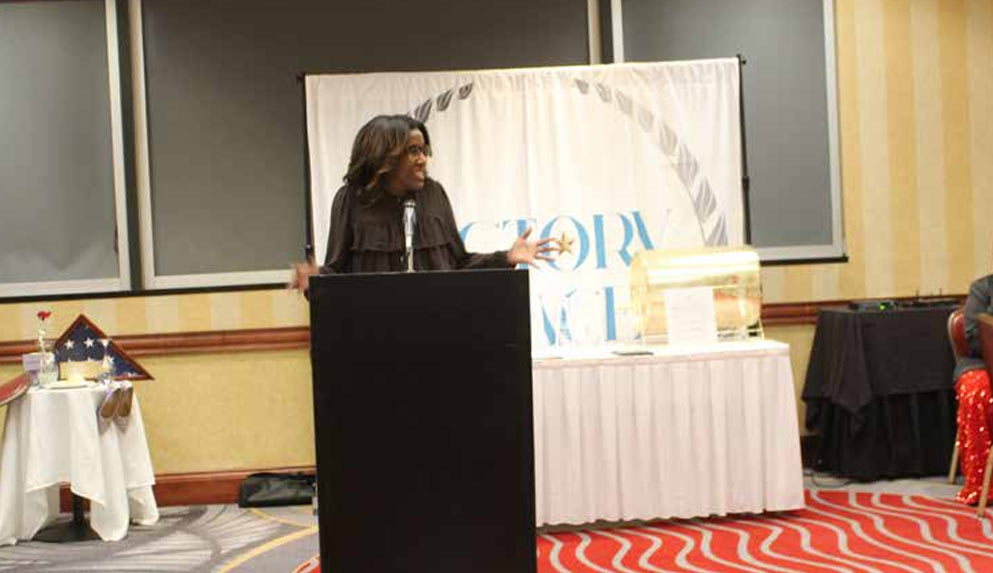
Illinois lawmakers are pledging support for a Chicago-area veterans advocate seeking stronger protections and accountability for service members who experience sexual assault, as new Pentagon data shows declines in estimated assaults but advocates warn that fear of reporting remains a serious concern.
State Rep. La Shawn K. Ford (D-8th), U.S. Reps. Danny K. Davis (D-7th) and Jonathan Jackson (D-1st), and Cook County Commissioner Donna Miller (6th) have expressed support for Dr. Renee Dickerson, an Air Force veteran, sexual assault survivor and founder and CEO of Victory Place, NFP.
Dickerson is a co-national organizer of the Million Women Veterans March on Washington, which she said is scheduled for October 27, 2027. The effort, known as “Dishonored Valor,” is being organized by National Women Veterans United, the International Association of Military Women of Color and Victory Place. Its policy priorities include military sexual trauma prevention, justice and accountability, mental health care, housing, economic equity and institutional transparency.
Ford and Miller were among veterans and supporters who attended a recent Victory Place fundraiser at the DoubleTree by Hilton in Alsip. Miller, whose father served in Vietnam, chairs the Cook County Board’s Veterans Committee.
“Sexual assault in the military is not a problem of the past. It is still happening to women and men who volunteered to serve our country,” Ford said. “Too many survivors carry that trauma home with them without the care and justice they deserve.”
Ford said he plans to help convene veterans, behavioral health professionals, educators and community partners in Illinois before the Washington march to identify state policies that could complement federal reforms.
“Those who served deserve to be safe while serving and supported when they come home,” Ford said.
Davis said he is committed to working with Dickerson’s group. He also urged voters concerned about federal policy to participate in the November 3 election.
“If people want change in this country, if they want progressive thought and progressive ideas to be actualized, then every chance that they get to put the more progressive people in decision-making places, that is the most effective way to do it,” Davis said.
Dickerson’s campaign comes as the military continues to confront sexual assault and questions about whether survivors trust the reporting system.
The Pentagon’s Fiscal Year 2025 Annual Report on Sexual Assault in the Military estimated that 20,492 active-duty service members experienced unwanted sexual contact, down from 29,061 in fiscal 2023. The estimated rate among active-duty women fell from 6.8% to 4.3%, while the rate among men declined from 1.3% to 1.0%. The Pentagon also estimated that 33% of affected service members reported an assault to military authorities, up from 25% in 2023.
Protect Our Defenders, a national advocacy organization focused on military sexual assault and harassment, cautioned that the lower estimates should not end scrutiny of the system. The organization said it continues to hear concerns from service members about fear of reporting and access to survivor protections and has criticized changes to prevention and response programs.
One case cited by the organization involves Army Maj. Blaine McGraw, an obstetrician-gynecologist facing a general court-martial at Fort Hood, Texas. According to the Army, McGraw pleaded not guilty in August to nine charges encompassing 272 specifications involving 93 alleged victims. The allegations include sexual assault and abusive sexual contact, indecent recording, assault consummated by battery and other offenses. He is presumed innocent unless proven guilty. His trial is scheduled to begin March 30, 2027.
Dickerson said her advocacy is rooted in her own experience with military sexual trauma. She said the superior who raped her was never charged, an experience that has fueled her work with veterans and their families dealing with trauma.
Through Victory Place and the Million Women Veterans March, Dickerson said she intends to press for policy changes and greater accountability for survivors who believe military systems failed them.
“I am proud to stand with Dr. Dickerson and the Million Women Veterans March,” Ford said.
Based on reporting by Chicago Crusader.
Black Press
Message from the Associate Editor: Blindness, Hurts, Cops
HOUSTON DEFENDER — Reports regarding Philadelphia Eagles quarterback Jalen Hurts have raised serious concerns about the treatment of Black athletes after it was revealed he played through a medical emergency. According to team reports, Hurts was hospitalized until 4 a.m. with a blood clot prior to a Week 5 game in London, yet he was allowed to play the entire game and endure international flights.

The Jalen Hurts saga hurts
The disturbing reports surrounding Philadelphia Eagles quarterback, Houston-born Jalen Hurts, raise a troubling question: How much is a Black athlete’s life worth when winning is on the line? According to reports, the Eagles knew Hurts had a blood clot after he was hospitalized until 4 a.m. before the team’s Week 5 game against Jacksonville in London. Nevertheless, he played the entire game and endured international flights before doctors discovered the clot had progressed to deep vein thrombosis and bilateral pulmonary emboli. He was placed on blood thinners and injured reserve (out for the season). Sports medicine physician Jesse Morse warned that migrating clots could cause a fatal pulmonary blockage, heart attack, or stroke. Pulmonologist Matthew Gordon acknowledged that blood clots can be catastrophic or fatal. Beyond the medical questions, this episode reflects a disturbing American tradition: Treating Black bodies as expendable commodities. From slavery to exploitative labor practices and generations of dangerous sports, Black people have repeatedly been expected to sacrifice their well-being for others’ profits. The NFL’s predominantly Black workforce is literally “fieldhands” making their wealthy “owners” wealthier, giving serious plantation vibes. What’s crazy is, Hurts could have died. And if he had, the Eagles would have simply put another Black body to work and kept it moving.
Blind by choice
Recently, a Black woman conservative social media influencer was physically removed from a Ken Paxton voter event. And as she fought back tears, after being “dog-walked” out of the building, she kept asking, “Why?” She told her followers that she has been a faithful supporter of Donald Trump and the entire Republican ticket. She said she not only voted for Trump and crew, but also organized and volunteered for them on various campaigns. Before she got to the event, she went live on social media, bubbling with excitement about supporting Paxton, which is crazy, because no one is excited about supporting Paxton. But her MAGA-fest was abruptly ended as her live-stream followers saw her suddenly teary-eyed, being led out of the event space. “And there’s no one I can talk to about this,” she asked her exit escort, dumbfounded. She then shared with her MAGA followers, “Someone just came up to me and said Ken Paxton’s campaign manager wanted me to leave… I drove two hours to get here, and I have done nothing but support everyone on the Republican side. And this is how I get treated? I cannot believe the disrespect that I was just given.” Blackfolk in the comments section couldn’t believe that soul sister couldn’t understand what was happening. But you, if she’s been willing to play blind and support one of the most anti-Black regimes in history, and organize for a party that has gone out of its way to disrespect every ounce of Black existence, then I can understand why she couldn’t see their disrespect of her Blackness. But since she’s already given her soul to anti-Blackness, you best believe she’s still voting for Paxton. In fact, she literally said so.
Mecklenburg racist police competitions
It’s old news by now that several Charlotte-Mecklenburg cops sent text messages to each other, degrading Black people with the N-word and racist jokes, celebrating their open competition to see which racist-ass officer could pull over, harass, and even inflict the most bodily harm on Black motorists. Their Klan-ish fun and games had zero to do with Black people breaking the law. It was just white cops making a sport out of terrorizing Black people, using the authority of the state and their literal license to kill to torture Black people emotionally and physically. And they used Flock cameras to help them with their fun and games. But what’s older news is the fact that these are the very actions Blackfolk have been pointing out from cops for centuries. These six cops got caught via text messages. But police in every city and state routinely take this same approach to law enforcement.
Based on reporting by Houston Defender.
Black Press
A Legacy of Service, a Future of Hope: North Carolina Juvenile Services Association Commemorates 60 Years of Empowering Youth
THE CAROLINIAN — The North Carolina Juvenile Services Association (NCJSA) recently celebrated its 60th anniversary at a diamond anniversary conference in Greensboro, marking six decades of transformation in the state’s approach to youth justice. Founded in 1966, the organization was established by dedicated practitioners who sought to move juvenile rehabilitation away from the adult correction system.
Greensboro, NC — When the North Carolina Juvenile Services Association (NCJSA) first organized in 1966, juvenile rehabilitation was largely indistinguishable from adult correction. Young offenders were often held in adult facilities, supervised by adult parole officers, and met with rigid punitive measures rather than developmental care. Six decades later, hundreds of frontline practitioners, community advocates, and statewide leaders gathered at the Embassy Suites in Greensboro from October 14–16, 2026, to celebrate sixty years of groundbreaking advocacy, service, and youth empowerment under the banner: “A Legacy of Service, A Future of Hope.”
The three-day diamond anniversary conference reflected both the historic evolution of juvenile justice across North Carolina and the urgent, modern challenges we face today. From youth mental health and social media exploitation to adult court transfer laws and systemic racial disparities, this important conference created a safe space for essential conversations.
Opening the historical retrospective, longtime leaders Pamela Stokes, Eastern Area Manager for the N.C. Department of Public Safety (NCDPS) Division of Juvenile Justice and Delinquency Prevention (DJJDP), and Johnny Wilson, President and CEO of Fayetteville Urban Ministry, walked attendees through the timeline of change.
Stokes detailed how juvenile justice advocates broke away from the adult probation system in 1966 to build specialized juvenile training, establish community youth homes, and eliminate the warehouse penal approach for minors. By 1997, NCJSA formally received its 501(c)(3) nonprofit status, continually expanding its network from court counselors to include clinicians, educators, and grassroots diversion specialists. “Rather than a single founding figure, the NCJSA was a group of dedicated people who collectively formed together to ask: What are we going to do to help our children?” Stokes noted, emphasizing that early pioneers recognized children needed rehabilitation, family support, and genuine guidance rather than adult incarceration.
The dialogue throughout the opening sessions remained uncompromisingly honest. Johnny Wilson challenged the room to recognize that what society often labels as “badness” in a child is frequently untreated trauma. Wilson, drawing on decades of community intervention, urged attendees to confront the blind spots in youth service, “Who is mentoring your child when the adults aren’t looking? Mentorship is repetition and consistent relationship. When one child is impacted by the justice system, the entire family is impacted. We have to be the voice for the voiceless and hope for the hopeless.”
Wilson pointed out that while nearly two-thirds of high school students report having an adult at school they can talk to, too many youth still feel unsafe at home and in their communities, leading them toward risky street influences and firearm possession as a misguided shield. He stressed that authentic diversion must bridge safety, accountability, and development before a child ever reaches a courtroom desk.
This protective sentiment was further echoed in a critical digital safety session on internet crimes against children. Law enforcement presenters highlighted the explosion of digital exploitation, online grooming, extortion, and non-consensual artificial intelligence imagery targeting minors, noting a 1,000% statewide increase in related investigations since 2019. Law enforcement and child protection experts urged workers to act swiftly in preserving evidence, report via the National Center for Missing & Exploited Children via MissingKids.org, CyberTipline, and the SBI, and remember above all else: “The child is the victim, not the offender.”
Another powerful keynote on policy and data briefing by Deputy Secretary William “Billy” Lassiter of the NCDPS Division of Juvenile Justice shared vital metrics shaping the state’s current juvenile justice landscape, alongside a recorded welcome address from Governor Josh Stein. Lassiter delivered welcome news: overall juvenile crime complaints across North Carolina experienced a significant decline over the past year—marking nearly 2,000 fewer youth entering the system. However, Lassiter and state analysts pointed to complex systemic dynamics beneath the topline numbers: There has been disproportionate minority contact. Deep racial disparities persist across North Carolina’s system. While African American youth make up approximately 21% of the state’s juvenile population, they accounted for over 21,000 of the complaints filed last year, compared to roughly 8,000 for white youth. Lassiter emphasized that disparities are most severe at the system’s entry and exit points (referrals and secure detention), urging practitioners and lawmakers to directly address these inequities with targeted community resources.
A major concern is the adult transfer burden. Following the implementation of recent statutory changes, including House Bill 834, which directs 16- and 17-year-olds facing Class A through E felonies into adult court, juvenile detention centers are increasingly filled with adult-transferred youth awaiting trial. Lassiter reported that these youths now make up 60% to 70% of daily detention beds, with an average length of stay reaching 276 days, compared to just 25 days for youth under juvenile jurisdiction. Strikingly, approximately 60% of transferred homicide/murder charges against juveniles are eventually dismissed due to accessory or bystander involvement rather than principal culpability.
As we know as a community, there are intensive mental health needs. More than 99% of youth held in Youth Development Centers (YDCs) have at least one mental health diagnosis, averaging nearly five distinct diagnoses per child. In response, NCDPS recently broke ground on a specialized, 10-bed juvenile crisis unit in partnership with New Hope Treatment Centers, set to open on November 1 to provide intensive stabilization and eliminate long, draining emergency room waits.
Finally, Lassiter highlighted North Carolina’s upcoming $451 million settlement from Meta, structured in $45 million annual distributions over nine years, intended to curb screen addiction, fund crisis lines like 988, and expand outdoor and community-based Juvenile Crime Prevention Council (JCPC) programs.
Celebration was central to the diamond anniversary and the overall mood of the conference. Despite such a serious subject matter, there was also a solid focus on fun and celebration. The association paid tribute to its founding and lifetime members, including pioneers like Jane Steinberg, Renee Walker, and Judy Juliet, whose early service paved the path for today’s statewide continuum.
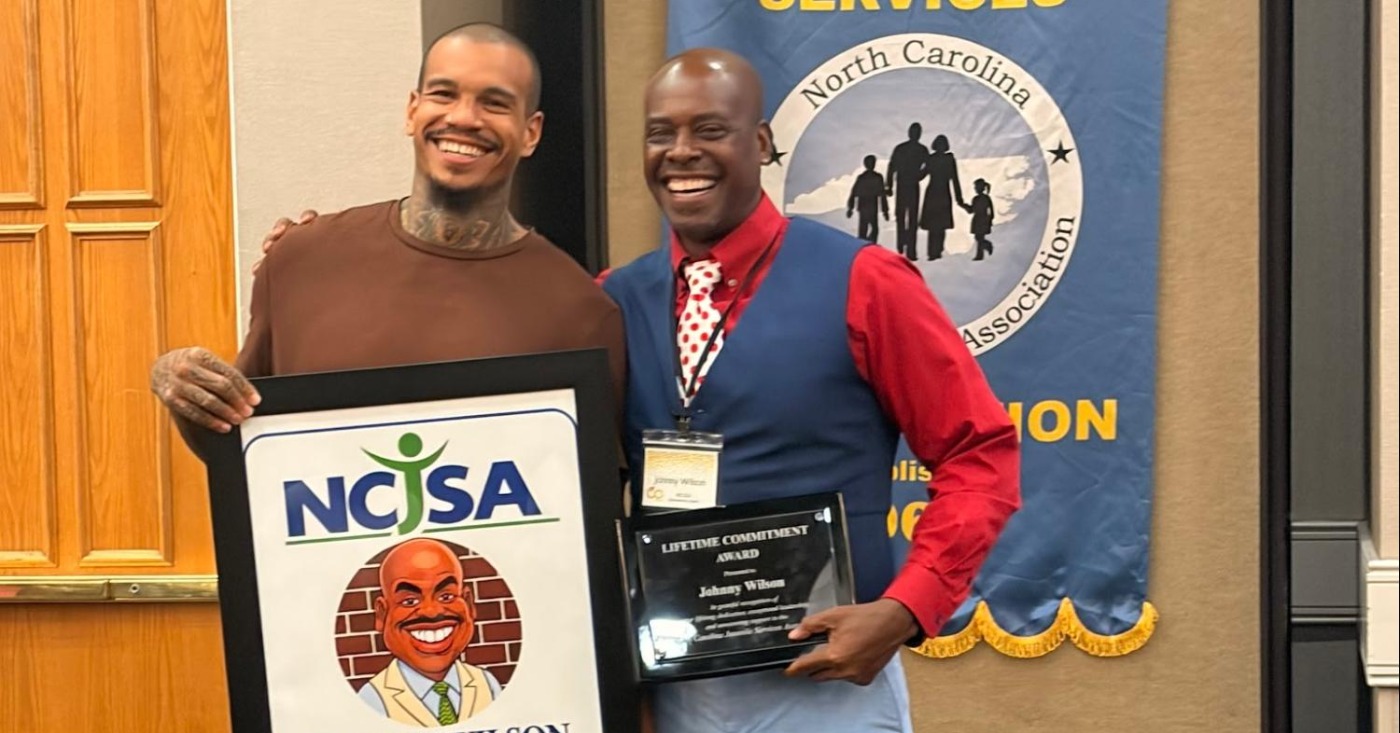
NCJSA presented several prestigious awards. In a special tribute, the NCJSA Board and Fayetteville Urban Ministry surprised Johnny Wilson with lifetime honors for his steadfast leadership, faith-driven advocacy, and deep commitment to North Carolina’s children and families since joining the association in 2006.
The conference closed with a resounding call to sustain both youth and the professionals who care for them. Keynote reflections framed the transition from mere bureaucratic compliance to genuine human connection, urging attendees to practice self-care and mutual support. Using the metaphor of an airplane’s oxygen mask, speakers reminded caseworkers, court counselors, and facility staff not to leave their own oxygen masks on the floor while rushing to save others, “We cannot serve our children and families effectively if we are operating on empty. To reach year 61 and beyond, we must see each other, celebrate our small victories, heal our own spirits, and remember our ‘why.’”
As attendees stood with linked arms across the ballroom, the message of NCJSA’s 60th anniversary was unmistakable: the past six decades prove that prevention, compassion, and community-centered intervention work. For North Carolina’s youth, the next sixty years will depend on sustaining the people and programs who refuse to give up on their promise.
Based on reporting by The Carolinian.
Black Press
Birmingham on Pace for Fewest Homicides in 75 Years
BAKERSFIELD NEWS OBSERVER — Birmingham, Alabama, is currently on track to record its lowest annual homicide total in approximately 75 years. According to the Birmingham Police Department’s third-quarter briefing, the city recorded 34 homicides through October 1, representing a significant decrease from the 61 reported at the same time last year and the 129 reported by October 2024.

Birmingham, Alabama, is on pace to close 2026 with its fewest homicides in roughly 75 years — a turnaround for a majority-Black city that for decades made national headlines for its murder rate.
Birmingham police counted 34 homicides through Oct. 1, down from 61 at the same point in 2025 and 129 at the same point in 2024, Police Chief Michael Pickett said at the department’s third-quarter briefing. The city’s lowest annual total on record is 44, set in 1951. Just two years ago, Birmingham recorded 152 homicides, its deadliest year.
“I did not think that we would have this much of a reduction but of course that’s always the goal,” Pickett said. He put the drop at 74% compared with 2024 and said the department has cleared 91% of this year’s cases.
“Birmingham is on track for our fewest homicides in 75 years,” Mayor Randall Woodfin wrote on Facebook this month, crediting the officers of the Birmingham Police Department, Pickett, and the city’s community violence intervention workers.
The city’s bet runs on two tracks. On the policing side, Pickett has pointed to the department’s crime reduction plan, enforcement targeting illegal firearms, and cooperation with federal agencies. On the community side, Birmingham has put about $5.4 million in American Rescue Plan money into violence intervention programs: a hospital-based partnership with UAB Hospital, the Jefferson County Department of Health, the Offender Alumni Association, and Violence Intervention and Prevention Partners that places specialists at the bedsides of people wounded by gunfire; a street outreach team run with the Urban League of Alabama; a Group Violence Reduction Strategy with the National Institute for Criminal Justice Reform; and One Hood. With the one-time federal dollars expiring, the city council extended the hospital-linked program through June 2027 with $1.15 million and put $3 million for community violence intervention — a $1.5 million increase — into the city’s fiscal 2027 budget. Whether every program is fully covered once the federal money runs out remains unclear.
The honest caveats: murders are falling across the country, too — crime analyst Jeff Asher projects the lowest U.S. murder rate ever recorded in 2026, after the FBI reported the national homicide rate hit a 75-year low in 2025 — and nobody can prove which piece of Birmingham’s approach drove the drop. One category is moving the wrong way: domestic violence offenses are up 18.3% this year, the chief said. “This is not something the police department can handle alone,” Pickett said of the domestic violence increase.
Two accounting notes readers deserve: the mayor’s latest post says homicides are down 46% from last year, while the police department’s own Oct. 1 numbers work out to about 44% — and a May fact-check by ABC 33/40 found an earlier Woodfin figure slightly overstated. Separately, Bhamwiki counts 38 homicides as of Oct. 1 because it includes police-involved and justified cases; the police count is 34. And the pace math matters: 34 homicides through Oct. 1 projects to roughly 45 for the full year — just above the 1951 record of 44. So “fewest since 1951” is within reach; a new all-time low likely isn’t.
What’s working to make your neighborhood safer? Tell us.
Drafted by News Observed Editorial AI, human reviewed and published.
Based on reporting by Bakersfield News Observer.
Black History
Federal Agents Search Ilhan Omar’s Home Just 22 Days Before Election
WASHINGTON INFORMER — Federal agents searched the D.C.-area home of Rep. Ilhan Omar (D-Minn.) on Monday, 22 days before Election Day. This extraordinary step involved executing a criminal search warrant against a sitting member of Congress.
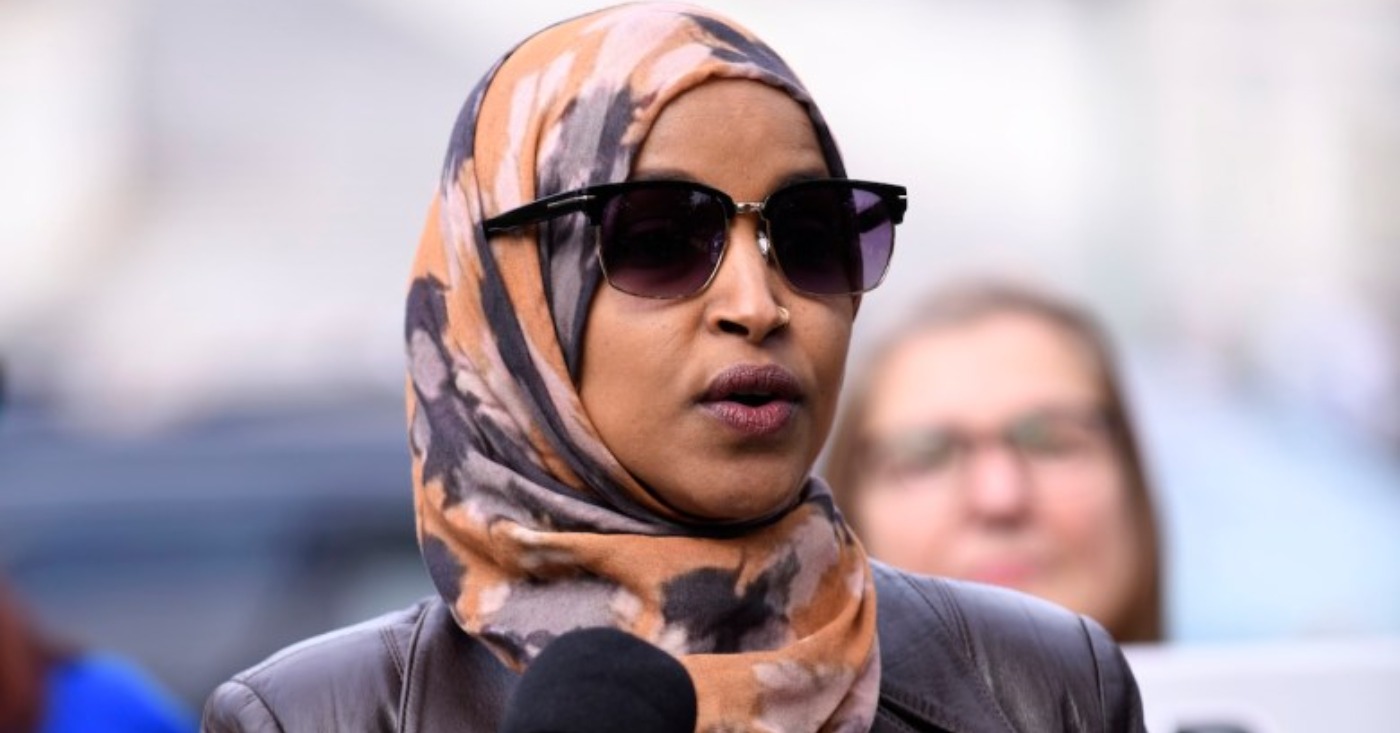
Federal agents searched the D.C.-area home of Rep. Ilhan Omar (D-Minn.) on Monday, taking the extraordinary step of executing a criminal search warrant against a sitting member of Congress just 22 days before Election Day, as the Trump administration investigates allegations involving her family’s immigration records.
The search immediately drew accusations of political intimidation from Omar’s supporters, who pointed to President Donald Trump’s repeated attacks on the Minnesota congresswoman and questioned the timing of an investigation targeting one of his most outspoken critics.
“Representative Omar is a dedicated public servant and a true ally for working families, and Donald Trump has done nothing but use racist tropes and stereotypes to attack her,” said Joel Payne, MoveOn’s chief communications officer. “Now, he’s abusing his power to physically intimidate and harass her.”
A Justice Department spokeswoman acknowledged that Homeland Security Investigations agents, part of Immigration and Customs Enforcement, searched a District residence as part of an ongoing federal criminal investigation.
The spokeswoman declined to provide additional information or publicly identify the person under investigation.
According to published reports, the warrant identified possible violations involving false statements, immigration document fraud and conspiracy. Federal investigators have also examined questions concerning Omar’s finances, campaign funds and interactions with foreign citizens.
No criminal charges against the congresswoman were identified, but Monday’s search occurred less than four weeks before voters decided whether to return Omar to Congress.
The investigation follows months of public accusations from senior Trump administration officials, including Vice President JD Vance, who previously claimed that Omar committed immigration fraud.
In an interview with conservative commentator Benny Johnson, Vance asserted, without publicly presenting evidence, that the administration believed Omar had broken immigration laws. He also said he and White House deputy chief of staff Stephen Miller had discussed how to pursue the allegations.
“What are the legal remedies now that we know that she’s committed immigration fraud?” Vance asked during the interview. “How do you go after her? How do you investigate her?”
Omar has repeatedly rejected the accusations, including claims that she married her brother to facilitate immigration fraud. Her office dismissed Vance’s allegations in March as fabricated and defamatory.
Questions about the investigation intensified in August when Immigration and Customs Enforcement refused to release records sought under the Freedom of Information Act concerning allegations surrounding Omar’s 2009 marriage to Ahmed Nur Said Elmi.
The agency cited an exemption allowing law enforcement authorities to withhold records when disclosure could interfere with enforcement proceedings. The refusal did not establish that Omar committed fraud or, at the time, confirmed that she was personally under investigation.
Omar, who came to the United States as a refugee from Somalia, was elected to Congress in 2018 and became one of the first two Muslim women to serve in the House. She represents Minnesota’s 5th Congressional District, which includes Minneapolis, and has frequently challenged Trump over immigration enforcement, civil rights, and his administration’s treatment of immigrant communities.
Her confrontations with the administration have made her a recurring target of the president’s political attacks. The criminal investigation also follows a frightening incident earlier this year in which Omar was physically attacked during a public appearance.
On Jan. 27, a man attacked Omar during a town hall meeting at the National Urban League’s Twin Cities headquarters in Minneapolis. The incident prompted condemnation from the National Coalition on Black Civic Participation and its Black Women’s Roundtable, which demanded accountability and warned against political violence.
“We are shocked and extremely disturbed by the attack on Rep. Ilhan Omar yesterday while she attempted to address the critical issues and chaos swirling around in Minneapolis,” Melanie L. Campbell, president and CEO of the coalition and national convener of the Black Women’s Roundtable, said in a Jan. 28 statement.
Campbell praised Omar for continuing to speak out despite threats against her.
“We believe that NO public official should be threatened or physically attacked, especially when they are serving in the best interests of their constituents,” Campbell said. “Political violence and intimidation have no place in our democracy.”
MoveOn, the progressive advocacy organization, accused Trump of using federal law enforcement to intimidate a political opponent and urged voters to respond at the ballot box.
“On Nov. 3rd, we get our chance to fight back and hold him and his corrupt administration accountable,” Payne said.
Based on reporting by Washington Informer.


Together Building Back Better

Homecoming Ends in Gunfire Outside FAMU: 12 Hurt, Six of Them Children
COMMENTARY: Bring on the Positive Calvary

Retirement Triggers Doctor to Pen Book for Young Audience

Fatigue, Bloating, and Inflammation: Spotting the Subtle Signs of MASLD

Metro Detroit Faith Leaders Call out Islamophobia in Michigan Senate Race

Dallas Trinity FC Signs Kaiya Brewer to Academy Contract

Dallas Mavericks Unite Players, Legends and the Oak Cliff Community at 2026 Community Tip-Off

Brooklyn Roots and Artistic Genius

NCCU Snap Three – Game Losing Streak with Win over Delaware State University

OP-ED: Haiti TPS: Have We Lost Sense of Humanity?

All Skinfolk Ain’t Kinfolk

Rulings Leave Questions Lingering in Nolan Wells Case

Latinas Deserve Equal Pay. Unions Help Make It Happen.

Why Black Artists Struggle to Sell Tours

COMMENTARY: The Audacity of Joyce Beatty

Zakiya Jendayi Arrested, Locked Out of Home by Sheriff’s Deputies

A $2.1 Trillion Wellness Industry Never Built a Daily Practice for Black Children. So This Atlanta Family Did.

Oakland Awarded More than $14 Million in State Funding

OP-ED: Washington Has a Chance to Save Veterans’ Lives

East Side Shoutout! Sports Talk & Guest Invite! #shorts

Black Girl Walk in the Rain at George Floyd Square | Protect Your Peace | MSR

Stop Overpaying for Car Insurance: Compare 3–5 Quotes #shorts

A $50K SUV Becomes $66K—Are the Options Worth It? #shorts

Dr. Charles Drew – Blood Banking and Preservation

15 Years Together: The Surprising Joy of Discovering Your Partner #shorts

Wala Blegay on the Future of Energy Grid Stability and Data Center Concerns

Gopher Football: Can They Rekindle 2019 Magic Or Are They Just Average? #shorts

The Conversation with Al McFarlane (10/27)

Citizen Savings Bank: Oldest Black-Owned Bank in US #shorts
-

 Black History1 week ago
OP-ED: The Black Church Writes AI’s Next Chapter
-

 Featured1 week ago
Tamiko Armstead | 2026 Lifetime Achiever in Education
-

 Black History1 week ago
Practitioners of African Traditional Spirituality Offer Ancestral Reverence Ritual Oct. 31
-
 Art1 week ago
Kickstarter CEO Everette Taylor Shares Tips on Creating and Growing a Business
-

 Black History1 week ago
Columbus’s Oldest Businesses Still Open: 10 That Have Lasted 75+ Years
-

 Black History1 week ago
COMMENTARY: BIG MAMA SAID: Don’t Throw Away the Gift Just Because It Came Wrapped Wrong
