
Government
Congressional Black Caucus Launches Census 2020 Taskforce
LOS ANGELES SENTINEL — The Congressional Black Caucus will launch a new taskforce that will focus on the upcoming 2020 Census and the legacy of under counting the African American community. Members of the CBC will meet with stakeholders and leading professionals to discuss the current state of play. The Caucus will also discuss the tools required for effective outreach to hard to count communities across the United States. The taskforce will be led by Congressman Steven Horsford (D-NV). Below, Chairwoman Bass and members of the taskforce released the following statement:


The Congressional Black Caucus will launch a new taskforce that will focus on the upcoming 2020 Census and the legacy of under counting the African American community. Members of the CBC will meet with stakeholders and leading professionals to discuss the current state of play. The Caucus will also discuss the tools required for effective outreach to hard to count communities across the United States. The taskforce will be led by Congressman Steven Horsford (D-NV). Below, Chairwoman Bass and members of the taskforce released the following statement:
“This time around, we are facing a big question regarding how the census is going to be administered in 2020 under the Trump Administration. With the census becoming digital, can you imagine working families receiving a postcard telling them to go online to fill out their census form? Many Americans might not have access to a computer or broadband services. That is why the Black Caucus is taking the lead to begin the work now. Through this taskforce, and under Congressman Horsford’s leadership, the Black Caucus will meet with African American leaders from around the country to discuss the current state of play and the tools needed for effective outreach to hard to count communities. Our community must be counted,” said Congresswoman Karen Bass, Chair of the Congressional Black Caucus.
“The Constitution declares that we must count all persons in this country. The Trump administration has taken coordinated action specifically to discourage and frighten people away from participating in the 2020 census, and now we are fighting back. I am taking part in this taskforce for my constituents in Nevada. Undercounting urban communities like mine can result in an unfair distribution of congressional seats and deny communities of color, specifically Black communities, access to representation in Congress. We only get one chance every ten years to get this right. Let’s make it count,” said,” Congressman Horsford, Chair of CBC Census 2020 Taskforce.
“Vital services for each community are directly tied to Census Counts. I must act as a leader to ensure every person is counted on the 2020 Census which is why I am proud to join the CBC’s Census Task Force. We already know that Black communities are undercounted, underscored by the fact that my district, NY-09, has one of the hardest-to-count districts in America. We must empower Black communities to understand the power of filling out the Census, so each community receives access to critically-needed resources in their backyards,” said Congresswoman Yvette Clarke (NY-09).
“I am proud to join my colleagues to ensure that our census is not weaponized to silence communities of color. States like my home state of Texas would lose billions to fund essential programs and fair representation in Congress if this administration wins the fight to silence our communities–that’s why this task force is critically needed,” said Congressman Marc Veasey (TX-33).
Background
The legacy of undercounting African Americans in the census dates to the first census count in 1790.[1] During the writing of the U.S. Constitution in 1787, delegates debated over the number of seats in the House of Representatives. In 1790, a compromise between the northern and southern states resulted in a decision for enslaved Africans to be counted as three-fifths of a person for Congressional representation and taxation.
African Americans are still undercounted in the census in current times. According to the Decennial Statistics Studies Division of the Department of Commerce, in 1990 the agency estimated “a net undercount of about 4 percent for African Americans.”[2] This number was lowered to “2 percent – around 800,000 people – in the 2000 Census, but the most recent Census in 2010 showed no significant change to the black undercount, despite the net undercount being the lowest it had been in history.”[3]
Every decade the U.S. Constitution requires a census count of every resident in every household, and an accurate count is critical to the foundation of our democracy. Data gathered by the census is used to determine how many congressional seats and electoral college votes each state receives, as well as the drawing of federal, state, and local government legislative boundaries. Furthermore, this data is also used to direct over $800 billion annually in federal dollars to states and local communities that impact health care services, housing, schools, and economic development plans among other priorities.[4]
There is a perennial concern about black households getting undercounted in the census. During the last count in 2010, African Americans were undercounted by over 800,000.[5] Therefore, some African Americans may also live in communities where the political districts do not reflect their policy needs. Moreover, undercounting African Americans in the 2020 census could have real consequences because “African-American children and families are disproportionately affected by poverty and federal programs designed to alleviate the impact of poverty.”[6] Specifically, some of the federal programs impacted by census data include:[7]
- Head Start Program – A federal program that provides early childhood education to kids. African American children account for 29% of kids in this program for low-income families.[8]
- Title I Grants – These grants provide federal resources to schools with high numbers of low-income children intended to help all students fulfill state academic requirements.[9]
- Special Education Grants – Assists schools in meeting the requirements of the Individuals with Disabilities Education Act (IDEA). These grants are used to assist students with disabilities. In 2012-2013, approximately 15% of African American children needed IDEA resources.[10]
- Child Care and Development Fund – This fund helps low-income parents access childcare so that they can go to work or school. African American children represented 41% of children in this program in 2015.[11]
- SNAP – The Supplemental Nutritional Assistance Program (SNAP) is the nation’s most extensive domestic food assistance program, serving 42.1 million individuals each month. Around 26% of African Americans received SNAP benefits in 2015.[12]
- National School Lunch Program – This program provides free or reduced-price meals to disadvantaged students.[13]
- Section 8 Housing Program – A federal program that subsidizes the rents of low-income individuals to secure affordable housing. African Americans comprised 45% of the recipients in this program in 2010.[14]
- Medicaid – A joint federal-state program that finances the delivery of primary and acute medical services to a diverse low-income population. An estimated 16 million African Americans enrolled in this program in 2012.[15]
- Pell Grants – Data is used from the census to factor Pell grants for college.
- Highway spending – Funding for national infrastructure is apportioned according to census data.
- Small businesses – Data from the census helps small businesses in their competitiveness.
- Large companies – Big businesses rely on census data for hiring and demographic data.
This article originally appeared in The Los Angeles Sentinel.













Black Press
Botham Jean’s Killer Granted Parole 7 Years After His Murder
MICHIGAN CHRONICLE — Former Dallas police officer Amber Guyger has been granted parole, seven years after her conviction for murdering Botham Jean inside his Dallas apartment. The Texas Board of Pardons and Paroles approved her release on October 1, seven years to the day after her murder conviction. Guyger was convicted in 2019 and sentenced to 10 years in prison for Jean’s 2018 death.


Former Dallas police officerAmber Guyger has been granted parole seven years after she was convicted of murdering her neighbor,Botham Jean, inside his Dallas apartment.
The Texas Board of Pardons and Paroles approved Guyger’s release Thursday (October 1), seven years to the day after Guyger was convicted of Jean’s murder, according to NBC News.
In 2019, a jury convicted Guyger of murder and she was sentenced to 10 years in prison for Jean’s 2018 death. Her conviction and 10-year sentence were upheld on appeal in 2022.
Geyger’s first parole request was denied in 2024, NBC Dallas-Fort Worth reported.
The Dallas Police Department fired her after the shooting. During her trial, Guyger testified that she mistakenly entered Jean’s apartment after returning home from work, believing it was her own apartment one floor below.
She said she saw Jean inside and fired her weapon because she believed he was an intruder, according to NBC News.
Jean was a 26-year-old Black man from St. Lucia who worked as an accountant. He was inside his home eating ice cream when Guyger entered and shot him, NBC DFW reported.
The parole board cited Guyger’s prison record in approving her release. According to NBC DFW, officials said she did not have a documented pattern of violent or assaultive arrests or convictions, maintained a satisfactory adjustment while incarcerated, and completed programs intended to help her obtain and maintain employment.
Jean’s family opposed the parole decision and had asked that Guyger serve her full 10-year sentence, according to NBC DFW.
Civil rights attorney Lee Merritt, who represents the family, told NBC DFW that the decision was deeply disappointing.
“They stood up again and again to ask that the full sentence be served,” Merritt said.
The Dallas Police Department told NBC DFW that the parole decision was outside its authority and that the department had no role in determining whether Guyger would be released. The department said its thoughts remained with Jean’s family and others affected by his death.
Guyger’s conviction and 10-year sentence were upheld on appeal in 2022.
A civil jury ordered Guyger to pay Jean’s family $98.6 million in damages in 2024, according to NBC DFW.
Guyger’s release date has not been announced. NBC News reported that the Texas Department of Criminal Justice will determine when she is released.
The Black Information Network is your source for Black News! Get the latest news 24/7 on The Black Information Network. Listen now on the iHeartRadio app or click HEREto tune in live.
Based on reporting by Michigan Chronicle.
Black Press
OP-ED: Proposition 44 Would Put a Price on Trust
The danger in Proposition 44 is not only its 90 percent figure. It is that the meaning of “qualifying” spending will be worked out later. A clinic preparing a budget today may not know whether a navigator, health educator, transportation program, outreach worker, technology upgrade, or other patient-support service will be counted the way it expects. Yet the financial consequence of getting it wrong could be immediate.

Black Press
OP-ED: Proposition 40: It’s Time to Play Chess, Not Checkers
Proposition 40 would impose a one-time 5 percent tax on the wealth of Californians with more than $1 billion in assets. Most of that money would go toward health care, with the remainder supporting food assistance and education-related programs.

Black Press
OP-ED: How One State Invests in Fast-Track Training to Overcome Childcare Worker Shortages, Center Closures
BLACKPRESSUSA NEWSWIRE — “If North Carolina is going to produce the qualified workforce necessary to meet the demand for high-quality childcare services in a timely manner, the state must lean less heavily on higher education to train and prepare early childhood professionals and more heavily on strategies that are more accessible, affordable, flexible, and expeditious,” the report’s authors wrote.
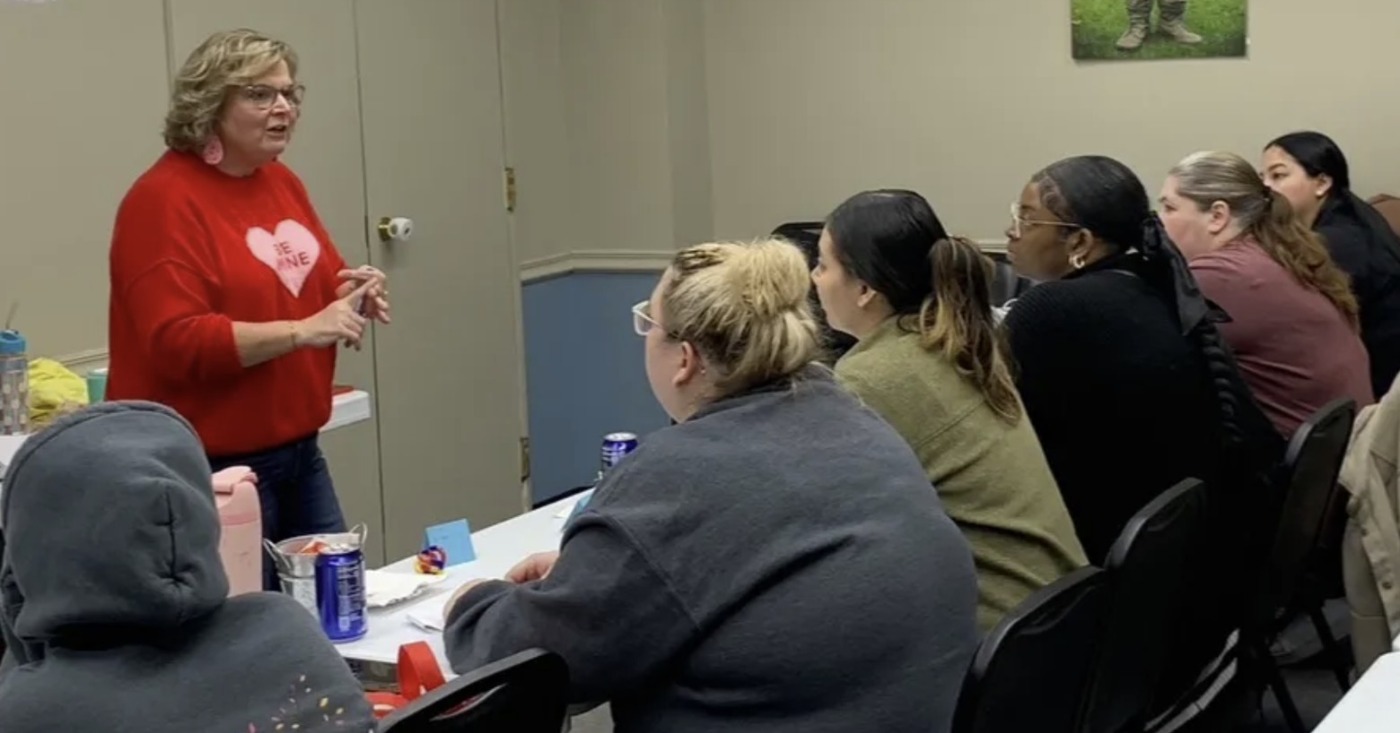
About a week after finishing the Early Childhood Workforce Ready Academy in Wayne County, North Carolina, Dominque McBride walked into Little Bulldogs Academy in Goldsboro.
She carried a packet filled with certifications — such as CPR, first aid, playground safety — that she earned while undergoing intensive training during the two-week academy in February 2024.
At the end of the interview, McBride walked out with a job.
Typically, that type of training can take months to a year to complete, said Shelly Willis, director of program coordination and evaluation with Partnership for Children of Wayne County, which offers the academy.
On top of that, students would have had to pay for the various certifications and classes and squeeze them in between jobs and their lives at home.
But McBride and more than 100 other people got the training for free over the past two years, thanks to grants from the Camber Foundation, according to Valerie Wallace, executive director of the Partnership for Children of Wayne County. She said the organization, which supports community projects in 41 eastern North Carolina counties, has pumped $145,000 into the childcare academies in Wayne and Johnston counties.
McBride said the academy prepared her for her first job in childcare, and made it easy to get all the required certifications and training in one place, in a short time.
“If I had to do it on my own, I think I would have been overwhelmed,” McBride told NC Health News.
Now, state legislators want to take that model and expand it across the state. They included $1.5 million in one-time funding in the state budget passed in July. The training support is part of a slate of efforts added to this year’s budget to tackle staffing shortages and long waitlists for childcare in North Carolina.
From March 2018 to June 2026, North Carolina has lost a net 1,072 childcare sites, according to the NC Early Care and Learning dashboard. Enrollment dropped by 28,183 children — or 11.5% — during that same time.
The NC Chamber touted such academies as a way to address chronic staffing shortages driving those closures in a February 2025 report.
“If North Carolina is going to produce the qualified workforce necessary to meet the demand for high-quality childcare services in a timely manner, the state must lean less heavily on higher education to train and prepare early childhood professionals and more heavily on strategies that are more accessible, affordable, flexible, and expeditious,” the report’s authors wrote.
‘At a crossroads’
The National Conference of State Legislatures also recently highlighted such academies for quick training to alleviate workforce shortages.
The recommendation is included in the report “Childcare at a Crossroads: A State Legislative Framework for Strengthening Childcare Systems,” released on July 27. The report was developed by a bipartisan work group of 13 state legislators from across the country that included North Carolina state Sen. Jim Burgin, R-Harnett.
The legislators wrote that childcare has become “one of the most urgent and complex challenges facing states.”
“It affects children’s development and well-being, parents’ ability to work, employers’ access to a stable workforce and the economic vitality of communities large and small,” they said in the report. “Rural and urban. Red and blue. No state is unaffected, and no ideology holds all the answers.
“As costs rise, workforce shortages persist and demand remains strong, state policymakers face important decisions,” the report’s authors continued. “The childcare system is at a crossroads, and decisions made now will shape how well systems meet the needs of families and economies in the years ahead.”
North Carolina has struggled to meet the need. Lack of childcare costs the state $5.65 billion every year in economic activity, according to a 2024 report from the U.S. Chamber of Commerce Foundation, the NC Chamber Foundation, and advocacy organization NC Child.
Since 2018, childcare employment in the state rose by just 1%, or 419 people, even as the state’s population grew by around a million people.
Where that growth has occurred has been uneven.
Small centers and family childcare homes make up most of the closures, according to research shared July 9 by Afton Partners, an Illinois-based consultant firm that specializes in several areas, including early education. The group presented the findings earlier in the year to members of the North Carolina Task Force on Child Care and Early Education.
Meanwhile, more large centers have opened, mainly in urban areas, according to the Afton research.
Many counties, including Wayne, have lost workers and childcare slots from 2018 to 2026.
In Wayne County, state data shows there are nine fewer childcare facilities than in 2018. Average monthly enrollment dropped by more than 1,000 kids during that same time. And average monthly employment is down by 420 workers.
The state faces a double whammy: demand for more childcare slots and a lack of workers.
The biggest problem in childcare is having qualified teachers, Burgin said as part of a panel discussion on the “Childcare at a Crossroads” report at the National Conference of State Legislatures conference in Chicago last month.
“We’ve made the restrictions so high that by the time that they get enough qualified people on board, those people will go find other jobs, usually in the school system,” he said.
He told the audience that North Carolina directed millions of dollars to tackling the childcare workforce issue in the state’s latest budget.
The bipartisan work group’s report highlighted North Carolina’s childcare academies, like the program in Wayne County.
Other efforts in the report included a high school student training program in South Dakota, scholarships and stipends for people pursuing childcare degrees in Delaware, and a pilot program in New Mexico that gives stipends to people in workforce training for childcare.
In West Virginia and Rhode Island, there are also apprenticeships that target the childcare work force.
Like some other states, North Carolina included in its recent budget stipends for graduates who stay with an employer for at least a year.
‘A huge step forward’
The N.C. Child Fatality Task Force has been recommending since 2024 that North Carolina support efforts to improve the childcare system, including increasing subsidies to childcare centers, especially in the wake of additional federal childcare stabilization grants that sunsetted as the COVID pandemic wound down.
Childcare funding was one of the four task force recommendations for this year.
In July, the General Assembly passed a budget with $97 million in federal funding to increase reimbursement rates to providers of subsidized childcare and to create a much-welcomed floor rate. The budget also transfers $16.8 million from the federal Temporary Assistance for Needy Families block grant to the state’s childcare subsidy program.
Creating a rate floor means that, for the first time, all facilities will get at least the statewide average for subsidized care. Without that base rate, subsidies have ranged widely across the state, which has made it difficult for some facilities to survive.
The state’s childcare subsidy program uses state and federal money to help pay for childcare for low- to moderate-income families who qualify. Families still have to cover a co-pay. The subsidy can be used for children through age 12, or up to age 18 for children with special needs.
While the state doesn’t set salaries for childcare workers, increasing the subsidy gives providers the flexibility to pay workers more.
Low pay has been an issue in attracting and maintaining childcare workers. Starting median hourly wages for childcare teachers in 2023 was $14 per hour, according to the 2023 North Carolina Child Care Workforce Study by Early Years (formerly Child Care Services Association.) That’s the same or less than entry-level jobs at retail stores such as Target and Walmart and fast food restaurants such as Five Guys and Whataburger.
“With our current economic situation and the prices of everything increasing, it is very difficult to stay in the field of childcare and make ends meet with the average pay offered,” McBride said in an email.
“It’s not only about attracting people to the field, but encouraging them to stay,” she added.
To quickly train childcare workers, legislators funneled $1.5 million in one-time funding to replicate childcare academies modeled after the program in Wayne County across the state. Two-thirds of that funding will cover tuition costs. The remaining $500,000 will pay for stipends of $500 for every student hired within three months of graduating and who stays employed for at least one year at the same childcare program.
“This funding for child care is a huge step forward in helping to stabilize North Carolina’s child care system,” Kella Hatcher, executive director of the Child Fatality Task Force, said in an email.
A model program
In Wayne County, Wallace and Willis with the Partnership for Children are hoping the increased subsidy rate, along with a new rate floor, will ease high turnover while the academies help train new childcare workers more quickly.
They’ve had about a dozen people sign up for each session, the most recent of which ran from Aug. 3 through Aug. 14. It was the first of three planned for this year under the Camber grant.
“Those may not seem like high numbers, but if you can put that many people to work, it makes a huge difference in a childcare,” said Wallace. “Our numbers are going to be fewer, but they’re mighty if we give these folks the necessary training that they need.”
Wallace said they’ve tweaked their academy a little bit every year to make it stronger and attract more people.
“We’ve learned with each academy that we’ve done, and last year we worked with the North Carolina Partnership for Children to try to get this to be aligned,” in anticipation of the state creating a pilot program, Wallace said. “So if people were doing it across the state, everybody was doing the same curriculum, and it was going to be consistent with what people were coming out of the academies with.”
They’re not sure if they’ll add more academy classes this year based on what was passed in the state budget. It depends on whether their program is considered aligned with the state plan. They could add up to three more sessions later in the fiscal year based on that state plan, Wallace said.
The training allows students like McBride to be hired immediately.
McBride, 29, was working for the Wayne County Department of Social Services when her mother saw a notice in 2024 about the free training to become a childcare worker. It came at a perfect time for McBride, who was disillusioned with the paperwork involved in her DSS job.
And she always wanted to teach and work with children, she said. In her now-former job at Little Bulldogs, she worked with the 2-year-olds.
“It can be very chaotic,” she said, describing children that age as wanting to be more autonomous but not quite ready for that. “But I enjoyed every bit of it.”
Every day, she saw the need for more childcare workers.
“We weren’t getting enough childcare teachers as much as we were getting kids,” McBride said. “We couldn’t keep up.”
Her work at Little Bulldogs inspired McBride to go back to school for a degree in early childhood education with a focus on special education. She now works with children on the autism spectrum at Action Behavior Center in Clayton.
She’s grateful for Wayne County’s childcare academy.
“It definitely helps you prepare,” she said. “The one thing that can deter you is feeling like you’re not equipped to do it.”
This article first appeared on North Carolina Health News and is republished here under a Creative Commons Attribution-NoDerivatives 4.0 International License.
Black Press
Master P Encourages Norwood Elementary Students to Dream Big, Work Hard
BIRMINGHAM TIMES — Music mogul Percy Miller, known as Master P, visited Norwood Elementary School on Friday alongside his mascot sidekick, Captain Ace. Teachers and students, dressed in school colors, welcomed Miller, who shared lessons on education, consistency, networking, and the importance of not letting circumstances define one’s future.

Music mogul Percy Miller, better known as Master P, visited Norwood Elementary School on Friday with his mascot sidekick, Captain Ace. (Birmingham City Schools) ”
The sounds of students singing filled Norwood Elementary School Friday morning as teachers dressed in camouflage and students wearing their school colors of green welcomed a special guest whose career has been built on music, entrepreneurship and perseverance.
Before taking the stage at the Birmingham-Jefferson Convention Complex (BJCC) Friday night, music mogul and entrepreneur Percy “Master P” Miller spent the morning with Birmingham students, sharing lessons about education, consistency, networking and the importance of refusing to let circumstances determine their futures.
Miller was joined by Captain Ace, the blue-dog mascot and educational character associated with his school visits and assemblies. Together, they turned the celebrity appearance into a lesson centered on positive choices, learning, and believing in one’s potential.
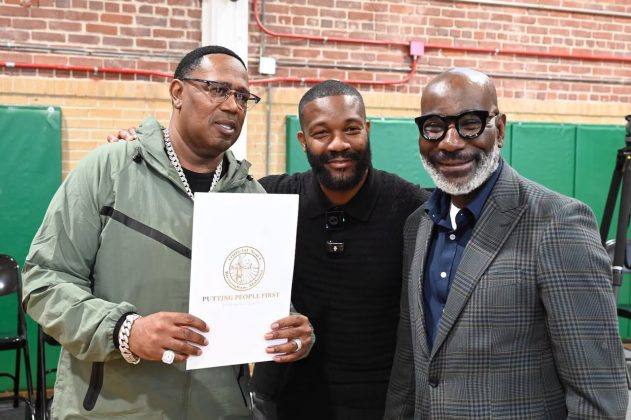
The visit also brought together Birmingham city and school leaders, including Mayor Randall L. Woodfin, Birmingham City Schools Superintendent Dr. Mark Sullivan and members of the school system’s staff and leadership.
At the conclusion of the assembly, Woodfin and Sullivan presented Miller with a proclamation honoring his visit to Norwood Elementary.
For Miller, however, the morning was less about recognition and more about the children sitting in front of him.
“I love the kids,” Miller told the students. “Even though I got a show, I’m like, no, I got to come and touch the kids because that’s the future.”
Miller said his focus is on what he described as “saving the next generation” and educating young people so they can recognize their potential.
“I want these kids to know that they can fly over all this negative,” he said.
That message became personal when Miller reflected on his own childhood.
He told students he grew up living with his grandparents, who had 12 children. His family lived in a three-bedroom housing project, but Miller said he refused to allow his circumstances to define what was possible for him.
“I didn’t let my condition stop me, and I don’t want you guys to let your condition stop you,” he told the students.
Miller repeatedly returned to the idea that dreams require action.
“There’s no limit to your dreams,” he said, emphasizing that success requires work and that students cannot “cheat the game of life.”
He then asked the students how many of them wanted to be successful. The room responded.
Miller used a familiar example to explain one of his central lessons: McDonald’s.
After asking students what the restaurant sells, he shifted the conversation from hamburgers to consistency.
“McDonald’s is selling consistency,” Miller said.
He explained that a Big Mac is expected to taste the same wherever it is purchased, using that familiarity as an analogy for persistence.
“Keep doing something, not giving up,” he told the students. “Keep chasing your dreams, doing something every day to get that, even when it don’t look like it’s gonna happen.”

“Somebody’s gonna make it big.”
Miller also challenged the students to think about the relationships they are building now. He asked whether they understood what networking means before explaining that the people sitting beside them today could become important figures in their lives tomorrow.
Miller shared a story about a girl he knew when he was in school — someone he said other people did not like or treated negatively. Years later, she became a bank president. When Miller needed a loan, he said, she remembered how kind he had been to her when they were younger.
“You never know who’s gonna be what in here,” Miller said.
He encouraged students to introduce themselves to others, learn their names and treat people well.
“That’s networking,” he said.
For Miller, the lesson went beyond professional connections. He encouraged students to recognize the possibility within one another.
“Who’s gonna be a doctor? Who’s gonna be a lawyer? Who gonna be a teacher?” he asked. “Who gonna be the president of the bank? Who gonna be the mayor? Who gonna be the superintendent?”
Miller said students cannot know where their classmates will end up, which makes how they treat one another today important.
“Somebody’s gonna make it big,” he said. “And it could be all you guys.”

Moments of Celebration
The visit was also filled with moments of celebration. Before Miller addressed the students, Norwood teachers and scholars welcomed him with a robust singalong to “The Affirmation Song,” creating an energetic introduction to the morning’s message.
The appearance of Captain Ace added another layer to the program. The character is part of Miller’s educational work with children, with school assemblies and musical programs addressing topics including anti-bullying, stranger danger and mental health awareness.
Miller said he has spent years making time for young people because he sees them as the future.
The message aligned with the presence of Birmingham’s education and civic leadership throughout the morning. Woodfin and Birmingham City Schools leadership have increasingly emphasized connecting children with educational, enrichment and career opportunities across the city. Earlier this year, the city announced its Children and Youth Commission’s Cradle-to-Career Roadmap, a strategy designed to connect the systems and resources influencing children from early education through adulthood.
For Norwood students, however, the morning offered a more immediate lesson: the opportunity to see someone who built a career from a childhood that did not necessarily predict the future he ultimately created.
As Miller prepared to leave, he encouraged students to keep working, keep learning and keep believing in themselves.
“I kept going,” he told them, reflecting on the people who once told him he would not succeed. “That’s what I want you guys to do. Keep going, no matter what your conditions is. No matter what your environment is.”
Based on reporting by Birmingham Times.
Black Press
New York Prosecutors Reopen Alleged Cornell University Gang Rape Case
NEW YORK BEACON — Prosecutors in Tompkins County, New York, have reopened an alleged gang rape case from 2024 involving Cornell University. The decision follows a civil lawsuit filed by the alleged victim, Jane Doe, against several fraternity members. District Attorney Matthew Van Houten confirmed his office is examining conflicting claims and intends to present the case to a grand jury.

Cornell University is at the center of a developing matter involving an alleged gang rape case that took place in 2024. Prosecutors are reopening the matter after the alleged victim filed a civil lawsuit against a group of fraternity members at Cornell University.
ABC News reports that prosecutors in Tompkins County in Central New York State are examining the claims made by a Jane Doe, the alleged victim of the assault. According to Tompkins County District Attorney Matthew Van Houten, his office is examining whether or not to bring charges but did share that there are two conflicting claims at the heart of the matter.
“It’s our intention to present the case to the Tompkins County grand jury with Jane Doe’s cooperation,” Van Houten told the outlet. “We want to reexamine whether there’s additional evidence that we were not aware of in November of 2024, that exists now that would change our assessment of the case and would result in the grand jury finding that there was criminal conduct.”
Back in 2024, the Jane Doe and former student accused seven current and former members of the Chi Phi fraternity of assaulting her, leading to the chapter’s expulsion from Cornell University. The school conducted an investigation, and initially, Doe did not say she was drugged and forced into acts. Doe’s lawsuit is now alleging the fraternity members drugged and assaulted her.
“She never says that she was drugged without her knowledge. She admits to taking drugs and alcohol voluntarily and with knowledge. She does not allege that she was forced to engage in any acts. She does not say that she was physically helpless or unconscious or incapacitated at any point during the time at the fraternity house,” Van Houten added.
Based on reporting by New York Beacon.


The Black Bank That Survived the 1893 Panic #shorts

Why A Black Bank Started From A House #shorts

Defender ONE-on-ONE: U.S. Rep. Christian Menefee

How To Manage Conflict at Work

How To Overcome Financial Setbacks and Win

How To Overcome Financial Setbacks and Win

Sports Talk: Texans vs Cowboys

Car Warranty Explained: Battery, Maintenance & Roadside #shorts

Social Media Success through Songs

2026 Voting Guide: Every Candidate and Proposition Explained!

Latest Massacre in Haiti Reveals Cruelty U.S. Deportations

The Youngest American Killed in the Vietnam War

Booked and Unbound: The Legacy of Black Women’s Literary Circles

Passing for White, Fighting for Black America: The Courage of Walter White

OPINION: Nolan Wells’ Death One of Several Signifying Racial Terror Lives on in U.S. South

OP-ED: Haiti TPS: Have We Lost Sense of Humanity?

OP-ED: If AI Is the New Language of Power, Then NAN Wants Black Communities Fluent

OP-ED: How Does Your State Rank for Pre-K?

Henry O. Flipper: A Trailblazer at West Point and Beyond

NFL: NFC Preview | The Rams will NOT make the Super Bowl
The Black Bank That Survived the 1893 Panic #shorts
Why A Black Bank Started From A House #shorts
Defender ONE-on-ONE: U.S. Rep. Christian Menefee
How To Manage Conflict at Work
How To Overcome Financial Setbacks and Win
How To Overcome Financial Setbacks and Win
Sports Talk: Texans vs Cowboys
Car Warranty Explained: Battery, Maintenance & Roadside #shorts
Social Media Success through Songs
2026 Voting Guide: Every Candidate and Proposition Explained!
-
 Black Press1 week ago
OP-ED: Haiti TPS: Have We Lost Sense of Humanity?
-

 Black Press6 days ago
Zakiya Jendayi Arrested, Locked Out of Home by Sheriff’s Deputies
-

 Black Press4 days ago
A $2.1 Trillion Wellness Industry Never Built a Daily Practice for Black Children. So This Atlanta Family Did.
-

 Black History6 days ago
Listening as a Lifeline: A Doula’s Witness to Black Maternal Health
-

 Bakersfield News Observer1 week ago
“I’m Just As Good As You”: Lewis Neal Retires After 35 Years With Bakersfield City Schools
-
 BlackPressUSA2 days ago
Latinas Deserve Equal Pay. Unions Help Make It Happen.
