
Commentary
COMMENTARY: Russia Targeted African-American Voters
SAN ANTONIO OBSERVER — We are entitled to know everything about Russia’s brazen attacks on our political system. This includes how Russia manipulated voters in the United States, fomented racial division among voters through social media and other means, and targeted the African-American community in extraordinary fashion to suppress voter turnout.


By: Derrick Johnson, President & CEO NAACP
Baltimore, Maryland – Attorney General William Barr released a four-page letter to Congress that raises more questions than answers.
Congress and the American people deserve to see the full report and findings from the investigation, not just a summary from Trump’s hand-picked Attorney General. It is absolutely imperative that we have full access to the Mueller report and all the underlying evidence to learn the facts surrounding Donald Trump’s actions and potential attacks on the integrity of our democracy.
We are entitled to know everything about Russia’s brazen attacks on our political system. This includes how Russia manipulated voters in the United States, fomented racial division among voters through social media and other means, and targeted the African-American community in extraordinary fashion to suppress voter turnout.
The NAACP calls on Congress to exercise its power under the Constitution to rigorously and exhaustively investigate these harmful attacks on our democracy.
Unlike Special Counsel’s Mueller’s charge, this investigation will not be limited in scope. We implore the House and the Senate to do the job we entrusted to our elected representatives to protect the rule of law. Guarding our democracy is not partisan. It is a Congressional duty.
Congress must take all available action to ensure a vital and fully functioning democracy. The American people deserve no less.
This article originally appeared in the San Antonio Observer.





Black History
Debunking the Myth That Europeans Alone Plotted Africa
THE CAROLINIAN — Following the United Nations’ recent adoption of a resolution endorsing more accurate global maps, scholars are reexamining historical misconceptions regarding the cartography of Africa.
THE CONVERSATION – After the United Nations adopted a resolution in September 2026 endorsing a map that more fairly represents the size of Earth’s landmasses, author and journalist Moky Makura of Africa No Filter – a main sponsor of the Correct the Map initiative – asked: “What else about Africa is the world underestimating that’s also hidden in plain sight?”
It is a fair question.
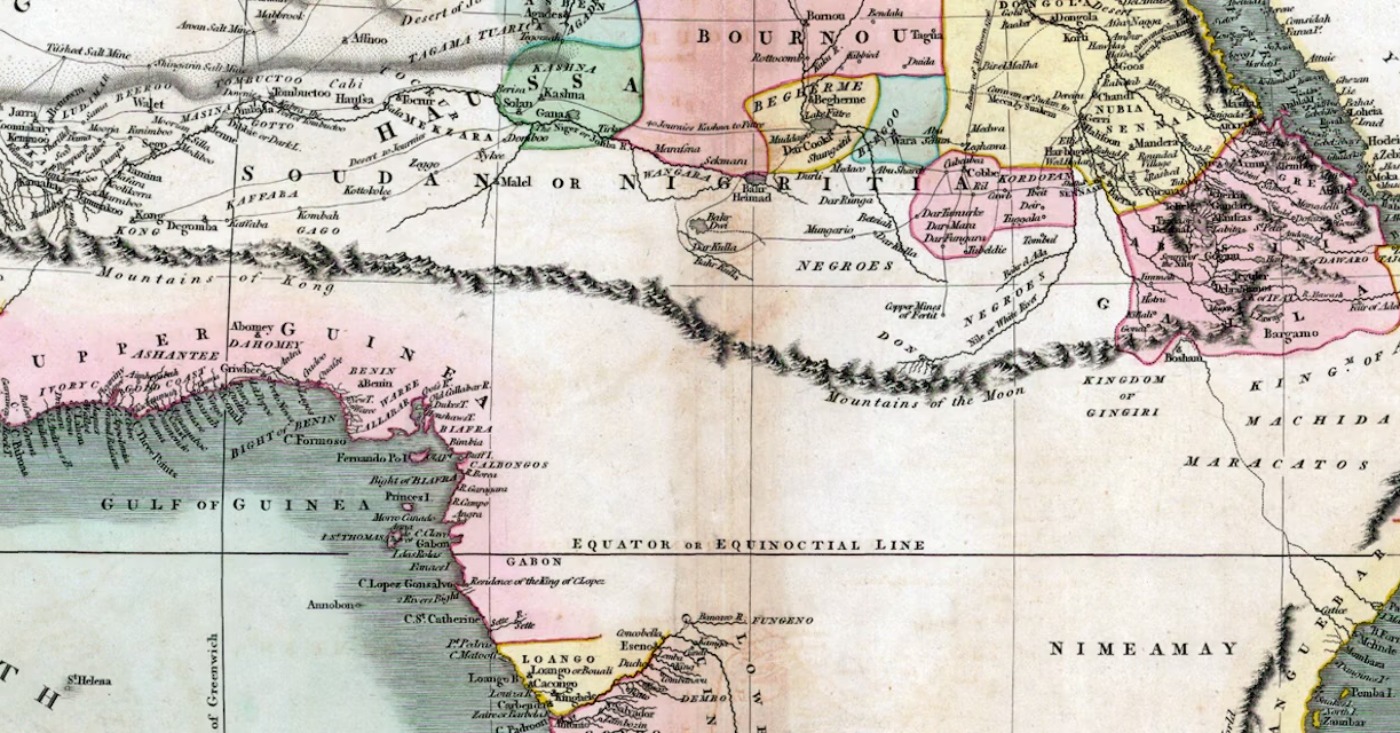
The initiative brought attention to the way continents are distorted by projections that display our rotund planet on two-dimensional maps, something that has long made Africa especially appear far smaller than it actually is. But it left another assumption untouched: that European maps of Africa – which became the basis of how we see African countries today – are based solely on the observations of the Europeans who made them.
As an expert on the map history of Africa, I know that this is a misconception which deserves rethinking. Recent research by myself and others on colonial-era mapping of West Africa demonstrates that much of the geographical information these maps show is based on African observations. It’s just that Europeans largely took the credit.
A line in the sand
Most African map traditions are undocumented or ephemeral. But ground and oral mapping was common in the pre-colonial period, and often highly valued. European explorers relied upon these indigenous mapping practices during their travels and sometimes incorporated them into their own maps.
For example, sections of French explorer Henri Duveyrier’s 1861 map of the Sahara owed much to the maps drawn in the sand by his guide, Cheikh-‘Othmàn. Indeed, more than a third of Duveyrier’s map is based on information provided by local sources.
A common objective of mapping is to solve a spatial problem. Route mapping is all about finding one’s way between points A and B and determining the distances between them. For Europeans, it was important to know where African leaders resided or the most direct route to important trade centers.
When European explorers and soldier-surveyors inquired, African guides, interpreters and merchants described the road ahead and often drew these routes on the ground with a stick. Europeans valued African oral and ground-mapping practices for their contributions to knowledge; they were also useful for empire building.
In his 1892 travel memoir, French Navy Lt. Louis-Gustave Binger reproduced the plan of Niellé, a city in contemporary northern Ivory Coast that was drawn on the ground by his interpreter, Fofana Diawé.
Niellé’s chief prohibited Binger from visiting the town, making Diawé’s drawing particularly valuable. In another instance, Binger reports that an African intermediary placed varied lengths of straw on the ground to indicate the distances between localities in the Kong region.
In his exploration of the area between the Niger River and the Gulf of Guinea in the early 1890s, Navy Lt. Jean-Baptiste Marchand routinely collected route information from local inhabitants about places he could not visit. This “locally sourced route information,” as he described it, appears as dashed lines on his landmark map of the region. The routes of Marchand and other European explorers appear as solid lines.
When the total distance of all routes is calculated, African sources account for 65% of routes on Marchand’s map.
Thanks to African intermediaries guiding these military explorers, Binger discovered that the fabled Kong Mountains, which stretched across most 19th-century maps, did not exist.
And Marchand learned that the savanna penetrated more deeply into the rainforest in south-central Ivory Coast. The elimination of the imaginary Kong Mountains and knowledge of a shorter travel distance through the dense tropical forest accelerated French colonization of the region.
But this practice of displaying locally sourced route information on European maps was debated among European geographers and military officers. Some mapmakers refused to display African mapping because it did not follow the standards of scientific cartography.
They argued that the geographical information was based on hearsay rather than measurement. Others, particularly military officers trying to expand colonial boundaries, appreciated locally made maps’ practical value. Embedded in this debate was the self-claimed civilizing mission ideology underpinning colonialism, which assumed the superiority of European knowledge. The dashed lines suggest that locally sourced information was tentative and would eventually be replaced by solid lines based on European measurements.
Filling in the blanks
The appearance of blank spaces on maps is typically seen as demonstrating the scientific standard of accuracy: Cartographers don’t show what we don’t know.
Blank spaces were also viewed as instrumental to imperial expansion. That’s because they suggested vacant areas open to colonization.
The common denominator of both views is that Europeans determine what is shown and not shown on maps of Africa. But a closer look at explorers’ and soldier-surveyors’ reports indicates that blank spaces often emerged from the refusal of African authorities to allow Europeans to travel through their territory.
Wisely, these African rulers understood the ultimate goals of European soldier-surveyors – to map the road to colonial conquest. In the memoir of his exploration of contemporary Mali, Ivory Coast and Burkina Faso, Binger explained the blank spaces on his four-sheet map as deriving from his lack of “a good guide and a travel permit [from African authorities].”
To try to overcome this lack of access, colonial officials employed Africans to explore and map. Traces of their little-known expeditions appear in late 19th- and early 20th-century compilation maps assembled by European mapmakers. The travel routes of two Senegalese explorers, Roger Panet in 1850 and Bou El Mogdad Seck around a decade later, appear in Hermann Habenicht’s ten-sheet map of Africa published in 1885-1886.
The central Africa mapping of two Africans working as Portuguese trade agents, Pedro Joao Baptista and Amaro José, is depicted on the “Kabébé” sheet of Régnauld de Lannoy de Bissy’s 63-sheet map of Africa.
The display of their itineraries in solid lines alongside those of Europeans indicates their equal treatment by Lannoy. Lannoy also used the dashed-line symbol to show locally sourced geographical information. More than two-thirds of the route information displayed in his 1882 Segou-Sikoro sheet stems from African mapping practices.
Both maps were used at the Berlin Africa Conference of 1884-85 to determine the boundaries of free trade zones in the Congo and Niger river basins.
The conference kick-started the “scramble for Africa” that was to last into the 20th century. Paradoxically, the maps that Africans helped construct were later used to divide their territories into European colonies.
Decades after decolonization, when we open the drawers of national archives, we find these remarkable maps with their solid and dashed lines. And map historians are finally acknowledging that these maps, cataloged as purely European achievements, are in fact hybrid productions that emerged from complex intercultural encounters. The evidence was hidden in plain sight.
Based on reporting by The Carolinian.
Black History
COMMENTARY: Property Is Power! the Black Family Meeting
CHICAGO DEFENDER — For more than 30 years in the mortgage industry, experts have observed that the primary obstacle to Black homeownership is often not just the cost of housing or the availability of financing. Instead, many families miss out on building generational wealth because they lack meaningful conversations about the mechanics of property ownership.
Some conversations can change the financial direction of a family. They rarely happen in a bank, a mortgage office, or even at the closing table. More often, they begin around a kitchen table, where parents, children, and grandparents can discuss something that can shape generations: ownership.
After more than 30 years in the mortgage business, I have come to understand that one of the greatest obstacles to Black homeownership is not simply the cost of housing, the availability of financing, or the qualifications lenders require. It is that too many families have never had a meaningful conversation about the economics of owning property. We discuss education, employment, and the importance of working hard. Yet we do not always discuss how money works, how credit creates access, how real estate builds equity, or how ownership can change a family’s financial circumstances.
I founded Property is Power out of a conviction that economic advancement must include a deeper understanding of real estate ownership. Over the years, I have sat across the desk from people who worked for decades, raised families, paid rent faithfully, and fulfilled every financial obligation expected of them. Yet, after 15 or 20 years, they had little to show for the money they had spent on housing. Their labor had sustained someone else’s investment, while their own opportunity to accumulate wealth remained largely untouched.
I do not suggest that renting is always a mistake or that homeownership is appropriate for everyone. But I have encountered too many people who wanted to own, could have positioned themselves to own, and simply lacked the information, preparation, or guidance to make it happen.
Information is not a small thing. In the marketplace of wealth creation, information often determines who participates and who remains on the sidelines.
The Conversation We Are Not Having
I want to challenge Black families to do something that may seem simple but could have lasting consequences: schedule a family meeting devoted to financial preparation and property ownership.
Bring the generations together. Invite the adult children. Include the grandparents. Let the teenagers listen. Put the phones away and have an honest discussion about where the family stands financially and where it intends to go. The objective is not to make everyone a real estate investor overnight. It is to establish a different understanding of money, credit, savings, and ownership. It is to move from discussing what the family earns to discussing what the family is building.
I would begin with three subjects: credit, savings, and a plan for ownership.
Credit: Your Financial Reputation Has an Economic Consequence
We often speak about credit as though it were merely a number. It is much more than that. Credit is a record of how the financial marketplace perceives your borrowing history. That perception can influence whether you receive financing, how much you can borrow, and the interest rate you pay.
Creditworthiness is developed over time. Treat it as a financial asset that requires maintenance, discipline, and attention. We cannot expect the next generation to make informed financial decisions if we do not teach them how the system works.
Savings: Income Is Important, but What You Keep Matters
A family may have a respectable income and still lack the resources to purchase a home. Earning money and accumulating money are two different disciplines. Homeownership requires more than the ability to make a monthly payment. There may be a down payment, closing costs, inspections, insurance, and the inevitable repairs that accompany maintaining a property.
Families should establish a dedicated ownership fund. It doesn’t have to start with thousands of dollars. An automatic deposit from every paycheck, a portion of a tax refund, or a reduction in unnecessary spending can establish the foundation.
Families should also discuss whether they can help one another responsibly. A parent may be able to assist an adult child with a documented down-payment gift. A grandparent may have resources to help a grandchild begin saving. There is nothing wrong with families using their collective knowledge and resources to create opportunities for their family members. We have to stop thinking exclusively as individuals when the objective is to strengthen generations.
The Plan: Turn Good Intentions into an Economic Strategy
What kind of property are we pursuing? Where do we want to live? What can we reasonably afford? Are we preparing to purchase a primary residence, an investment property, or perhaps a multifamily property that could generate rental income? What needs to happen over the next twelve or twenty-four months to make that possible?
Establish savings targets. Identify credit issues that need attention. Research available homebuyer assistance programs. Speak with a knowledgeable mortgage professional before making major financial commitments.
A family meeting should not be a one-time event that produces enthusiasm for a week and then disappears. It should become a regular conversation about financial progress, obstacles, and opportunities. The larger objective is to establish a culture in which ownership is discussed, planned, and pursued with the same seriousness families traditionally give to education and career advancement.
Ownership Does Not End at the Closing Table
Buying a home is an accomplishment. Maintaining it is an obligation. Protecting its value is an investment in both the household and the surrounding community. Take care of the property. Maintain the lawn. Repair the porch. Keep the sidewalks clean. Replace the exterior light that has been out for months. Pay attention to the roof, foundation, plumbing, and exterior.
These may seem like ordinary household responsibilities, but they reflect something larger: an understanding that property ownership carries responsibilities beyond the four walls of a house. A neighborhood’s value is influenced by the collective behavior of its residents. Neglect can become normalized just as pride can become contagious. When homeowners invest in maintaining their properties, they contribute to the stability and economic health of the surrounding community.
We should understand that neighborhood improvement is not solely the government’s responsibility. Public investment and fair housing policies matter, but residents also have a role. Ownership should inspire participation, not isolation.
The Home Is an Economic Institution
We sometimes underestimate the economic significance of a home because we have become accustomed to thinking of it primarily as a place to live. But a home is also an asset. Over time, mortgage payments can reduce principal and build equity. Property may appreciate, although appreciation is never guaranteed. That equity can provide financial options for education, business development, or other family needs, provided it is accessed responsibly.
A home can also provide stability that extends beyond the individual borrower. Children may remain in the same school district, develop lasting friendships, and benefit from continuity in their educational environment. Parents become invested in the quality of local schools, the condition of their streets, and the vitality of nearby businesses. Homeowners support local economies by purchasing materials, hiring contractors, using neighborhood services, and supporting entrepreneurs. Their presence can help sustain commercial corridors and strengthen surrounding communities.
The Inheritance We Should Be Discussing
Perhaps the most important reason to hold a family meeting is the conversation about legacy. For generations, too many Black families have had to build their financial lives from the ground up, with limited assets to transfer and fewer opportunities to benefit from the accumulated wealth of previous generations.
That history did not happen by accident. Redlining, restrictive covenants, discriminatory housing practices, and unequal access to mortgage financing systematically limited the ability of Black households to acquire and retain property. Their economic consequences did not disappear when those practices became illegal. We should understand that history without allowing it to define the limits of our future.
The home can become one of the instruments through which families change that equation. But inheritance requires preparation. Families need wills, trusts when appropriate, clear title, and conversations about how property will be managed and transferred. Too many families have lost valuable property because nobody addressed the legal and financial responsibilities of passing it down.
We should not spend thirty years building equity only to leave the next generation with a title dispute or an unresolved estate. Legacy is not simply what we leave behind. It is what we prepare the next generation to receive, protect, and build upon.
Bring the Family to the Table
I have spent more than three decades in the mortgage business, and one lesson has remained constant: families rarely stumble into lasting financial progress. It requires information, preparation, discipline, and a willingness to make decisions that may not produce immediate gratification.
The Black homeownership conversation must become more intentional. We cannot discuss the racial wealth gap without discussing property. We cannot discuss generational wealth without discussing assets. And we cannot talk about changing the economic circumstances of our communities while overlooking the importance of what families own, what they retain, and what they pass forward. Property is not the only path to wealth, but it remains one of the most consequential wealth-building opportunities for families who prepare, purchase responsibly, and protect what they acquire.
So, call the meeting. Set a date. Bring the generations together. Talk about credit, savings, homeownership, investment property, and estate planning. Talk about the kind of financial foundation you want your children and grandchildren to inherit.
The family meeting may be the most important financial meeting you ever hold.
Property is Power! Dr. Anthony O. Kellum is CEO of Kellum Mortgage, LLC, a homeownership advocate, speaker, and author. NMLS #1267030 / #1567030. www.KellumMortgage.com
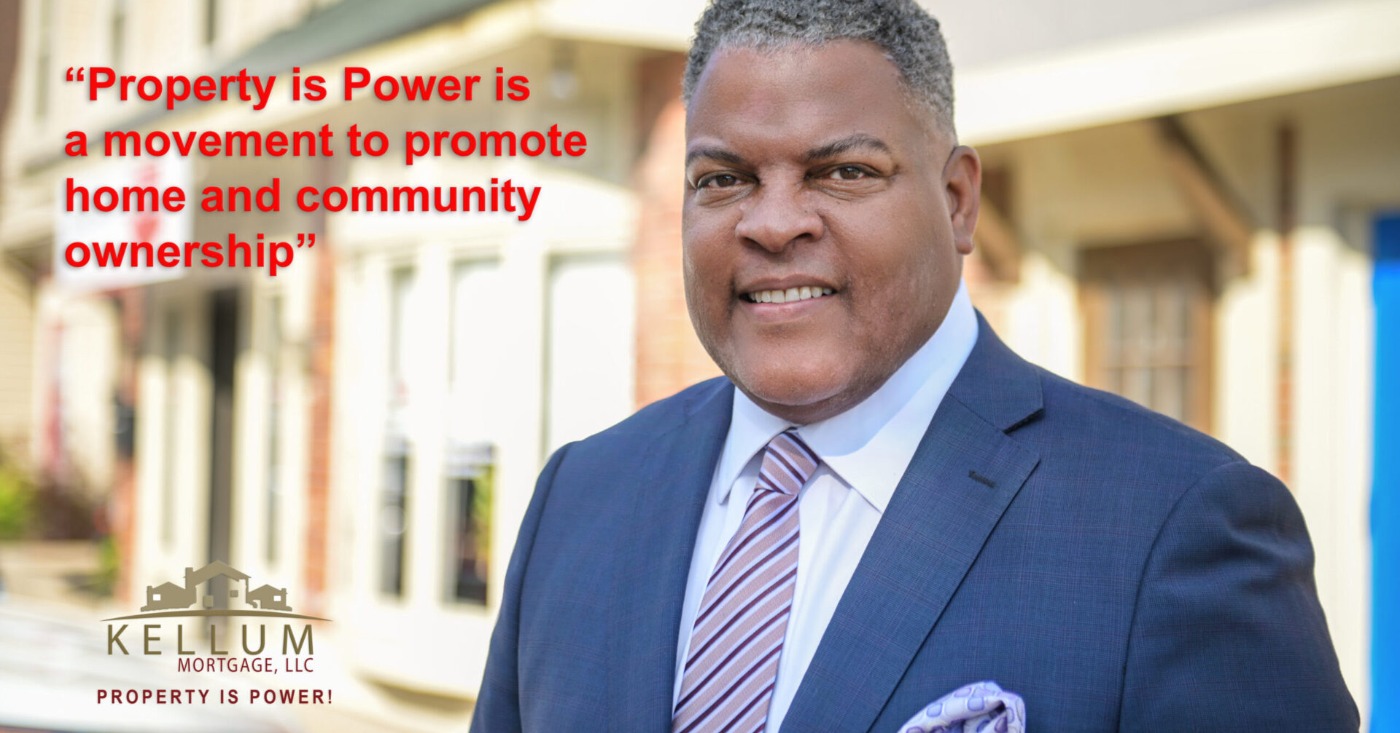
Property is Power! is a movement to promote home and community ownership. Studies indicate homeownership leads to higher graduation rates, family wealth, and community involvement.
The post Property is Power! The Black Family Meeting appeared first in the Chicago Defender.
Based on reporting by Chicago Defender.
Black Press
Computational Thinking and Young Children: It’s Not What You Might Think!
BLACKPRESSUSA NEWSWIRE — Skepticism about CT in early childhood is not uncommon. Critics often argue that CT is too advanced, abstract, or inappropriate for young learners. My neighbor voiced similar concerns, questioning how concepts from a technical domain could be meaningfully adapted for children ages 3 to 5.
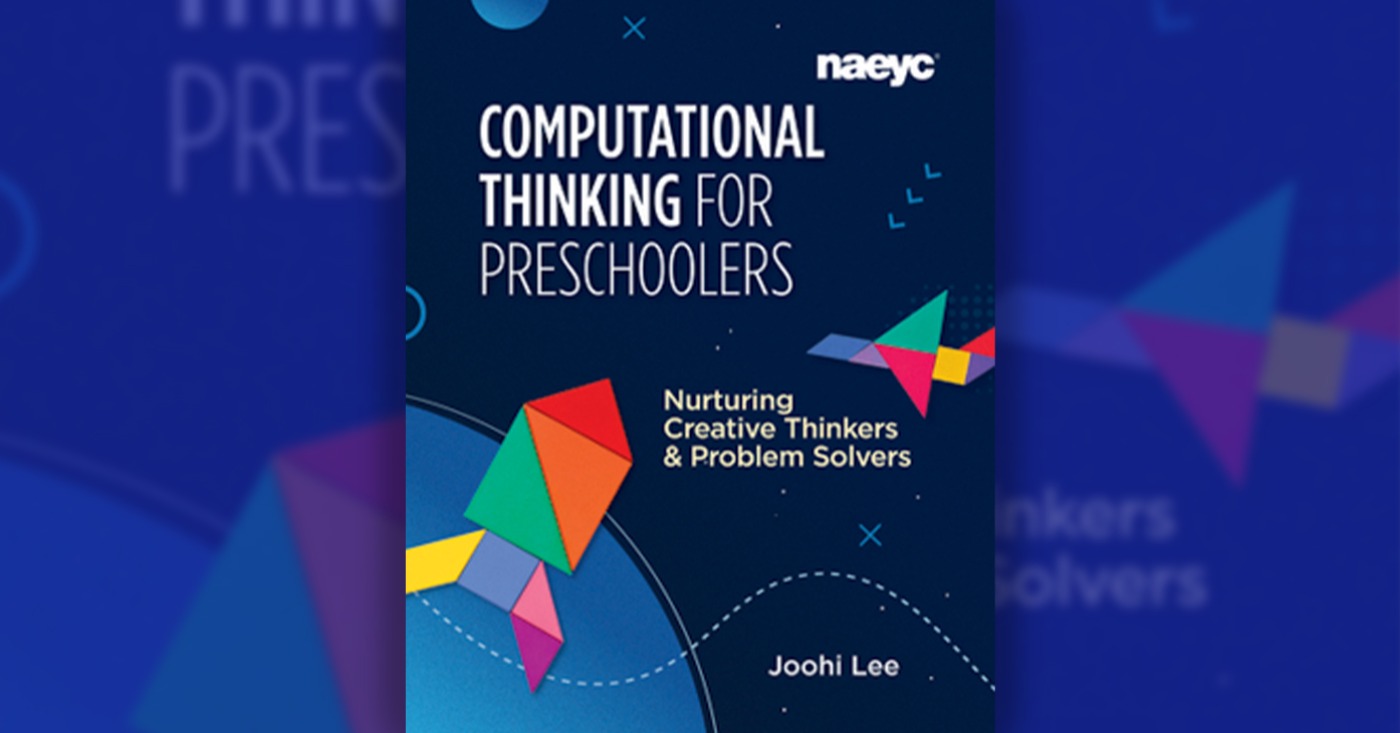
NAEYC recently published “Computational Thinking for Preschoolers: Nurturing Creative Thinkers and Problem Solvers,” written by Joohi Lee as part of its new suite of STEM products.
As an educator and researcher, I have spent years exploring how to integrate computational thinking (CT) into early childhood education in ways that feel natural and meaningful to young children.
One evening, I had a conversation with my neighbor—a computer scientist and father of two daughters, ages 4 and 5—about the idea of CT for preschoolers. His initial reaction was one of surprise, and he asked, “Really? Isn’t that a bit early?” This simple question kicked off an engaging hour-long exchange of perspectives.
We discussed what CT really means—things like breaking problems into steps, spotting patterns, and figuring out how to solve challenges. I described how young children learn these concepts through play, stories, and hands-on exploration, and he shared how those same ideas show up in computer science.
The longer we talked, the more we realized we were speaking the same language. By the end of our conversation, my neighbor smiled and said, “You know, I never thought of it that way, but it makes perfect sense.” That moment reminded me how universal CT skills really are—and how powerful it can be to start nurturing them in the preschool years.
When hearing the term computational thinking, many people immediately associate it with computing numbers, computer science, or programming.
Skepticism about CT in early childhood is not uncommon. Critics often argue that CT is too advanced, abstract, or inappropriate for young learners. My neighbor voiced similar concerns, questioning how concepts from a technical domain could be meaningfully adapted for children ages 3 to 5.
Some early childhood educators also share this viewpoint, perceiving CT as complex and disconnected from the developmental realities of young children. This initial hesitation is completely understandable and often stems from limited information about CT, as well as a lack of clear examples demonstrating its applicability in early learning settings.
On the other hand, some teachers are eager to integrate CT but feel somewhat intimidated by the term itself and are uncertain about where to start or how to effectively incorporate it into their teaching.
When approaching CT for young children, the first step is to understand that, while closely interconnected, CT is not the same as or interchangeable with computing, computer science, or programming. CT is a cognitive framework for problem solving. It falls under the umbrella of computing and is integral to computer science and to programming, which is a branch of computer science.
CT is also an independent skill set that leverages concepts that overlap with computer science and can be applied more broadly to problem solve in other contexts and academic disciplines. In other words, CT is not limited to any specific field or to individuals pursuing careers in computer science—it is a universal skill set for everyone.
CT equips children with the ability to think logically, analyze problems, and develop solutions systematically, making it an essential competency for navigating the complexities of our increasingly digital society.
From morning circle time to building block structures to navigating obstacle courses, the routines and play-based learning experiences that young children engage in every day inherently incorporate CT. Understanding this foundational principle can help educators get their early learning settings buzzing with curiosity, where every question, every game, and every playful moment becomes a stepping stone toward building powerful CT skills.
Example 1: Computational Thinking and Morning Interactions with Children
Mr. Miyazaki: Good morning, Angelica!
Angelica: Good morning, Mr. Miyazaki!
Mr. Miyazaki: How are you?
Angelica: Good!
Mr. Miyazaki: Tell me what is making you feel good.
The prompt Mr. Miyazaki uses (“Tell me what is making you feel good”) guides Angelica to logically think about her own feelings. Angelica may have responded “good” out of habit, but when asked to consider the cause of this feeling, she needs to contemplate what exactly is making her feel good in order to answer. This is a question that Angelica may not think of often on her own. It also requires her to engage with the important CT skills involving cause-and-effect—in other words, what (the cause) is leading to her happiness (effect). It may not be possible for educators to have exchanges like this with every child since mornings are such a busy time for greeting children and their families. However, when you find a chance to ask, this question functions as a tool to promote children’s CT. This question can also be integrated during morning whole-group time.
Example 2: Computational Thinking, Sequencing and Ordering, and Patterns in Music and Dance
Understanding that patterns are sequences helps children grasp the concept of logical progression and structure. Learning experiences that involve arranging objects or performing actions in a specific sequence reinforce this idea. For instance, teachers can invite children to follow a sequence of dance movements to the music, such as clap, stomp, jump, clap, stomp, jump, clap, stomp, jump (abc pattern). As the music plays, children perform the movements in the correct progression, helping them internalize the concept of sequencing and ordering. To support learning, the teacher may begin by demonstrating the sequence of movements slowly, ensuring the children understand each step. Once the children are familiar with the sequence, the teacher can play a lively song and encourage the children to perform the movements along with the music. To add complexity, variations in the sequence can later be introduced, such as clap, clap, stomp, jump, clap, clap, stomp, jump (aabc pattern). This not only reinforces sequencing and ordering but also engages children physically and rhythmically, making the learning process both effective and enjoyable. Through hands-on activities, children develop a stronger understanding of sequences and order, which are fundamental concepts in pattern recognition.
NAEYC recently published “Computational Thinking for Preschoolers: Nurturing Creative Thinkers and Problem Solvers,” written by Lee as part of its new suite of STEM products. She’s a professor of teacher and administrator preparation at the University of Texas at Arlington.
Black Press
COMMENTARY: Thank You, Trump, for Making America Great Again!
COURIER ECO LATINO — Mr. President, I never thought I would say these words, but here they are: Thank you, Donald Trump. Thank you for making America great again! You promised the American people you would do it. You traveled across this country wearing those red hats, standing before packed arenas, declaring that you alone could restore America’s greatness. And after the political earthquake of the 2026 midterm elections, I have to give you credit.

Thank You, Trump, for Making America Great Again!
Mr. President, I never thought I would say these words, but here they are: Thank you, Donald Trump. Thank you for making America great again!
You promised the American people you would do it. You traveled across this country wearing those red hats, standing before packed arenas, declaring that you alone could restore America’s greatness. And after the political earthquake of the 2026 midterm elections, I have to give you credit.
You said you would make America great again. You just never told us you were going to do it by waking up the very people you thought you could silence.
Mr. President, you may have accomplished what civil rights organizations, political strategists, voter registration campaigns and community activists have spent decades trying to achieve. You woke up Black America. You woke up young America. You woke up women across America. And perhaps most importantly, you reminded millions of Americans that democracy is not a spectator sport.
For years, we have begged our communities to understand the importance of voting. We organized marches, held rallies, registered voters, knocked on doors and pleaded with people to exercise the rights that our ancestors fought, bled and died to secure.
But then you came along.
You attacked diversity, equity and inclusion. You turned the word “woke” into a political insult. You challenged institutions that had worked to create opportunities for historically excluded communities. Your administration’s policies and rhetoric left many Americans wondering whether the progress of previous generations was being pushed backward.
And something remarkable happened.The people you underestimated decided they had heard enough. They didn’t just complain on social media. They didn’t just shake their heads at the evening news. They didn’t just talk about what needed to change. They went to the polls. And, Mr. President, they brought their receipts.
The Democratic victories in the House and Senate, along with the historic rise of Black elected leadership, represent something far greater than a political shift. They represent a powerful reminder that the American people still have the final word.
Consider Georgia. A state once synonymous with segregation, voter suppression and some of the most painful chapters of America’s racial history has witnessed a remarkable political transformation.
Keisha Lance Bottoms’ historic election as governor represents more than a victory for one candidate or one political party. As the first Black woman elected governor in American history, she represents generations of women who were told to wait their turn, stay in their place or lower their expectations.
And here in Columbus, state Rep. Carolyn Hugley stands poised to make history as the first Black woman to serve as speaker of the Georgia House of Representatives.
Think about that for a moment. Black women, whose political organizing, leadership and determination have so often been taken for granted, are now positioned to help shape the direction of government at its highest levels.
Across the country, Black candidates and other historically underrepresented leaders are demonstrating that political power does not belong exclusively to those who have traditionally held it.
And while you certainly cannot take credit for their qualifications, their sacrifices or their victories, Mr. President, you deserve recognition for helping create the political climate that motivated so many Americans to act.
You tried to make DEI a dirty word. The voters responded by making democracy a powerful one.
You said America needed to return to its greatness. But perhaps the greatest lesson of this election is that America’s greatness was never found in turning back the clock. It was never found in excluding people because of their race, gender, religion or background. It was never found in deciding whose history should be taught, whose voices should be heard or whose opportunities should be protected.
America’s greatness has always rested in its ability, however imperfectly, to move closer to the promise that all people are created equal. And sometimes, it takes a political backlash to remind us just how precious that promise is.
I am particularly proud of the role played by Black women, historically Black colleges and universities, the Black church and a new generation of voters who refused to allow frustration to become surrender.
They understood something that too many people had forgotten.You cannot change the direction of a country if you refuse to participate in determining who leads it.
But let me offer a word of caution. Winning an election is not the same as winning the future. The same energy that carried voters to the polls must now be directed toward holding elected officials accountable. Representation must translate into results. Historic firsts must produce meaningful progress.
We need affordable health care, quality education, economic opportunity, safe neighborhoods, fair housing and a justice system that treats every American with dignity.
We need elected officials who understand that making history is important, but improving people’s lives is even more important. And we must never confuse political victory with the completion of the struggle. The work continues.
Still, there is something wonderfully ironic about this moment in American history.
The man who built a political movement around the promise of making America great again may have helped inspire an entirely different movement — one determined to make America more inclusive, more representative and more accountable.
Mr. President, you told America you were going to bring about change. You did. You told America you were going to shake up Washington. You did. You told America you were going to make people pay attention to politics again. And, Lord knows, you did that too.
But perhaps your greatest political accomplishment was not what you intended to build. Perhaps it was the determination you awakened in those who refused to accept your vision of America.
You reminded us that elections have consequences. You reminded us that silence has a price. You reminded us that the power of the people is greater than the personality of any president. And you reminded Black America of something our ancestors have been telling us for generations:We do not have to beg for a seat at the table when we have the power to help determine who sits at the head of it.
So, Mr. President, from the bottom of my heart, thank you. Thank you for waking up the sleeping giant. Thank you for reminding us that our votes matter. Thank you for inspiring a generation that may have otherwise remained politically disengaged. And thank you for proving that no political movement, no administration and no individual is greater than the American people’s right to choose their own future.
You promised to make America great again. And in one of the greatest ironies of modern American politics, you may have helped do exactly that. Just not the way you planned.
Because, Mr. President, while you were busy trying to take America back, the American people were busy taking their country forward. And that, my friends, is what making America great really looks like.
Black Press
OPINION: Mario Juarez’s Courtroom Admissions Raise Questions About Allegations That Fueled Recall of Pamela Price
POST NEWS GROUP — Juarez’ claims became a significant part of the political narrative surrounding the recall campaign that removed me from office. Even though I denied the allegations, for two years, Juarez’s allegation was repeated across news outlets and used as political ammunition against me. His former local criminal defense attorney Ernest Castillo proclaimed Juarez’ innocence and claimed that the charges were politically motivated. Castillo is now a judge in the Alameda County Superior Co
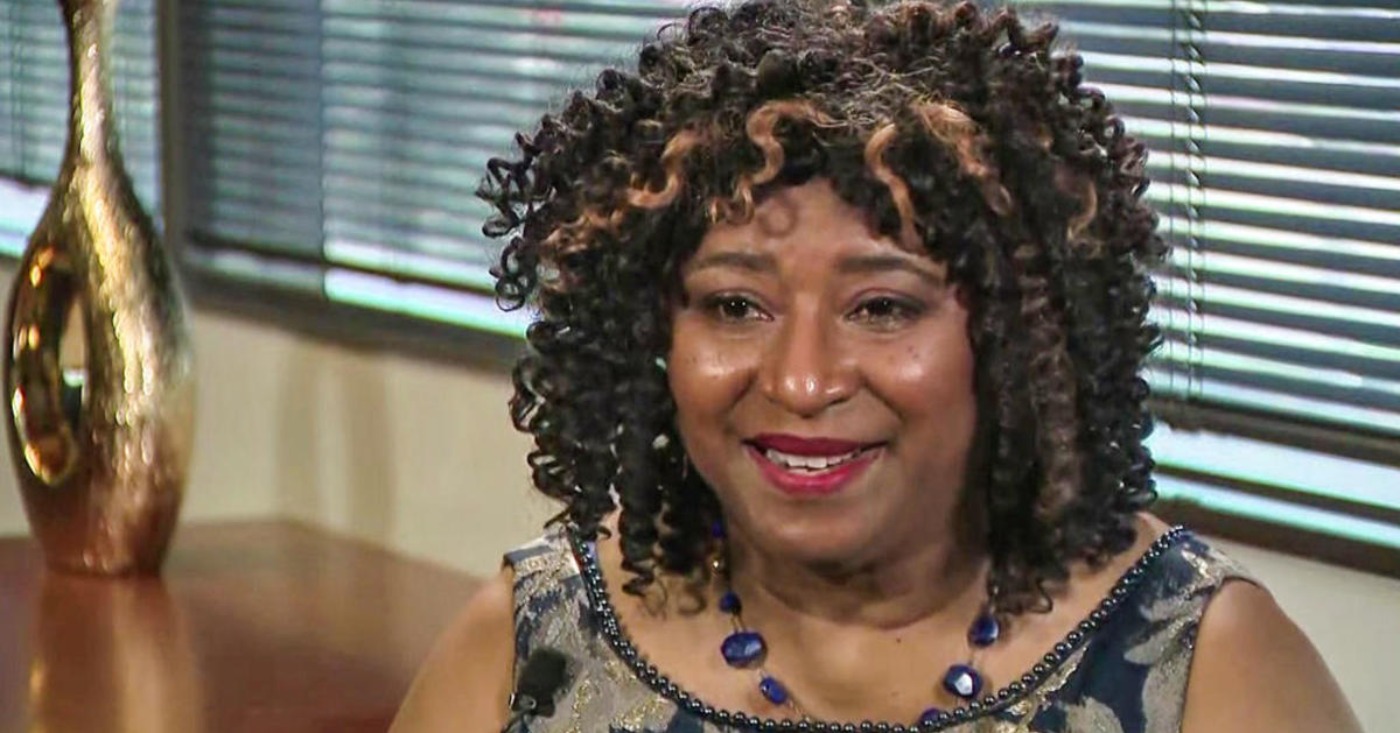
Former Alameda County District Attorney says it may take time, but ‘the truth will always catch up to the lie.’
In 2024, Mario Juarez, the U.S. government’s star witness in former Oakland Mayor Sheng Thao’s bribery case, steadfastly proclaimed his innocence of charges filed by the Alameda County District Attorney’s office under my leadership for allegedly passing tens of thousands of dollars in bad checks.
After he was charged in January 2024, Juarez fabricated a story claiming that I tried to extort $25,000 in cash from him for the anti-recall campaign.
In his recent courtroom testimony at Sheng’s trial, Juarez admitted that he knew the checks he wrote to print brokers Butterfly Direct Marketing were bad and would bounce. He also testified that he took money intended to pay the printer for himself. Juarez has a long, documented history of making false accusations and scamming business partners and acquaintances.
I denied Juarez’s allegation from the beginning. I never solicited a $25,000 payment from Juarez in exchange for dismissing criminal charges. It did not happen.
Now, in open court, the public is hearing Juarez admit that he knew the checks he wrote would bounce and that he took money intended to pay Butterfly for himself.
Juarez’ claims became a significant part of the political narrative surrounding the recall campaign that removed me from office. Even though I denied the allegations, for two years, Juarez’s allegations were repeated across news outlets and used as political ammunition against me. His former local criminal defense attorney, Ernest Castillo, proclaimed Juarez’ innocence and claimed that the charges were politically motivated. Castillo is now a judge in the Alameda County Superior Court.
Juarez’ false allegations against me had political consequences. The media and local bloggers were quick to amplify his allegations. Now they each have an obligation to give the public the same level of attention to the facts that have emerged in court. Anyone who repeated those allegations has a responsibility to revisit them now that Juarez admits he was guilty of the charges.
Juarez’s admissions also raise serious questions about why current District Attorney Ursula Jones Dickson chose to dismiss the charges against him rather than pursue accountability for the criminal conduct he has now admitted under oath. One of Jones Dickson’s first acts in February 2025 was to dismiss the charges against Juarez, despite the victim’s objections.
Political opponents should not be able to turn an unverified accusation into a public verdict. My reputation, my career, and the confidence of voters were all affected by an accusation that was never established as true.
The press should never confuse an allegation with proof and mislead the public about the veracity of a claim. And the current district attorney should not make prosecution decisions based on politics.
About Hon. Pamela Price
Pamela Price earned her B.A. from Yale College and a J.D. and M.A. from the Berkeley School of Law. She was admitted to practice law in California in 1983 and has specialized in federal civil rights litigation since 1991. She has successfully prosecuted civil and criminal cases in Bay area courts and is one of the few Black women to ever argue a case in the U.S. Supreme Court. She served as the elected District Attorney of Alameda County from 2023 to 2024.
Black Press
OP-ED: And Then What?
BLACKPRESSUSA NEWSWIRE — Last week, Democrats regained control of both houses of Congress, flipping at least 43 House seats and seven Senate seats. We flipped five governorships; 500 legislative seats took districts that have been red for a generation and turned them blue, and there are even more races left to be called.

The historic Blue Tsunami we all witnessed across this country provided a clear mandate for Democrats and a clear demonstration that Americans want our elected officials focused on fixing the real problems they face every day instead of promoting a meaningless culture war that has zero impact on our lives while corporate fat cats pick our pockets to line their own.
But, that being said, I can’t help but remember the words of Young Jeezy: And then what?
Look, I’m as blown away by the election results as anyone.
Last week, Democrats regained control of both houses of Congress, flipping at least 43 seats in the House and seven in the Senate. We flipped five governorships; 500 legislative seats took districts that have been red for a generation and turned them blue, and there are even more races left to be called.
According to The New York Times, the Black voter share grew dramatically. In Alabama, it went from 22% in 2024 to 26% in 2026. In Mississippi, it went from 30% in 2024 to 33% in 2026; in South Carolina, it went from 21% in 2024 to 24% in 2026. In Louisiana, it went from 27% in 2024 to 30% in 2026, and in Georgia, it went from 29% in 2024 to 32% in 2026.
That’s a three- to four-percent growth in all of those states, and even in states like Michigan, Illinois, and New York, where there was no measurable change, that’s compared to a presidential year, which, in and of itself, is absolutely huge.
In North Carolina, Senator-elect Roy Cooper got more votes from early voting than Michael Whatley got in total, and the same thing happened in Texas and Georgia. So, yes, I’m pretty excited.
But I’m also a realist because I know progress isn’t permanent and things can change in a heartbeat, especially if you don’t keep your eye on the ball. I know that we need to protect this electoral progress, so we can’t afford to mismanage our politics, our policies, or the promises we made on the campaign trail.
We can’t afford to mismanage the broad coalition that propelled us to a historic election night.
That’s what the Republicans did, and we see what it got them.
In 1967, Dr. King spoke at a similar moment, saying we had to choose between chaos and community, and in 2005, Young Jeezy asked the same question: “And then what?”
Our “what” is simple:
- We have to lower the cost of living.
- We have to save affordable healthcare.
- We have to hold the crooks who’ve been running this country for the past two years accountable for their crimes.
Does that mean we launch a campaign of retribution that gets us bogged down in some neverending impeachment fight? Of course not.
We stand up against corruption while working for the people because they need our help more than they need political payback.
We choose community because we know too well what chaos looks like.
It looks like skyrocketing foreclosure rates and car repossessions. It looks like more than half of Americans are forced to rely on credit cards to pay for basic needs like groceries, rent and utilities, student debt has jumped since the Trump administration reversed course on Biden repayment and forgiveness plans and an unconstitutional war that costs us record-high diesel prices and fertilizer costs, along with 16 unnecessary American deaths.
It looks like Americans are having to take out loans to pay for groceries even though they’re making six figures, and affordable housing is sitting vacant because folks still can’t afford it, particularly with the dramatic cuts to SNAP and Medicaid we saw in Trump’s “Big Ugly Bill.”
According to the Federal Reserve, the net worth of Black households is down 25%. That’s chaos.
We choose community. We choose raising the minimum wage, tackling price gouging, expanding voting rights, and putting back the subsidies that helped you pay for health insurance. We chose standing up for each other.
Young Jeezy asked the question, “And then what?” Community is the answer, and it’s time to get to work.


Carolyn Hugley Could Become Georgia’s First Black Woman House Speaker

BOO REVIEW: Upcoming Book Revisits Dr. King’s 1957 Visit to St. Paul

Mom Com & Co Is Building a Village for DFW Mothers, One Connection at a Time

Debunking the Myth That Europeans Alone Plotted Africa

COMMENTARY: Property Is Power! the Black Family Meeting

Alonzo Mourning’s Affordable Senior Housing

Black Men Encouraged to Start Prostate Cancer Screening at 45

Computational Thinking and Young Children: It’s Not What You Might Think!

Inside Chevron’s Fifth Annual “Hug a Pup” Salute to Veterans

Filmmaker Joy Adenike brings Nollywood romance to Houston

Practitioners of African Traditional Spirituality Offer Ancestral Reverence Ritual Oct. 31

HISTORY MADE: Keisha Lance Bottoms Becomes First Black Woman Elected Governor in American History

Tamiko Armstead | 2026 Lifetime Achiever in Education

Kickstarter CEO Everette Taylor Shares Tips on Creating and Growing a Business

BLACK MEN VOTE: Mobilizing 100,000 Black Men Ahead of the Midterms 📱

NFN live presents 🎙️ THE ROAD TO BEYOND IWDM 50: WE CANNOT STOP NOW! 8-Week Podcast

Black Household Wealth Plummeted 25% in Three Years, New Data Shows

Secretary of State Shirley Weber Pushes Back Against DOJ Demands Over California Voter Rolls

COMMENTARY: BIG MAMA SAID: Don’t Throw Away the Gift Just Because It Came Wrapped Wrong

Columbus’s Oldest Businesses Still Open: 10 That Have Lasted 75+ Years
Filmmaker Joy Adenike brings Nollywood romance to Houston

Filmmaker Joy Adenike brings Nollywood romance to Houston

2026 Best of Black Business Awards Recap: Meet the Winners

LIVE! — ASK ALMA — TUES. 11.24.26 7PM EST

Charles Cave turns community service into Houston legacy

Houston ISD board: Transition to local control can start ‘mid-January’

400 days – Fifth Ward awaits cancer cluster EPA report

The Hidden Cost of Friction in Car Buying

Truck Test Drive: Is Heavy Steering a Warning Sign? #shorts

Nationwide Flight Chaos, Democratic Leadership Battles 📱
-
 Black History1 week ago
Keisha Lance Bottoms to Govern State Where Her Great-Great-Grandfather Was Enslaved
-
 Black History1 week ago
Don’t Pass the Torch. Expand the Circle.
-
 Black Press3 days ago
OP-ED: Closing the Next Digital Divide — Communities of Color Must Have a Voice in the AI Future
-
 Black History1 week ago
Meet Scott Colom, the Mississippi Democrat Leading Tight Mississippi Senate Race
-
 Black Press1 week ago
Eight Black Women Win Georgia Statewide Offices
-

 Black History4 days ago
New NAACP Report Warns AI Could Deepen Health Disparities in Black Communities
