
Featured
COMMENTARY: I Will Vote!
NNPA NEWSWIRE — African Americans should use these midterm elections as a beta test for the 2020 Presidential election and use the results as a tool to make demands and ensure a dedicated seat at the head table prior to 2020.


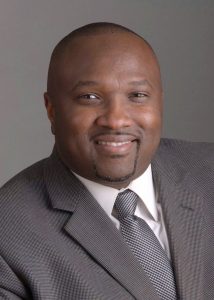
Jeffrey L. Boney serves as Associate Editor and is an award-winning journalist for the Houston Forward Times newspaper.
By Jeffrey L. Boney, NNPA Political Analyst
“I Will Vote!”
That is such an empowering statement, when you think about it, especially considering how important voting is for Black people at this critical time in this country.
The voting rights of Blacks are being targeted and threatened every day and those threats have become extremely rampant over the course of the last several months leading up to these important midterm elections in a few weeks.
Early voting has begun in several states and the shenanigans have also increased. There have been a number of reports coming out across the country about voter disenfranchisement and voter suppression tactics that are negatively impacting African Americans, and it is startling.
In Georgia, for instance, Secretary of State Brian Kemp, who is also running for governor against Democratic opponent Stacey Abrams, who is African American, has been hit with a federal lawsuit after being accused of hampering minority voters from registering prior to the midterm elections on November 6. This is troubling, especially because Kemp is running for governor, while holding the office responsible for handling the important process of voter registration.
According to reports, Kemp’s office put approximately 53,000 voter registration applications on hold because of minor discrepancies, and although Blacks make up roughly 32 percent of Georgia’s population, approximately 70 percent of the applications in Kemp’s office that were placed in this voter registration pending status were those of Black applicants.
Back in August, the Forward Times published an extremely troubling story entitled, Jim Crow 2018 – Black Voting Rights under Attack in Harris County, highlighting a voter suppression tactic that took place where roughly 4,000 eligible Harris County voters, mostly African Americans located in Houston’s historic Third Ward, had their voting rights attacked by an independent operative who used an antiquated Texas state law to legally challenge their voting status.
The issue of voter disenfranchisement, voter intimidation and voter suppression is not new, just like protecting the voting rights of African Americans has been an ongoing fight for centuries and one that cannot be ignored. Voting matters. Voting makes a difference.
After the Civil War, Black men were elected to the U.S. Congress and the South even elected some Black senators. These political gains and the progress made by Black people as a result of Reconstruction governments in the South, empowered many Blacks financially and socially.
Many Southern Whites knew that if they wanted to reestablish control and political dominance over Black people in this country, they would have to stop Black people from voting by any means necessary. Thus, the Ku Klux Klan was formed, which came with a primary focus of taking back the South through voter suppression, voter intimidation and voter disenfranchisement. Fast forward to 2018 and the apple has not fallen too far from the tree, as it relates to many of the same tactics being used to disenfranchise Black people in this country politically through voter suppression, voter intimidation and voter disenfranchisement.
It is impossible for Black people to be disengaged politically, and then hope to get the best treatment, outcomes or results from the elected officials they failed to engage with while those candidates were running for their respective seats.
Black people must get engaged and must vote.
However, choosing not to vote at all is a completely different situation altogether. It is detrimental to the growth of the African American community. It does not help, it hurts.
There is a quote that is often referenced when describing someone who is not a part of a major decision that affects them that goes, “If you’re not at the table, you’re on the menu.”
The worst thing African Americans could ever do in the realm of politics is: Nothing.
Have you ever asked yourself why it has been so important to other people to make it difficult for Black people to vote? Why have so many people and groups poured so much money into getting behind select candidates and political parties? Why are people constantly seeking to suppress the vote? Why would people do anything to steal an election through voter suppression and voter intimidation tactics with an emphasis on disenfranchising African American voters?
It is because Black votes matter — and everyone knows it.
African Americans must know it and must show it on November 6. Black people must show that we are actually “at the table” and are no longer just “on the menu” come November 6.
To avoid being “on the menu” as the main course meal on someone else’s table, Black people must show up to the polls this election cycle and make their voices heard. Black people must do this, in spite of the continuous neglect and lack of concentration of reaching Black voters through the mediums they are accustomed to by both political parties. Black people must not rely on others to plead their cause or fight their overall battles for them. Black people must vote.
The National Newspaper Publishers Association (NNPA), which represents over 200 Black-owned media companies across the U.S., has been focused on registering 5 million, new Black voters before the midterm elections and is working collaboratively with other national organizations to fight voter suppression and increase Black voter turnout.
“We want the largest, Black voter turnout in American history,” said NNPA President and CEO Dr. Benjamin Chavis. “Voter suppression is taking place, because we’re voting. But we’re going to overcome voter suppression this year, as this is a payback year for African Americans all over the country at the polls.”
African Americans should use these midterm elections as a beta test for the 2020 Presidential election and use the results as a tool to make demands and ensure a dedicated seat at the head table prior to 2020. In Texas, straight-ticket ballots will go away, so neither political party will be able to take a lazy approach to proactively educating potential voters on who their candidates are.
More importantly, candidates of either party will no longer be able to simply skate in to office on party affiliation alone and must put in the necessary ground work and investments to make potential voters more aware of their position on the issues that matter to African Americans. The Black vote should no longer be considered a guaranteed vote.
Choosing not to vote leads to dire consequences for African Americans.
There is a big difference between being able to choose what you want versus being told what you will get. No one likes to have things forced upon them. Of course, you could choose to do nothing, which is still your choice and right to do so. But, by choosing not to vote, you are in essence being told who you will get to represent you at every level of government – local, county, state and federal, as well as what you will get when it comes to key public policy issues.
Those who have sought to disenfranchise and discourage African Americans from voting know the importance of voting, as well as the profound impact that voting has on representation, political outcomes and critical decisions that must be made on major issues that impact you.
More importantly, those who seek to disenfranchise African Americans from the voting process know that whoever holds these political positions of power are able to direct necessary and critical resources to select areas. They are also able to ensure that select people are appointed to key boards and select positions that have an impact on you.
Whether you believe your vote matters or not — and it most certainly does — every Black person will have to adhere to any law that is passed and every decision that is made by the elected body of representatives who hold every seat.
There is absolutely no level of complaining or reactionary response that will change that.
There are no acceptable excuses when it comes to voting. Either Black people vote or reap the consequences of not voting. Every Black person should get engaged in politics if they wish to bring about change. So, this is your chance to make a difference. Say it – I Will Vote!
Now go do it! Cast your vote early or be sure to vote on November 6.
Jeffrey Boney is a political analyst for the NNPA Newswire and BlackPressUSA.com and the associate editor for the Houston Forward Times newspaper. Jeffrey is an award-winning journalist, dynamic, international speaker, experienced entrepreneur, business development strategist and founder and CEO of the Texas Business Alliance Follow Jeffrey on Twitter @realtalkjunkies.








Black Press
OP-ED: More Sleep and Lower Blood Pressure — An Overlooked Connection
POST NEWS GROUP — High blood pressure often produces no noticeable symptoms, even while increasing the risk of heart disease and stroke. The absence of symptoms became even clearer to me at a local festival where free blood pressure screenings were offered. I spoke with a woman whose systolic pressure — the top number — was 198. She said she felt fine.

Essay: More Sleep and Lower Blood Pressure — An Overlooked Connection
Photo Caption:
By
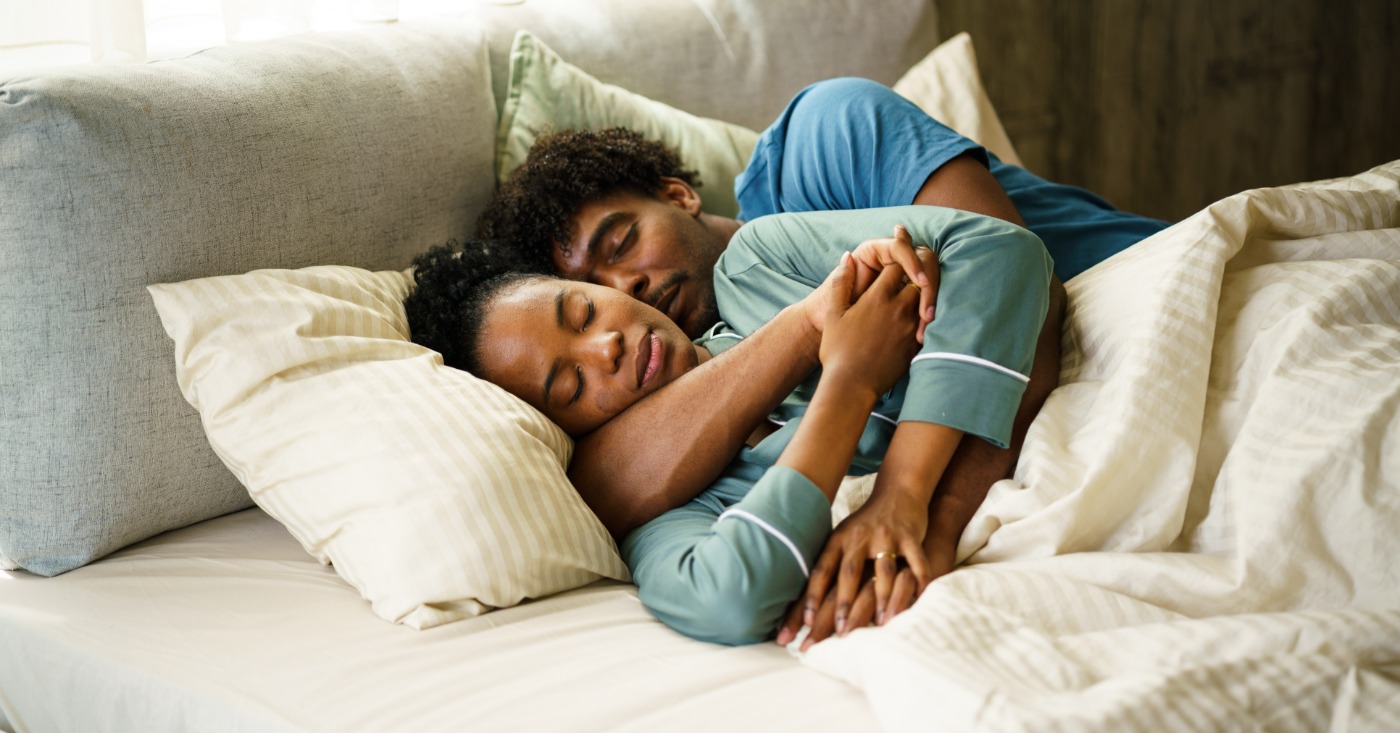
Lack of sleep can contribute to high blood pressure, yet sleep often receives less attention than medication, diet and exercise in discussions about heart health. During sleep, blood pressure normally declines, reducing the demands placed on the heart and blood vessels. When sleep is insufficient or frequently interrupted, blood pressure can remain higher for longer periods.
For Black Americans, the connection deserves particular attention. Nearly 58% of Black adults have high blood pressure, according to the Centers for Disease Control and Prevention. A National Center for Health Statistics report found that 40.2% of Black adults experienced short sleep, compared with 28.9% of White adults.
The figures do not prove that inadequate sleep explains why Black adults have higher rates of hypertension. They do show why sleep belongs in the discussion about Black cardiovascular health.
That connection became personal for me during a routine visit to my cardiologist. My blood pressure was 143/90. I was already taking blood pressure medication, but I had not been monitoring my pressure at home. I had no warning that the reading had changed.
High blood pressure often produces no noticeable symptoms, even while increasing the risk of heart disease and stroke.
The absence of symptoms became even clearer to me at a local festival where free blood pressure screenings were offered. I spoke with a woman whose systolic pressure — the top number — was 198. She said she felt fine.
A systolic reading above 180 is considered severe hypertension and requires prompt medical attention, even without symptoms. Her reading reinforced what I had learned from my own experience: Feeling fine does not mean that blood pressure is normal.
After my cardiology appointment, I began looking at possible reasons for my elevated reading. I considered what I ate, how much I exercised and whether I was taking my medication as prescribed. Then I thought about my sleep.
I was sleeping four to five hours a night. I was not deliberately choosing to sleep less. I would become busy in the evening, move from one activity to another and go to bed later than I intended. Over time, that pattern became routine.
After researching the relationship between sleep and high blood pressure, I began going to bed earlier. I increased my sleep to seven or eight hours a night and continued monitoring my pressure. My medication remained the same.
Within weeks, my blood pressure readings moved into the normal range. One recent reading was 114/68.
I know that one change in my routine does not prove cause and effect. I had no home readings from before the cardiologist visit, so I do not know when my pressure started rising. Blood pressure also changes with stress, activity, time of day and how it is measured.
Still, my medication remained the same while I slept longer and my blood pressure readings improved.
Research has linked inadequate sleep to hypertension.
“When a person doesn’t sleep enough or doesn’t get quality sleep, it can increase their risk of hypertension,” Dr. Chandra Jackson, a senior investigator at the National Institute of Environmental Health Sciences, said in an interview published by the institute.
The American Heart Association added sleep to its Life’s Essential 8 measures of cardiovascular health in 2022. The association recommends seven to nine hours of sleep a night for most adults, which is the amount I now get.
Getting more sleep is also not simply a matter of personal discipline. Work schedules, multiple jobs, caregiving responsibilities, neighborhood noise, housing conditions and concerns about safety can make regular sleep difficult.
Dr. Girardin Jean-Louis, director of the Center on Translational Sleep and Circadian Sciences at the University of Miami, has studied racial disparities in sleep.
“Black and Latino people in the U.S. sleep around 30 to 60 minutes less per night than White people,” Jean-Louis said in an article published by the university.
Racism and discrimination also contribute to stress that can interfere with sleep.
“Things like racism and discrimination, these affect our sleep,” Dr. Dayna Johnson, a sleep epidemiologist at Emory University, said in an interview with North Carolina Public Radio.
Sleep quality matters, too. A person can spend seven or eight hours in bed and still not get restorative sleep. Sleep apnea causes breathing to stop and restart during the night and increases the risk of high blood pressure, heart attack and stroke. Warning signs include loud snoring, gasping during sleep, morning headaches and excessive daytime sleepiness. The condition is more common among Black adults than White adults.
The lesson from my experience is not that sleeping longer cured my high blood pressure. Sleeping longer does not replace medication, medical care or regular monitoring. I told my cardiologist about the change in my sleep schedule, and his concern remained whether my readings were under control.
What changed was my understanding of sleep as part of protecting my heart. I had treated sleep as the time left after I finished everything else. Going to bed earlier was a change I could make, and monitoring my pressure allowed me to see what was happening.
For me, inadequate sleep was a risk factor I had overlooked. Getting enough sleep is now part of how I manage my heart health. I did not know it mattered. Now I do.
About the Author
Joe W. Bowers Jr. is a contributing editor for California Black Media who reports on health, education and public policy. He is a graduate of Stanford University.
Black Press
Harlem Neighbors Feed Neighbors, Senator Cleare’s Thanksgiving Giveaway Brings Hope to the Table
HARLEM COMMUNITY NEWSPAPERS — State Senator Cordell Cleare partnered with local businesses and community activists to host her annual Turkey and Produce Giveaway on Friday, Nov. 22. Held at the Adam Clayton Powell Jr.
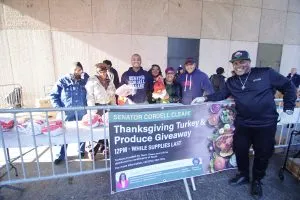
The spirit of Thanksgiving came alive in Harlem on Friday, November 20, as State Senator Cordell Cleare and community partners brought neighbors together for her annual Turkey and Produce Giveaway at the Adam Clayton Powell Jr. State Office Building Plaza.
Beginning at noon, residents visited the plaza at 163 West 125th Street to receive free food on a first-come, first-served basis. The holiday distribution included hundreds of donated turkeys and boxed meals, along with hot turkey dinners, fresh produce and traditional fixings to help families prepare for Thanksgiving.
For households working to stretch their budgets, the giveaway offered practical support during a season when grocery bills and other necessities can place added pressure on family finances.
“Times are particularly harsh economically, there is a lot of anxiety and uncertainty, and if we can help in any way, this is what we do,” Cleare said.
The senator credited local businesses, community organizations and activists with answering her office’s call for donations and assistance. Their contributions helped provide constituents of the 30th District with food for their holiday tables.
“Typically once again, we have Harlem neighbors helping fellow Harlemites,” Cleare said, highlighting the community cooperation behind the annual effort.
Beyond distributing turkeys, the event offered several forms of food assistance, including prepared meals for residents seeking an immediate dinner and produce and fixings for those planning to cook at home.
Cleare expressed gratitude for the partners who contributed, describing the gathering as an opportunity to ease financial strain while helping residents enjoy the upcoming holiday.
With neighbors leaving the plaza carrying bags of food, the giveaway reflected Harlem’s enduring tradition of mutual support. Through donated meals, shared resources and community commitment, Cleare and her partners helped bring Thanksgiving comfort to local households, demonstrating how collective generosity can make a meaningful difference for families.
Based on reporting by Harlem Community Newspapers.
Featured
D’Angelos Svenkeson on Football, Faith and Building the Future of Rondo | Blacklight on Sports
From St. Paul’s Rondo neighborhood to urban development visionary, D’Angelos Svenkeson shares how faith and football shaped his path to building the future.


What does it take to go from the playgrounds of Rondo to shaping development across the Twin Cities?
On this episode of Blacklight on Sports, host Dr. Mitchell Palmer McDonald sits down with D’Angelos Svenkeson, co-founder of NEOO Partners, a commercial real estate and urban planning firm. Raised in St. Paul’s Rondo neighborhood, Svenkeson became St. Paul Central’s all-time leading tackler and was inducted into the Central Hall of Fame this year.
Svenkeson shares how “SimCity” sparked his love of city building, how preparation and faith carried him through a difficult college football career at St. Cloud State, and how earning his master’s at Jackson State showed him what it means to build community from a place of abundance. He also honors the village that raised him, from his grandfather’s mobility story to his mother, uncles, coaches and mentors.
In this episode, you’ll hear about:
Learning to build cities from a video game
What football taught him about preparation
Leaving the game and finding his calling at Jackson State
Founding NEOO Partners with Denetrick Powers
Hiring his mom as the firm’s finance manager
The difference between passive and active representation
His vision for the regeneration of the Rondo spirit
Subscribe for more episodes of Blacklight on Sports, where Dr. Mitchell Palmer McDonald and Charles Hallman bring you the stories, voices and history of Black sports and community in Minnesota and beyond.
Featured
The Unisex Sweatshirt That Helps You Protect Your Peace #shorts
Stay cozy and create space for yourself with our signature unisex sweatshirts. Discover the perfect way to protect your peace in ultimate comfort.
Soft, unisex sweatshirts bring cozy warmth and comfort while helping people create space to protect their peace. #MN #Minnesota #Mpls #Minneapolis #StPaul #HennepinCounty #RamseyCounty #UnisexSweatshirts #CozyStyle #ComfortWear #SelfCare #Streetwear
Featured
Killing Me Softly: The Story Sampling Should Remember #shorts
Sampling isn’t just about the beat—it’s a way to preserve musical history. Discover the story behind Roberta Flack’s legendary track and its lasting legacy.
Sampling can do more than credit a song—it can share the story and mindset behind its creation, bringing Roberta Flack’s legacy to new listeners. #MN #Minnesota #Mpls #Minneapolis #StPaul #HennepinCounty #RamseyCounty #MusicSampling #RobertaFlack #KillingMeSoftly #MusicHistory #TheFugees
Featured
MC Scat Cat: Why Fans Still Remember the Iconic Character #shorts
Decades after his debut, MC Scat Cat remains a pop culture icon. Discover why fans are still clamoring for autographs from this legendary feline.

Decades later, MC Scat Cat still brings back memories. The character’s lasting affection—and autograph requests—show the enduring impact of the song. #MN #Minnesota #Mpls #Minneapolis #StPaul #HennepinCounty #RamseyCounty #MCS cat #OppositesAttract #PaulaAbdul #80sMusic #PopCulture


OP-ED: More Sleep and Lower Blood Pressure — An Overlooked Connection

Harlem Neighbors Feed Neighbors, Senator Cleare’s Thanksgiving Giveaway Brings Hope to the Table

D’Angelos Svenkeson on Football, Faith and Building the Future of Rondo | Blacklight on Sports
Shop Black, Shop Local: The REAL Black Friday! – Hell’s Kitchen DC: In the Spotlight with Roz White

Public EV Charging: Plan Your Routes Before You Buy #shorts

The Unisex Sweatshirt That Helps You Protect Your Peace #shorts

Killing Me Softly: The Story Sampling Should Remember #shorts

MC Scat Cat: Why Fans Still Remember the Iconic Character #shorts

How This Bag Business Turns Community Into Collaboration #shorts

Minnesota Hip-Hop in 1979: Finding Music on KMOJ #shorts

HISTORY MADE: Keisha Lance Bottoms Becomes First Black Woman Elected Governor in American History

Multi-Faith Leaders Representing 10 Million People Launch National Anti-Authoritarian Initiative

Christianity’s Racial History

Hundreds of Black Christian Leaders Arriving in Israel for Martin Luther King-Inspired Mission

Michael Shiner: The Enslaved Man Who Wrote His Way into American History

Keisha Lance Bottoms to Govern State Where Her Great-Great-Grandfather Was Enslaved

Don’t Pass the Torch. Expand the Circle.

DOJ Fights to Keep Rep. Ilhan Omar’s Search Warrant Sealed: Report

OP-ED: Closing the Next Digital Divide — Communities of Color Must Have a Voice in the AI Future

COMMENTARY: Thank You, Trump, for Making America Great Again!
D’Angelos Svenkeson on Football, Faith and Building the Future of Rondo | Blacklight on Sports
Public EV Charging: Plan Your Routes Before You Buy #shorts
The Unisex Sweatshirt That Helps You Protect Your Peace #shorts
Killing Me Softly: The Story Sampling Should Remember #shorts
MC Scat Cat: Why Fans Still Remember the Iconic Character #shorts
How This Bag Business Turns Community Into Collaboration #shorts
Minnesota Hip-Hop in 1979: Finding Music on KMOJ #shorts

Set Boundaries, Choose Yourself: The Mind the Crown Lifestyle #shorts

Recording at Prince’s Paisley Park Led to a No. 1 Hit #shorts

The Green Book: How Black Families Traveled Safely #shorts
-
 Black History7 days ago
Black Barbershops Have Long Given Neighborhood Politics a Place to Unfold.
-
 Black History1 week ago
Wichita’s Only Black-Owned Bookstore Seeks $90,000 to Secure Its Future
-

 Black History1 week ago
Debunking the Myth That Europeans Alone Plotted Africa
-
 Black History1 week ago
COMMENTARY: Property Is Power! the Black Family Meeting
-
 Black History1 week ago
OP-ED: Black voters made history. They laid the groundwork for a Third Reconstruction.
-
 Featured7 days ago
How Sick Must America Get Before Saying Enough to RFK
