
Black Press
Chase Launches Fraud & Scam Prevention Month
JPMorganChase is launching Chase Fraud & Scam Prevention Month this November to help consumers protect their personal information and finances. As the holiday season approaches, the nationwide initiative provides education on avoiding sophisticated tactics used by criminals, such as phishing and impersonation scams. The program features free workshops hosted by community managers across the lower 48 states and builds on existing financial wellness efforts that have reached over one million customers. Read more to learn how these new resources and technologies aim to stop financial crimes.

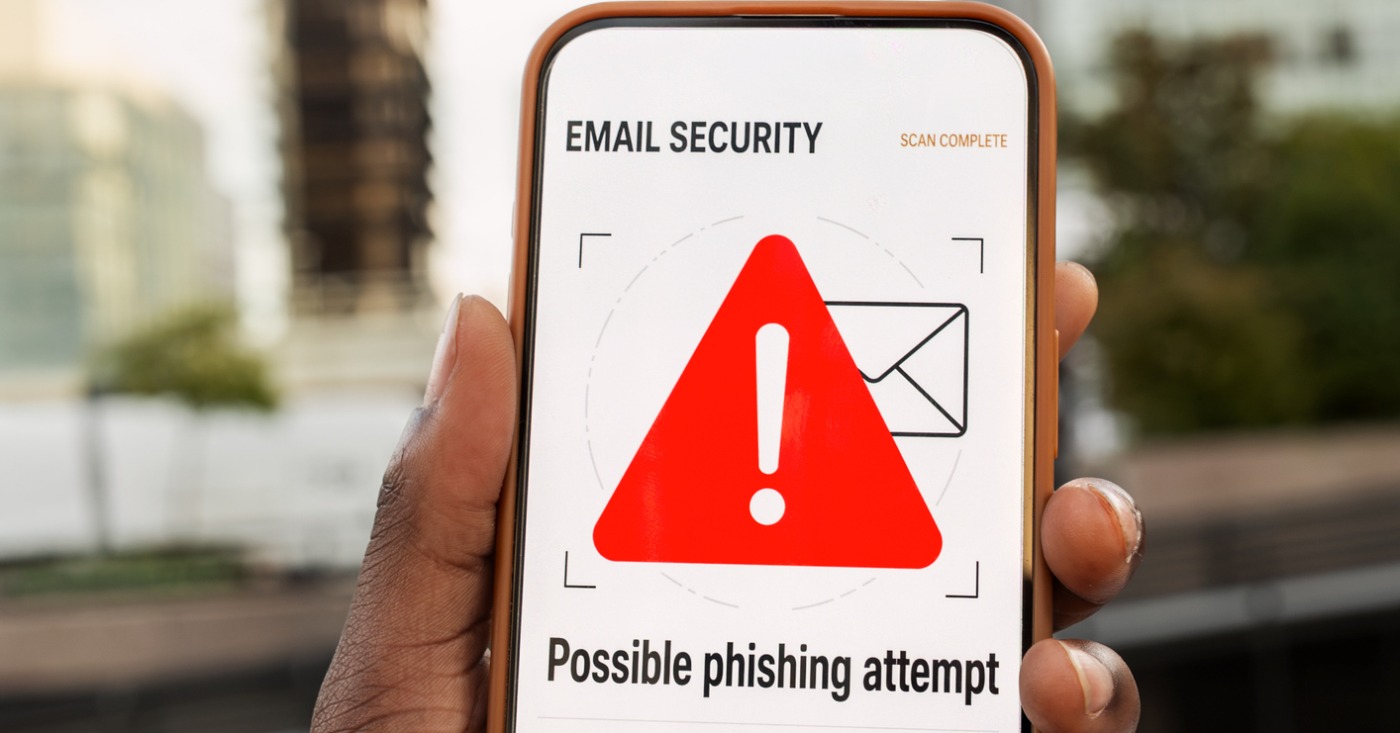
New initiative builds on Chase’s longstanding commitment to fraud and scam prevention education nationwide.
NEW YORK, Oct. 19, 2026 – Scams can happen to anyone. That’s why Chase is dedicating November to helping consumers protect themselves.
As consumers prepare for the holiday season, criminals are increasingly using sophisticated tactics to pressure people into sending money, sharing personal information and making decisions they’ll later regret.
This November, JPMorganChase is launching Chase Fraud & Scam Prevention Month, a nationwide consumer education initiative designed to help people recognize common scams, avoid in-the-moment mistakes and better protect their money and personal information during the holiday season.
The initiative builds on Chase’s longstanding efforts to help consumers navigate fraud and scams through education, awareness and community-based programming. Through its financial wellness initiatives, Chase has served more than 1 million customers and continues to host more than 1,000 fraud and scam prevention workshops annually across the country.
Throughout November, Chase Community Managers will host free educational workshops in all lower 48 states, as Chase continues to expand digital resources and consumer awareness efforts focused on helping people spot scams and take practical steps to protect themselves. Programming will address scams commonly seen during the holiday season, including impersonation scams, package delivery phishing attempts, gift card scams, fake online deals and fraudulent charity solicitations.
“Scammers are constantly adapting their tactics, making education and awareness more important than ever,” said Jennifer Roberts, CEO of Consumer Banking at Chase. “For years, JPMorganChase has invested in helping consumers recognize scams, understand warning signs and feel empowered to protect themselves. Chase Fraud & Scam Prevention Month builds on that commitment by providing practical guidance that can help people make safer decisions during the holiday season.”
Fraud and scam prevention remains a key component of Chase’s broader commitment to consumer financial wellness. Through educational workshops, local partnerships and community outreach, Chase helps communities build financial confidence and stay informed about evolving fraud and scam threats. The firm also works closely with law enforcement to share scam trends and insights and help drive more effective interventions as agencies work to combat financial crime.
Ongoing Fraud and Scam Prevention Efforts
Beyond consumer education, Chase continues to invest in technology, partnerships and customer protections designed to help prevent fraud and scams before they occur.
Scam prevention is embedded throughout the customer experience, from account opening and authentication to payments and customer service interactions. Chase continues to strengthen protections across the customer journey through targeted warnings, risk-based interventions, behavioral science-informed approaches and frontline employee training. These efforts help employees identify potential scams, recognize warning signs and better support customers who may be at risk of fraud or scams.
In addition, the firm continues to invest in next-generation security tools, including expanded use of passkeys and other authentication technologies designed to help defend against phishing, social engineering and account takeover attempts, as well as Trusted Contact Person, which allows customers to designate a trusted adult who may be notified of certain transactions to help guard against potential fraud or financial exploitation.
Earlier this year, JPMorganChase also announced nearly $14 million in philanthropic investments focused on consumer awareness, real-time prevention and victim support.
For more information about Chase’s fraud and scam prevention efforts and tips, visit Chase.com/security and attend a local fraud and scam prevention workshop.
About Chase
Chase is the U.S. consumer and commercial banking business of JPMorgan Chase & Co. (NYSE: JPM), a leading financial services firm based in the United States of America with operations worldwide, assets of $5 trillion and $375 billion in stockholders’ equity as of June 30, 2026. Chase serves more than 87 million consumers and 7.5 million small businesses with a broad range of financial services, including personal banking, credit cards, mortgages, auto financing, investment advice, small business loans and payment processing. Customers can choose how and where they want to bank: 5,100 branches in 48 states and the District of Columbia, 14,500 ATMs, mobile, online and by phone. For more information, go to chase.com.


Black History
COMMENTARY: We’ve Got Some Difficult Days Ahead
GARY CRUSADER — The present administration and those driving a malicious agenda of anti-human policies driven by greed will likely ratchet up the rhetoric of ruin against safety-net programs. These are the very programs that support the people who actually do the living and dying in this country.
On April 3, 1968, at Mason Temple in Memphis, Dr. Martin Luther King Jr. delivered his famous “I’ve Been to the Mountaintop” sermon.
As he prepared to close, he told the overflowing crowd: “We’ve got some difficult days ahead.”
Those words ring just as true today as they did nearly six decades ago. We, too, have some difficult days ahead.
By the time this article hits the newsstands (I’m dating myself), the midterm elections will be over. Regardless of the outcome, the fight for justice and humanity will continue with full force.
We’ve got some difficult days ahead.
The present administration and those driving a malicious agenda of anti-human policies driven by greed will likely ratchet up the rhetoric of ruin against safety-net programs. These are the very programs that support the people who actually do the living and dying in this country.
We’ve got some difficult days ahead.
Following the midterms, people who believe in the sacredness of humanity must turn their attention to holding elected officials accountable. Senators and representatives promised to protect the people’s agenda: health care for all, quality education for all, and ensuring billionaires pay their fair share of taxes to fund programs for “the least of these.”
If sober, principled leaders are not elected, and the hounds of hell break through the gates of Congress, then those who believe that every person has inherent dignity, regardless of race, ethnicity, gender, sexuality, age, or economic status, will have to redouble their efforts. We must resist the fanatical intent of those who believe one race is superior to others.
We’ve got some difficult days ahead.
Churches must stand in the tradition of the prophet Amos. They must declare to wannabe kings and sycophants who trade human principles for profit that God says: “Let justice roll down like waters, and righteousness like an ever-flowing stream.”
Black churches in particular must make a Sankofa move, reaching back to reclaim the lessons of ancestors who waged heroic battles against white supremacy and settler colonialism, forcing this country to make drastic changes for the better.
We’ve got some difficult days ahead.
Black churches and people of goodwill must reclaim the narrative. We must prevent the masses, often captivated by social media talking heads who lack the bandwidth for deep theology, ideology, or political literacy, from falling under the influence of rampant ignorance online.
We’ve got some difficult days ahead.
Those who have always wondered what they would have done during the Civil Rights Movement will soon confront a hard truth: what they are doing right now is exactly what they would have done back then. For many, that means doing nothing but talking. Others will realize they are the kind of people Harriet Tubman would have left behind, because they did nothing but get in the way.
We must answer the question Dr. King posed in the title of his final book: Where Do We Go from Here: Chaos or Community?
We’ve got some difficult days ahead.
That sentiment reflects the words Jesus left with His disciples, hours before He was executed by the Roman Empire on a cross. In John 16:33, Jesus told them: “I have told you these things, so that in me you may have peace. In this world you will have trouble. But take heart! I have overcome the world.”
Yes, we have difficult days ahead, but we have truth on our side. We have justice on our side. We have our ancestors on our side. We have history on our side.
And for those of us who follow that barefoot preacher from the northeast African region of biblical Palestine, Jesus of Nazareth, we know that victory ultimately triumphs over defeat, because resurrection is a living reality.
Be vigilant, be authentic, and stay woke. Uhuru Sasa!
The Rev. Dr. John E. Jackson, Sr. Senior Pastor of Trinity United Church of Christ-Gary, 1276 W. 20th Ave. Gary, IN. Contact the church at [email protected] or by phone at 219-944-0500.
Based on reporting by Gary Crusader.
Black Press
Eight Black Women Win Georgia Statewide Offices
COMMUNITY VOICE (KS) — Georgia voters made history on Nov. 3 by electing eight Democratic women to statewide offices, securing seven of the state’s eight major executive positions. Among the victors, Penny Brown Reynolds defeated her Republican opponent to become the first Black woman elected as Georgia’s secretary of state.
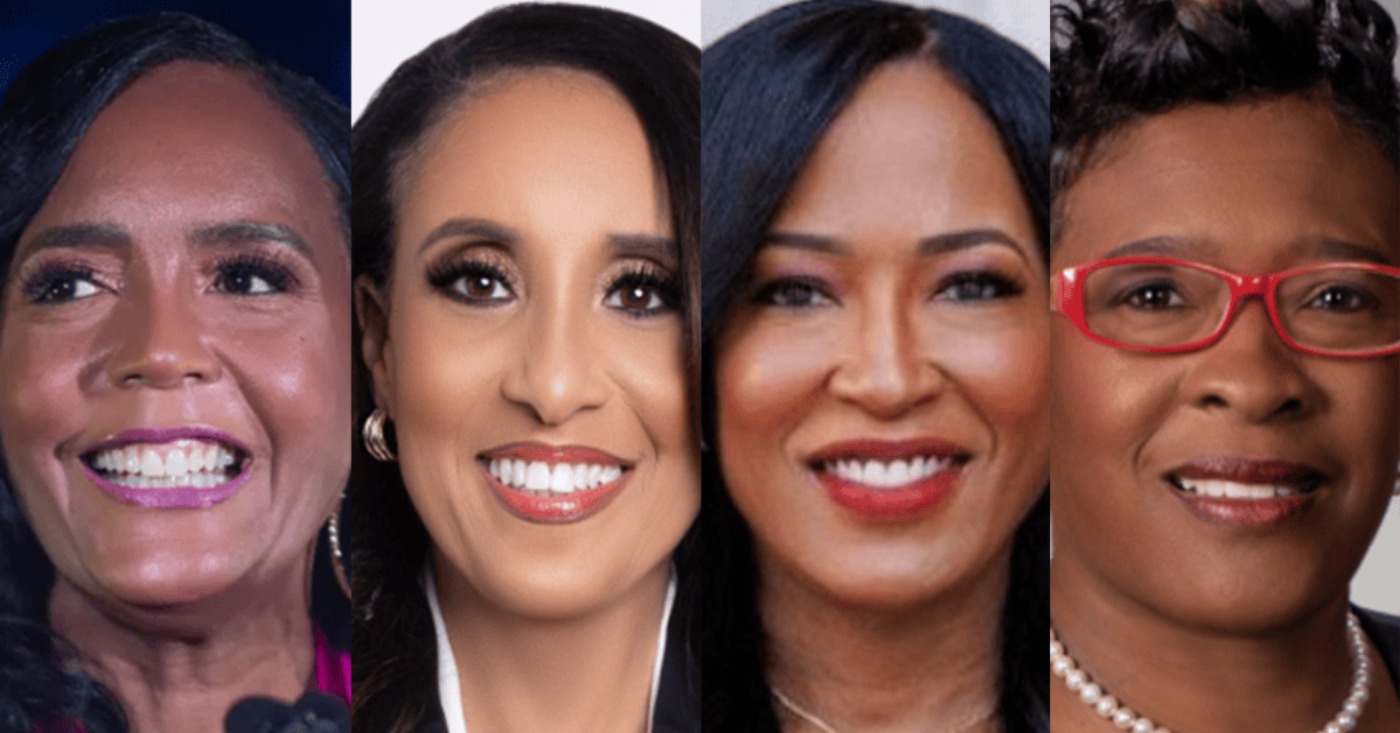
Georgia voters elected eight Democratic women to statewide offices Nov. 3, giving women seven of the state’s eight major executive positions and a seat on its utility regulatory commission.
The winners are:
- Keisha Lance Bottoms: Governor
- Penny Brown Reynolds: Secretary of state
- Tanya Miller: Attorney general
- Keisha Sean Waites: Insurance and safety fire commissioner
- Nikki Porcher: Labor commissioner
- Katherine Juhan-Arnold: Agriculture commissioner
- Lydia Powell: State school superintendent
- Shelia Edwards: Public Service Commission, District 5.
Brown Reynolds, a lawyer and former Fulton County judge, defeated Republican Tim Fleming to become the first Black woman elected Georgia secretary of state. She succeeds Republican Brad Raffensperger, who ran unsuccessfully for governor. The office gained national attention after Donald Trump pressured Raffensperger in a January 2021 phone call to “find 11,780 votes” to overturn his Georgia defeat. Raffensperger refused. Brown Reynolds will now serve as the state’s top elections official.
Miller, a state representative and former federal and county prosecutor, defeated Republican Brian Strickland to become Georgia’s first Black female attorney general. Waites, a former Atlanta city councilor and state representative, unseated Republican Insurance Commissioner John King.
The post Eight Black Women Win Georgia Statewide Offices appeared first on The Community Voice.
Based on reporting by Community Voice (KS).
Black History
THE RELIGION CORNER: We Stand on Their Shoulders — the Sacred Duty of the Ballot Box
WASHINGTON INFORMER — As millions of citizens reflect on the results of the recent election, the weight of history and the tension of a divided nation remain prevalent. For Black Americans and marginalized communities, the act of voting is far more than a political calculation; it is a sacred inheritance paid for through the blood and sacrifice of ancestors who refused to accept second-class citizenship.
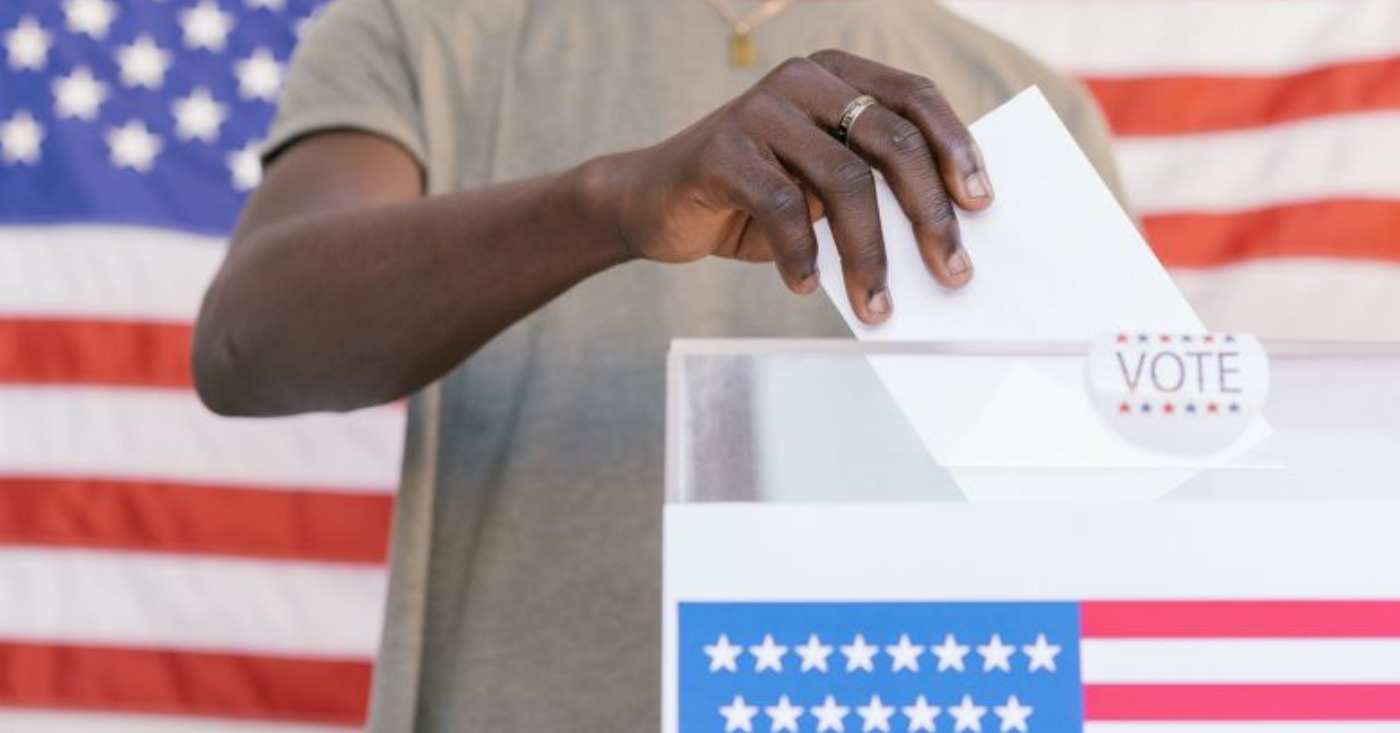
As this edition of The Washington Informer hits the stands, millions of citizens have cast their ballots, made their voices heard, and begun reflecting on the election’s outcome. The atmosphere this election season has been heavy. We feel the weight of history, the tension of a divided nation, and anxiety about tomorrow. In this issue, I remind Gen Z voters of the past struggles that secured this right.
I voted early, which reminded me that votingisn’t a mere political calculation. For people of faith, it is a profound act of stewardship, a tool for community survival and an expression of our deepest moral values.
For Black Americans, low-income families and marginalized communities, the ballot is a sacred inheritance. The right to vote was not a gift; it was paid for in blood, sacrifice, and the determination of people whorefused toaccept second-class citizenship. We must never forget that for decades, our ancestors faced systemic terror just to register. They were met with violent police dogs, high-pressure fire hoses, mandatory literacy tests designed to make them fail, and the constant threat of white supremacist violence.
Historians estimate that dozens of documented freedom fighters were murdered during the voting rights campaigns of the 1950s and 1960s, with countless other deaths unrecorded or unpunished. Millions more endured brutal beatings and dehumanizing jail cells. The protections we rely on today were forged in the heat of protest, through the 1961 Freedom Rides, the dangerous 1964 Freedom Summer registration drives, and the brutal crossing of the Edmund Pettus Bridge during the Selma-to-Montgomery march on “Bloody Sunday” in 1965.
Today, we stand on the broad shoulders of giants who put their lives on the line so we could walk into a voting booth with our heads held high.
We remember Fannie Lou Hamer, asharecropper’s daughter who was brutally beaten in a Mississippi jail for her voting rights activism and famously declared that she was “sick and tired of being sick and tired.”
We remember John Lewis, who, as a student leader, had his skull fractured by police batons in Selma and spent his life protecting what he called the most powerful nonviolent tool we have.”
We honor Jimmie Lee Jackson, a 26-year-old church deacon and veteran who was shotand killedby an Alabama state trooper while protecting his family during a peaceful march.
We honor Medgar Evers, the NAACP field secretary who was assassinated in his driveway for his civil rights and voter registration work.
Lastly, we honor Viola Liuzzo, a mother of five who traveled from Detroit to Alabama to shuttle Selma marchers before she was targeted and killed by Ku Klux Klan members.
When we view the ballot box through the lens of history and faith, the narrative shifts from partisan warfare to spiritual responsibility. Voting becomes a tangible way to love our neighbors as ourselves.
The policies shaped by our votes directly affect the vulnerable, the poor, and the stranger. InMicah6:8, we are asked: “What does the Lord require of you but to do justice, and to love kindness, and to walk humbly with your God?”Notice the action words. We are commanded to do justice. Castinga ballot with the collectivecommunity in mind helps fulfill that requirement. Similarly, Proverbs 29:2teaches, “When the righteous are in authority, the people rejoice.”Righteousness in public policy is about fairness, equity, and protecting human dignity.
No matter what the election results show, our assignment remains unchanged. If your candidate won, your job now is to hold them accountable to justice and mercy. If your candidate lost, your job is to remain resilient, keeping your hands on the plow to protect the vulnerable and speak truth to power. Our ultimate hope does not rest in any political party or elected official.
If you have already voted, I commend you for honoring the ancestors. If you did not cast your ballot,I urge you to reflect on this election not with fear or cynicism, but as a reminder of our ongoing sacred responsibility.
For information on local election results and future voting opportunities, consult your official local election authorities. Continue to engage in the democratic process with a heart centered on love for your community, carry the names of those who died for your right to be there, and let us resolve to bind up our nation’s wounds together.
Please do not think this inhumane treatment is over. Though this column reminds readers of the past, everything is not perfect yet.
According to civil rights groups and a report by the organization JULIAN, which documentedmore than70 cases of suspected modern-daylynchings across seven Southern states between2000 and 2025, systemic violence persists. Furthermore, independent tracking by groups such as Black Lives Matter of Atlanta reportedly recorded a recent uptick between March 2025and August 2026, finding at least22 Blackindividuals dead under suspicious or unusual hanging circumstances across the country.
Each vote helps bring about the necessary change, and that change begins at the ballot box. Make that change!
Lyndia Grant is a speaker/writer living in the D.C. area. Her radio show, “Think on These Things,” airs Fridays at 6 p.m. on 1340 AM (WYCB), a Radio One station. To reach Grant, go to her website, www.lyndiagrant.com, email [email protected] or call 240-602-6295. Follow her on X @LyndiaGrant and on Facebook.
Based on reporting by Washington Informer.
Black History
New Computer Lab Adds to MLK Catholic Student Center’s Sense of Home
SOUTHERN UNIVERSITY – SOUTHERNDIGEST — The Martin Luther King Jr. Catholic Student Center at Southern University has opened a new computer lab to provide students with essential academic resources and a sense of community. The project, which began in August 2023 and opened in October, was funded by an anonymous private benefactor.
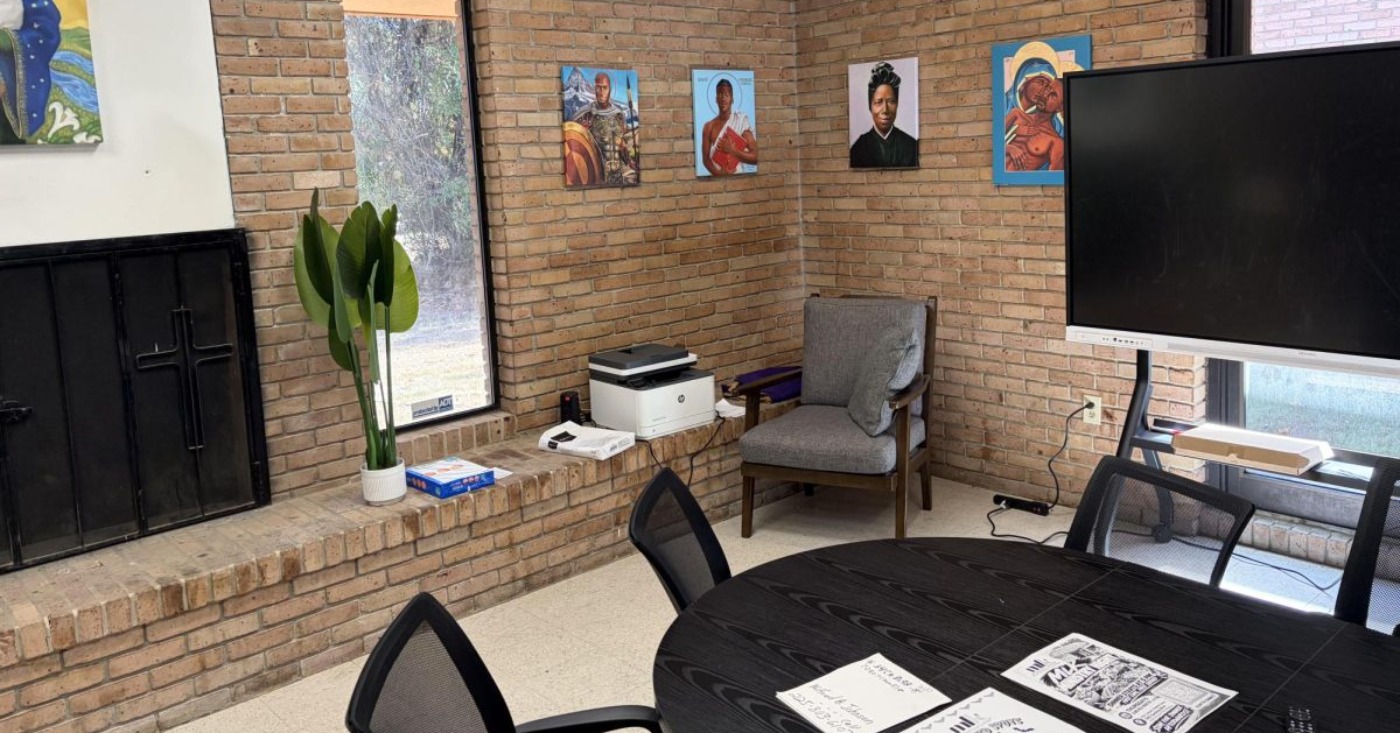
Madison Holmes wanted to leave Southern University. Now, she calls the Martin Luther King Jr. Catholic Student Center home.
The center’s new computer lab has become one of the places where Holmes feels calm, supported and connected to campus life. Holmes said she struggled with being away from her support system in Pass Christian, Mississippi, while also managing difficult classes. At the time, transferring closer to home seemed like a better option.
She recalled going to the library one day to print a lab report and finding a long line at the printer. “I was like, ‘Oh, wait. I know where I can go,’” Holmes said. “So, I came here and printed out my lab report, and then I took it to class.” Her experience is one example of how the center provides students with a place to turn when they need support.
The computer lab opened in October after the project began in August 2026. An anonymous private benefactor provided funding that helped pay for the lab and other improvements throughout the building.
The Rev. Thomas F. Clark, chaplain of the Martin Luther King Jr. Catholic Student Center, said the center aims to support students as they adjust to college life away from home. “You realize that when you’re away from home for the first time, you’re trying to make your way,” Clark said.
According to Clark, students often expressed the need for additional study space. Others shared concerns about unreliable laptops or computer crashes, concerns that ultimately helped shape the decision to add a computer lab.
The lab is one of several resources available to students. The center also provides Wi-Fi, study space and approximately 50 meals every Thursday at 5 p.m. Located across from Bethune Hall, the Martin Luther King Jr. Catholic Student Center has served Southern University students for decades.
According to the Roman Catholic Diocese of Baton Rouge, Father Rawlin B. Enette advocated for a stronger Catholic presence at Southern in the late 1960s. Construction on the center began in 1969 after land was donated by a university official.
Originally known as the Newman Center, the building was later renamed the Martin Luther King Jr. Catholic Student Center. Southern University art professor Frank Hayden also created religious artwork for the facility.
While the center provides practical resources, it also offers students a place to slow down, reflect and feel supported. For Holmes, Clark is part of that support system. “I do think that Father Clark is a safe space and a person I could go to,” Holmes said.
That sense of availability is intentional. Clark said students sometimes stop by with personal concerns or during times of stress. They talk and, in some cases, pray together as he helps students navigate the semester.
“We just feel that we can add to that support by being available and providing a warm and friendly place,” Clark said. As students navigate the challenges of college life, the Martin Luther King Jr. Catholic Student Center continues to offer a place of support, community and encouragement. For Holmes, it has become a home away from home.
Gallery • 3 Photos Brianna Meeks Interior shots of the newly create computer lab.
Based on reporting by Southern University – SouthernDIGEST.
Black History
Keisha Lance Bottoms to Govern State Where Her Great-Great-Grandfather Was Enslaved
ATLANTA DAILY WORLD — Keisha Lance Bottoms has made history as the first Black woman elected governor in the United States, securing her victory in Georgia after previously serving as the mayor of Atlanta. The milestone is deeply personal for Bottoms, as she will now lead the same state where her great-great-grandfather, Sheppard Peek, was once enslaved in Crawfordville.
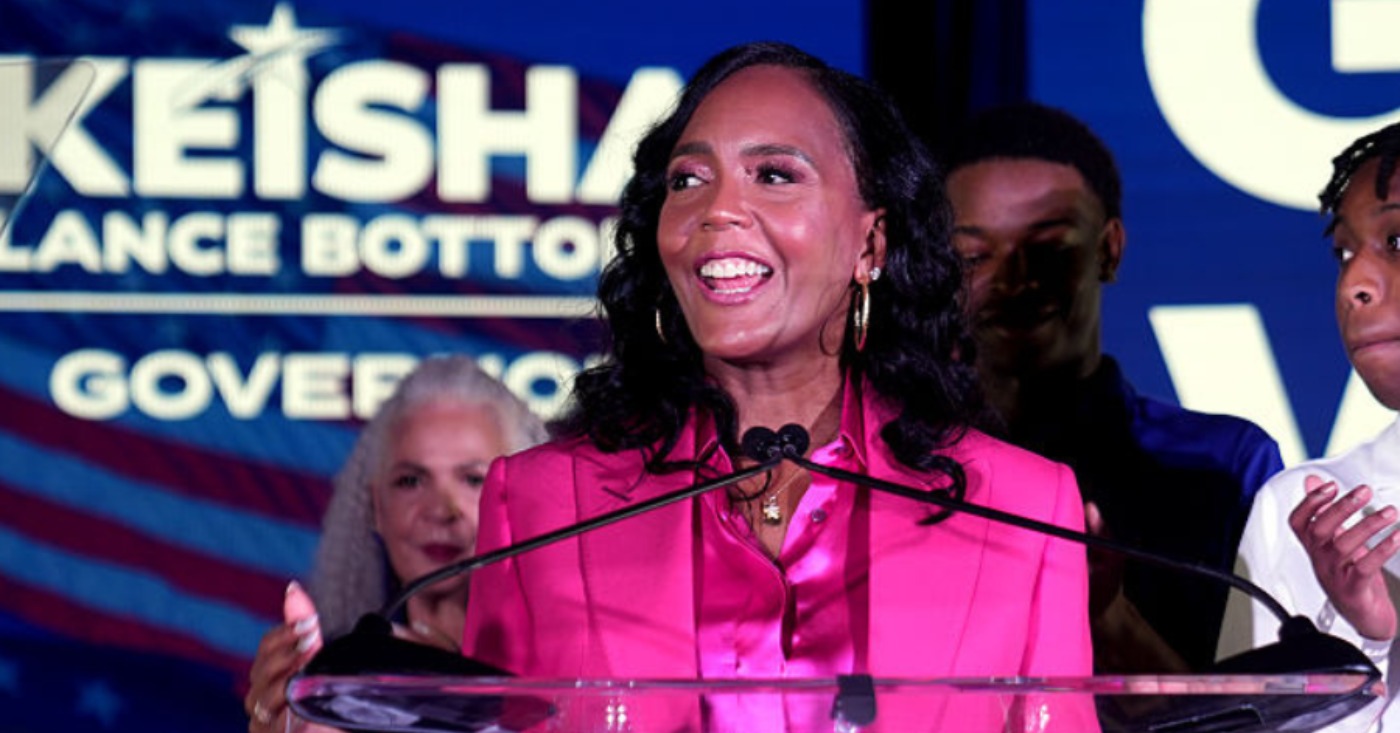
Georgia Gov.-elect Keisha Lance Bottoms is preparing to lead the same state where her great-great-grandfather was enslaved. Sheppard Peek was listed in an 1860 inventory of a white man’s possessions in Crawfordville, Georgia, with an assigned value of $1,400, according to the Atlanta Journal-Constitution (AJC).
On Monday (November 2), just one day before the election, Bottoms returned to Crawfordville, where she spoke with approximately 100 Black voters before visiting the grave of her great-great-grandmother, Betsy Peek. Bottoms knelt at Betsy’s grave and wept, the AJC reported.
“My grandmother would tell me the story of her parents packing them up in a horse and buggy and making their way to Atlanta,” Bottoms told the newspaper. “All of our stories can be told.”
The following day, Bottoms made history becoming the first Black woman elected governor in the United States. Her victory also made her Georgia’s first Black governor and its first female governor.
Before entering the gubernatorial race, Bottoms served as Atlanta’s mayor from 2018 to 2022 and worked as a senior adviser in former President Joe Biden’s administration.
She secured the Democratic nomination in May after receiving more than 50% of the primary vote, BIN previously reported.
The Black Information Network is your source for Black News! Get the latest news 24/7 on The Black Information Network. Listen now on the iHeartRadio app or click HEREto tune in live.
The post Keisha Lance Bottoms To Govern State Where Her Great-Great-Grandfather Was Enslaved appeared first on Atlanta Daily World.
Based on reporting by Atlanta Daily World.
Black History
A Command Through the Culture
SOUTHERN UNIVERSITY – SOUTHERNDIGEST — Southern University and A&M College recently held its annual Second Line to the Polls event, transforming a historic Louisiana cultural tradition into a powerful mobilization effort. On Tuesday, Oct. 27, busloads of students traveled from the Baton Rouge campus to the Louisiana Art & Science Museum, where they were met with a high-energy atmosphere of unity and school spirit.
The moment you become a student at Southern University and A&M College, you step through the doors of endless possibilities, equipped with the power to write your own chapter in history. Every person is born with the mental, physical and vocal ability to walk the paths they choose. Yet as a Jaguar, you are called to do more than follow a path. You are empowered to create one. Jaguars have the ability to break new ground and build what is needed, for change, for dreams, for legacy and for the culture.
On Tuesday, Oct. 27., Southern University and A&M College hosted its annual Second Line to the Polls event, encouraging students not only to vote, but also to educate and be educated. As busloads of students traveled from campus to the Louisiana Art & Science Museum in downtown Baton Rouge, the mission became crystal clear, and the blue and gold spirit shined even brighter.
Southern University’s Student Government Association, the Human Jukebox, the NAACP, Collegiate 100, Omega Tau Pi, Alpha Phi Alpha, Alpha Kappa Alpha, Kappa Alpha Psi, Phi Beta Sigma and Sigma Gamma Rho came together in solidarity, leading the way as students marched from the museum to Baton Rouge City Hall to exercise their right to vote in true South Louisiana fashion.
Historically, a second line in Louisiana has served as a powerful expression of celebration, unity and community. To witness a second line is to witness resilience, joy, freedom and an electrifying spirit that brings people together through culture. Thanks to the leadership of SGA President Bryman Williams and Jaden York, this year’s event reflected those values and more.
Attorney Vernon Wesley Thomas, a Southern University Law Center graduate and current candidate for judge in Louisiana’s 19th Judicial District Court, reflected on the significance of the event and the student turnout. “ You cut me, I bleed blue and gold. Seeing all the young people carry this energy and this will to come out and vote is amazing. I love seeing the youth like this; I love the unity…The youth is the future.” His remarks proved that this event carried out more than what was visible on the surface. It carried civil respect rooted not only in deep-rooted culture, but also in deep-rooted legacy and love.
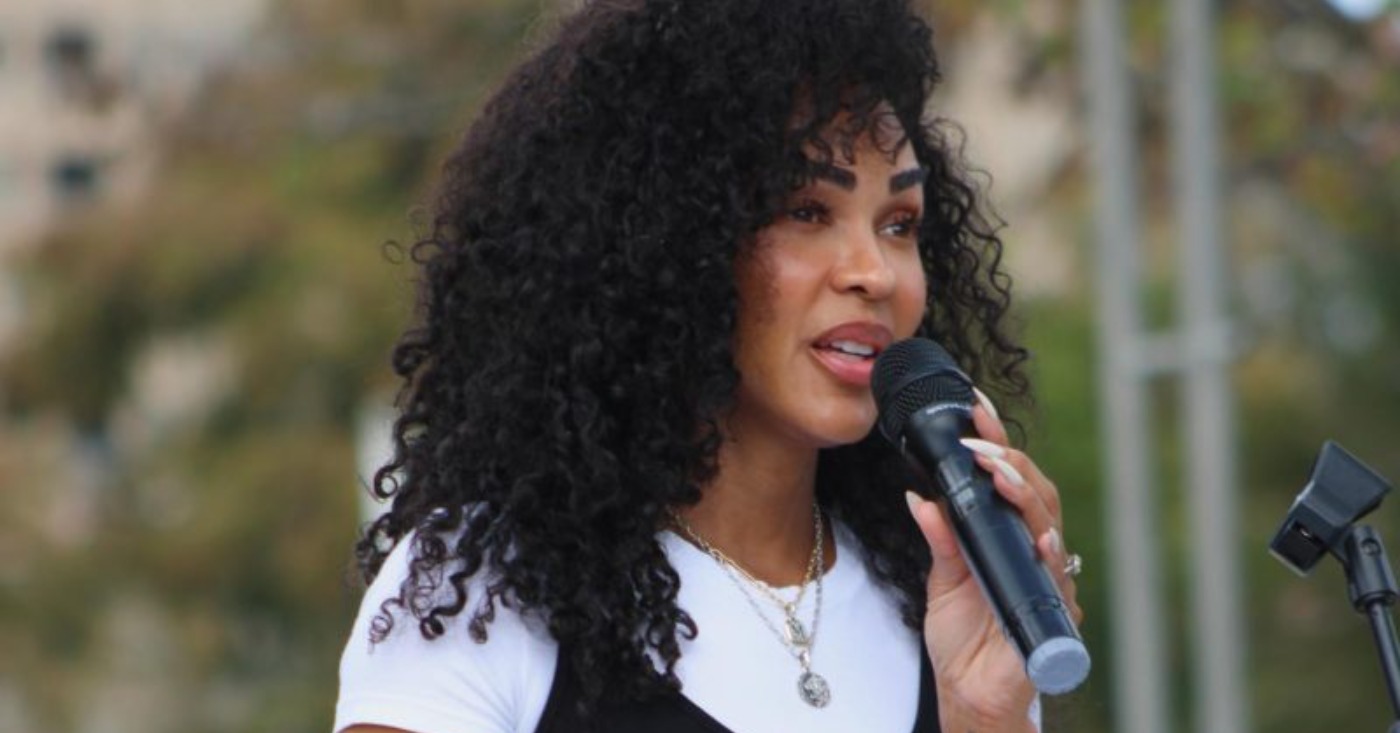
Gallery • 5 Photos Rhyanna Burks Actress and producer, Meagan Good, supporting Southern University students and the city of Baton Rouge at the Secondline to the Polls event hosted by Jaden York, Southern alum and student organizations at Southern University on Tuesday October 27.
Actress Meagan Good Majors came to support the event out of pure love and a pure heart for the youthful drive and determination shown by Southern University students.
The Second Line to the Polls shined harmony through freedom, painted a picture of power and showcased the elegance of the youthful heart. Southern University used culture to call and command. Our culture is our color, our footsteps in history and our freedom brought to life.
Our vote is our voice, our future, our story and our rights. Southern University lit fire of them both, strengthening our reality, our identity, our legacy and our history.
Go Vote, Jags!
Based on reporting by Southern University – SouthernDIGEST.


COMMENTARY: We’ve Got Some Difficult Days Ahead

Eight Black Women Win Georgia Statewide Offices

THE RELIGION CORNER: We Stand on Their Shoulders — the Sacred Duty of the Ballot Box

New Computer Lab Adds to MLK Catholic Student Center’s Sense of Home

Keisha Lance Bottoms to Govern State Where Her Great-Great-Grandfather Was Enslaved

A Command Through the Culture
Do You Struggle with Cloudy Tub Water After Frequent Weekend Entertaining?
Pop-Up Shops: Vendor Costs Can Shape Profits Before Opening Day

Why Recognizing Artists Matters More Than Awards #shorts

Check out These Smart Ways Tech Companies Can Speed up Project Timelines Today

All Skinfolk Ain’t Kinfolk

Practitioners of African Traditional Spirituality Offer Ancestral Reverence Ritual Oct. 31

Tamiko Armstead | 2026 Lifetime Achiever in Education

Oakland Awarded More than $14 Million in State Funding

OP-ED: The Black Church Writes AI’s Next Chapter

Inside 820 S. Michigan: New Book Captures the Lost World of Ebony and Jet

HISTORY MADE: Keisha Lance Bottoms Becomes First Black Woman Elected Governor in American History

Jendayi Arrest Raises Community Concerns Regarding Sheriff’s Chain of Command

Kickstarter CEO Everette Taylor Shares Tips on Creating and Growing a Business

OP-ED: If the ‘Cornell 7’ Were Black Men at an HBCU — America Wouldn’t Be This Sympathetic
Why Recognizing Artists Matters More Than Awards #shorts

Why I Created a Black-Centered Community Coffee Shop #shorts

How EVs Create Opportunity for Black Communities #shorts

Don’t Accept Your Auto Insurance Renewal Before Comparing Quotes #shorts

Pete Pioneered Cable Radio—The Story Behind His Breakthrough #shorts

How a Social Enterprise Café Invests in Young People #shorts

California Redistricting: Prop 50 & San Diego Seat Shakeup

Entrepreneurship Can Feel Lonely—Here’s How to Find Support #shorts

Why the Sports Community Deserves Respect and Support #shorts

Tired Business Owner? How the Gym Helps Me Recharge #shorts
-
 Black History3 days ago
HISTORY MADE: Keisha Lance Bottoms Becomes First Black Woman Elected Governor in American History
-
 Featured6 days ago
Multi-Faith Leaders Representing 10 Million People Launch National Anti-Authoritarian Initiative
-
 Black History5 days ago
Christianity’s Racial History
-
 Black History5 days ago
Michael Shiner: The Enslaved Man Who Wrote His Way into American History
-
 Black History5 days ago
Five Hospitals Said No! Who Will Help Annette Henry Recover?
-
 Black History4 days ago
Hundreds of Black Christian Leaders Arriving in Israel for Martin Luther King-Inspired Mission
