
Business
Car Review: 2015 Kia Soul EV


By Frank S. Washington
NNPA Columnist
DANA POINT, Calif. – The Kia Soul is the most successful alternatively shaped car (read: square box) on the road. Now the Korean automaker is attempting to transfer the vehicle’s popularity to the new Soul EV – that stands for “electric vehicle.”
Electric-powered vehicles are not as rare as you might think. There is a robust competition in the segment. There are 11 all-electric vehicles on the market and more are on the way. The 2015 Soul EV was the latest when it went on sale in early October.
The Soul EV uses a Lithium Ion Polymer battery. It has a range of 93 miles, better than all EVs accept the luxury Telsa S, and it has regenerative braking to help recharge the battery. But it is not a closed system. In other words, the battery must be recharged externally.
It takes 24 hours to recharge the Soul EV’s battery from zero capacity using a standard 120 volt electrical outlet. A 240-volt outlet will do the job in 4.5 hours. And a direct charge 490 volt outlet, not recommended for home use, will charge the battery to 80 percent of its capacity in 33 minutes.
The battery is engineered for use in warm weather, thus, it makes sense for Kia to first target California with the Soul EV. Los Angeles and San Francisco are the top markets for electric vehicles. However, for colder climes there is a battery warmer available.
You’ve got to know your Souls to distinguish a gasoline powered model from an electric variant. Our test vehicle still featured the Soul’s floating roof, square shoulders and windows that looked like wrap around tinted glasses. The difference was the grille; it was larger on the EV to accommodate the charging ports that were hidden behind it. A third of the grille panel swung out and over to allow charging.
The battery was underneath the car which didn’t cause much alteration to the interior. Thus, the Soul EV only lost 3 inches of rear passenger space that was cavernous to begin with. Cargo space remained at more than 18 cu. ft. with the second row seat up.
Electric vehicles are a new world. They not only include kilowatt hour readings but specifications on energy, power, volts (the Soul EV makes 360), battery pack watt hours, amp/hours and on it goes.
But some numbers were familiar. The car generated 109 horsepower and 210 pound-feet of torque. That electric motor was mated to a one-gear transmission. Oh, the torque was instantaneous and that one gear was more than adequate. These figures were not as piddling as they seem to be in print.
We test drove the Soul EV on a 68-mile route. When we were done, the gauges said we had 35 miles left in range and 35 percent of the charge remained. We took it easy during the drive because the electric automobile is an unknown entity. Still, the vehicle was quiet; we heard nothing but some wind noise over the roof.
It also had all the bells and whistles you’ve come to expect: heated and cooled front seats, and heated rear seats, a navigation system, satellite radio, auxiliary and USB jacks, Bluetooth, push button start, smart key, rearview camera, there was nothing missing.
Power was good; we once got up to 80 mph without noticing. The top speed is electronically limited to 90 mph but the car can’t go much faster anyway. The Soul EV can get to 60 mph from a standstill in 11.2 seconds and when it comes to towing, the spec sheet said it is “not recommended.” We took that to mean don’t do it.
Once, backing out of a parking space we heard the crossover (that’s what Kia calls the Soul) chiming gently to alert pedestrians as well other vehicles. Remember, this car runs virtually silent. That chime is supposed to sound off whenever the Soul EV is traveling at 12 mph or less to alert those on foot and other vehicles that it is there.
We thought the car handled extremely well. Kia engineers did a nice job in retuning the suspension to handle the 400 lbs. of extra weight. Though the Soul EV lost a gasoline engine and a conventional transmission, it gained a sizable battery, regenerative brakes and stiffer (read heavier) low resistance tires. What’s more, because of the retuning, the Soul EV’s center of gravity was lower and that made it hug the pavement even more.
It was a nice ride. But what Kia and other electric vehicle makers must overcome is range anxiety. Kia has opted to include a satellite feed to the Soul EV’s UVO system that tells drivers where the nearest charging station is in California’s fast growing electric charging infrastructure.
Since we didn’t need it we didn’t bother to check. But one of our colleagues got caught in a huge traffic jam on I-5 and could not go anywhere for more than an hour. He remarked that he was glad he was driving the Soul Sedona (another new Kia that was also tested) and we agreed.
But on reflection it occurred to us that getting caught in a traffic jam should not matter to the Soul EV. It is about range and battery charge. If you’re not moving, that does not impact either. A Kia official said that is right, unless you’ve got the air conditioner going or the radio playing and not moving, thus not using regenerative braking to recharge the 12 volt battery – the range could go down a little. But in stop and go traffic jams the regenerative brakes are being used – a lot.
Anyway, the point is that the public needs to be educated about electric vehicles; not by automakers but by owners of EVs. And Kia has a good one in the 2015 Soul EV; prices start at $33,700. Our test vehicle had a sticker of $36,625 including an $800 freight charge.
Frank S. Washington is editor of AboutThatCar.com.
###








Black History
PRESS ROOM: Mississippi Congressman Bennie Thompson to Speak at Oakland Post/El Mundo and Post News Group 64th Anniversary Celebration
POST NEWS GROUP — The anniversary fundraising luncheon, to be held at Scott’s Restaurant in Jack London Square, will also celebrate the 200th anniversary of the founding of the Freedom’s Journal, the first Black newspaper, published March 16, 1827, in New York.
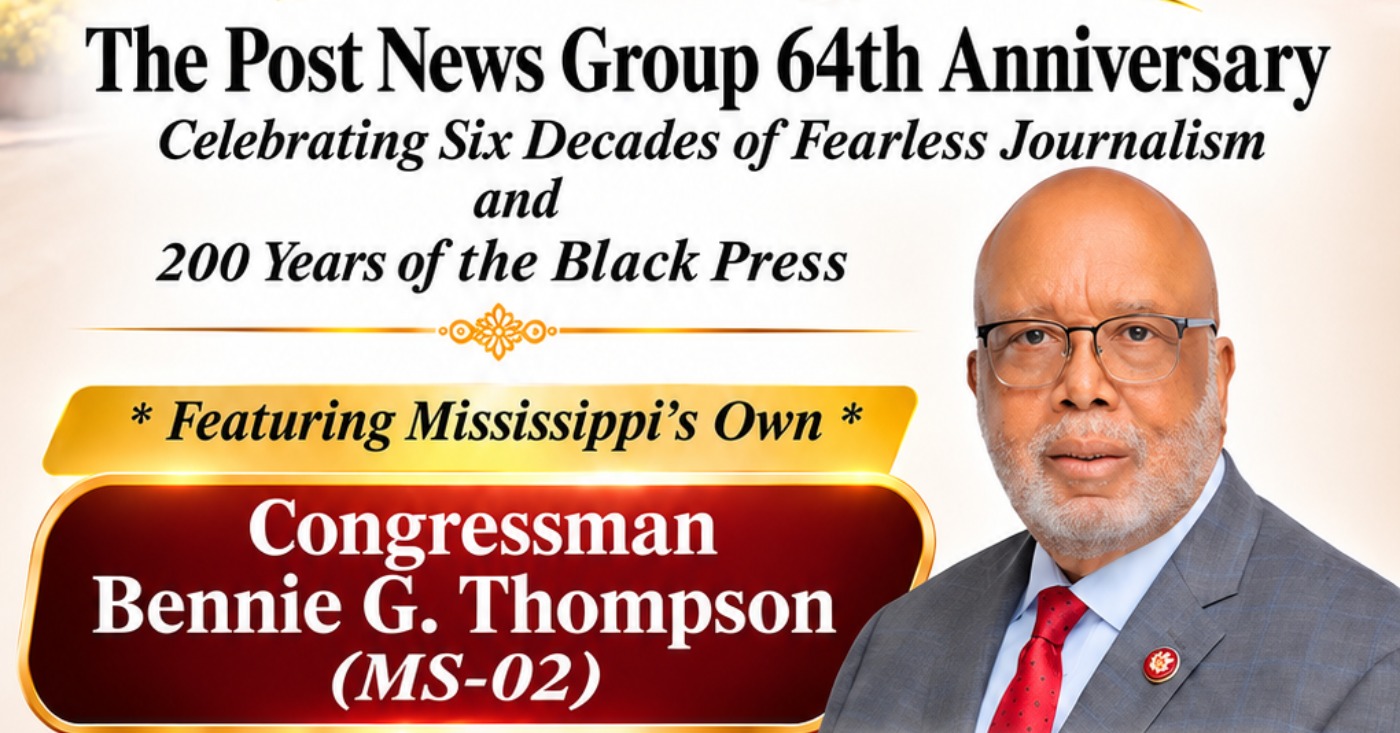
Mississippi Congressman Bennie G. Thompson will be the keynote speaker at the 64th Anniversary Celebration of the Oakland Post/El Mundo and the Post News Group on Feb. 12, 2027.
The anniversary fundraising luncheon, to be held at Scott’s Restaurant in Jack London Square, will also celebrate the 200th anniversary of the founding of the Freedom’s Journal, the first Black newspaper, published March 16, 1827, in New York.
More details on the anniversary celebration will be announced soon.
(The Oakland Post was founded in 1963 by Thomas L. Berkley and his wife, Velda. Paul and Gay Plair Cobb purchased the Post newspapers in 2004.)
The Cobbs’ connection to Thompson goes back decades. After a brief home libation ceremony with “Roots” writer Alex Haley and civil rights activist Beni Ivey in 1973, the Cobbs moved to the South to continue their work in the civil rights, voter education, and political development movements.
As national field director of the Southern Elections Fund (SEF), Paul Cobb helped raise funds, register voters, and politically organize with the late Julian Bond and John Lewis when Bennie Thompson ran for mayor of Bolton, Mississippi, in 1973.
After two terms as mayor, Thompson served on the Hinds County Board of Supervisors in the 1980s before being elected to represent Mississippi’s 2nd congressional district in 1993. A Democrat, he has served as chair of the Committee on Homeland Security from 2007 to 2011 and from 2019 to 2023.
Thompson was appointed chair of the Jan. 6th Congressional Committee by Nancy Pelosi in 2021 and will likely be appointed chair of the Homeland Security Committee, which oversees issues concerning immigration and ICE agents.
In an interview on NPR, Thompson praised Scott Colom’s recent Senate victory, pointing out that Colom is the first Black U.S. senator elected from Mississippi since Reconstruction.
For more information, visit: https://postnewsgroup64th.eventbrite.com
Art
The Afrikan Restoration Project Marks 60 Years of Kwanzaa With New Book and Expanded Focus
THE AFRIKAN RESTORATION PROJECT FOR IMMEDIATE RELEASE | November 24, 2026 Media contact: Shujaa Baker | [email protected] | (949) 257-7133 | Media Kit – https://bit.ly/3X2tSlz The Afrikan Restoration Project Marks 60 Yea
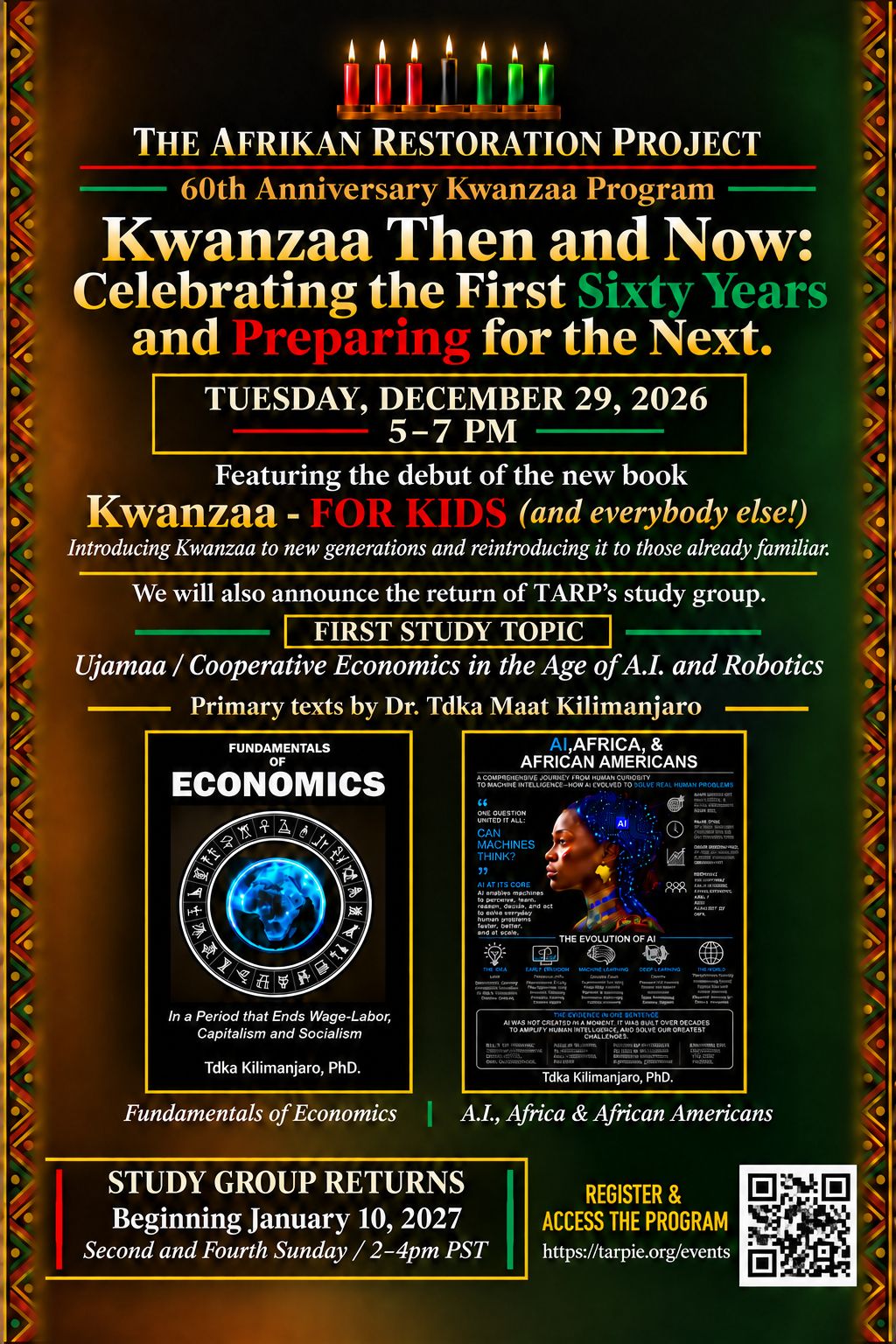
The Afrikan Restoration Project Marks 60 Years of Kwanzaa With New Book and Expanded Focus
Events in San Diego, Detroit, and online will honor the holiday’s origins and prepare for the next sixty years of the Nguzo Saba.
The Afrikan Restoration Project (TARP) announces its 2026 Kwanzaa anniversary season, Dec. 26–Jan. 1, marking sixty years of the African American and Pan-African holiday first observed in Los Angeles in 1966. Under the theme “Celebrating the First Sixty Years of Kwanzaa… and the Next!” the programs share an expanded understanding of the Kwanzaa creation story and thoughtfully promote year-round practice of the Nguzo Saba (Seven Principles).
Central to the celebration is the worldwide debut of the new book titled “Kwanzaa – FOR KIDS (and everybody else!),” written by Shujaa Baker, illustrated by Thad Lavalais, and based on the firsthand accounts of Kinamo and Karama Damu about the first Kwanzaa. The book traces how ten-year-old Kinamo’s questions about African holidays in 1965 inspired the creation of Kwanzaa while recounting the children’s experiences leading up to the first celebrations in 1966. Learn more at kwanzaaforkids.org.
60th Anniversary Events
Dec. 26 | San Diego | 1–4:30 p.m. PT — WorldBeat Cultural Center, Balboa Park. The children’s Kwanzaa Camp celebration and book debut features Karama Damu, a participant in the first Children’s Kwanzaa, along with a Kwanzaa Essentials lesson and lessons from the new book, art, music, drumming, and dance. Instructional content by Imagiread.
Dec. 26 | San Diego | 6–9 p.m. PT — WorldBeat Cultural Center. Umoja (Unity) Night program celebrating the First Sixty Years of Kwanzaa… and the Next! recognizes the first sixty years of Kwanzaa and the work ahead to teach the Nguzo Saba more broadly
Dec. 27 | Detroit | 2–5 p.m. ET — Charles H. Wright Museum of African American History. The Kujichagulia (Self-Determination) program explores Kwanzaa’s past, present, and future, and the role of self-determination in Elevating Blackness.
Dec. 29 | Online | 5–7 p.m. PT — Kwanzaa Then and Now: Celebrating the First Sixty Years and Preparing for the Next. TARP introduces its new book and announces the return of its study group on Jan. 10, 2027 – examining Ujamaa (Cooperative Economics) in the age of AI and robotics.
TARP is merging our work to promote African culture, S.T.E.M., manufacturing, and principled daily practice into a new online program called The Elevating Blackness Online Academy. Launching on December 5th, this site offers educational resources that build character, including curricula for Kwanzaa – FOR KIDS, the STEM ’n ’Nem children’s book series, and partner content.
Visit https://elevatingblackness.com for more info. (For beta test access – TESTER / Innovationary2026!).
TARP also invites public discussion of three position statements on Kwanzaa’s origins, the responsibilities of the next sixty years, and the daily practice of the Seven Principles found here.
Event details and registration: https://kwanzaa.org/events.html and https://tarpie.org/events. Contact Shujaa Baker for interviews, the media kit, and high-resolution images. See tarpie.org for full details.
About The Afrikan Restoration Project
TARP is an African-centered educational and cultural development initiative advancing cultural knowledge, practical capabilities, and principled community development through publications, programming, and collaborative education.
Black Press
Native American Health Center Connects 140 Community Members to Career Opportunities During Native American Heritage Month
The Native American Health Center recently hosted its Career Connect job fair at the Flicker Building and Cultural Center in Oakland, welcoming 140 community members in honor of Native American Heritage Month. Organized through the federally funded Strong Native Workforce Program, the event aimed to promote economic stability by connecting American Indian, Alaska Native, and Native Hawaiian residents with local career pathways. A diverse group of employers from the healthcare, technology, and government sectors attended to provide attendees with information regarding job openings and professional training programs. Read more.
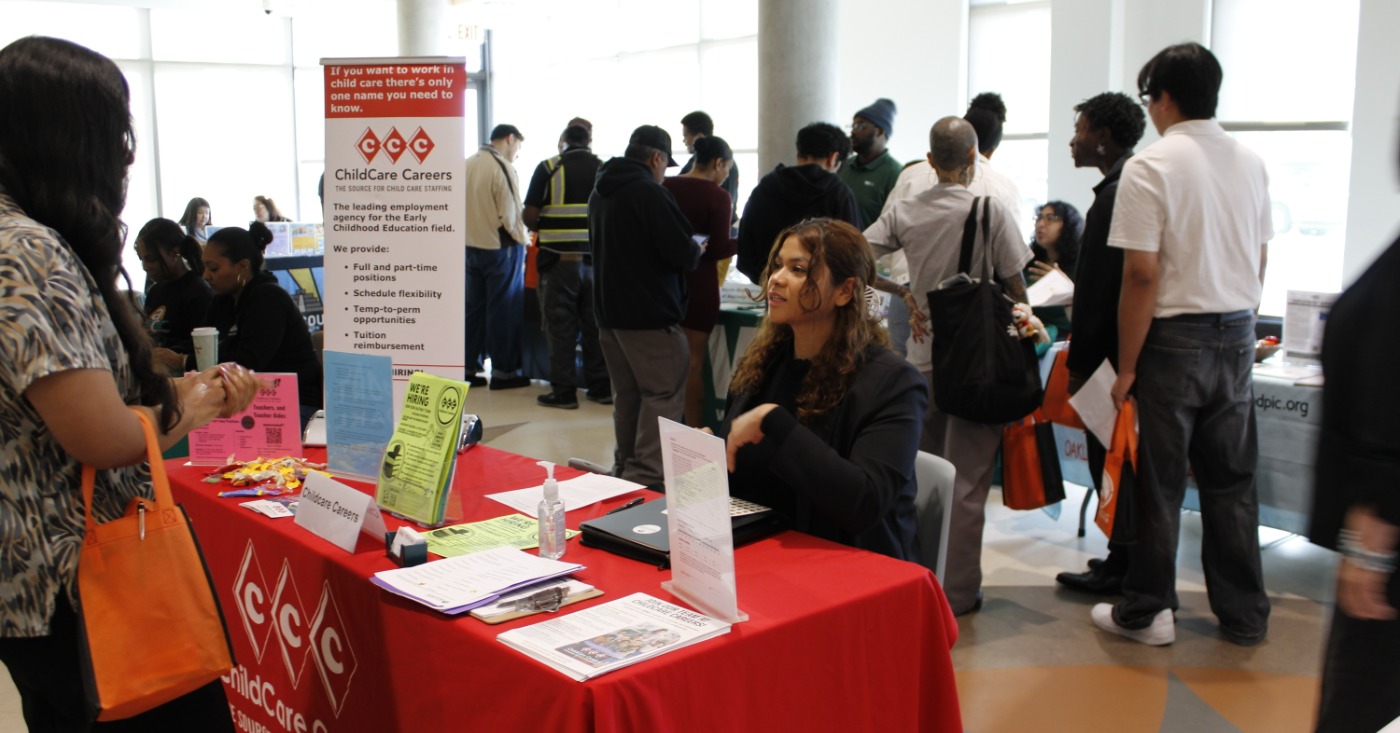
In celebration of Native American Heritage Month, the Native American Health Center (NAHC) welcomed 140 community members to its Career Connect: Community Job & Career Fair on Friday, Nov. 6.
Held at NAHC’s Flicker Building and Cultural Center in Oakland, the event connected American Indian, Alaska Native, Native Hawaiian, and other community members with employers, career pathways, workforce development programs, and family resources throughout the San Francisco Bay Area.
The event was organized through NAHC’s Strong Native Workforce Program, a federally funded initiative supported by the U.S. Department of Labor through the Workforce Innovation and Opportunity Act (WIOA). The program helps Native community members pursue meaningful employment and long-term economic stability through career counseling, job placement assistance, skills training, and supportive services.
The Career Connect Job Fair was coordinated with support from Gallo Advantage Consulting, a Native American woman-owned consulting firm specializing in strategic planning, community engagement, and workforce development. Working alongside NAHC, the firm supported employer outreach, event coordination, and partnerships with local businesses and community organizations.
“Native American Heritage Month is an opportunity to celebrate the strength, resilience, and contributions of our communities while investing in their future,” said Natalie Aguilera, CEO of NAHC. “Employment is an important part of health and well-being, providing economic stability, purpose, and opportunities for individuals and families to thrive. Through our Strong Native Workforce Program and events like Career Connect, we are helping community members build meaningful careers and create stronger futures for generations to come. We are grateful to the employers and community partners who joined us in this effort.”
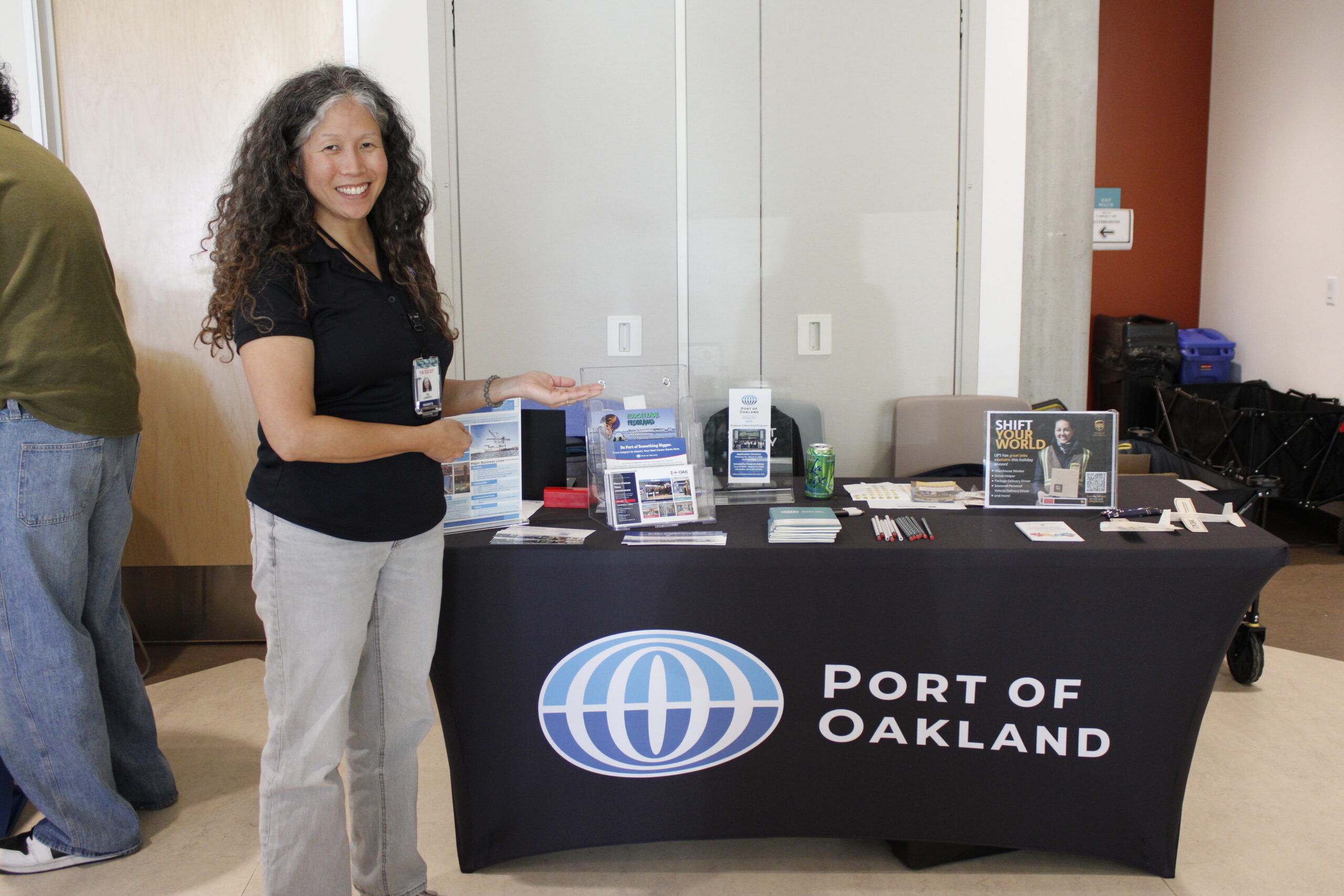
The job fair featured employers across healthcare, technology, government, transportation, education, and other industries. Participating organizations included Cisco Systems, the City of Oakland, East Bay Regional Park District, Kaiser Permanente, Port of Oakland, Sutter Health, Balance Staffing, MANOS Homecare, Inc., Childcare Careers, AC Transit, Samuel Merritt University, Waste Management of Alameda County, Inc., CareBuilders at Home – East Bay, East Bay Municipal Utility District, Patelco Credit Union, and Code Tenderloin.
Workforce development and community partners who shared their resources with participants included the Oakland Private Industry Council, Lao Family Community Development, The Unity Council, West Oakland Jobs Resource Center, Friendship House Association of American Indians of San Francisco, the Washoe Tribe of Nevada and California’s Alameda County Native TANF Program, as well as NAHC’s own Community Wellness Department.
Throughout the event, attendees connected with employers, explored job openings, and learned about apprenticeships, certification programs, training opportunities, and community resources.
Held during Native American Heritage Month, Career Connect highlighted the importance of investing in Native communities through education, employment, and economic opportunity. The event demonstrated the value of bringing employers and community organizations together to support career advancement and build a stronger Native workforce.
About Native American Health Center
Founded in 1972, the Native American Health Center (NAHC) is a nonprofit community health center serving American Indians, Alaska Natives, and surrounding communities throughout the San Francisco Bay Area. NAHC provides culturally responsive healthcare, behavioral health services, and community wellness programs, including workforce development initiatives that support employment and economic opportunity. All individuals are welcome at NAHC. NAHC provides care for 15,000 members annually. NAHC employs almost 300 staff across 17 sites in three counties: Alameda, San Francisco, Contra Costa.
For more information, visit www.nativehealth.org.
About Gallo Advantage Consulting
Gallo Advantage Consulting is a Native American woman-owned consulting firm specializing in strategic planning, community engagement, workforce development, and partnership development. The firm works with public agencies, nonprofits, and community organizations to strengthen programs, build partnerships, and expand opportunities for the communities they serve.
For more information, visit www.galloadvantage.com
Black Press
City Council Hearing Shines a Light on Failures of City’s Prompt Payment Policy
Oakland’s Finance and Management Committee recently held a hearing to address systemic failures in the city’s Prompt Payment Policy, which mandates that vendors be paid within 20 business days. Despite official reports claiming a 96% success rate, local business leaders and Councilmember Janani Ramachandran argue the data ignores the struggles of small firms and nonprofits. Many contractors reported waiting months or even a year for compensation, forcing some to take out loans to survive. Community leaders are now demanding greater accountability for department heads to ensure the city’s business community remains viable. Read more.
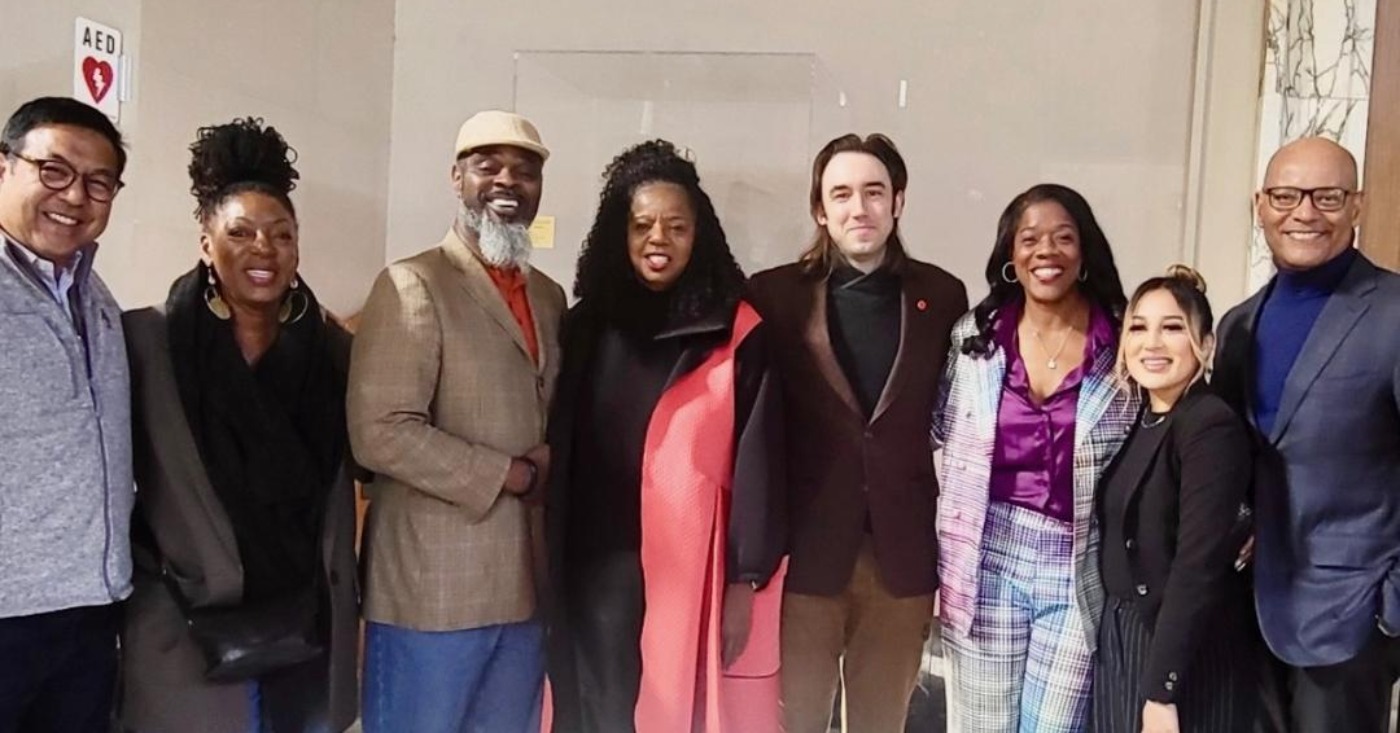
For years, many small businesses and nonprofits have not been paid on time
A City Council hearing this week shined a light on the shortcomings of the implementation of Oakland’s Prompt Payment Policy, which requires the city to pay vendors and consultants within 20 business days for work done for the city.
The hearing, led by Councilmember Janani Ramachandran at the City Council’s Finance and Management Committee on Tuesday, was a discussion of the track record of implementation of the Prompt Payment Policy, which was enacted in 2008 as part of the Oakland Municipal Code to ensure that local vendors are paid promptly and to “increase local business contracting opportunities with the city,” according to a city report.
In 2014, the ordinance was extended to cover local grant recipients.
Ensuring that this policy lives up to its promise is a crucial part of the city’s pledge in the wake of the findings of a Disparity Study in 2024 to end decades of discrimination preventing Black-owned, women-owned, and other small local businesses from obtaining contracts in their own hometown.
“Small businesses are the lifeblood of our city: timely payment is critical for small businesses and nonprofit organizations that provide direct services to our youth and young adults that are typically underfunded and rely on predictable cash flow to sustain operations,” said Ramachandran in a memo requesting a report from city staff on the implementation of the Prompt Payment Policy.
Many small businesses and nonprofits have complained loudly for years that they have not been paid on time. Though the city has produced a report that says over the past five years 96% of vendors were paid promptly, there are concerns that the report did not focus sufficiently on the treatment of small businesses and nonprofits.
In addition, the report did not cover whether subcontractors are paid promptly. A vast majority of the city’s contracts go to a handful of large “prime” contracts, and many small companies perform work as subcontractors of the larger firms.
Speakers at Tuesday’s hearing reported that small companies and nonprofits have not been paid for months or for as long as year, forcing them to take out loans or go out of business while waiting to be reimbursed for costs for employees and resources for work already completed.
City staff did acknowledge that at present the city does not track whether “prime” contactors pay their subcontractors on time.
Speaking at the hearing, Councilmember Ken Houston said that the failure to pay on time has been an issue in the city for at least 15 years.
Cathy Adams, president and CEO of the Oakland African American Chamber of Commerce and representing the Oakland Business Coalition and city’s multi-cultural chambers of commerce, said, “Our small businesses deserve to be paid on time for work they have already performed.”
“(The staff report) does not tell the whole story because the city does not track payment to subcontractors,” she said. “Our (small) businesses cannot operate on promises. They have employees to pay, insurance to maintain, suppliers to compensate, and families dependent on them. When payments are delayed, businesses suffer. Some may not survive.
“Accountability requires prime contractors to pay their subcontractors promptly with clear payment requirements written into every contract (with the city),” she said.
In a statement to the Oakland Post, Adams said, “The City must conduct a comprehensive audit of every department to identify operational failures, inadequate staffing performance, and breakdowns in management oversight.”
“Department heads must be held accountable, and employees who consistently fail to perform their responsibilities must face corrective action, including termination when warranted,” she continued. “Our businesses deserve to be paid promptly for work performed. We are not asking for special treatment; we are demanding fair treatment.”
“Under Mayor Barbara Lee’s leadership, Oakland is moving in the right direction, but we cannot allow bureaucratic failures to undermine our business community,” Adams said.
Black History
Black Barbershops Have Long Given Neighborhood Politics a Place to Unfold.
BLACKPRESSUSA NEWSWIRE — For generations, Black barbershops have served as more than just places for grooming; they have functioned as essential hubs for political debate, neighborhood news, and civic connection. During the era of segregation, these community-owned spaces provided a rare environment where Black residents could gather freely to discuss matters affecting their daily lives.
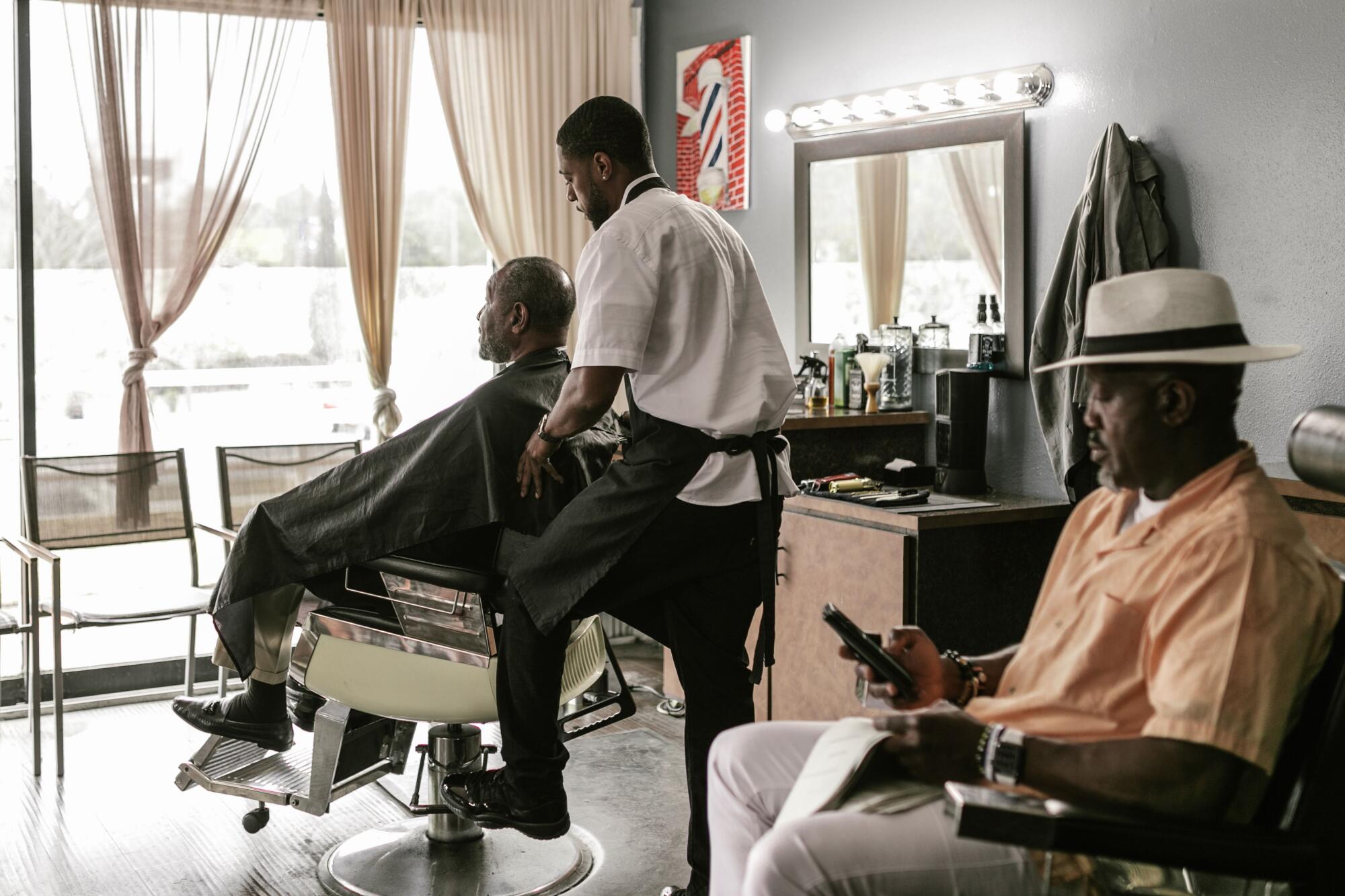
Black barbershops offer space for political debate, neighborhood news, and civic ties. The black barbershop also preserves local stories often missing from official records.
A haircut might bring you through the door. A conversation about a school closing, a city election, or a struggling business might keep you there. Inside a neighborhood shop, people can challenge opinions without needing a microphone.
A familiar storefront can hold decades of public life. Studying its past reveals people who earned a living, debated decisions, and helped neighbors interpret events.
Why Have Black Barbershops Been Important to Their Communities?
An African American barbershop has often combined a practical service with a gathering place. Under segregation, Black residents faced barriers in many public settings. Community-owned shops could offer more room for conversation and connection.
The National Museum of African American History and Culture describes barber and beauty shopsas places where customers discuss matters affecting their lives. Regular visits built relationships across generations.
Barbers often knew which families needed help or which businesses had opened. Waiting customers heard different viewpoints.
The importance of the shop came from trust built over many ordinary visits. A young customer might meet an older neighbor who understood the area’s past. Such relationships gave local conversations staying power and helped turn a routine appointment into a shared community experience.
How Did Black Barbershops Become Places for Political Discussion?
Politics often started with questions about rent, schools, jobs, or fair treatment. Customers connected those problems to elected leaders.
A University of Chicago report examined conversations inside a South Side Chicago shop. Researchers found that patrons debated:
- Political power
- Economic choices
- Leadership
They also disagreed with one another. A black barbershop did not require agreement. Customers could test ideas against those of neighbors.
Some shops supported voter registration and civic groups through personal relationships. Notices on counters or conversations with regulars could bring public issues into daily life. Yet lively debate was not the same as organized activism, and each shop had its own culture.
Black Barbers Built Businesses That Reached Beyond Haircuts
Enslaved and free Black men worked as barbers when many trades were restricted. Ownership later gave some black barbers a path toward greater financial independence, even under unfair laws.
Alonzo Herndon offers one example. According to the Georgia Historical Society, he operated Atlanta barbershops, including the Crystal Palace, and later built a major insurance business. His shops served white customers, reflecting segregation and unequal access.
Herndon’s success was unusual. Black business owners could still turn skilled work into jobs and property. Not all black companies grew large. Neighborhood shops kept commerce local.
Owners also faced rent, competition, and the challenge of building a steady customer base. Their business records can reveal how Black enterprise survived major shifts in the local economy.
Photographs and Newspapers Reveal Neighborhood History
Shop photos show storefront signs, neighboring businesses, clothing, and names painted on windows. Those clues help date images.
City directories can connect a shop name to an address, while maps show whether its block later changed. Each clue adds a piece to neighborhood history without requiring a famous owner or landmark.
Next, try the Library of Congress’s Chronicling America resources. Historic newspapers hold:
- Ads
- Openings
- Local events
- Owners’ names
Older records may use dated language. A useful starting checklist includes:
- Shop names and former street addresses
- Advertisements and business listings
- Photographs with dates or handwritten notes
- Local reporting about civic meetings
Compare records. An ad can confirm a shop’s address, not what customers discussed. Good neighborhood history separates documented facts from personal memories.
Customers’ Memories Fill Gaps in the Public Record
Customers may remember an owner’s nickname. Former barbers can explain busy hours or changes after a nearby factory closed.
Ask about routines and memorable events. Distinguish firsthand knowledge from secondhand stories.
When possible, interview more than one person. Different memories may show how workers and customers experienced the same event.
A recording can be useful, but permission comes first. Explain whether an interview will be shared publicly, kept privately, or donated to a library. Take note of:
- The date
- Place
- Speaker’s preferred name
Differences between memories are clues worth checking, not reasons to dismiss an account.
Modern Grooming Changes, but the Community Role Remains
Today’s African American barbershop operates amid appointment apps and new grooming services.
Some men also explore treatments beyond conventional haircuts. Many who are comparing long-term hair reduction with other grooming choices can learn more here.
A shop’s social value goes beyond its services. Many black barbers still:
- Listen to customers
- Pass along local information
- Create space for people of different generations to meet
The work of black business owners remains part of the wider story of black companies and community investment.
Frequently Asked Questions
How Can You Tell Whether an Old Barbershop Moved?
Start with city directories from several years. Match the owner’s name, phone number, and shop name at each address.
Property records or historical maps may show whether a street was renamed or a building was replaced. Moves may reflect development or shifting customers. Record each address and source.
Can You Share a Historic Barbershop Photo Online?
Owning a print does not guarantee copyright. Identify the:
- Photographer
- Date
- Source collection
A library may allow research access while limiting reuse. Copyright rules can vary by image and age, so avoid assuming that an old photo is free to publish.
Ask about permission when rights remain unclear. Credit the photographer and people pictured when their names are known. Respect requests from families who prefer sensitive images to remain private.
How Can You Preserve a Shop’s History After It Closes?
Collect photos, business cards, notices, and interviews. Label digital files and protect originals.
A local library, historical society, or community archive may help preserve the collection. Include the stories of workers and customers, not only the owner.
Public access can keep a vanished storefront connected to the people who remember it. A short exhibit or digital collection can help younger residents discover that history.
Keep the Black Barbershop Story Alive
A black barbershop can hold pieces of a town’s political, economic, and cultural history. Preserving those pieces starts with listening carefully and checking the record.
Continue exploring our other guides and articles for more stories about Black history, local businesses, and the communities they serve.
Content provided through ContentManagerIO.
Black Press
COMMENTARY: Money Matters — AI Can Help Your Small Business — But Is It Helping Your Bottom Line?
CHICAGO DEFENDER — Artificial intelligence has transitioned from a science fiction concept to a common resource for researching topics and developing content. While small businesses face increasing pressure to adopt these tools to save time and reduce expenses, experts warn that speed does not always guarantee accuracy.
Not long ago, most of us associated artificial intelligence with science fiction movies or technology companies in Silicon Valley. Today, its emergence in our everyday lives and business operations is impossible to ignore.
From organizing ideas and researching topics to developing content, AI has become an increasingly useful resource. But just because it can produce an answer in seconds doesn’t mean it’s always the right answer.
There’s growing pressure for small businesses to embrace AI. Everywhere you turn, another tool promises to save time, reduce expenses, attract customers or improve productivity, emerges.
But before jumping on the bandwagon, business owners should ask an important question:
Is this technology going to help my business make money, save money, or operate more efficiently?
After all, that’s what business decisions should ultimately come down to.
AI is rapidly becoming part of the small-business landscape in Michigan and across the country. A recent survey of 70 Michigan small businesses participating in Goldman Sachs’ 10,000 Small Businesses program found that 86% use AI, although many are still experimenting with its capabilities.
Clearly, interest is growing. But adoption doesn’t necessarily translate into profitability.
For small-business owners, every dollar counts. Whether investing in employees, marketing, equipment, or technology, you need to understand what you’re getting in return. AI should be no different.
Consider the possibilities. Small businesses can use AI to develop marketing campaigns, generate social media content, draft customer communications, conduct research, and streamline administrative tasks.
For an entrepreneur wearing multiple hats, those capabilities can be valuable.
Imagine reclaiming several hours each week that could instead be spent developing new business, strengthening customer relationships or pursuing sales opportunities.
Time is money, particularly when you’re running a small business.
However, purchasing an AI subscription doesn’t automatically improve your bottom line. Business owners need to evaluate its actual return on investment.
How much time is it saving? Is it reducing expenses? Helping generate sales? Improving customer retention? Making employees more productive?
Those are the measurements that matter.
A recent Federal Reserve survey found that while 46% of employer firms reported using AI, only 7% of those using it said the technology was fully integrated into their business processes. Many companies are still figuring out how to translate AI into measurable results.
My recommendation is to start small.
Identify one area where your business is spending too much time or money. Find an AI tool that might address the challenge. Test it, monitor the results and determine whether the investment makes financial sense.
You don’t need multiple subscriptions or an overhaul of your entire operation to get started.
There’s another consideration: AI is a tool, not a replacement for sound business judgment.
Accuracy, privacy and security matter. Be careful about sharing confidential customer information or proprietary business data. Always review AI-generated information before using it in customer communications or important business decisions.
A faster process isn’t necessarily better if it creates mistakes or damages customer relationships.
There’s also a competitive consideration.
Small businesses have traditionally distinguished themselves through personal service, flexibility, creativity and relationships. Those advantages shouldn’t be sacrificed in the pursuit of automation.
If every business uses AI to produce the same generic marketing messages, what makes one company stand out?
The answer should still be its people, its service and its ability to connect with customers.
AI can help develop the message, but you provide the personality. It can organize information, but you provide the judgment. It can make your operation more efficient, but you determine where the human touch remains essential.
Ultimately, AI could help level the playing field by giving smaller companies access to capabilities that once required larger budgets and bigger teams. That’s an opportunity worth exploring.
But don’t confuse keeping up with technology with running a better business.
Before investing in another AI platform, set clear objectives and decide how you’ll measure success. If it isn’t saving time, reducing costs, improving service, or contributing to revenue growth, reconsider whether you need it.
Artificial intelligence may be changing the way we do business, but the fundamentals haven’t changed. You still need customers, revenue, sound expense management, and smart investment decisions.
At the end of the day, the best technology isn’t necessarily the newest or most expensive. It’s the technology that delivers a measurable return on your investment.
That’s not just smart technology adoption. That’s smart business.
We invite readers, business owners and future entrepreneurs to follow along, ask questions and engage. If you have story ideas or questions, email Lee at [email protected] or visit leegroupinnovation.com.
The post Money Matters: AI Can Help Your Small Business—But Is It Helping Your Bottom Line? appeared first on Chicago Defender.
Based on reporting by Chicago Defender.


Cadillac VISTIQ Road Noise: Test This Before You Buy #shorts

Family and Friends Honor Billy Rabun with Birthday Balloon Release After Deadly Midtown Shooting

Football Blocking Drill: The Moment He Proved Himself #shorts

Build a Business That Lasts: Stay True, Adapt, Grow #shorts

Community Transformation Takes a Lifetime of Commitment #shorts

New to the Twin Cities? Find Your Community with PlayProfessionals #shorts

4 Buyer Pain Points That Make Every Deal Harder #shorts

$96,575 Tahoe: Which Extras Are Worth Paying For? #shorts

How Mentorship Turned Into Unexpected Job Offers #shorts

Networking Events That Turn Strangers Into Friends #shorts

HISTORY MADE: Keisha Lance Bottoms Becomes First Black Woman Elected Governor in American History

Multi-Faith Leaders Representing 10 Million People Launch National Anti-Authoritarian Initiative

Christianity’s Racial History

Hundreds of Black Christian Leaders Arriving in Israel for Martin Luther King-Inspired Mission

Michael Shiner: The Enslaved Man Who Wrote His Way into American History

Keisha Lance Bottoms to Govern State Where Her Great-Great-Grandfather Was Enslaved

Don’t Pass the Torch. Expand the Circle.

DOJ Fights to Keep Rep. Ilhan Omar’s Search Warrant Sealed: Report

OP-ED: Closing the Next Digital Divide — Communities of Color Must Have a Voice in the AI Future

COMMENTARY: Thank You, Trump, for Making America Great Again!
Cadillac VISTIQ Road Noise: Test This Before You Buy #shorts
Family and Friends Honor Billy Rabun with Birthday Balloon Release After Deadly Midtown Shooting
Football Blocking Drill: The Moment He Proved Himself #shorts
Build a Business That Lasts: Stay True, Adapt, Grow #shorts
Community Transformation Takes a Lifetime of Commitment #shorts
New to the Twin Cities? Find Your Community with PlayProfessionals #shorts
4 Buyer Pain Points That Make Every Deal Harder #shorts
$96,575 Tahoe: Which Extras Are Worth Paying For? #shorts
How Mentorship Turned Into Unexpected Job Offers #shorts
Networking Events That Turn Strangers Into Friends #shorts
-
 Black History1 week ago
Black Barbershops Have Long Given Neighborhood Politics a Place to Unfold.
-

 Black History1 week ago
OP-ED: Black voters made history. They laid the groundwork for a Third Reconstruction.
-

 Featured1 week ago
How Sick Must America Get Before Saying Enough to RFK
-

 Black History5 days ago
Hoodoo Heritage Month Celebrates Origins of African American Folk Medicine
-

 Black History5 days ago
PRESS ROOM: Donalds Transition Website Now Open to All Floridians Who Want to Serve
-

 Featured5 days ago
Scott Colom’s Nike Challenge Goes National, Freshman Democrats Get a Surprise 📱
