Connect with us

Black Voice News

California Looks to Lead Nation in Unraveling Childhood Trauma

BLACK VOICE NEWS — Imagine identifying a toxin so potent it could rewire a child’s brain and erode his immune system. A substance that, in high doses, tripled the risk of heart disease and lung cancer and reduced life expectancy by 20 years. And then realizing that tens of millions of American children had been exposed.

Published

on

Image by: blackvoicenews.com

By Anna Maria Barry-Jester

Imagine identifying a toxin so potent it could rewire a child’s brain and erode his immune system. A substance that, in high doses, tripled the risk of heart disease and lung cancer and reduced life expectancy by 20 years.

And then realizing that tens of millions of American children had been exposed.

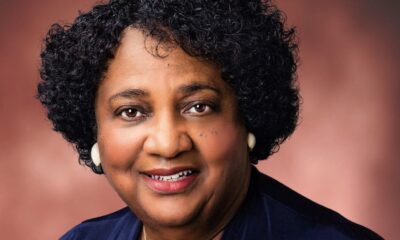
Dr. Nadine Burke Harris, California’s newly appointed surgeon general, will tell you this is not a hypothetical scenario. She is a leading voice in a movement trying to transform our understanding of how the traumatic experiences that affect so many American children can trigger serious physical and mental illness.

The movement draws on decades of research that has found that children who endure sustained stresses in their day-to-day lives — think sexual abuse, emotional neglect, a mother’s mental illness, a father’s alcoholism — undergo biochemical changes to their brains and bodies that can dramatically increase their risk of developing serious health problems, including heart disease, lung cancer, asthma and depression.

“ has probably single-handedly done more to elevate this issue than anyone else,” said Dr. Mona Hanna-Attisha, the pediatrician known for documenting the rise in children’s blood lead levels in Flint, Mich., after the city switched its water supply.

With Burke Harris’ selection as the state’s first surgeon general, California is poised to become a vanguard for the nation in embracing the research that traces adverse childhood experiences, or ACEs, to the later onset of physical and mental illness. In pockets across the country, it’s increasingly common for schools and correctional systems to train staff on how academic and behavioral problems can be rooted in childhood trauma. Burke Harris envisions a statewide approach whereby screening for traumatic stress is as routine for pediatricians as screening for hearing or vision, and children with high ACEs scores have access to services that can build resilience and help their young bodies reset and thrive.

As California’s surgeon general, she will have a powerful bully pulpit — and the firm backing of a new administration with deep pockets. In his first weeks in office, newly elected Gov. Gavin Newsom has made clear he intends to devote significant resources to early childhood development. He has named several recognized experts in child welfare, along with Burke Harris, to top posts, and is promoting child-centric policies that include extended family leave for new parents, home nursing visits for new families and universal preschool. In his first state budget proposal, released last month, Newsom called out ACEs by name and committed $105 million to boost trauma and developmental screenings for children.

“It should be no surprise to anyone that I’m going to be focusing on ACEs and toxic stress,” Burke Harris said in a phone interview just days into the new job. “I think my selection is a reflection of where that issue fits in the administration’s priorities.”

A Game-Changing Study

Adversity is the sort of thing we intuitively understand, at least to some extent. Having a parent who struggles with addiction or mental illness is hard on kids, as is growing up in a neighborhood marked by poverty, gun violence or drug abuse.

A 1990s study laid the groundwork, however, for an understanding of adversity that suggests it poses a pervasive threat to public health.

During interviews with patients at a Kaiser Permanente obesity clinic in Southern California, Dr. Vince Felitti was shocked at how many said they had been sexually abused as children. He wondered if the experiences could be connected. (Kaiser Health News, which produces California Healthline, is not affiliated with Kaiser Permanente.)

As head of the Department of Preventive Medicine at Kaiser Permanente in San Diego, he had access to a huge pool of patients to try to find out. Together with the Centers for Disease Control and Prevention, he surveyed more than 17,000 adult patients about 10 areas of childhood adversity. Among them: Did a parent or other adult in your household physically abuse you? Emotionally abuse you? Sexually abuse you? Go to prison? Was your mother regularly hit? Did you often go hungry? Were your parents divorced? The researchers scored each patient, assigning a point for each yes, and matched up the responses with patients’ medical records.

What they found was striking. Almost two-thirds of participants reported experiencing at least one kind of adversity, and 13 percent — about 1 in 8 — said they had experienced four or more. Those who reported experiencing high doses of trauma as children were far more likely to have serious health problems as adults, including heart disease, stroke, cancer and diabetes. And the higher their ACEs score, the worse their health was likely to be.

This extended to mental health, as well: Adults who reported experiencing four or more ACEs were 4.6 times as likely to have clinical depression and 12 times as likely to have attempted suicide.

In the 20 years since, scientists have built on the research, replicating the findings and digging into the “why.” In the simplest terms, traumatic events trigger surges in cortisol, the “stress” hormone. When those surges go unchecked for sustained periods, they can disrupt a child’s brain development, damage the cardiovascular system and cause chronic inflammation that messes with the body’s immune system.

And where children really get into trouble is when they also are missing the best-known antidote to adversity: a nurturing and trustworthy caregiver. Without that positive stimulation, children can end up with an overdeveloped threat response and a diminished ability to control impulses or make good decisions. Children with high ACEs scores are more likely to develop attention deficit hyperactivity disorder, known as ADHD, and cognitive impairments that can make school a struggle. They are more likely to grow into adults who drink to excess, are violent or are victims of violence.

The research is compelling, because it has the potential to explain so many intractable health problems. What if some portion of Generation ADHD really has PTSD? What if obesity and hypertension are disorders with roots in childhood experiences, and not just what we eat for dinner?

‘What Happens To You Matters’

Until now, Burke Harris’ professional epicenter has been Bayview-Hunters Point in San Francisco. It’s a vibrant community with a history of activism, but also deeply impoverished, and blighted by pollution and violence. It was there that Burke Harris, at her pediatric clinic, noticed that many of her young patients with serious medical conditions also had experienced profound trauma. And patients who had experienced serious adversity were 32 times more likely to be diagnosed with learning and behavioral problems than kids who had not.

When a colleague introduced her to the ACEs study, she saw her patients written between its lines. Though these problems might be concentrated in Bayview, they certainly weren’t confined there. This was a health crisis transcending race, class and ZIP code.

In the years since, Burke Harris has worked to advance ACEs science though her work at the clinic and her nonprofit research institute, the Center for Youth Wellness. She regularly travels the country to train fellow pediatricians in trauma screening and treatment. She has written an acclaimed book on the issue, “The Deepest Well,” and her TED talk on the topic has been viewed nearly 5 million times online.

Now, she’ll be directing her singular focus back on California.

She plans to start with a statewide tour to hear from doctors and other health leaders about barriers to increasing pediatric screening and care. She’ll also be talking about the science of ACEs. “It’s Public Health 101 that raising awareness is a critical form of primary prevention,” she said.

But even with the funding included in Newsom’s budget, there are challenges to standardizing trauma screening. For one: In medicine, it’s common practice that you screen only for what you can treat. Many doctors — even those persuaded by research on adversity — have raised concerns about the lack of established protocols for treating childhood trauma. What can a pediatrician, with her 15-minute time slots and extensive to-do list, do about the ills of an absent parent, or a neighborhood riddled with gun violence?

In general, experts working on the issue say a critical ingredient in helping kids heal is ensuring they find and develop healthy relationships.

“All of us want to feel seen, heard, understood and supported,” said Alicia Lieberman, a researcher at the University of California-San Francisco who specializes in early childhood trauma. Involving parents is an essential aspect of treatment, particularly because so many have experienced trauma themselves. “It has to start with an acknowledgment that what happens to you matters.”

Researchers have found early success in seemingly simple interventions: Therapists coaching parents by filming and playing back positive interactions with their child. Therapists working with teachers on how to support their students. Key to success, said Pat Levitt, chief scientific officer at Children’s Hospital Los Angeles, are quality programs that start early and recognize the role of relationships.

At her clinic, Burke Harris coordinates with a team that wraps a child in care, treating mind and body. When a patient scores high on the adversity scale, she can send them down the hall to a therapist; connect them with classes on meditation, nutrition and exercise; involve the family in counseling; and aggressively monitor for and treat any physical manifestations.

Most clinics aren’t set up for this staff-intensive approach.

Dr. Andria Ruth, a pediatrician with the Santa Barbara Neighborhood Clinics in California, is among those researching how to “treat” adversity within a more traditional doctor’s office. Her research team is randomly assigning patients who screen positive for trauma into one of three groups. One group is assigned a navigator who connects the family to services for basic needs, such as food and housing. A second group also sees a behavioral health therapist at their child wellness visits. The third group receives both those services, and gets home family visits from therapists.

Ruth has a healthy skepticism about what’s possible, but she and her colleagues are convinced childhood trauma does pose a potent health threat: None of them felt comfortable including a control group that wouldn’t receive any services.

In the big picture, these experts say, addressing the fallout of traumatic stress will require a broader paradigm shift, to a system that recognizes that bad behavior can be a physical symptom rather than a moral failing. Gov. Newsom has signaled a move in that direction: In January, he said he would transfer the Division of Juvenile Justice out of the Department of Corrections, which runs the state’s prison system, and into the Health and Human Services Agency.

Garnering that kind of official backing is a powerful boost, said Jason Gortney, director of innovation at the Children’s Home Society of Washington, that state’s oldest and largest nonprofit dedicated to child welfare. His organization has lots of programs with promising results, he said, but connecting them to state agencies that aren’t used to working together is a challenge.

With Burke Harris crusading from the surgeon general post, Gortney said, he and fellow advocates across the country are hoping California can provide a beacon.

“Maybe California can show some of the other states how to do this,” he said.

This story was produced by Kaiser Health News, which publishes California Healthline, an editorially independent service of the California Health Care. Black Voice News is a distribution partner of Kaiser Health News.

This article originally appeared in Black Voice News.

Continue Reading
Advertisement
Comments

Austin R. Cooper

Gerald E. Rose Expands Civil Rights Movement Through NOHRO Across U.S.

BLACKPRESSUSA NEWSWIRE: Gerald E. Rose is building a national civil rights network through NOHRO, expanding grassroots advocacy to fight systemic barriers and support underserved communities across the country.

Published

on

Building on a family legacy, Rose leads a growing national effort to fight systemic barriers and empower underserved communities through grassroots advocacy

By Austin R. Cooper, Jr.
Washington Informer

Gerald E. Rose is transforming a family legacy of civil rights advocacy into an expanding national movement through the New Order Human Rights Organization (NOHRO).

Rose has turned a family legacy of activism into a growing national movement for justice. As the founder of NOHRO, Rose is leading an expanding grassroots campaign to fight systemic barriers faced by Black Americans and underserved communities nationwide.

What started as a local effort has gradually expanded into a broader platform for advocacy, accountability, and community empowerment.

A Legacy That Inspired a Movement

Rose’s dedication to social justice is strongly influenced by his father, the Rev. Floyd Rose, a well-known civil rights advocate in Toledo, Ohio, recognized for his efforts to defend the dignity and rights of marginalized communities.

Growing up, he witnessed firsthand how advocacy can create change and why it’s crucial to stand up for those whose voices are frequently ignored.

“My father believed advocacy meant standing in the gap for people who didn’t always have someone fighting for them,” Rose said. “That principle guides everything I do.”

For Rose, founding the New Order Human Rights Organization was more than just creating an organization — it was carrying on a mission his father devoted his life to.

From Local Effort to National Vision

Under Rose’s leadership, NOHRO, established in 2000 and based in Atlanta, Georgia, has expanded to serve 17 cities nationwide, creating a network of activists, community leaders, and volunteers dedicated to addressing local family issues.

However, his vision extends well beyond the organization’s current scope. He plans to expand the foundation’s presence to 50 cities by the end of 2026, creating a nationwide network that can quickly respond to civil rights issues and community needs.

“We want to be where the need is greatest,” Rose said. “Real change happens when communities are organized and empowered to advocate for themselves.”

Confronting Barriers to Opportunity

The organization tackles issues that often overlap in the lives of marginalized communities. Its priorities include fighting racial profiling, helping individuals overcome employment barriers, supporting students and families facing challenges in the school system, and advocating for meaningful education reform.

Through advocacy, community outreach, and collaboration with local leaders, the organization seeks to highlight inequities and provide practical support to individuals facing these challenges.

Rose believes that tackling these issues together is essential to creating genuine, lasting change.

NOHRO has been involved in several cases that have garnered both national and international news coverage, including, but not limited to, the following:

  • Leon Moss, Jr., a young man being held at the Fulton County Jail on contested charges. The New Order team works with legal experts and media to pursue justice.
  • Ahmaud Arbery, a 25-year-old murdered in a hate crime, was among the first to rally outside the Glynn County Courthouse.
  • Terrell Carter Jr., a 39-year-old man with a history of mental illness, was shot 24 times in East Toledo, Ohio.
  • Sandra Bland, a 28-year-old woman, died while in police custody in Texas.


Rose is also familiar with controversy. He publicly supported Michael Vick during the dogfighting scandal, even writing him weekly letters while in prison. “Everybody said, ‘Gerald, why are you supporting him?’ But I also saw the bigger picture – a man, not just his mistakes.”

Empowering Communities Via Advocacy

Beyond raising awareness, the NOHRO aims to empower communities with resources and support systems designed to help individuals overcome institutional barriers.

Community workshops, partnerships with local organizations, and grassroots organizing are key components of the foundation’s strategy. By building strong local networks, Rose aims to improve communities’ capacity to advocate for themselves.

“Empowerment begins when people realize they are not alone,” Rose said. “Our duty is to help communities organize, speak out, and demand the opportunities they deserve.”

Creating a Legacy for Future Generations

For Rose, the work involves not just tackling today’s challenges but also building the foundation for future generations.

By expanding the organization’s reach and strengthening partnerships across communities nationwide, he aims to build a sustainable movement capable of influencing policies and increasing opportunities for those who have historically been marginalized.

“Our mission goes beyond today’s problems,” Rose said. “It’s about creating pathways for the next generation to succeed and making sure that justice and opportunity are rights, not privileges.”

For more information on NOHRO, please visit www.nohro.com or call (800) 346 -5138.

Continue Reading

Black Press

Briefing Room Bedlam: Misinformation and Racial Undertones Taint White House Press Corps

BLACKPRESSUSA NEWSWIRE — As White House Press Secretary Karoline Leavitt continued her boss’s vicious attacks on former President Joe Biden and made it evident that Trump believes any judge that goes against his controversial policies should be impeached

Published

on

The White House in Washington D.C., the North Gate

https://www.youtube.com/watch?v=12mbmvfn9ps

Continue Reading

Advice

Keeping it Real: Former Assemblymember Cheryl Brown Advocates for Aging Population

BLACK VOICE NEWS — Anyone who has cared for an elderly loved one understands the challenges that lie ahead for these individuals, their families and community. The challenges are many and varied. They include everything from making ends meet on a fixed income while the cost of living continues to increase year over year, the healthcare frailties that come with aging especially for those minority and low income communities that suffer from comorbidities at higher rates than their white and more economically secure peers,  housing, the need for in home support, transportation, and suicide rates that increase with age. 

Published

on

Former Assemblymember Cheryl Brown was appointed to the California Commission on Aging(CCoA) in 2017 and in November was reelected to a second term as the organization’s chair. Credit: Chris Allen, BVN

By S.E. Williams

Every day in America about 10,000 people turn 65 years of age and experts project that by the year 2035  those 65 and older will outnumber  those under the age of 18 for the first time in the nation’s history.

In California the number of residents  60 years and older is projected to triple  in the coming years–those numbers, however, vary widely by region with the Inland Empire outpacing much of the state.

According to the California Department of Aging between the years 2010 and 2060 the number of seniors in Riverside County is expected to increase by more than 248%, while San Bernardino’s population over the age of 60 years is projected to grow by more than 202%.

By 2060 the number of seniors in Riverside County is expected to increase by more than 248%, while San Bernardino’s population over the age of 60 years is projected to grow by more than 202%. (aging.ca.gov)

Anyone who has cared for an elderly loved one understands the challenges that lie ahead for these individuals, their families and community. The challenges are many and varied. They include everything from making ends meet on a fixed income while the cost of living continues to increase year over year, the healthcare frailties that come with aging especially for those minority and low income communities that suffer from comorbidities at higher rates than their white and more economically secure peers,  housing, the need for in home support, transportation, and suicide rates that increase with age.

As individuals and as a community the need for resources and support will continue to expand as the aging population grows. It is for these and a plethora of other reasons related to this issue that the inland region is fortunate to have a strong advocate working and advocating at the state level who understands this issue and is a strong voice for the region’s aging population.

Former Assemblymember Cheryl Brown was appointed to the California Commission on Aging(CCoA)  in 2017 and in November was reelected to a second term as the organization’s chair.

“There are only four kinds of people in the world: those who have been caregivers, those who are currently caregivers, those who will be caregivers, and those who will need caregivers.”

Rosalynn Carter

Brown leverages her experience and compassion as a family caregiver coupled with her leadership and legislative acumen to help guide the efforts of the  organization.

Her major accomplishments with CCoA include her role as a founding member of  the Stakeholder Advisory Committee for the California Master Plan on Aging (MPA).

This plan prioritizes the health and well-being of older Californians and people with disabilities. But it is more than a plan. It is a “blueprint” for state and local governments in addition to the private sector and philanthropic organizations to prepare the state and local communities for the growing demographic changes and to help ensure equity remains at the forefront.

With the inland region expected to be home to so many of the state’s aging population, having a fierce advocate in our midst will help ensure the concerns of this community on this issue has an important seat at the table.

Of course this is just my opinion. I’m keeping it real.

The post Keeping it Real: Former Assemblymember Cheryl Brown Advocates for Aging Population appeared first on Black Voice News.

Continue Reading

Black History

Keep It Local Business Fund Grants $200k to Community Entrepreneurs

BLACK VOICE NEWS — The Keep It Local Business Fund has awarded $200,000 in microgrants this year to community entrepreneurs across the country. “These 20 entrepreneurs demonstrated not only a clear vision and plan for their businesses, but a drive to create solutions, opportunities and positive change for their communities,” said Shireen Santosham, Executive Director of the Nextdoor Kind Foundation in a press release. “It’s a privilege to introduce these innovative business owners as Keep It Local Business Fund grant recipients and connect them with financial resources and a network of cohorts to help fuel their ongoing growth.”

Published

on

Keep It Local Business Fund Grants $200k to Community Entrepreneurs. Credit: Chris Allen, BVN

By Ellen Perrault

On #GivingTuesday, November 28, the Nextdoor Kind Foundation awarded 20 U.S. small business owners of color microgrants from the Keep It Local Business Fund in partnership with the NAACP, and Hello Alice, the free platform helping over one million small businesses launch and grow.

Four of the 20 grantees are located in California including The Daisy Refillery located in San Francisco; FreeJac Nation in Oakland; I Know a Place located in Los Angeles; and Kindness and Mischief Coffee, also located in Los Angeles.

The Keep It Local Business Fund has awarded $200,000 in microgrants this year to community entrepreneurs across the country.

“These 20 entrepreneurs demonstrated not only a clear vision and plan for their businesses, but a drive to create solutions, opportunities and positive change for their communities,” said Shireen Santosham, Executive Director of the Nextdoor Kind Foundation in a press release. “It’s a privilege to introduce these innovative business owners as Keep It Local Business Fund grant recipients and connect them with financial resources and a network of cohorts to help fuel their ongoing growth.”

More than 11,000 applications were received from across the country during the  application period for this grant round,

Unified by a vision for growth and a commitment to their communities, this period’s grantees represent a diverse spectrum of proposals and industries spanning real estate and preservation, wellness and beauty, counseling and educational services, culinary and more.

“The NAACP extends a heartfelt congratulations to the recipients of this year’s Keep It Local Business Fund,” said NAACP President and CEO, Derrick Johnson.  “This grant initiative further underscores the transformative power of a thriving community through its small business owners. We celebrate not only the achievements of these 20 entrepreneurs but also the potential they hold to inspire and uplift their communities.”

In addition to the grant, recipients will receive resources and tools to grow their business including pro bono advertising on the Nextdoor (NYSE: KIND) platform and access to personalized training.

Follow this link to learn more about the 2023 grant recipients.

The post Keep It Local Business Fund Grants $200k to Community Entrepreneurs appeared first on Black Voice News.

Continue Reading

Black History

Rising Cases of Congenital Syphilis in Newborns Highlight Need for Timely Testing and Treatment

Published

on

By Breanna Reeves | Black Voice News

Cases of syphilis in newborns in the U.S. continue to rise, according to a recent report issued by the U.S. Centers for Disease Control and Prevention (CDC). The report emphasized a tenfold increase in cases in 10 years with a total of 3,761 cases of congenital syphilis in 2022 compared to about 335 cases in 2012.

“The congenital syphilis crisis in the United States has skyrocketed at a heartbreaking rate,” said CDC Chief Medical Officer DR. Debra Houry in a press release. “We’re calling on healthcare providers, public health systems, and communities to take additional steps to connect mothers and babies with the care they need.”

Syphilis is a sexually transmitted infection (STI) that is caused by bacteria and is spread through sexual contact. The infection evolves over four stages: primary, secondary, latent and tertiary, where symptoms and signs can progress.

Symptoms of syphilis in the primary stage include sores and can progress in the secondary stage to multiple sores and rashes. In the latent stage, there are no visible symptoms and without treatment, syphilis can exist in the body for years, according to the CDC.

“Syphilis is sometimes referred to as ‘the Great Pretender’ because symptoms can often appear like other diseases throughout the first stages,” according to a statement from San Bernardino County’s Department of Public Health. “However, syphilis should be included in testing for STDs, especially since symptoms can go away on their own but create other complications later.”

Congenital syphilis is a disease that is the result of a mother with syphilis passing the infection to the baby during pregnancy. Syphilis during pregnancy can result in miscarriages, stillbirth and infant death among other long-term medical issues.  In 2022, 231 stillbirths and 51 infant deaths were reported to the CDC.

The CDC’s report found that nearly nine in 10 cases of newborn syphilis in 2022 could have been prevented “with timely testing and treatment during pregnancy.” More than half of cases were among people who tested positive, but never received adequate or timely treatment.

Roughly 40% of cases occurred in mothers who were not in prenatal care. In an emailed statement, the California Department of Public Health (CDPH) noted that “maternal risk factors associated with congenital syphilis in California include a lack of or late prenatal care, substance use, experiencing homelessness, a previous history of syphilis, and incarceration in the previous twelve months.”

One important risk factor for contracting syphilis is where people live. Some counties have higher rates of syphilis among reproductive-age women than others. Other factors that contribute to the rising cases of syphilis include social and economic factors that have created barriers to high quality prenatal care and ongoing declines in prevention, infrastructure and resources, explained Bethan Swift, CDC Epidemic Intelligence Service Fellow.

Swift works with the Riverside County Department of Public Health. In July, the department issued a public health advisory regarding “concerning syphilis trends” and the national shortage of Bicillin-LA, an antibiotic used to treat syphilis and other bacterial infections. Riverside County reported 42 cases of congenital syphilis in 2021, which represented a 55.6% increase in cases since 2019.

In San Bernardino County, congenital syphilis has primarily impacted Hispanic/Latino infants, Non-Hispanic white infants, and Non-Hispanic Black or African American infants, according to the County Department of Public Health.

According to the CDC, California had the 11th highest congenital syphilis rate of all states in 2021. Thirty-seven of California’s 61 local health jurisdictions reported at least one case of congenital syphilis in 2021. The CDPH reported congenital syphilis cases increased from 33 cases in 2012 to 528 cases in 2021.

In 2022, there were 615 congenital syphilis cases reported to CDPH. The highest congenital syphilis rates were among those who identify as American Indian/Alaska native (941.3 cases per 100,000 live births) and African American (383.6/100,000), compared to Hispanic populations (173/100,000) and white populations (133.42/100,000).

In an effort to address congenital syphilis cases, the CDPH’s Sexually Transmitted Diseases (STD) Control Branch has expanded syphilis screening recommendations for the prevention of congenital syphilis. Additional recommendations include at least one screen for syphilis for all sexually active people who could become pregnant, with additional screening for those at increased risk.

“Ensuring syphilis screening among pregnant people (and timely treatment if positive) is a first step toward prevention of mother to child transmission of syphilis,” according to CDPH.

In order to address the increase in congenital syphilis, an expansion of adequate services must occur to ensure that more people are accessing prenatal care and are getting screened, as well as getting prenatal care earlier, before the third trimester. Expansion also includes implementing syphilis screenings for people who are or could become pregnant in other settings like jails and homeless encampments.

This article is published as part of the Commonwealth Health Equity Reporting Fellowship.

The post Rising Cases of Congenital Syphilis in Newborns Highlight Need for Timely Testing and Treatment appeared first on Black Voice News.

Continue Reading

Black Voice News

UCLA Suffers 7-17 Loss to ASU in Uninspired Plays

BLACK VOICE NEWS — The Bruins lose their first game at home all year and are (6-4) overall. UCLA travels across town to play their rival USC at the Coliseum on Saturday. A win against the Trojans will go a long way towards a better bowl bid and salvaging the season.

Published

on

Bruins suffer a loss to visiting ASU in a game of rotating quarterbacks and uninspired play. The Sun Devils were (2-6) overall and certainly the underdogs coming in, yet they stopped the UCLA offense inside the twenty twice, yielding no points and winning 17-7.

On the most critical fourth down attempts, the UCLA offense was unsuccessful each time, turning the ball over on downs and giving ASU renewed energy. Former third-string quarterback Collin Schlee started the game, then was replaced by fourth-string Chase Griffin to finish a game that had already been won.

For the Bruin faithful, the game was a dismal 3-0 contest until midway through the third quarter as the Bruins just couldn’t sustain countless scoring drives. Schlee finally ended the scoring drought by hitting wide receiver Logan Loya for a 16-yard score in the fourth.

The Bruins lose their first game at home all year and are (6-4) overall. UCLA travels across town to play their rival USC at the Coliseum on Saturday. A win against the Trojans will go a long way toward a better bowl bid and salvaging the season.

While on assignment for GamePro Magazine in 1996, Jon Gaede met former Black Voice Sports Editor Leland Stein at a Los Angeles Lakers game. They formed a working relationship which has endured for 24 years. In addition to African safaris, theater productions, Footsteps to Freedom Tours with Black Voice News Publisher Emeritus Cheryl Brown, concerts, and portraits, Jon’s true passion comes from shooting action sports images. Jon has covered a variety of prep, collegiate and professional sports from track & field to boxing, including six Olympic Games.

The post UCLA Suffers 7-17 Loss to ASU in Uninspired Plays appeared first on Black Voice News.

Continue Reading

SIGN UP TO RECEIVE NEWS UPDATES IN YOUR INBOX

Subscribe

* indicates required

Like BlackPressUSA on Facebook

Advertisement

Advertise on BlackPressUSA

advertise with blackpressusa.com

Latest News