
Law
Boudin Runs for District Attorney
OAKLAND POST — Running for San Francisco District Attorney to challenge the system of mass incarceration, SF Deputy Public Defender Chesa Boudin has gained the backing of civil rights attorney Pamela Price and other East Bay progressives.


Running for San Francisco District Attorney to challenge the system of mass incarceration, SF Deputy Public Defender Chesa Boudin has gained the backing of civil rights attorney Pamela Price and other East Bay progressives.
“The system is broken,” Boudin said, speaking at a fundraiser in Oakland on Sunday, June 23. ” If we can’t do better in San Francisco, in the Bay Area, where can we do better?”
Hosting the fundraiser were Price; civil rights icon Howard Moore Jr; Fania Davis, a leading national voice on restorative justice; Allyssa Victory, Shirley Golub, Royl Roberts and Sheryl Walton. Boudin’s San Francisco endorsements include former Assemblyman Tom Ammiano, Democratic Party Chair David Campos and Supervisors Hillary Ronen, Aaron Peskin and Sandra Fewer.
Boudin has served as Deputy Public Defender since 2015, handling over 300 felony cases. He is running against Suzy Loftus, Nancy Tung, and Leif Dautch – who hope to succeed eight-year incumbent DA George Gascón, who is not running for reelection. The election takes place on Nov. 5.
A graduate of Yale Law School, Boudin earned a masters’ degree in public policy and is a Rhodes Scholar. His campaign emphasizes that he knows “firsthand the destructive impacts of mass incarceration.” He was only 14 months old when his parents were incarcerated for driving the getaway car “in a robbery that tragically took the lives of three men.” His mother served 22 years, and his father may never get out.
Introducing Boudin at the fundraiser, Price said, “When I heard about this young man, I did my research. I was blown away immediately. We have a real warrior among us. We have someone who has overcome obstacles, whose life, profession and whose spirit epitomizes what we need in our district attorney.”
“We know that our criminal justice system has been completely corrupted by injustice and racism,” she continued. “(The system) is upheld and sustained by people who practice it and are committed to its perpetuation… Chesa is in so many ways our greatest hope.”
In his remarks, Boudin called for an end to criminal justice practices that are institutionalized but have clearly failed.
“We know that we have 25 percent of the world’s prison population in the U.S., and 2.2 million people are behind bars on any single day,” he said.
“We’re promised equal justice under the law, but instead we have discriminatory money bail,” he said. “We believe in treating the mentally ill and the drug addicted, but instead this system puts them in solitary confinement.”
Boudin’s program includes creation of a “Wrongful Conviction Unit,” would decide whether to reopen the investigation of certain cases, eliminating cash bail, effectively prosecuting police misconduct and refocusing resources to work on serious and violent felonies.
“(Change) has to start with people who understand how profoundly broken the system is, not just because they read it in a book but because they experienced it,” he said.
For more information about Chesa Boudin’s campaign, go to www.chesaboudin.com/












Black Press
Botham Jean’s Killer Granted Parole 7 Years After His Murder
MICHIGAN CHRONICLE — Former Dallas police officer Amber Guyger has been granted parole, seven years after her conviction for murdering Botham Jean inside his Dallas apartment. The Texas Board of Pardons and Paroles approved her release on October 1, seven years to the day after her murder conviction. Guyger was convicted in 2019 and sentenced to 10 years in prison for Jean’s 2018 death.
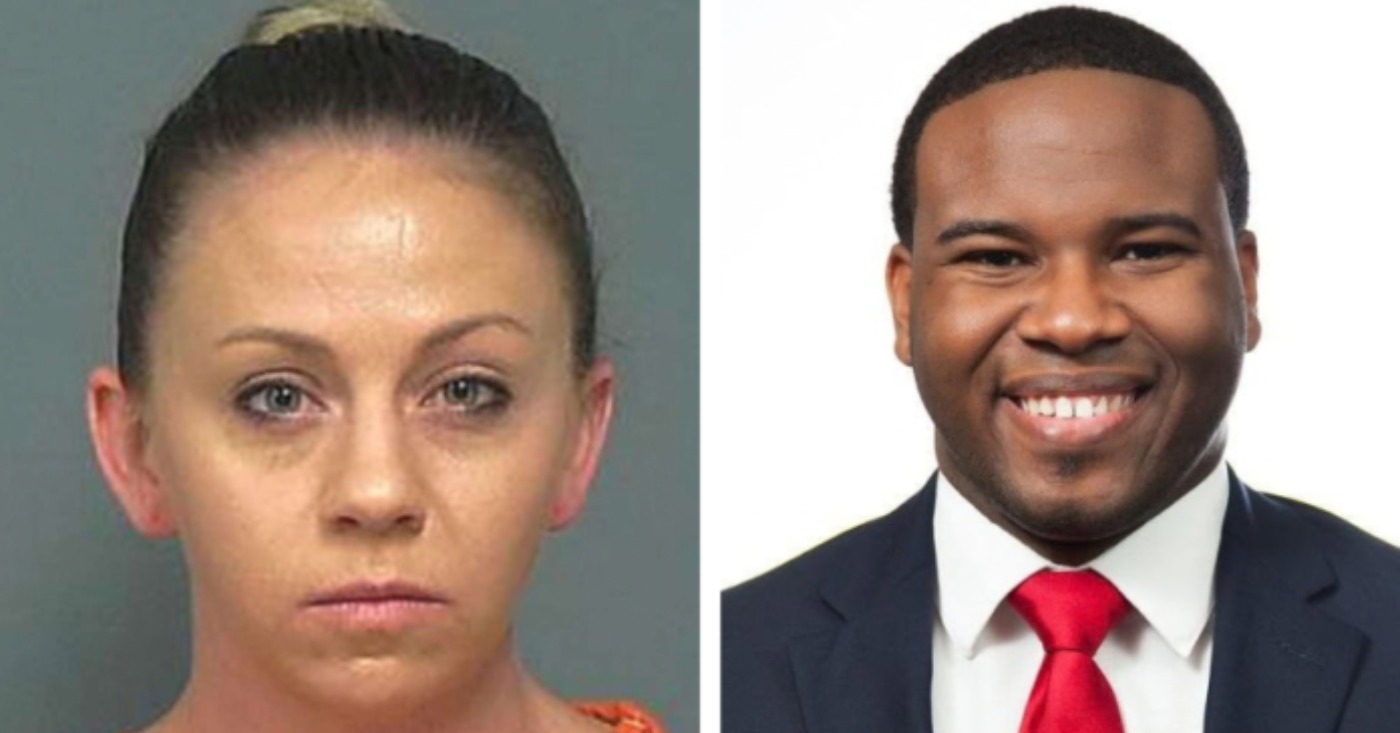
Former Dallas police officerAmber Guyger has been granted parole seven years after she was convicted of murdering her neighbor,Botham Jean, inside his Dallas apartment.
The Texas Board of Pardons and Paroles approved Guyger’s release Thursday (October 1), seven years to the day after Guyger was convicted of Jean’s murder, according to NBC News.
In 2019, a jury convicted Guyger of murder and she was sentenced to 10 years in prison for Jean’s 2018 death. Her conviction and 10-year sentence were upheld on appeal in 2022.
Geyger’s first parole request was denied in 2024, NBC Dallas-Fort Worth reported.
The Dallas Police Department fired her after the shooting. During her trial, Guyger testified that she mistakenly entered Jean’s apartment after returning home from work, believing it was her own apartment one floor below.
She said she saw Jean inside and fired her weapon because she believed he was an intruder, according to NBC News.
Jean was a 26-year-old Black man from St. Lucia who worked as an accountant. He was inside his home eating ice cream when Guyger entered and shot him, NBC DFW reported.
The parole board cited Guyger’s prison record in approving her release. According to NBC DFW, officials said she did not have a documented pattern of violent or assaultive arrests or convictions, maintained a satisfactory adjustment while incarcerated, and completed programs intended to help her obtain and maintain employment.
Jean’s family opposed the parole decision and had asked that Guyger serve her full 10-year sentence, according to NBC DFW.
Civil rights attorney Lee Merritt, who represents the family, told NBC DFW that the decision was deeply disappointing.
“They stood up again and again to ask that the full sentence be served,” Merritt said.
The Dallas Police Department told NBC DFW that the parole decision was outside its authority and that the department had no role in determining whether Guyger would be released. The department said its thoughts remained with Jean’s family and others affected by his death.
Guyger’s conviction and 10-year sentence were upheld on appeal in 2022.
A civil jury ordered Guyger to pay Jean’s family $98.6 million in damages in 2024, according to NBC DFW.
Guyger’s release date has not been announced. NBC News reported that the Texas Department of Criminal Justice will determine when she is released.
The Black Information Network is your source for Black News! Get the latest news 24/7 on The Black Information Network. Listen now on the iHeartRadio app or click HEREto tune in live.
Based on reporting by Michigan Chronicle.
Black Press
OP-ED: Proposition 40: It’s Time to Play Chess, Not Checkers
Proposition 40 would impose a one-time 5 percent tax on the wealth of Californians with more than $1 billion in assets. Most of that money would go toward health care, with the remainder supporting food assistance and education-related programs.

Black Press
New York Prosecutors Reopen Alleged Cornell University Gang Rape Case
NEW YORK BEACON — Prosecutors in Tompkins County, New York, have reopened an alleged gang rape case from 2024 involving Cornell University. The decision follows a civil lawsuit filed by the alleged victim, Jane Doe, against several fraternity members. District Attorney Matthew Van Houten confirmed his office is examining conflicting claims and intends to present the case to a grand jury.

Cornell University is at the center of a developing matter involving an alleged gang rape case that took place in 2024. Prosecutors are reopening the matter after the alleged victim filed a civil lawsuit against a group of fraternity members at Cornell University.
ABC News reports that prosecutors in Tompkins County in Central New York State are examining the claims made by a Jane Doe, the alleged victim of the assault. According to Tompkins County District Attorney Matthew Van Houten, his office is examining whether or not to bring charges but did share that there are two conflicting claims at the heart of the matter.
“It’s our intention to present the case to the Tompkins County grand jury with Jane Doe’s cooperation,” Van Houten told the outlet. “We want to reexamine whether there’s additional evidence that we were not aware of in November of 2024, that exists now that would change our assessment of the case and would result in the grand jury finding that there was criminal conduct.”
Back in 2024, the Jane Doe and former student accused seven current and former members of the Chi Phi fraternity of assaulting her, leading to the chapter’s expulsion from Cornell University. The school conducted an investigation, and initially, Doe did not say she was drugged and forced into acts. Doe’s lawsuit is now alleging the fraternity members drugged and assaulted her.
“She never says that she was drugged without her knowledge. She admits to taking drugs and alcohol voluntarily and with knowledge. She does not allege that she was forced to engage in any acts. She does not say that she was physically helpless or unconscious or incapacitated at any point during the time at the fraternity house,” Van Houten added.
Based on reporting by New York Beacon.
Black History
Annika Ashton First Black Woman and Jamaican Broward County Attorney
SOUTH FLORIDA TIMES — Annika E. Ashton is the new Broward County Attorney, becoming the first Black woman and Jamaican American to hold the position. Ashton, 42, was sworn in last month, replacing Andrew Meyers who retired after eight years.
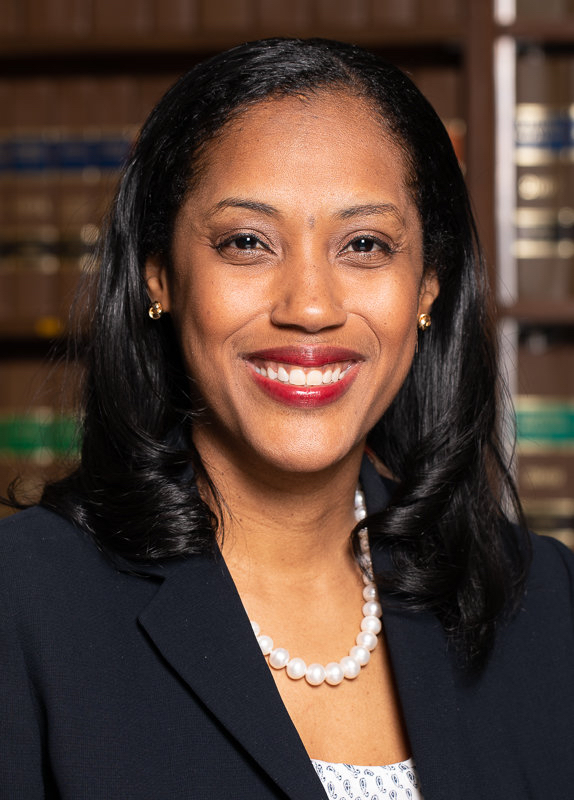
FORT LAUDERDALE, Fla. – Annika E. Ashton is the new Broward County Attorney, becoming the first Black woman and Jamaican American to assume the role.
Ashton, 42, was sworn in last month to replace Andrew Meyers who retired after eight years at the helm.
The Broward County Commission unanimously appointed Ashton, who was the Deputy Broward County attorney, in April 2026 and she took over on September 10, 2026 the official last day of Meyers’ tenure.
She will oversee more than 50 attorneys and a support staff.
Ashton’s appointment reflects overcoming racial and gender barriers to become the chief legal advisor for the county.
The Coral Springs resident thanked the commission and Broward County legal department for their support.
“I’m very excited to work with a really great office of people and have the support of the Broward County Commission,” Ashton said.
Broward County Commissioner Nan Rich called Ashton “the most qualified person to lead the County Attorney’s Office,” noting the county attorney position is one of only three the board is responsible for appointing
Ashton has worked for Broward County since 2014, starting as an assistant county attorney and rose to senior assistant county attorney before becoming deputy county attorney in 2019.
She graduated from Princeton University and Columbia Law School and clerked for the Hon. Adalberto Jordan on the U.S. District Court for the Southern District of Florida and the U.S. Court of Appeals for the Eleventh Circuit.
Ashton’s county work has included litigating federal court cases, drafting ordinances and contributing to the $1 billion expansion of the Broward County Convention Center in Fort Lauderdale.
She previously did private practice in New York and Miami.
According to her bio, Ashton was born in Spanish Town, Jamaica and raised with deepy family roots in Clarendon, particularly Palmer Cross.
She migrated to the U.S. and graduated from Ft. Lauderdale Boyd Anderson High School, earned her bachelor’s degree from Princeton University and law degree from Columbia Law School.
As the new chief attorney for Broward County, Ashton will provide legal counsel for commissioners and administrators, represent the county in litigation, drafting legal documents including preparing ordinances, government contracts and oversight of zoning issues.
Ashton will also advise commissioners on legal aspects of county projects, developments and public services, including environmental, transportation, and consumer protection issues in Broward County.
She is also a Past President of the Caribbean Bar Association.
Ashton credits her Jamaican upbringing for a stellar legal career.
She said women leadership in Jamaica helped her thrive, studying successful women in business and public service, as well as community figures like Cathy Levy, founder of the iconic Little People and Teen Players Club, who has been a stalwart of youth arts education in Jamaica for decades.
These early influences, along with the cultural ethos of resilience captured in the popular Jamaican refrain, “Wi likkle but wi tallawah,” she notes, helped shape her ambition and belief that she could make a meaningful impact on the world around her.
The post Annika Ashton first Black woman and Jamaican Broward County Attorney appeared first on South Florida Times.
Based on reporting by South Florida Times.
Black History
National Civil Rights Museum Freedom Award Honors the Relentless Fight for Equality
TRI-STATE DEFENDER — The National Civil Rights Museum’s 35th annual Freedom Award ceremony, held on Thursday, October 1, at the Orpheum Theatre, recognized a diverse group of civil rights leaders. Honorees included Fred Gray Sr., a legal strategist who represented Dr. Martin Luther King Jr.
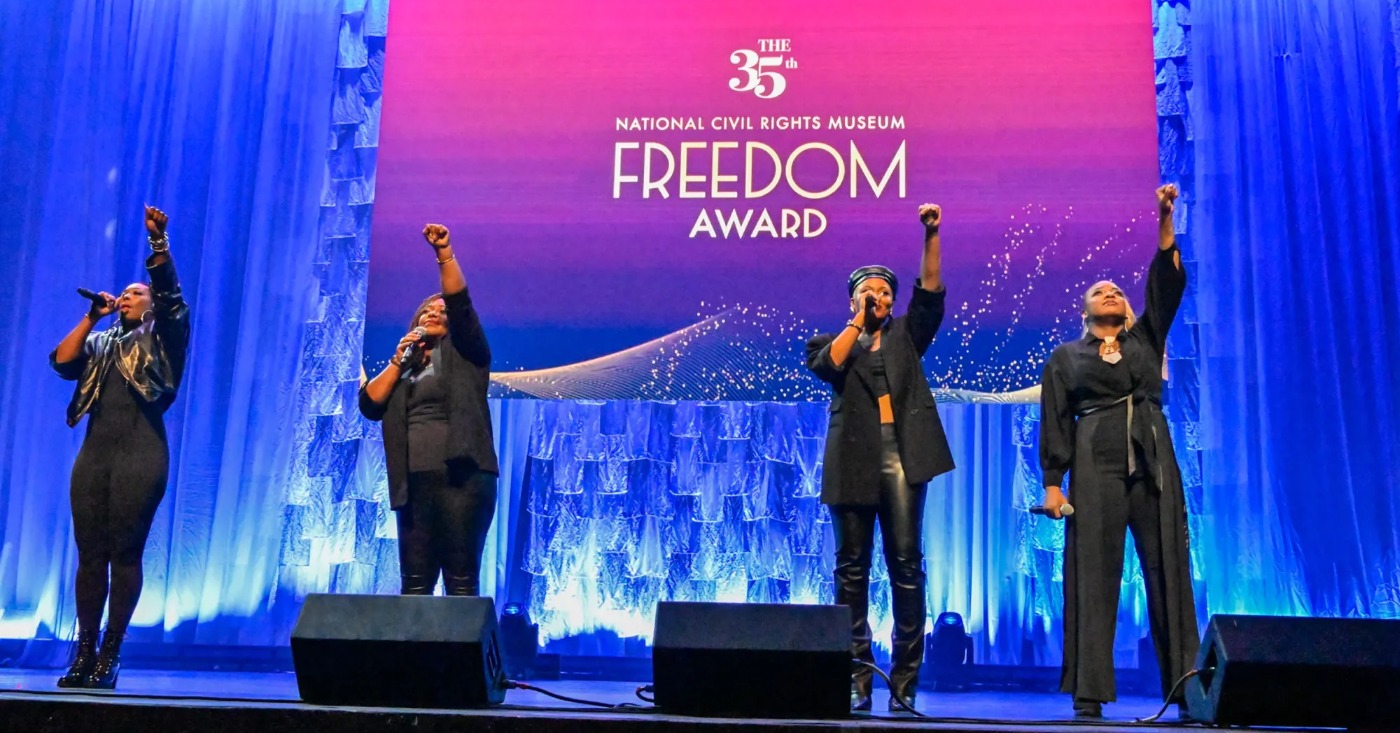
The honorees at the National Civil Rights Museum’s 35th annual Freedom Award ceremony held at the Orpheum Theatre on Thursday, Oct. 1, reflected a changing era of civil rights leadership.
Fred Gray Sr., one of the last surviving legal strategists of the Civil Rights Movement, helped dismantle segregation in America as the lawyer who represented Dr. Martin Luther King Jr. and Rosa Parks. Gray’s pioneering legacy now rests with the generations he helped empower, including fellow award recipients Rev. Shavon Arline-Bradley, Nneka Ogwumike and Bakari Sellers.
Arline-Bradley, an ordained minister, public health advocate, and president and CEO of the National Council of Negro Women since 2023, credits the women and civil rights legends who preceded her and built the organizations she now leads with making her work possible.
Nneka Ogwumike, WNBA champion and four-term president of the league’s players association, and Bakari Sellers, a lawyer, author, CNN political correspondent and former South Carolina legislator, represent a younger generation of human and civil rights activists. They are taking the fight into new arenas, from women’s sports and economic opportunity to voting rights, education and social justice.
Together, their stories shaped the event’s overall theme and mood, which celebrated the courage of freedom fighters of the past while embracing what civil rights leadership looks like now — and what it may become.
Before the ceremony, hundreds of guests gathered for photographs and interviews on the red carpet and hors d’oeuvres at the Halloran Centre for Performing Arts & Education next door to the Orpheum. Actor Larenz Tate hosted the event for the second consecutive year. Grammy Award-winning gospel artist Tamela Mann brought the audience to its feet with her performance of the hit song “Take Me to the King.” And local artist Garry Goin and the Freedom Award House Band performed a mix of R&B and liberation songs.
-

Fred Gray Jr. accepted the Freedom Award on behalf of his father, civil rights attorney Fred Gray Sr., who was unable to attend the ceremony. (Gary S. Whitlow/Tri-State Defender) -

Rev. Shavon Arline-Bradley, president and CEO of the National Council of Negro Women, was among the honorees at the National Civil Rights Museum’s 35th annual Freedom Award. (Gary S. Whitlow/Tri-State Defender) -

Nneka Ogwumike, WNBA champion and four-term president of the league’s players association, was honored at the National Civil Rights Museum’s 35th annual Freedom Award. (Gary S. Whitlow/Tri-State Defender) -

Bakari Sellers, lawyer, author, CNN political correspondent and former South Carolina legislator, was honored at the National Civil Rights Museum’s 35th annual Freedom Award. (Gary S. Whitlow/Tri-State Defender)
Taking the stage to accept the first award was Arline-Bradley, who reflected on the legacy that shaped her path to leadership.
“This honor means more to me than you can ever imagine,” Arline-Bradley said, describing the moment as the culmination of what she believes God had in store for her.
She paid tribute to Dorothy Height, whose leadership helped secure the headquarters for the women’s advocacy nonprofit on Pennsylvania Avenue in Washington, D.C. Arline-Bradley described the building, located on the same street as the White House, as a representation of Black women’s history, power and resilience.
“NCNW stands as the only Black and women-owned building on Pennsylvania Ave,” she continued.
During her speech, Arline-Bradley outlined what she believes it will take to achieve freedom and equality today.
“If America wants to get her healing, we’ve got to climb to the rooftop of justice,” she said.
And justice includes using Black economic power to support companies with compatible values, she continued.
Fred Gray Jr. accepted the award on behalf of his father, who was unable to attend the ceremony. Gray, who practices law alongside his father and brother, recalled his father’s decision to become a lawyer and return to Montgomery, Alabama, determined to challenge segregation.

Gray connected his father’s legal work to Memphis’ sanitation workers, whose 1968 strike became a defining moment in the city’s civil rights history. “At 95, if he was here, he would say to you, ‘I have done what I can do. The rest is up to you,’” Gray Jr. said.
Ogwumike used her acceptance speech to connect the growing visibility of women’s sports to a broader conversation about opportunity and equality.
“In this moment, there are greater and more opportunities for girls and women in sports,” Ogwumike said, pointing to the example provided by the WNBA’s professional athletes who serve as role models for young girls.
She also addressed what she described as threats to women’s rights and access, including debates surrounding Title IX, voting rights, reproductive healthcare and gender violence. “We refuse to be bullied and we refuse to be silenced and made to disappear,” Ogwumike said.
Her remarks were followed by a surprise video message from former Vice President Kamala Harris, who thanked Ogwumike for “being a fighter for the people” and congratulated the evening’s other honorees.
The final honoree, Bakari Sellers, has family ties to Memphis. His mother grew up in the city. His grandfather, the Rev. E.W. Williamson, once served as pastor of Middle Baptist Church and Olivet Baptist Church.

Sellers wrapped his remarks in light humor as he reflected on his conversations with other advocates and his own social justice journey. At one point, he paused, overcome with emotion, as he recalled visiting the National Civil Rights Museum earlier in the day and standing on the balcony where Dr. Martin Luther King Jr. was assassinated on April 4, 1968.
“The victories they won are being torn down all around us,” Sellers said.
To illustrate the cost and cruelty of social injustice, he asked the audience to imagine a 10-year-old student who might one day cure cancer but is struggling in school because of hunger.
“Somewhere we have forgotten that we come from a people of dreamers,” Sellers said. “We have forgotten the price that was paid.
“I am only 42 years old. I don’t really deserve this thing,” Sellers said. “But I will promise you this: Tomorrow I will work harder than I did yesterday.”
A video montage at the black-tie ceremony paid tribute to influential figures who died this year, including civil rights organizer Bernard Lafayette, a leader in the Nashville Movement, Freedom Rides and the Selma voting rights campaign; Rev. Jesse Jackson, the civil rights icon, minister and founder of Operation PUS;, Memphis civil rights activist Clara Ester; feminist leader and journalist Gloria Steinem; and country music legend and philanthropist Dolly Parton.
Museum President Russ Wigginton commented ahead of the program on the generational evolution of Freedom Award honorees. He noted that earlier generations of civil rights leaders often could measure progress through changes in laws, court decisions and government policy. Marches, sit-ins and other forms of direct action helped produce the landmark legal changes achieved during the Civil Rights era of the 1950s and 1960s.
But today, he said, the work can be more difficult to measure because much of it involves changing hearts and minds, increasing empathy and encouraging people to understand cultural differences.
“It is a delicate balancing act that requires patience and commitment,” Wigginton said.
He added, however, the fundamental goal remains unchanged: equal rights for everyone.
Based on reporting by Tri-State Defender.
Black Press
Safety Concerns at Southern University
SOUTHERN UNIVERSITY – SOUTHERNDIGEST — Students at Southern University express growing concerns about safety after dark due to poor lighting conditions across campus. Areas such as walking paths, the street near the bandroom, and streets by dorms are described as “terrifyingly pitch black” due to dying or non-existent lights.
Spending time across Southern University’s campus during the day, you feel the rich history and great energy that make the Bluff special. But once the sun goes down, that feeling shifts into a familiar sense of unease.
Returning home from a late-night study session in the library or walking back from your dorm can often feel like a game of avoiding the darkness. There are areas across campus that are terrifyingly pitch black with dying or non-existent lights posted along walking paths meant for students to walk alone. If you find yourself constantly having to squint to see while walking around campus, you can see why safety is such a big issue in students’ minds. The darkest parts of campus are the street where the bandroom is and the streets by dorms. I was driving back to my apartment on campus late one night when suddenly there was someone walking near the road. If my bright headlights weren’t on, I might not have seen them soon enough, and it could have caused an unsafe situation.
The darkness creates daily hazards that go far beyond a simple lack of visibility. Pedestrians are forced to walk directly in the street because sidewalks fade into pitch-black shadows, dodging cars while barely being able to see where they are stepping. At the same time, people are flying by on electric scooters moving through the dark, completely invisible to drivers and walkers because many of their rides lack proper headlights or reflectors. Nagging worry in the back of your mind about whether your car is even going to be in the parking lot or if it’s going to be stolen by morning, and campus life after dark feels entirely too stressful.
When looking at how Southern ranks for safety among HBCUs, Southern often lands in the lower tiers on various college safety and crime-reporting databases, frequently penalized for property concerns and lacking resources. According to PlainCampus, using the U.S. Department of Education Clery data, ranked Southern #1,287 out of 2,072 institutions based on its 2024 reported crime rate, with burglary identified as its largest reported criminal offense category.
A dark campus isn’t just an inconvenience; it’s a hazard that puts students at risk every single night. We shouldn’t have to dodge silent scooters in the middle of the road or cross our fingers every time we look toward the parking lot. It is time for the administration to step up, fix the lights, and make student safety a visible priority.
Based on reporting by Southern University – SouthernDIGEST.


Latinas Deserve Equal Pay. Unions Help Make It Happen.

Defender ONE-on-ONE: U.S. Rep. Christian Menefee

Unlock Your Best Auto Loan: Ask These Questions! #shorts

News Observer Weekly — October 7, 2026 | Top 5 Stories of the Week

Atlas Family Comfort: Worth the Extra Cash? #shorts

Antron Brown Takes His Impact Beyond the Racetrack

Headlines and Hot Topics with Rodney Perry

Headlines and Hot Topics with Rodney Perry 📱

Houston’s ‘call Me Mother’ Exhibit Opens Today, Spotlighting Black Maternal Health

Should You Have to Pay to Hear the Gospel?

Latest Massacre in Haiti Reveals Cruelty U.S. Deportations

The Youngest American Killed in the Vietnam War

Booked and Unbound: The Legacy of Black Women’s Literary Circles

Passing for White, Fighting for Black America: The Courage of Walter White

OPINION: Nolan Wells’ Death One of Several Signifying Racial Terror Lives on in U.S. South

Prostate Cancer is Twice as Likely to Kill Black Men. Talking to Your Doctor Could Help Save Your Life

OP-ED: If AI Is the New Language of Power, Then NAN Wants Black Communities Fluent

OP-ED: How Does Your State Rank for Pre-K?

OP-ED: Haiti TPS: Have We Lost Sense of Humanity?

Henry O. Flipper: A Trailblazer at West Point and Beyond
Defender ONE-on-ONE: U.S. Rep. Christian Menefee
Unlock Your Best Auto Loan: Ask These Questions! #shorts
News Observer Weekly — October 7, 2026 | Top 5 Stories of the Week
Atlas Family Comfort: Worth the Extra Cash? #shorts
Antron Brown Takes His Impact Beyond the Racetrack
Headlines and Hot Topics with Rodney Perry
Headlines and Hot Topics with Rodney Perry 📱

Jamal’s Take: Cowboys’ Epic Comeback Win and Dak’s Dominance Against Houston

REBROADCAST: HE SAID, HE SAID, HE SAID:Author Derrick M. Jackson — FRI. 10.9.26 7PM E

2026 Land Rover Defender 130 X Interior 360 Video
-
 Black Press1 week ago
OP-ED: Haiti TPS: Have We Lost Sense of Humanity?
-
 Black History1 week ago
COMMENTARY: The Audacity of Joyce Beatty
-

 Black History1 week ago
Rulings Leave Questions Lingering in Nolan Wells Case
-
 Black History1 week ago
Baptist Minister Says Black Church Champions for Civil Rights to Reign but Hesitates to Let Black Women Lead
-

 Black History1 week ago
Why Black Artists Struggle to Sell Tours
-

 Auto1 week ago
Consumers and States Awarded $694 Million After Predatory Auto Lender Settles Lawsuit
