
Business
Body-Camera Maker Has Financial Ties to Police Chiefs


In this photo taken Thursday, Feb. 19, 2015, Steve Tuttle, vice president of communications for Taser International, demonstrates one of the company’s body cameras for The Associated Press during a company-sponsored conference hosted by Taser at the California Highway Patrol Headquarters in Sacramento, Calif. (AP Photo/Rich Pedroncelli)
RYAN J. FOLEY, Associated Press
IOWA CITY, Iowa (AP) — Taser International, the stun-gun maker emerging as a leading supplier of body cameras for police, has cultivated financial ties to police chiefs whose departments have bought the recording devices, raising a host of conflict-of-interest questions.
A review of records and interviews by The Associated Press show Taser is covering airfare and hotel stays for police chiefs who speak at promotional conferences. It is also hiring recently retired chiefs as consultants, sometimes just months after their cities signed contracts with Taser.
Over the past 18 months, Taser has reached consulting agreements with two such chiefs weeks after they retired, and it is in talks with a third who also backed the purchase of its products, the AP has learned. Taser is planning to send two of them to speak at luxury hotels in Australia and the United Arab Emirates in March at events where they will address other law enforcement officers considering body cameras.
The relationships raise questions of whether chiefs are acting in the best interests of the taxpayers in their dealings with Scottsdale, Arizona-based Taser, whose contracts for cameras and storage systems for the video can run into the millions of dollars.
As the police chief in Fort Worth, Texas, successfully pushed for the signing of a major contract with Taser before a company quarterly sales deadline, he wrote a Taser representative in an email, “Someone should give me a raise.”
The market for wearable cameras that can record arrests, shootings and other encounters has been growing fast since the killing last August of 18-year-old Michael Brown by a police officer in Ferguson, Missouri. President Barack Obama has proposed a $75 million program for departments to buy the cameras to reduce tensions between officers and the communities they serve.
City officials and rival companies are raising concerns about police chiefs’ ties to Taser, not only in Fort Worth but in such cities as Albuquerque, New Mexico, and Salt Lake City.
“Department heads need to be very careful to avoid that type of appearance of an endorsement in a for-profit setting,” said Charlie Luke, a Salt Lake City councilman. “It opens up the opportunity for competitors of these companies to essentially do what we’re seeing here — complaining about that public process.”
He said he was surprised when he learned last year that the city’s police department had purchased Taser cameras using surplus money, bypassing the standard bidding process and City Council approval. The department declined to say how much it has spent acquiring 295 body cameras and Taser’s Evidence.com video storage program and hasn’t responded to a month-old public records request.
The city’s police chief, Chris Burbank, said that his relationship with Taser, which includes company-paid travel to Taser-sponsored conferences, is appropriate. He recently recorded at the company’s request a promotional video in which he praised Evidence.com.
Burbank said he does not receive speaking fees and believes he hasn’t violated a city code prohibiting paid product endorsements on public time. He said he accepts Taser’s speaking invitations to promote the best ways of using body cameras. But Luke, the city councilman, questioned what value Salt Lake City gets from Burbank’s trips.
A Taser spokesman said the company has no control over how cities decide to award contracts. Taser says early adopters of technology are the best ones to discuss its benefits and drawbacks and share their experiences with colleagues.
“This is a pretty normal practice for police chiefs and other recently retired individuals to speak on behalf of the industry,” Taser chief marketing officer Luke Larson said.
Taser’s competitors say its cozy relationships are hurting their ability to seek contracts. They complain they have been shut out by cities awarding no-bid contracts to Taser and are being put at a disadvantage by requests for proposals that appear tailored to Taser’s products.
“Every time I do a presentation, as I’m standing there looking through the room, I wonder, ‘Who is tainted by Taser?'” said Peter Onruang, president of Wolfcom Enterprises, a California body camera maker.
Taser reported Thursday that orders for body cameras and Evidence.com soared to $24.6 million in the final three months of 2014 — a nearly fivefold increase from the same quarter in 2013. The company said it had contracts with 13 major cities and is in discussions or trials with 28 more.
A no-bid contract in Albuquerque and Taser’s relationship with the police chief prompted an investigation by the city’s inspector general.
City Council members demanded the inquiry after learning that Chief Ray Schultz, who had supported the $1.9 million contract for Taser cameras and storage, became a company consultant shortly after stepping down. A U.S. Justice Department investigation last year blasted Albuquerque’s rollout of the body cameras, saying it had been so hasty that officers had not been properly trained.
Today, Schultz speaks in an online promotional video about Albuquerque’s experience with Evidence.com. Although he has recently been hired as assistant chief in the Houston suburb of Memorial Villages, Schultz said he will be paid by Taser to speak at the international conferences in March.
Former New Orleans Police Superintendent Ronal Serpas confirmed he signed a Taser consulting agreement after he stepped down in August and has spoken at company-sponsored events in Canada and Arizona. Less than a year earlier, in December 2013, the city agreed to a $1.4 million contract with Taser for 420 cameras and storage.
In an interview with the AP, Serpas declined to detail how the consulting deal came about but said it did not violate a state ethics law because he is not lobbying his former employer. He also said he was not on the committee that recommended Taser for the contract.
Serpas said his role is to speak about how technology affects policing and not to promote products. Taser marketing materials reviewed by AP, however, quote him as calling the company’s Axon cameras and Evidence.com “a game changer for police departments here and around the world.”
In Fort Worth, emails obtained by the AP under Texas’ open records law show that then-Police Chief Jeffrey Halstead was seeking 400 more body cameras for officers last year and that Taser promised a discount if the deal could be approved before the end of the company’s sales quarter.
“Close of the month? I do not wear a cape or have x-ray vision you know,” Halstead wrote a Taser representative.
But over the next three weeks, Halstead successfully pushed the city to approve a no-bid contract worth up to $2.7 million. He kept Taser representatives aware of his progress, adding at one point that he deserved a raise.
In the following months, Taser had Halstead speak at events in Phoenix, Miami and Boston, covering his airfare and lodging, records show. The four-day Boston trip for Halstead and a companion cost Taser $2,445.
Halstead said he reached an oral agreement during the contract negotiations to travel to three other cities at Fort Worth’s expense to talk about his experience with Taser cameras. In one email, he told a Taser representative he believed he could persuade San Antonio to buy its cameras, “but my fee is not cheap! LOL.”
Halstead, who retired from the department in January, said he hopes to become an official consultant before he travels to speak at overseas events in March. He said he discussed such an arrangement during the end of his city employment, but had nothing promised.
He defended his ties to Taser as a “good business relationship” with a company that supports law enforcement.
Fort Worth City Manager David Cooke said he does not believe Halstead violated rules that prohibit employees from accepting job offers or other benefits that might influence the performance of their official duties. But he said the episode might reveal “gaps that we need to fill” in the code.
___
Associated Press writers Brian Bakst in St. Paul, Minnesota, and Don Thompson in Sacramento, California, contributed to this report.
Copyright 2015 The Associated Press. All rights reserved. This material may not be published, broadcast, rewritten or redistributed.













Black Press
COMMENTARY: Money Matters — AI Can Help Your Small Business — But Is It Helping Your Bottom Line?
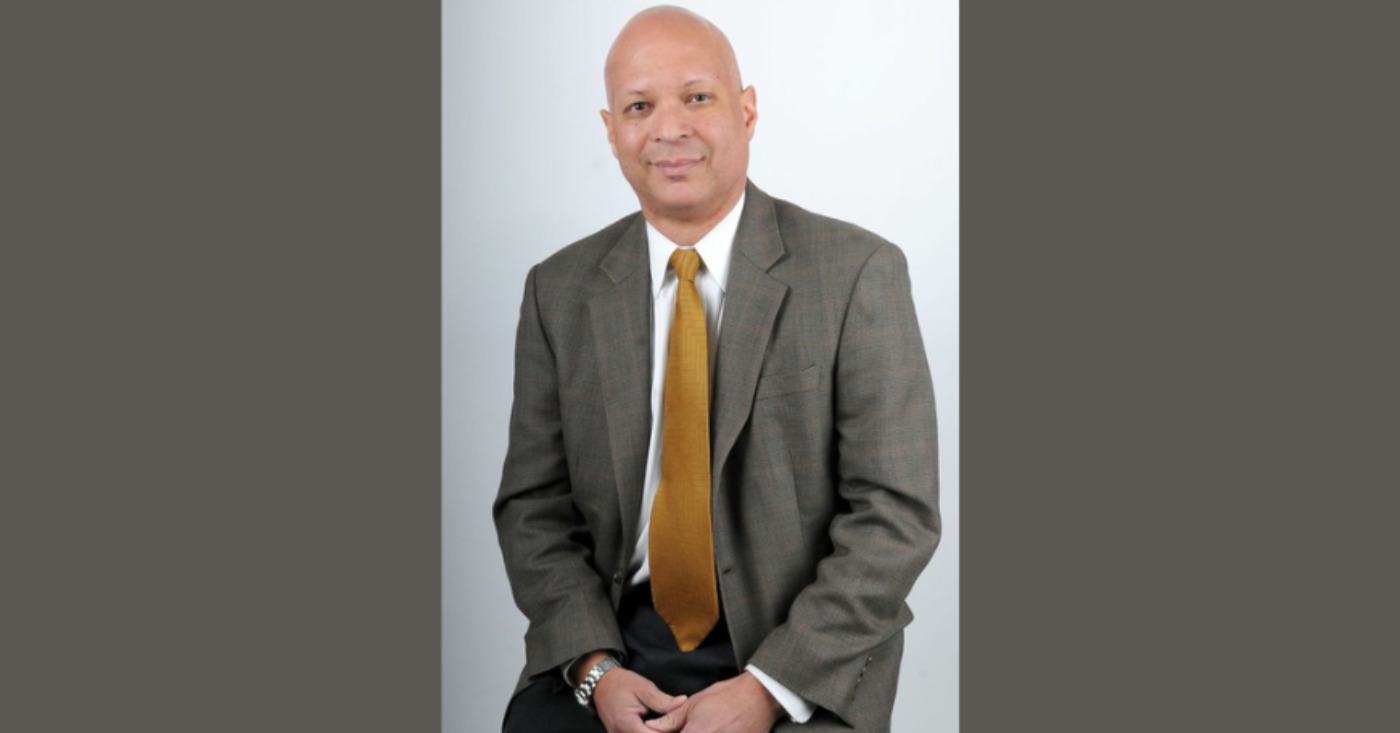
CHICAGO DEFENDER — Artificial intelligence has transitioned from a science fiction concept to a common resource for researching topics and developing content. While small businesses face increasing pressure to adopt these tools to save time and reduce expenses, experts warn that speed does not always guarantee accuracy.
Not long ago, most of us associated artificial intelligence with science fiction movies or technology companies in Silicon Valley. Today, its emergence in our everyday lives and business operations is impossible to ignore.
From organizing ideas and researching topics to developing content, AI has become an increasingly useful resource. But just because it can produce an answer in seconds doesn’t mean it’s always the right answer.
There’s growing pressure for small businesses to embrace AI. Everywhere you turn, another tool promises to save time, reduce expenses, attract customers or improve productivity, emerges.
But before jumping on the bandwagon, business owners should ask an important question:
Is this technology going to help my business make money, save money, or operate more efficiently?
After all, that’s what business decisions should ultimately come down to.
AI is rapidly becoming part of the small-business landscape in Michigan and across the country. A recent survey of 70 Michigan small businesses participating in Goldman Sachs’ 10,000 Small Businesses program found that 86% use AI, although many are still experimenting with its capabilities.
Clearly, interest is growing. But adoption doesn’t necessarily translate into profitability.
For small-business owners, every dollar counts. Whether investing in employees, marketing, equipment, or technology, you need to understand what you’re getting in return. AI should be no different.
Consider the possibilities. Small businesses can use AI to develop marketing campaigns, generate social media content, draft customer communications, conduct research, and streamline administrative tasks.
For an entrepreneur wearing multiple hats, those capabilities can be valuable.
Imagine reclaiming several hours each week that could instead be spent developing new business, strengthening customer relationships or pursuing sales opportunities.
Time is money, particularly when you’re running a small business.
However, purchasing an AI subscription doesn’t automatically improve your bottom line. Business owners need to evaluate its actual return on investment.
How much time is it saving? Is it reducing expenses? Helping generate sales? Improving customer retention? Making employees more productive?
Those are the measurements that matter.
A recent Federal Reserve survey found that while 46% of employer firms reported using AI, only 7% of those using it said the technology was fully integrated into their business processes. Many companies are still figuring out how to translate AI into measurable results.
My recommendation is to start small.
Identify one area where your business is spending too much time or money. Find an AI tool that might address the challenge. Test it, monitor the results and determine whether the investment makes financial sense.
You don’t need multiple subscriptions or an overhaul of your entire operation to get started.
There’s another consideration: AI is a tool, not a replacement for sound business judgment.
Accuracy, privacy and security matter. Be careful about sharing confidential customer information or proprietary business data. Always review AI-generated information before using it in customer communications or important business decisions.
A faster process isn’t necessarily better if it creates mistakes or damages customer relationships.
There’s also a competitive consideration.
Small businesses have traditionally distinguished themselves through personal service, flexibility, creativity and relationships. Those advantages shouldn’t be sacrificed in the pursuit of automation.
If every business uses AI to produce the same generic marketing messages, what makes one company stand out?
The answer should still be its people, its service and its ability to connect with customers.
AI can help develop the message, but you provide the personality. It can organize information, but you provide the judgment. It can make your operation more efficient, but you determine where the human touch remains essential.
Ultimately, AI could help level the playing field by giving smaller companies access to capabilities that once required larger budgets and bigger teams. That’s an opportunity worth exploring.
But don’t confuse keeping up with technology with running a better business.
Before investing in another AI platform, set clear objectives and decide how you’ll measure success. If it isn’t saving time, reducing costs, improving service, or contributing to revenue growth, reconsider whether you need it.
Artificial intelligence may be changing the way we do business, but the fundamentals haven’t changed. You still need customers, revenue, sound expense management, and smart investment decisions.
At the end of the day, the best technology isn’t necessarily the newest or most expensive. It’s the technology that delivers a measurable return on your investment.
That’s not just smart technology adoption. That’s smart business.
We invite readers, business owners and future entrepreneurs to follow along, ask questions and engage. If you have story ideas or questions, email Lee at [email protected] or visit leegroupinnovation.com.
The post Money Matters: AI Can Help Your Small Business—But Is It Helping Your Bottom Line? appeared first on Chicago Defender.
Based on reporting by Chicago Defender.
Black History
Wichita’s Only Black-Owned Bookstore Seeks $90,000 to Secure Its Future
COMMUNITY VOICE (KS) — Left on Read, believed to be the only Black-owned bookstore in Kansas, has launched a $90,000 fundraising campaign to secure its long-term future. Owner Dr. Latasha Eley Kelly initiated the “Support Left on Read: Books, Community, & Connection” appeal in October to address significant financial hurdles.
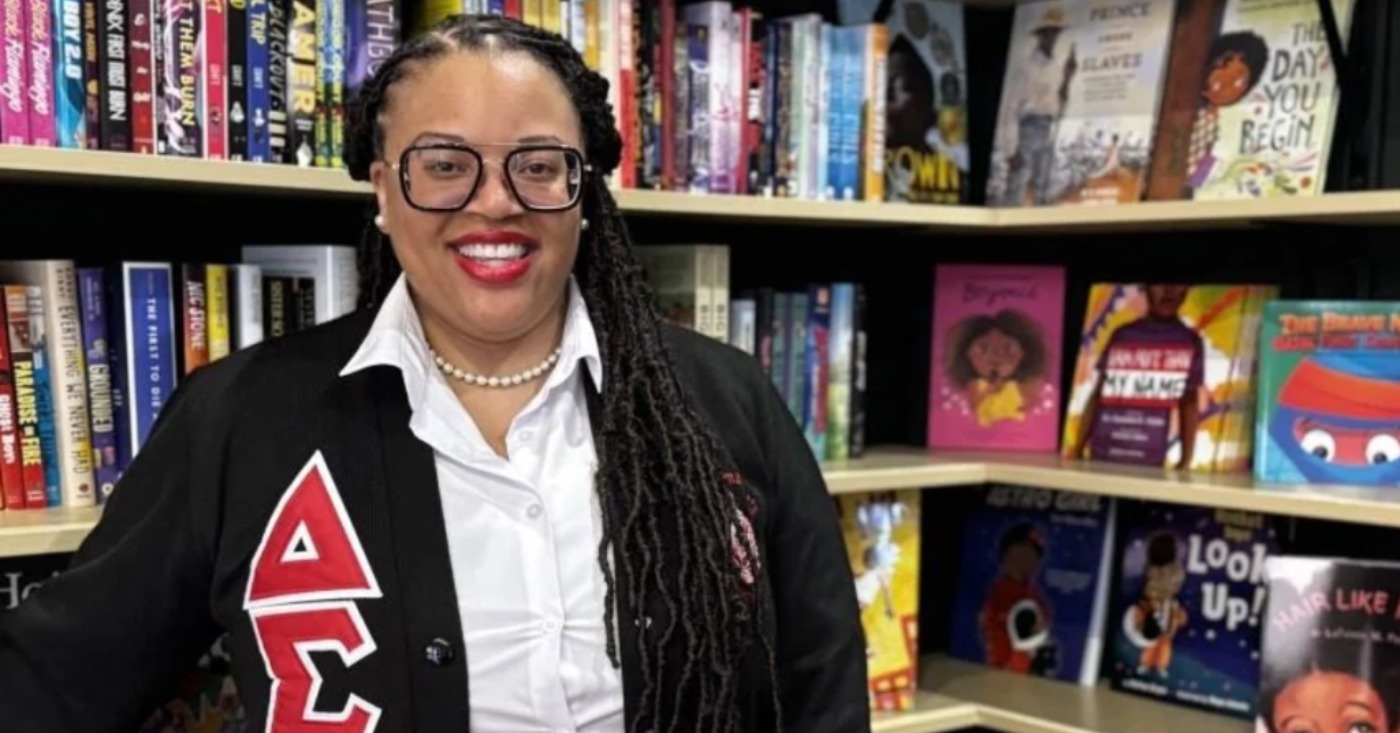
As Left on Read prepares to celebrate its second anniversary on Nov. 30, the bookstore is confronting financial challenges that have prompted owner Dr. Latasha Eley Kelly to launch a $90,000 fundraising campaign to sustain its operations.
The independent bookstore, believed to be the only Black-owned bookstore in Kansas, has become a destination for readers, authors and community gatherings since opening in 2024. But unexpected funding losses, rising operating expenses, and the costs of relocating have strained its finances.
Kelly launched the Support Left on Read: Books, Community, & Connection campaign in October, seeking contributions to cover operating expenses, staffing, inventory and community programming.
A recent snapshot of the GoFundMe campaign showed $14,410 raised from 183 donations, approximately 17% of the $90,000 goal.
Financial Setbacks Prompt Appeal
One of the bookstore’s financial challenges stems from the unexpected loss of grant funding supporting TMBP Media, one of Kelly’s interconnected business ventures. The media operation, The Millennial Black Professor and Left on Read share resources, making the funding loss significant for the bookstore.
In an October interview with KSNW-TV, Kelly also cited increasing operating and staffing costs and the need to establish more reliable revenue sources.
The bookstore relocated from its original downtown location at 612 E. Douglas Ave. to Revolutsia, a small-business development at 2721 E. Central Ave. Kelly described the move as unexpected and credited Mike Ramsey of Bokeh Development with helping facilitate the transition.
To help support the business, Kelly has continued teaching and pursuing consulting, speaking, and instructional opportunities.
The fundraising effort is designed to address immediate expenses while building a more sustainable financial structure. The bookstore has not announced plans to close, but the appeal underscores the financial pressures threatening its long-term viability.
More Than a Place to Buy Books

When Left on Read opened Nov. 30, 2024, Kelly envisioned a bookstore where African-American authors and other historically underrepresented writers would receive the visibility often missing from mainstream retail spaces.
Its selection includes fiction, nonfiction, children’s literature, poetry and history, with particular attention to Black authors and experiences.
Beyond book sales, Left on Read hosts author appearances, reading groups, cultural discussions and activities connecting local entrepreneurs with customers. The bookstore also provides space for The Blackprint, an initiative highlighting Black-owned businesses and their products.
Those activities have helped establish Left on Read as a cultural gathering place, but maintaining that role requires resources beyond revenue from book purchases alone.
Anniversary Campaign Focuses on Financial Stability
The bookstore’s annual 11.30 Campaign takes its name from its Nov. 30 opening date. While the first anniversary campaign encouraged smaller contributions to support the growing business, this year’s appeal focuses on strengthening its financial foundation.
Kelly is asking supporters to contribute financially, purchase books, recommend the store to others, and help spread awareness of the campaign.
The anniversary celebration will also feature several events intended to bring customers and community members into the bookstore.
Anniversary Celebration Events
Left on Read has scheduled the following activities from Nov. 20 through Nov. 22:
- Friday, Nov. 20, 6–7 p.m. — Malcolm Lynch’s Soulful Little Christmas Tour makes a stop at Left on Read.
- Saturday, Nov. 21, noon–1 p.m. — Launch of a free community library in partnership with a local service organization.
- Saturday, Nov. 21, noon–3 p.m. — Lemonade tasting featuring Tre’s Squeeze, presented in partnership with The Blackprint. Attendees can also purchase Squeeze Into Your Dreams by founder Tre Glasper.
- Saturday, Nov. 21, 2–4 p.m. — Public book club discussion of Children of Blood and Bone, covering chapters 1–28.
- Sunday, Nov. 22 — Ponder This at Build and Rebuild. Those purchasing tickets at Left on Read have a chance to win a Ponder This T-shirt and a bookstore gift card.
The events offer residents opportunities to experience the bookstore’s community programming while supporting a business working to overcome financial difficulties.
Community Support Could Determine What’s Next
For independent bookstores, balancing retail sales with the costs of staffing, inventory and community programming can be difficult. Left on Read faces those challenges while also working to maintain a space dedicated to Black literature, culture and entrepreneurship.
The fundraising campaign offers Wichita residents and businesses a chance to help preserve a locally owned institution that offers more than books.
Although the campaign’s outcome remains uncertain, the stakes extend beyond the bookstore’s balance sheet. Its future will determine whether Wichita continues to have a dedicated retail space where Black authors, readers and entrepreneurs are at the center of the experience.
How to Help: Supporters can donate through the 11.30 Campaign at bit.ly/supportleftonread, purchase books at leftonreadbookstore.com, or visit the store at 2721 E. Central Ave., Suite 121, Wichita.
The post Wichita’s Only Black-Owned Bookstore Seeks $90,000 to Secure Its Future appeared first on The Community Voice.
Based on reporting by Community Voice (KS).
Black Press
Mom Com & Co Is Building a Village for DFW Mothers, One Connection at a Time
THE DALLAS WEEKLY — Founder Jordan Thompson is transforming the landscape of motherhood in the Dallas-Fort Worth area through her new initiative, Mom Com & Co. Inspired by her own feelings of isolation during pregnancy, Thompson created the organization to provide “child-inclusive” spaces where mothers can connect without the fear of judgment or the need for childcare.

Founder Jordan Thompson’s launch social made room for babies, honest connection and the women navigating motherhood together.
During a doula-led stretch session at Mom Com & Co’s launch social, one mother paused to feed her baby. Founder Jordan Thompson held her own sleeping daughter in her arms. The gathering continued without anyone missing a beat.
For Thompson, that moment captured exactly what she wanted to create: a space where mothers could enjoy themselves with their children’s needs fully welcomed.
“That’s what child-inclusive means: no judgment, and no feeling embarrassed for bringing your baby along,” Thompson said to Dallas Weekly.

The launch introduced her vision for Mom Com & Co, a community connecting mothers across Dallas–Fort Worth through intentional gatherings and ongoing support. Its name carries the mission: “Com” stands for community. And while the social offered thoughtful touches, from grazing boxes to a signature mocktail, Thompson’s measure of success was more personal. According to the founder, every mother left with at least one new contact.
For someone who once searched for answers about pregnancy alone at 4 a.m., those connections represent the beginning of the village she had been looking for.
Thompson recalls attending some prenatal appointments by herself and spending early mornings online trying to understand what was happening inside her body. Early in her pregnancy, she did not have a connection to a doula and had to research how to find one.
Those experiences helped her recognize the kind of support she wanted: people willing to sit with a mother through difficult moments, along with knowledgeable guidance during pregnancy and recovery.
“Funny enough, the name Mom Com & Co came to me at 4 a.m. too,” Thompson said. “That hour used to be the loneliest part of my night. Now it’s where all of this began.”
Motherhood also brought an unexpected desire to heal and connect. The joy she found with her daughter made her want to bridge the distance between mothers whose circumstances might differ but whose need for dependable support could overlap.
“People assume that if you’re pregnant, you have a partner, and if you have a partner, you have a village,” she said. “There’s an assumption that everyone has a built-in support system. That’s a misconception. Even partnered moms can feel alone.”
Her background producing television and podcasts helped shape how she introduced the community. Thompson describes her career as finding meaningful ways to bring stories to the right audiences. Now, she applies that experience to Mom Com & Co’s marketing while putting particular emphasis on meeting women face to face.
“Marketing can introduce you to a mom. Real connection is what brings her back,” she said.
At the launch, that connection began with an intimate gathering where attendees could learn names, remember one another’s babies and discover whose children were close in age.

Thompson said the mothers arrived with different reasons for seeking community. Some did not have family nearby. One had friends but had entered motherhood later than they had and wanted to meet women raising babies. Another attended after encouragement from her lactation consultant. Another simply needed to get out of the house.
The event gave those different needs room to exist together. Alongside the stretch session, mothers enjoyed desserts and received goodie bags with custom bibs, tumblers and other items. Attendance was free for mothers and babies.
Thompson’s approach to an “elevated” experience is to treat the mother as the guest of honor while planning for her child. She said events are designed around specific age ranges so that babies’ needs are considered in advance.
Before attendees left, she gave them a challenge: exchange phone numbers and make an effort to get to know someone beyond social media.
“It’s kind of like dating, honestly,” Thompson said.
That invitation is central to what she hopes will happen after the gatherings end. A private Facebook group gives mothers a place to continue conversations between events, while future programming will include opportunities to bring their babies, spend time with other women and volunteer.
“A beautiful event opens the door, but the village is built in the follow-up,” she said.
Accessibility is also part of the plan. Thompson said future events will include both free and paid offerings, with partnerships and sponsorships helping support access. She is developing Mom Com Cares, the initiative’s giving arm, which she said has already delivered its first care box to a Texas mother.

Next, Thompson said, Mom Com & Co plans to host Sips & Storytime on Sunday, Dec. 6, at The COACH Coffee Shop in Allen. The shop will open early for the group, and mothers are encouraged to bring a new or gently used book to donate to local families for the holidays.
As the community grows, Thompson imagines its impact showing up in everyday life: two mothers grocery shopping together, an invitation to a baby’s birthday party or a phone call on an ordinary Tuesday.
“That’s success: when the village shows up in the ordinary days, not only the big ones,” she said.
For the mother who wants that connection but feels nervous about walking into a new space, Thompson offers an invitation with room to move at her own pace.
“So come when you’re ready. Come home when you’re ready.”
Learn more at momcomco.app, follow @momcomco on Instagram, Facebook and TikTok, or join the Mom Com & Co Facebook group.
The post Mom Com & Co Is Building a Village for DFW Mothers, One Connection at a Time appeared first on Dallas Weekly.
Based on reporting by The Dallas Weekly.
Black History
COMMENTARY: Property Is Power! the Black Family Meeting
CHICAGO DEFENDER — For more than 30 years in the mortgage industry, experts have observed that the primary obstacle to Black homeownership is often not just the cost of housing or the availability of financing. Instead, many families miss out on building generational wealth because they lack meaningful conversations about the mechanics of property ownership.
Some conversations can change the financial direction of a family. They rarely happen in a bank, a mortgage office, or even at the closing table. More often, they begin around a kitchen table, where parents, children, and grandparents can discuss something that can shape generations: ownership.
After more than 30 years in the mortgage business, I have come to understand that one of the greatest obstacles to Black homeownership is not simply the cost of housing, the availability of financing, or the qualifications lenders require. It is that too many families have never had a meaningful conversation about the economics of owning property. We discuss education, employment, and the importance of working hard. Yet we do not always discuss how money works, how credit creates access, how real estate builds equity, or how ownership can change a family’s financial circumstances.
I founded Property is Power out of a conviction that economic advancement must include a deeper understanding of real estate ownership. Over the years, I have sat across the desk from people who worked for decades, raised families, paid rent faithfully, and fulfilled every financial obligation expected of them. Yet, after 15 or 20 years, they had little to show for the money they had spent on housing. Their labor had sustained someone else’s investment, while their own opportunity to accumulate wealth remained largely untouched.
I do not suggest that renting is always a mistake or that homeownership is appropriate for everyone. But I have encountered too many people who wanted to own, could have positioned themselves to own, and simply lacked the information, preparation, or guidance to make it happen.
Information is not a small thing. In the marketplace of wealth creation, information often determines who participates and who remains on the sidelines.
The Conversation We Are Not Having
I want to challenge Black families to do something that may seem simple but could have lasting consequences: schedule a family meeting devoted to financial preparation and property ownership.
Bring the generations together. Invite the adult children. Include the grandparents. Let the teenagers listen. Put the phones away and have an honest discussion about where the family stands financially and where it intends to go. The objective is not to make everyone a real estate investor overnight. It is to establish a different understanding of money, credit, savings, and ownership. It is to move from discussing what the family earns to discussing what the family is building.
I would begin with three subjects: credit, savings, and a plan for ownership.
Credit: Your Financial Reputation Has an Economic Consequence
We often speak about credit as though it were merely a number. It is much more than that. Credit is a record of how the financial marketplace perceives your borrowing history. That perception can influence whether you receive financing, how much you can borrow, and the interest rate you pay.
Creditworthiness is developed over time. Treat it as a financial asset that requires maintenance, discipline, and attention. We cannot expect the next generation to make informed financial decisions if we do not teach them how the system works.
Savings: Income Is Important, but What You Keep Matters
A family may have a respectable income and still lack the resources to purchase a home. Earning money and accumulating money are two different disciplines. Homeownership requires more than the ability to make a monthly payment. There may be a down payment, closing costs, inspections, insurance, and the inevitable repairs that accompany maintaining a property.
Families should establish a dedicated ownership fund. It doesn’t have to start with thousands of dollars. An automatic deposit from every paycheck, a portion of a tax refund, or a reduction in unnecessary spending can establish the foundation.
Families should also discuss whether they can help one another responsibly. A parent may be able to assist an adult child with a documented down-payment gift. A grandparent may have resources to help a grandchild begin saving. There is nothing wrong with families using their collective knowledge and resources to create opportunities for their family members. We have to stop thinking exclusively as individuals when the objective is to strengthen generations.
The Plan: Turn Good Intentions into an Economic Strategy
What kind of property are we pursuing? Where do we want to live? What can we reasonably afford? Are we preparing to purchase a primary residence, an investment property, or perhaps a multifamily property that could generate rental income? What needs to happen over the next twelve or twenty-four months to make that possible?
Establish savings targets. Identify credit issues that need attention. Research available homebuyer assistance programs. Speak with a knowledgeable mortgage professional before making major financial commitments.
A family meeting should not be a one-time event that produces enthusiasm for a week and then disappears. It should become a regular conversation about financial progress, obstacles, and opportunities. The larger objective is to establish a culture in which ownership is discussed, planned, and pursued with the same seriousness families traditionally give to education and career advancement.
Ownership Does Not End at the Closing Table
Buying a home is an accomplishment. Maintaining it is an obligation. Protecting its value is an investment in both the household and the surrounding community. Take care of the property. Maintain the lawn. Repair the porch. Keep the sidewalks clean. Replace the exterior light that has been out for months. Pay attention to the roof, foundation, plumbing, and exterior.
These may seem like ordinary household responsibilities, but they reflect something larger: an understanding that property ownership carries responsibilities beyond the four walls of a house. A neighborhood’s value is influenced by the collective behavior of its residents. Neglect can become normalized just as pride can become contagious. When homeowners invest in maintaining their properties, they contribute to the stability and economic health of the surrounding community.
We should understand that neighborhood improvement is not solely the government’s responsibility. Public investment and fair housing policies matter, but residents also have a role. Ownership should inspire participation, not isolation.
The Home Is an Economic Institution
We sometimes underestimate the economic significance of a home because we have become accustomed to thinking of it primarily as a place to live. But a home is also an asset. Over time, mortgage payments can reduce principal and build equity. Property may appreciate, although appreciation is never guaranteed. That equity can provide financial options for education, business development, or other family needs, provided it is accessed responsibly.
A home can also provide stability that extends beyond the individual borrower. Children may remain in the same school district, develop lasting friendships, and benefit from continuity in their educational environment. Parents become invested in the quality of local schools, the condition of their streets, and the vitality of nearby businesses. Homeowners support local economies by purchasing materials, hiring contractors, using neighborhood services, and supporting entrepreneurs. Their presence can help sustain commercial corridors and strengthen surrounding communities.
The Inheritance We Should Be Discussing
Perhaps the most important reason to hold a family meeting is the conversation about legacy. For generations, too many Black families have had to build their financial lives from the ground up, with limited assets to transfer and fewer opportunities to benefit from the accumulated wealth of previous generations.
That history did not happen by accident. Redlining, restrictive covenants, discriminatory housing practices, and unequal access to mortgage financing systematically limited the ability of Black households to acquire and retain property. Their economic consequences did not disappear when those practices became illegal. We should understand that history without allowing it to define the limits of our future.
The home can become one of the instruments through which families change that equation. But inheritance requires preparation. Families need wills, trusts when appropriate, clear title, and conversations about how property will be managed and transferred. Too many families have lost valuable property because nobody addressed the legal and financial responsibilities of passing it down.
We should not spend thirty years building equity only to leave the next generation with a title dispute or an unresolved estate. Legacy is not simply what we leave behind. It is what we prepare the next generation to receive, protect, and build upon.
Bring the Family to the Table
I have spent more than three decades in the mortgage business, and one lesson has remained constant: families rarely stumble into lasting financial progress. It requires information, preparation, discipline, and a willingness to make decisions that may not produce immediate gratification.
The Black homeownership conversation must become more intentional. We cannot discuss the racial wealth gap without discussing property. We cannot discuss generational wealth without discussing assets. And we cannot talk about changing the economic circumstances of our communities while overlooking the importance of what families own, what they retain, and what they pass forward. Property is not the only path to wealth, but it remains one of the most consequential wealth-building opportunities for families who prepare, purchase responsibly, and protect what they acquire.
So, call the meeting. Set a date. Bring the generations together. Talk about credit, savings, homeownership, investment property, and estate planning. Talk about the kind of financial foundation you want your children and grandchildren to inherit.
The family meeting may be the most important financial meeting you ever hold.
Property is Power! Dr. Anthony O. Kellum is CEO of Kellum Mortgage, LLC, a homeownership advocate, speaker, and author. NMLS #1267030 / #1567030. www.KellumMortgage.com
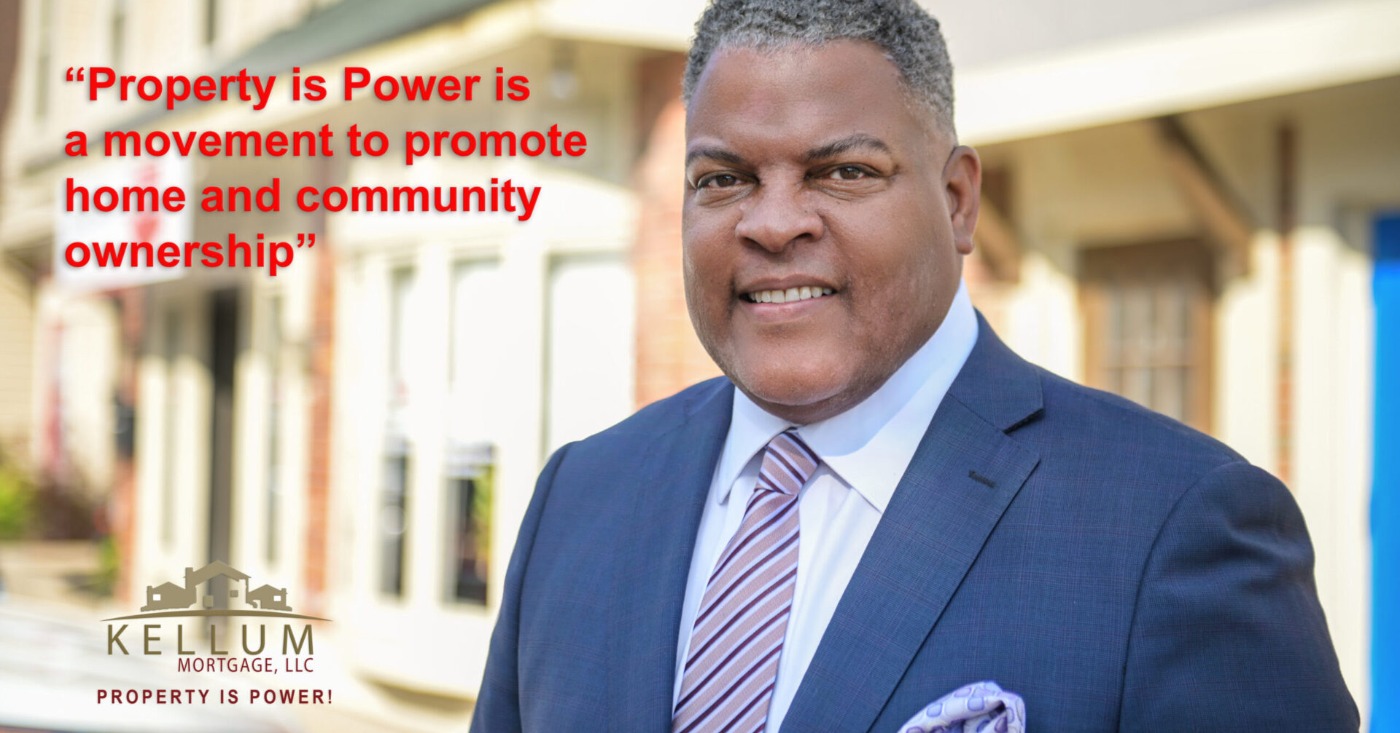
Property is Power! is a movement to promote home and community ownership. Studies indicate homeownership leads to higher graduation rates, family wealth, and community involvement.
The post Property is Power! The Black Family Meeting appeared first in the Chicago Defender.
Based on reporting by Chicago Defender.
Black Press
Alonzo Mourning’s Affordable Senior Housing
THE POSITIVE COMMUNITY — NBA legend Alonzo Mourning has transitioned from the basketball court to community development with the opening of Astoria on 9th, a $37 million senior living complex in Florida. The project addresses the critical shortage of affordable housing for older adults living on fixed incomes.
On the Astoria on 9th senior living complex
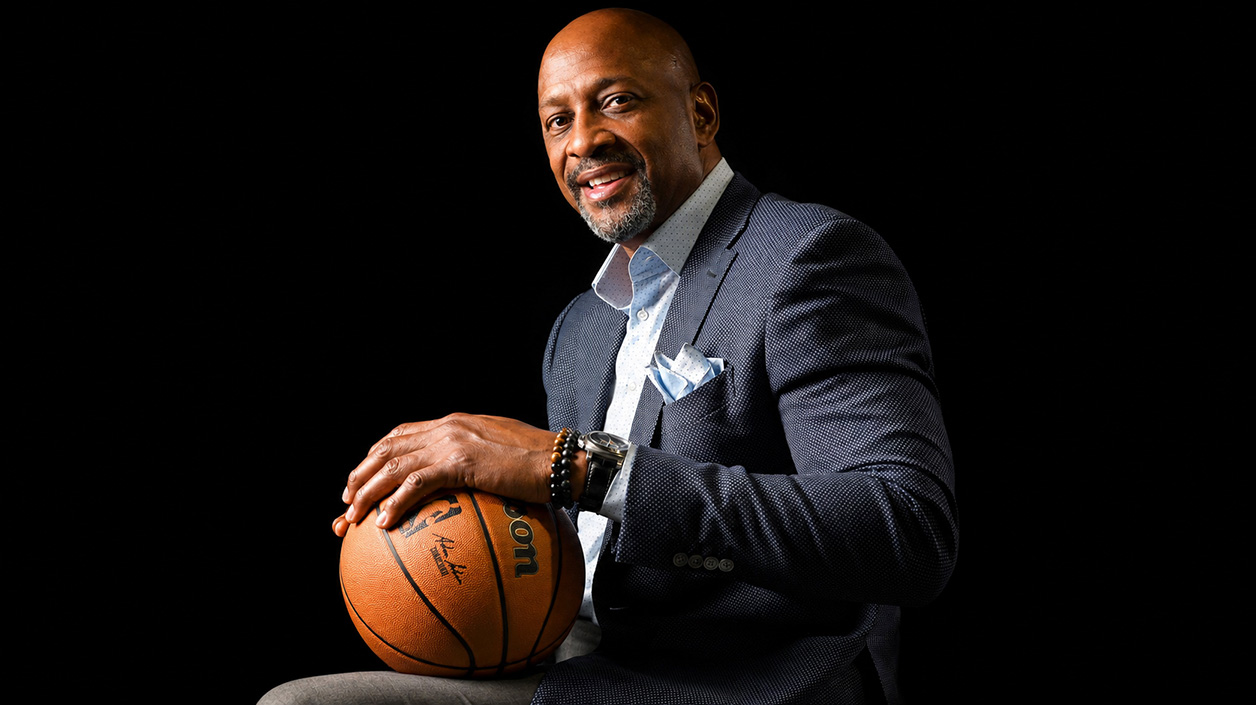
NBA legend Alonzo Mourning has added a new chapter to his story, and this one has nothing to do with basketball. He built Astoria on 9th, a senior living complex in Florida, at a cost of 37 million dollars. The project aims to give older residents a safe and affordable place to live at a time when housing costs are squeezing people on fixed incomes. It shows how a public figure can use his success and influence to address a need that affects thousands of families.
The scale of the development is significant. Astoria on 9th contains 120 apartments, which means 120 households can build a stable life under one roof. Each unit is either a one-bedroom or a two-bedroom home, giving residents some flexibility depending on their circumstances. A single person may want a quiet space of their own, while a couple or someone who wants room for a visiting family member may prefer the extra bedroom.
The apartments range from 635 to 900 square feet, which is modest but practical for older adults. Smaller homes are easier to clean, maintain, and move around in, and they also help keep costs under control. Many seniors are downsizing from larger houses, so a well-designed apartment of this size can feel comfortable rather than cramped. The goal is not luxury but dignity, safety, and a place that genuinely feels like home.
The most striking detail is the price. Residents with very low income can pay as little as 322 dollars in rent. That amount is a tiny fraction of what many people spend on housing in Florida, and it can make the difference between a secure life and a constant struggle to cover basic needs. For someone living on a small pension or limited benefits, a rent that low can free up money for food, medicine, and transportation.
Even the highest rent at the complex is only about 1,316 dollars. That is still far below what most Florida rentals demand, especially in a state where prices have climbed sharply in recent years. The gap between the lowest and highest rent, roughly fourfold, shows that the building is designed to serve a range of incomes rather than a single narrow group. Several kinds of seniors can find an option that fits their budget.
Affordable housing for older adults is an urgent issue because aging often brings rising expenses and shrinking income at the same time. Health care costs go up, savings can run low, and work becomes harder or impossible. When rent takes too large a share of a monthly check, seniors may skip medications, cut back on meals, or even risk losing their homes. Projects like Astoria on 9th act as a safety net against those pressures.
The 37 million dollar price tag also tells us something about what it takes to create this kind of housing. Dividing the cost across 120 apartments works out to roughly 308,000 dollars per home. Building affordable communities requires large investments, careful planning, and partners who are willing to accept modest returns. That makes Mourning’s commitment especially notable, because it takes patience and persistence to turn an idea into a finished building that people can actually move into.
There is also a symbolic side to the story. Athletes are often admired for what they do on the court, yet their influence can reach far beyond sports. By putting his name and resources behind a housing project, Mourning shows that celebrity can be used to support the community. His example may encourage other well-known people to look at local needs and ask how their platform and wealth could help solve problems that families face every day.
The benefits of a project like this extend beyond the residents themselves. When seniors have secure housing, their families worry less, and communities become more stable. Older neighbors can remain close to friends, places of worship, and the neighborhoods they know, which supports their emotional well-being. A well-run complex can also create a sense of community, giving residents chances to socialize, share meals, and look out for one another.
In the end, Astoria on 9th is more than a building with 120 apartments. It is a response to a real and growing need, offering homes at rents ranging from 322 to about 1,316 dollars in a state where affordability is increasingly rare. Alonzo Mourning’s work reminds us that a legacy can be measured not only in championships and records but also in the lives made easier by a safe, affordable place to call home.
Based on reporting by The Positive Community.
Black Press
Inside Chevron’s Fifth Annual “Hug a Pup” Salute to Veterans
THE COURIER ECO LATINO — Rather than limiting Veterans Day recognition to an internal email blast with a poorly prompted AI graphic, Chevron invited Veterans to HUG-A-PUP and learn about a resource that is available to them for FREE! – @TotallyRandie
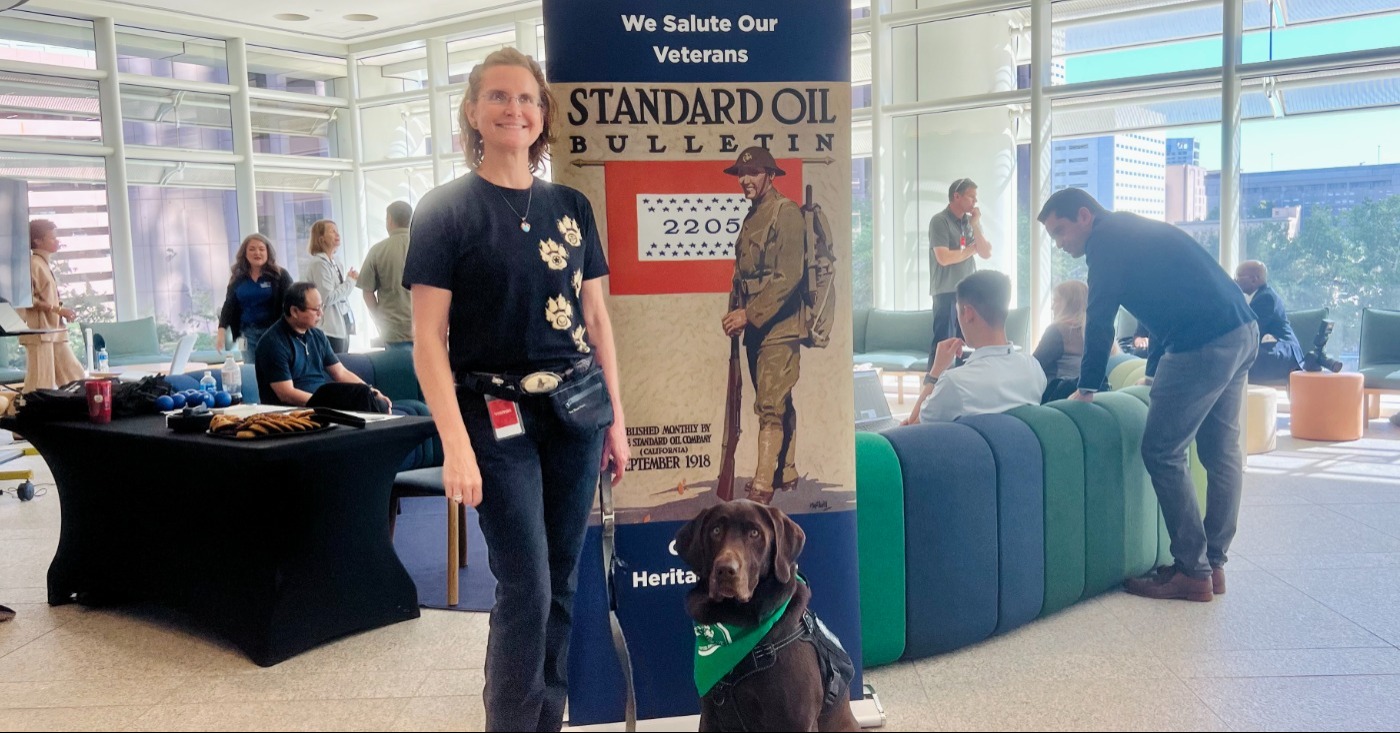
“Thank you for your service” is a phrase veterans hear so often it can start to feel like a routine greeting. Chevron decided to back that sentiment up with action. On November 12, Chevron’s employee networks hosted their fifth “Hug a Pup” event, giving downtown Houston staff five-minute breaks with four service-dogs-in-training while spotlighting the 1,200-plus U.S. veterans on the company’s roster.
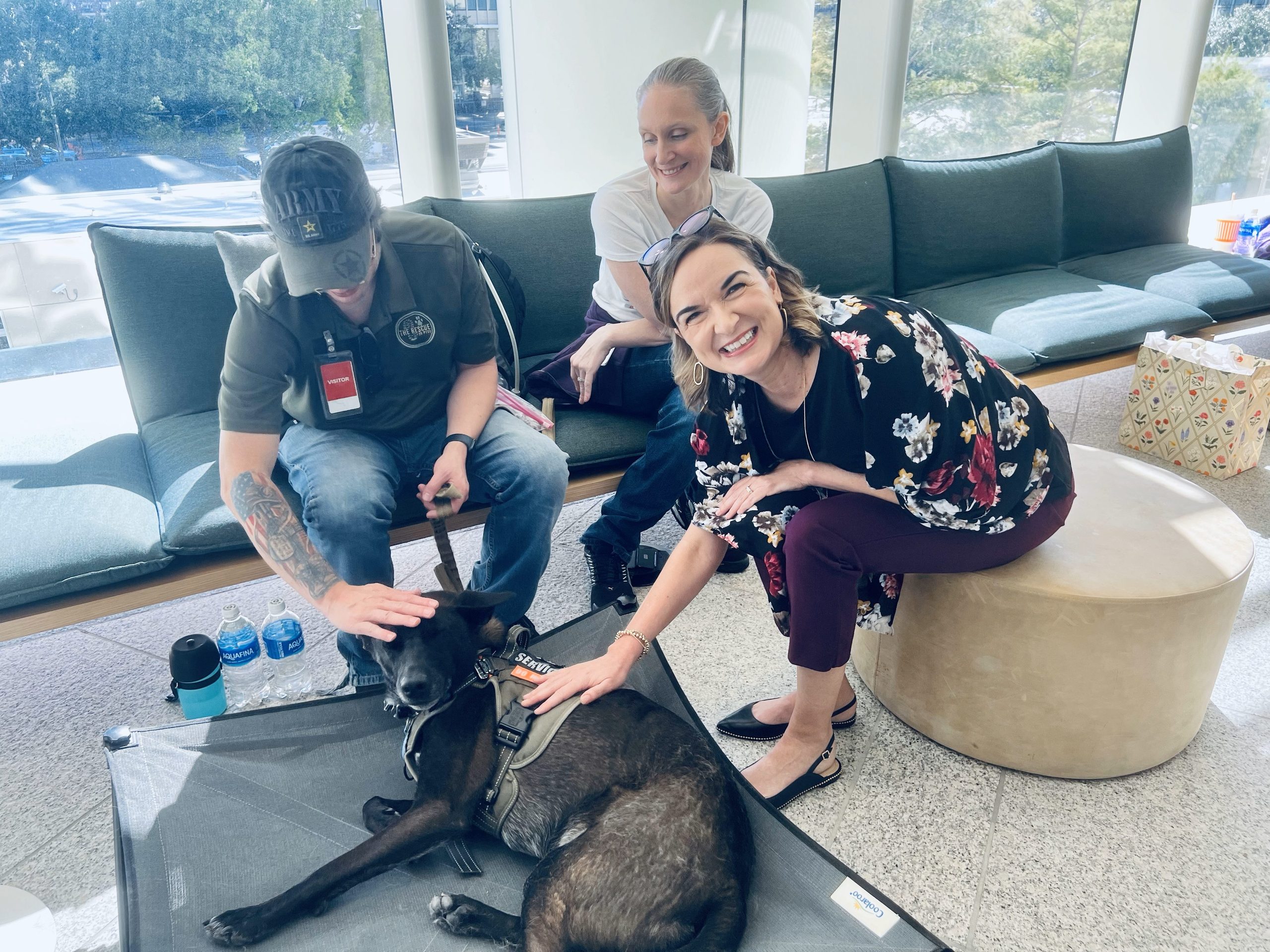
Behind the event is a partnership built inside Chevron’s own ranks. Katy Johns—Senior Asset Retirement Site Execution Lead at Chevron and Current President of the Veterans Employee Network—teamed up with Chevron retiree Laura Murray five years ago to launch the “Hug a Pup” activation. Murray, who comes from a military family and co-founded the 501(c)(3) nonprofit Rescue for PTSD with her husband, Aric, turned her lifelong background in dog training into a lifeline for returning service members. Together, Johns and Murray created the activation to give employees a midday mental health break while raising awareness around veteran PTSD; allowing staff to connect directly with trained service dogs and the military veterans who handle them.
“It’s one of our emplpoyees most favorite emplopyee engagement events that they get to participate in…It really has an impact on employee’s eventhough it’s just a 5 minute break.” – Katy Johns, President of the Veterans Employee Network
Founded in August 2017, The Rescue for PTSD has placed 19 individually trained shelter dogs with veterans and helped 38 more veterans train their own personal dogs through a dedicated group program. Bringing the organization’s total impact to 57 service dogs trained to date.
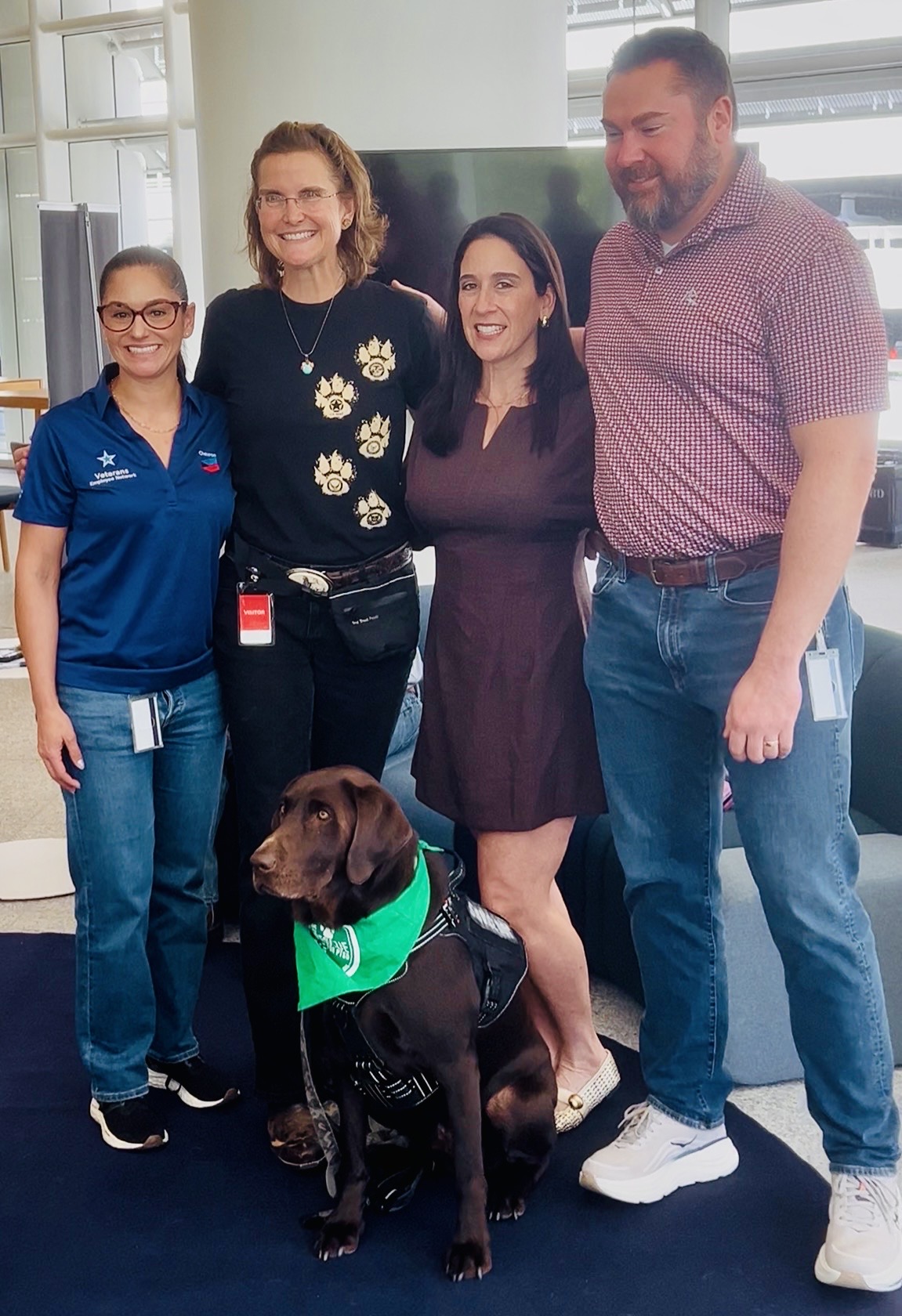
Rescue for PTSD operates on a straightforward, dual-impact model:
- Rescuing from Shelters: Rather than breeding dogs from scratch, the team adopts and rehabilitates dogs directly from local shelters and rescue groups, giving abandoned animals a second chance. “We have to deal with the PTSD of the Dogs first before we can train them to service veterans. So training can range from 6-18months” – Co-Founder Laura Murray.
- Zero Cost to Veterans: Each dog is trained specifically as a psychiatric service partner to help military veterans and first responders manage Post-Traumatic Stress Disorder—and every dog is placed completely free of charge.
- Lifelong Support: Graduates don’t just get handed a leash; veterans train alongside their partners and join ongoing monthly group classes and peer support networks to ensure the bond holds for life.
Knowing these dogs had to heal from their own trauma makes the partnership even deeper. They share real common ground with the veterans they serve, redefining what it means to be “man’s best friend.” Throughout the event, employees met four service pups: Julio, Diamond, Bear, and Smokey.
When most people picture a service dog, they imagine large breeds like Great Danes, Rottweilers, Dobermans, or Pit Bulls. Julio, however, is a Cocker Spaniel—and his owner couldn’t say enough about the difference he makes.
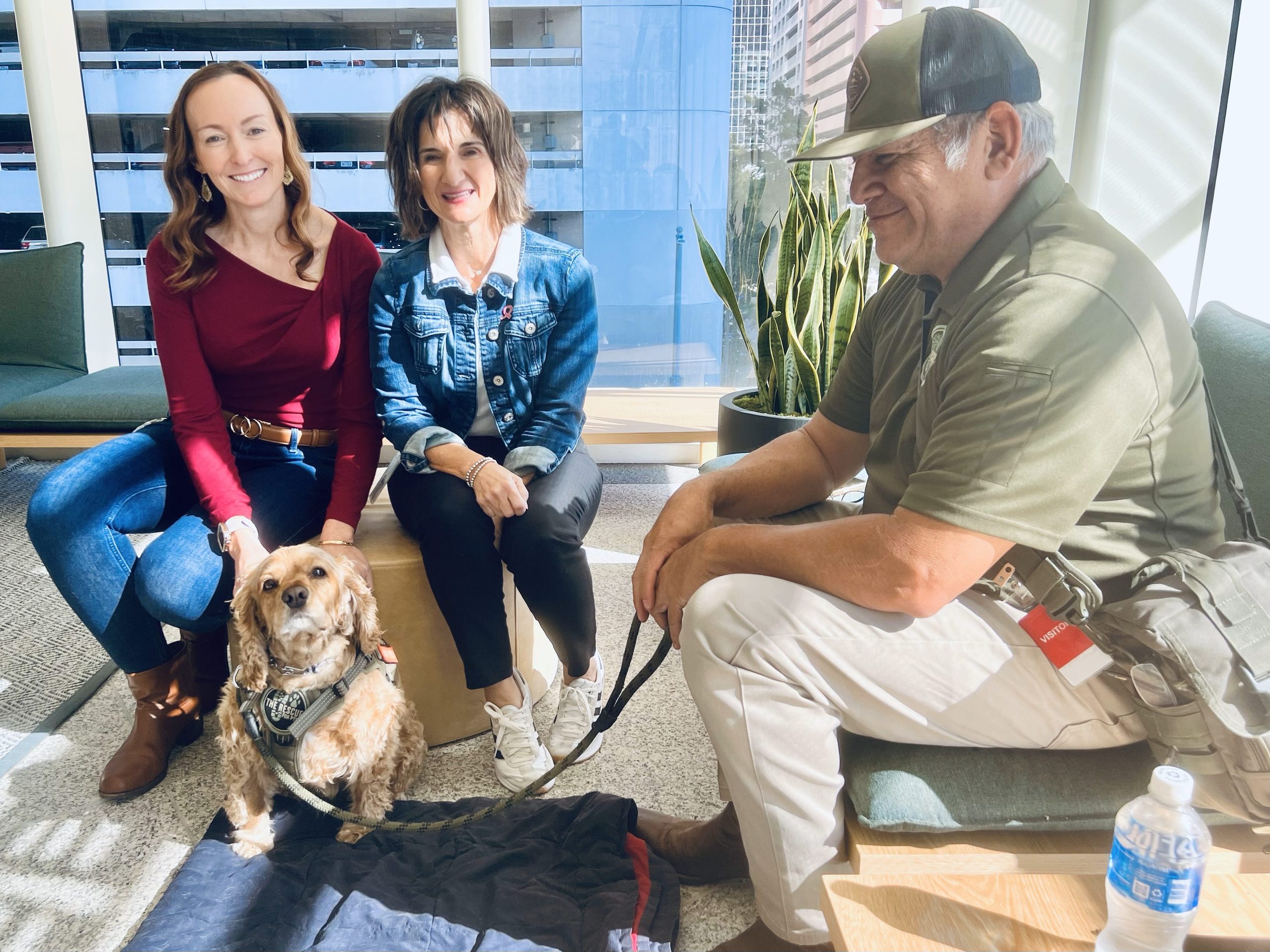
“I was in the Marines and I have a lot of anxiety. Julio helps me control my anger and anxiety.” — Mr. Davila
Everyday stressors like heavy traffic can quickly trigger anxiety or road rage for veterans managing PTSD. To interrupt those moments, The Rescue for PTSD trains its service dogs to read their handler’s cues and either rest their head in their lap or place a paw on their shoulder—a physical grounding technique that helps regulate emotions and bring calm back to the moment.
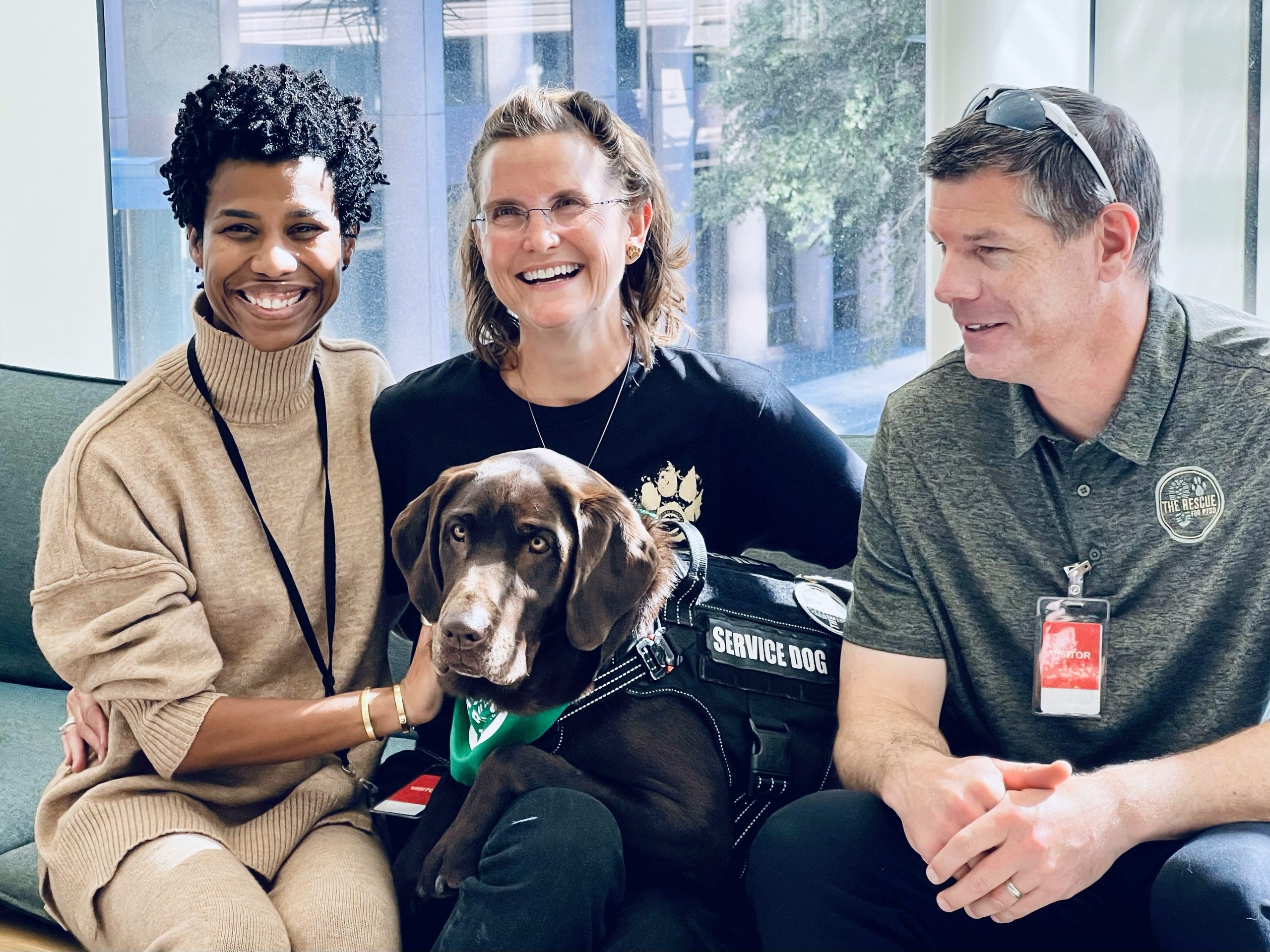
As they cycled through five-minute visits with the pups, trading conversations with veterans and seeing firsthand how these animals work in real time, employees also got a chance to HUG-A-PUP. Which helped them complete their day at work.
Rather than limiting Veterans Day recognition to an internal email blast with a poorly prompted AI graphic, Chevron brought Laura Murray, amazing service dogs, trainers, and veteran handlers onto the floor at 1500 Smith Street, putting a real face on what post-service transition actually requires. It was a brief pause in a busy downtown workday, but the takeaway was clear: service doesn’t end when the uniform comes off, and neither should community support.
To all veterans: thank you for your service. Please know you don’t have to carry the weight alone. If you are living with PTSD, reach out to The Rescue for PTSD and tap into a community built specifically with your mental health and healing in mind.


Build Your Personal Board of Directors—One Ask at a Time #shorts

The Leaders Shaping Norfolk s Community

London Brown finds purpose beyond Hollywood

London Brown finds purpose beyond Hollywood

Cut a 22% Loan Rate to 8% and Save Big #shorts

Houston Marijuana Arrests Jumped From 10 to 538

What Black EV Buyers Need to Know Before They Buy #shorts

Mind the Crown: Adrianna Willis on Rest, Boundaries and Building a Brand | MSR On the Radar

HAKEEM JEFFRIES WINS UNOPPOSED BID FOR HOUSE SPEAKER NOMINATION!

HAKEEM JEFFRIES WINS UNOPPOSED BID FOR HOUSE SPEAKER NOMINATION! 📱

HISTORY MADE: Keisha Lance Bottoms Becomes First Black Woman Elected Governor in American History

BLACK MEN VOTE: Mobilizing 100,000 Black Men Ahead of the Midterms 📱

Secretary of State Shirley Weber Pushes Back Against DOJ Demands Over California Voter Rolls

Retirement Triggers Doctor to Pen Book for Young Audience

Multi-Faith Leaders Representing 10 Million People Launch National Anti-Authoritarian Initiative

Capturing Black Life’s Beauty

OP-ED: For Us It’s Feel-a-Nomics

Christianity’s Racial History

Hundreds of Black Christian Leaders Arriving in Israel for Martin Luther King-Inspired Mission

Oakland Honors 60 Years of the Black Panther Party at the All Power to the People Gala
Build Your Personal Board of Directors—One Ask at a Time #shorts
The Leaders Shaping Norfolk s Community
London Brown finds purpose beyond Hollywood
London Brown finds purpose beyond Hollywood
Cut a 22% Loan Rate to 8% and Save Big #shorts
Houston Marijuana Arrests Jumped From 10 to 538
What Black EV Buyers Need to Know Before They Buy #shorts
Mind the Crown: Adrianna Willis on Rest, Boundaries and Building a Brand | MSR On the Radar
HAKEEM JEFFRIES WINS UNOPPOSED BID FOR HOUSE SPEAKER NOMINATION!
HAKEEM JEFFRIES WINS UNOPPOSED BID FOR HOUSE SPEAKER NOMINATION! 📱
-

 Black History1 week ago
Don’t Pass the Torch. Expand the Circle.
-
 Black Press5 days ago
OP-ED: Closing the Next Digital Divide — Communities of Color Must Have a Voice in the AI Future
-

 Featured1 week ago
Democratic Leadership Under Fire, Maxine Waters Challenged & Tyler Perry’s New Political Role 📱
-

 Black History6 days ago
New NAACP Report Warns AI Could Deepen Health Disparities in Black Communities
-

 Black History5 days ago
“Blue Tsunami” Sweeps Georgia, Bottoms Makes History
-

 Black History1 week ago
Nixon Unbought, Unbossed and Undeterred Following U.S. Senate Defeat – Free Press of Jacksonville
