
Black Press
Black Women Unite for ‘women Vote Early’ Event in Nashville
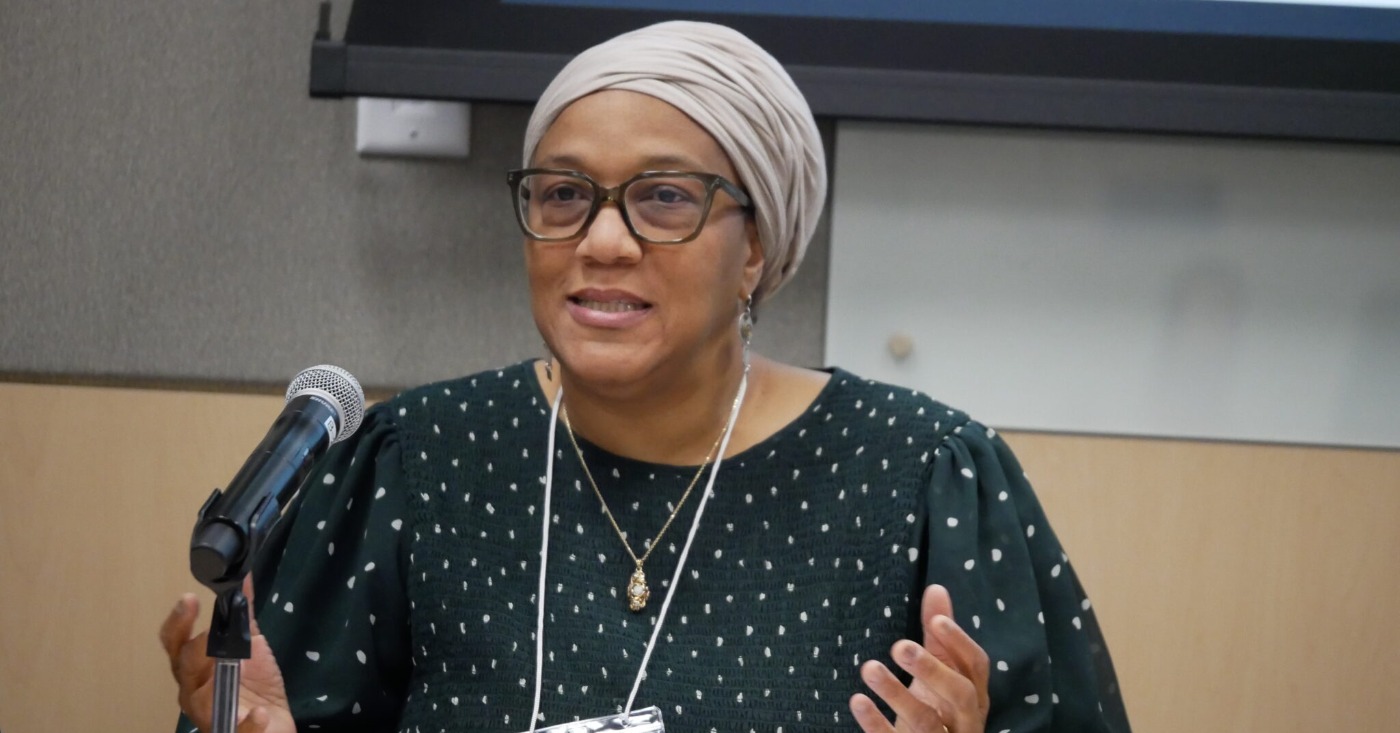
TENNESSEE TRIBUNE — The National Coalition of 100 Black Women, Inc. Metropolitan Nashville Chapter hosted a “Women Vote Early” event on July 25, encouraging civic engagement. The event brought together women from several African American organizations to cast their ballots during Tennessee’s early voting period.


NASHVILLE, TN — The National Coalition of 100 Black Women, Inc. Metropolitan Nashville Chapter encouraged civic engagement by hosting a Women Vote Early event on Saturday, July 25, bringing together women from several African American organizations to cast their ballots during Tennessee’s early voting period.
Organizations represented at the event included The Links, Delta Sigma Theta, Music City Zetas, the National Women’s Political Caucus, Les Gemes and the Urban League of Middle Tennessee.
“Despite the rain, we showed up because our voices matter, our votes matter, and our future matters,” organizers said in social media post. “We are grateful to every organization, leader, volunteer, and community member who stood with us in support of civic engagement. Together, we demonstrated the power of collective action and our commitment to empowering women and strengthening our communities.”
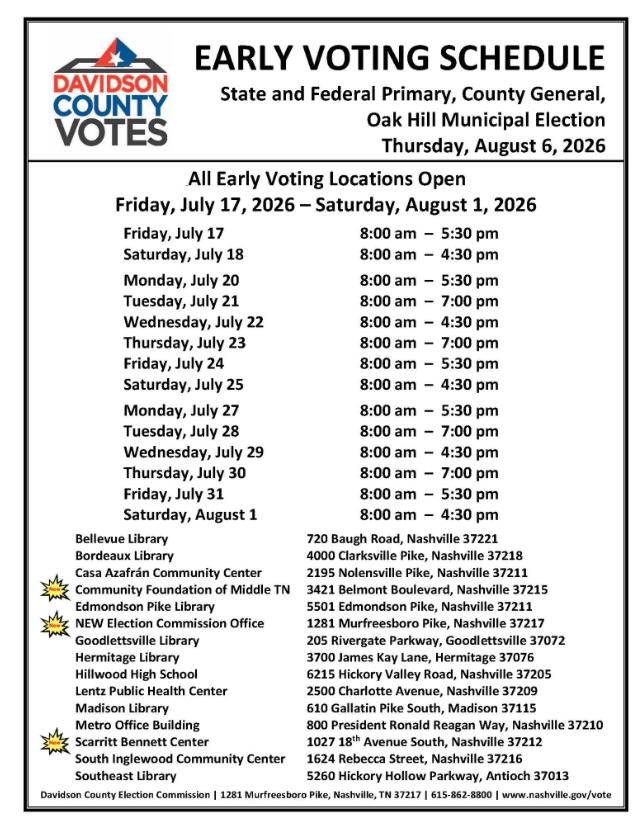
Early voting for the state and federal primary elections, as well as the Davidson County general and Oak Hill municipal elections, began Friday, July 17, and continues through Saturday, Aug. 1. Election Day is Thursday, Aug. 6.
Polling locations open at 8 a.m., with closing times varying between 4:30 p.m. and 7 p.m., depending on the date and location.
This year’s election includes the primary to determine the candidates seeking to become Tennessee’s next governor, as Gov. Bill Lee reaches the end of his second term.
Based on reporting by Tennessee Tribune.







Black History
Black Women’s Roundtable Unveils Its First 100 Days Federal Policy Agenda Priorities & Congratulates Congressman Hakeem Jeffries on Historic House Speaker Nomination
BLACKPRESSUSA NEWSWIRE — Developed under Campbell’s leadership, the BWR’s Policy Priorities draw from the Black Women’s Roundtable 2027 Federal Policy Agenda. They translate Black women voters’ concerns into specific legislative demands and a clear standard for holding newly elected members and returning lawmakers accountable.

“Black Women Didn’t Just Mobilize to Change Who Holds Office. We Organized to Change What Government Delivers”
Grounded in the 2026 Power of the Sister Vote Poll, BWR Outlines Seven Congressional Priorities Addressing Black Women Voters’ Concerns About Economic Security, Health Care, Voting Rights and Opportunities
Following the House Democratic Caucus’s nomination of Hakeem Jeffries for speaker, bringing him one step closer to becoming the first Black American to lead the U.S. The House of Representatives, the Black Women’s Roundtable today released its sevenpriorities for the first 100 days of the 120th Congress. The full House will elect its speaker when the new Congress convenes in January 2027. The BWR is the women and girls’ empowerment arm of the National Coalition on Black Civic Participation (NCBCP).
“For Black women who organized, mobilized their communities and helped elect the incoming Congress, the prospect of the nation’s first Black speaker carries profound historical significance, and an opportunity to turn representation into results,” states Melanie L. Campbell, NCBCP president and CEO and National Convener of the Black Women’s Roundtable.
Developed under Campbell’s leadership, the BWR’s Policy Priorities draw from the Black Women’s Roundtable 2027 Federal Policy Agenda. They translate Black women voters’ concerns into specific legislative demands and a clear standard for holding newly elected members and returning lawmakers accountable.
Working alongside state affiliates and coalition partners, NCBCP and the Black Women’s Roundtable led a multigenerational GOTV & Democracy Defense Campaign to engage and mobilize thousands of Black voters and protect access to the ballot across The South and in key states including: AL, FL, GA, MI, MS, NC, OH, PA, and SC (see www.UnityCampaign.org).
Black women helped mobilize voters and shape the outcome of the 2026 Midterm Elections. Now, they are sending a clear message to elected officials on a national, state and local level: Deliver on the issues that matter to our families and communities or answer to the voters who put you there.
The BWR Policy Priorities are informed by the The 2026 BWR Power of the Sister Vote Poll, a national survey of 1,000 registered Black women voters conducted during the 2026 midterm cycle. The findings underscore the urgency: 47% identified protecting the social safety net as a top federal priority, 43% cited rising prices, and 31% prioritized lowering health care and prescription drug costs.
Building on its nationwide voter mobilization and democracy protection efforts, NCBCP and BWR are now turning that organizing power toward holding elected officials accountable.
“Today’s vote brings Hakeem Jeffries one step closer to becoming the first Black speaker of the House – a historic milestone built on generations of struggle for representation and the organizing that Black women carried into this election,” said Melanie L. Campbell, NCBCP president and CEO and national convener of the Black Women’s Roundtable. “We recognize the significance of this moment, and we intend to build on it. Black women didn’t just mobilize to change who holds office. We organized to change what the government delivers.”
THE SEVEN PRIORITIES: WHAT BLACK WOMEN EXPECT FROM CONGRESS
NCBCP and BWR are calling on the 120th Congress to:
- Protect the Social Safety Net: Reverse Medicaid and SNAP cuts and protect Social Security and Medicare.
- Lower the Cost of Living: Expand the Child Tax Credit, increase affordable housing opportunities and address policies driving up family costs.
- Make Health Care Affordable and Save Black Mothers and Babies: Restore ACA tax credits, lower prescription drug costs, expand postpartum Medicaid coverage and protect maternity care.
- Create Jobs, Raise Wages & Expand Business Opportunities: Invest in job creation and apprenticeships, establish a $25 federal minimum wage, end the subminimum wage for tipped workers, advance paid family leave and expand access to entrepreneurship, small business development capital and federal contracting and procurement opportunities.
- Protect Voting Rights and Defend Democracy: Pass the John R. Lewis Voting Rights Advancement Act and the Freedom to Vote Act, protect ballot access and reject legislation that threatens voting rights.
- Reduce Gun Violence and Keep Communities Safe: Advance common-sense gun safety legislation, police accountability and protections for survivors of domestic violence.
- Combat Racism and Protect Equal Opportunity: Protect Black women and girls, defend civil rights and lawful diversity, equity and inclusion initiatives, and advance equal opportunity.
The broader federal policy agenda also calls for repealing the One Big Beautiful Bill Act, reversing cuts to federal programs and services, protecting federal workers and advancing economic, environmental and racial justice.
On immigration, Congress should provide no additional funding for U.S. Immigration and Customs
Enforcement (ICE). It should instead redirect the $75 billion the Department of Homeland Security received for ICE through 2029 toward addressing the affordability crisis and require the Department of Homeland Security to enforce civil rights protections.
The message to Congress is unmistakable: Black women did not mobilize simply to change who holds office. They mobilized to change what the government delivers.
Read the full Black Women’s Roundtable 2027 Federal Policy Agenda:HERE
About NCBCP: The National Coalition on Black Civic Participation (NCBCP) is a nonpartisan, nonprofit organization that, for 50 years, has worked to increase civic engagement and political participation in Black communities. Through its national network of organizations and grassroots partners, NCBCP strengthens civic leadership, promotes voter participation and advances policies that support equity and opportunity.
About the Black Women’s Roundtable: The Black Women’s Roundtable (BWR) is the women and girls’ empowerment arm of NCBCP. BWR brings together Black women leaders and organizations to advance civic engagement, economic security, leadership development and public policy priorities impacting Black women, girls and their families.
Black Press
Staying Ready: What Every Californian Should Know About Preparing for El Niño
BLACKPRESSUSA NEWSWIRE — “California is heading into a winter shaped by one of the strongest El Niño patterns on record,” said Matt Notley, Cal OES’ deputy director. “But the state has been preparing since last summer and our efforts now are about making sure our preparedness message reaches every community.”

Recent storms soaked parts of Northern and Southern California, brought heavy snow to the mountains and coincided with king tides that contributed to hazardous surfing conditions along sections of the coast.
As more storms are expected this winter, state and local officials are sharing resources to help Californians prepare.
At an online briefing hosted Nov. 13 by California Black Media (CBM), American Community Media (ACoM) and the California Governor’s Office of Emergency Services (Cal OES), officials discussed how residents can prepare.
“California is heading into a winter shaped by one of the strongest El Niño patterns on record,” said Matt Notley, Cal OES’ deputy director. “But the state has been preparing since last summer and our efforts now are about making sure our preparedness message reaches every community.”
El Niño is a climate pattern marked by warmer-than-average ocean temperatures in the tropical eastern Pacific. It can shift weather patterns and increase the odds of a wetter winter in California, though it does not guarantee severe storms in every area. NOAA says a strong to very strong El Niño is likely through January to March 2027.
Michael Anderson, the California Department of Water Resources’ climatologist, said elevated ocean levels can “amplify” flooding during king tides. Californians typically experience king tides in late fall and winter. Anderson said residents can expect rain to arrive in bursts lasting two to three days.
“Timing, pace, and scale of the storms drive the impacts. Storm size and time between the storms are really important,” said Anderson. “Coastal impacts have already started. They will amplify as the season evolves. So, if you are along the coast, please be careful.”
Understanding weather patterns is one part of preparing. Gov. Gavin Newsom proclaimed a state of emergency on Sept. 21 because of the developing 2026-27 El Niño, an early step to prepare for potential severe weather, according to Brian Ferguson, Cal OES’ chief deputy director of policy.
The Ready California website offers disaster alerts, preparation guidance and printable materials, including flip books and fact sheets, in multiple languages.
Among its recommendations, Ready California advises residents to check whether their home or workplace is in a flood-prone area; clear gutters and storm drains; fix roof leaks; trim trees; and get sandbags early. Residents should also sign up for local emergency alerts, prepare a Go Bag with medications and important documents, keep flashlights and charged phones nearby, and follow evacuation orders. This is a partial list of tips.
“We’re really trying to start early by talking to folks, getting the word out, and also how do we support communities on the front end so we can ultimately keep as many folks safe as possible,” said Ferguson. “Taken together, these actions help reduce the risk that we face and also improve public safety before the storms arrive.”
The California Water Watch website lets users check precipitation and other water conditions by address or ZIP code. Anderson said California should see short periods of stormy weather “every couple of weeks.”
The state is encouraging residents to prepare now. Cal OES and the governor’s office have emphasized the importance of having an emergency plan.
For more information, visit the Ready California website,sign up for emergency alerts, find disaster help or read preparedness materials and make a plan.
Black Press
Experts Convene to Make the ‘Early Connections’ that Matter for Children’s Health, Learning
BLACKPRESSUSA NEWSWIRE — “Early Connections: Building Bridges for Brighter Futures,” was hosted by the Equity Research Action Coalition at UNC’s Frank Porter Graham (FPG) Child Development Institute, along with several partners, including the state Division of Child Development and Early Education and UNC’s Department of Maternal and Child Health.
As children enter the world, research says the level of support babies, mothers, and families receive makes a lasting impact on children’s health and well-being.
“The bonds formed in the earliest years between caregivers and children, between families and communities, between systems and the people that they serve really shape a lifetime of well-being,” said Alessandra Bazzano, chair of University of North Carolina-Chapel Hill’s Department of Maternal and Child Health at a conference held at the university.
Yet too often, services during pregnancy and through the early years of life are fragmented — or nonexistent — advocates, researchers, and practitioners said at the event.
“Early Connections: Building Bridges for Brighter Futures,” was hosted by the Equity Research Action Coalition at UNC’s Frank Porter Graham (FPG) Child Development Institute, along with several partners, including the state Division of Child Development and Early Education and UNC’s Department of Maternal and Child Health. It convened leaders across policy, philanthropy, research, advocacy, and practice with the goal of creating new partnerships that better serve young children and families.
“We must ensure that there’s a through line from healthy pregnancies and births to infancy to entry into high-quality early childhood education settings, because we know that the first three years of life is essential and important for healthy brain development,” said Brian Boyd, director of the FPG Institute.
Iheoma Iruka, director of the Equity Research Action Coalition, planned the event to bring together individuals and agencies that are not often in conversation yet serve the same communities, including experts on early care and education and infant and maternal health.
Building authentic and new relationships matters now more than ever, Iruka said.
“We are living through a moment of profound change — from climate change and natural disasters, to the rapid rise of artificial intelligence, to shifting global relationships and increasingly complex interdependence across communities, institutions, and nations,” Iruka said. “These changes bring real opportunities for innovation, for collaboration, and for addressing longstanding inequities, but they also bring tension, uncertainty, and difficult questions and conversations.”
‘Prenatal care makes a difference’
During pregnancy, the services available to mothers and families vary widely.
Many mothers, especially in rural areas, struggle to access prenatal care and must drive far from their homes to reach hospitals to give birth. About 28% of mothers in 2024 did not receive prenatal care in the first trimester of their pregnancies, according to the North Carolina Maternal and Infant Health Dashboard.
“Prenatal care makes a difference — making sure that they are educated during those visits, that you talk about nutrition, that you talk about hydration and proper exercise, that you get into what kind of food do you have in your cabinet at the house,” said Tina Braimah, director of Aya Birth & Community Wellness in Durham and a panelist at the convening.
Thirteen counties in northeastern North Carolina have no hospital, according to an investigation published by Carolina Public Press on the “the desertification of women’s health care in rural counties.” The region experienced a net loss of 11 delivery rooms from 2013 to 2023. In the far western part of the state, five counties have no hospital, and the region had a net loss of 13 delivery rooms over the same period.
These gaps in access show up in babies’ birth outcomes, several experts at the convening said. North Carolina had the 18th highest infant morality rate in the country in 2024, and mortality rates are uneven across race.
Black babies were nearly three times more likely to die in the first year of life than white babies in 2024. Black mothers were 1.6 times more likely to die from a cause related to their pregnancies than white mothers in 2018 and 2019, according to a February 2024 report from the North Carolina Maternal Mortality Review Committee.
“That ought to be a great concern to all of us,” said Sen. Jim Burgin, R-Harnett, on the racial disparities in infant mortality. Burgin, a panelist at the convening, has advocated for maternal and infant health efforts at the state legislature.
“One of the goals I set was to reduce infant mortality in the Black community by half, and I don’t see that happening,” Burgin said. “So you all need to tell us what we need to do.”
Improving maternal and infant health requires ensuring families’ basic needs are met, Braimah said.
“The other part of it is making sure they have everything they need — that they’re not stressed out, that you have access to medicine … that you have access to food,” she said. “It’s about so much more than just the prenatal care and having a baby.”
Transforming rural maternal health
Researchers from North Carolina Central University’s Center for Health Disparities Research shared several efforts to link families, particularly those in marginalized communities, with research and services that improve their health.
For example, the university’s Rural Health Hub, based in Halifax County, launched a Community-Based Doula Program in 2025 that trains individuals from rural northeastern counties to work as doulas in their communities. The program has graduated 22 doulas, 18 of whom are focused in northeastern counties, with another cohort planned this year.
“Our goal is definitely to be able to utilize this program as a means and a way to help transform maternal health outcomes across rural North Carolina,” said Undi Hoffler, director for the Office of Research Compliance and Technology Transfer at NC Central. “We’re starting in the northeast, but we hopefully will be expanding widely.”
The hub provides scholarships for those who already live in the counties in which they will provide doula services.
“We are also establishing trust, because these are people that you see in the grocery store, you go to church with, you work with, and so there’s a relationship already there,” Hoffler said.
The researchers said their efforts are informed by the families and communities they serve.
“We don’t want to just work on the community, we want to work with the community, and that’s our role,” said Seronda Robinson, an epidemiologist. Robinson leads a “Community Engagement Core,” a team that “serves as the bridge between researchers and the communities most affected by health disparities,” according to its website. “The CEC ensures that community voices inform every stage of research.”
Professionals shaping policy and systems need to do a better job of listening to and learning from the experiences, needs, and assets of marginalized communities, several speakers said at the conference.
“We gain truth when we center families and their experiences,” said Devonya Govan-Hunt, executive director of Black Child Development Carolinas, an advocacy nonprofit.
Licensed child care programs are meeting about 55% of the potential need, according to a national analysis from Child Care Trust, and rural communities are particularly struggling.
Black History
PRESS ROOM: Donalds Transition Website Now Open to All Floridians Who Want to Serve
BLACKPRESSUSA NEWSWIRE — Governor-elect Byron Donalds and Lieutenant Governor-elect Bryan Avila are looking for talented, mission-driven people from every corner of Florida to help carry out the agenda voters approved this month.

The Donalds-Avila Transition Team has announced that its official transition website is now open for anyone who wants to apply to serve in the incoming administration.
Governor-elect Byron Donalds and Lieutenant Governor-elect Bryan Avila are looking for talented, mission-driven people from every corner of Florida to help carry out the agenda voters approved this month.
Through the website, Floridians can:
Apply for positions across state agencies and the Executive Office of the Governor
Volunteer for boards and commissions
Share ideas on how to keep Florida the freest, safest, and most affordable state in the nation
“Florida’s best days are ahead, and building this administration starts with our greatest strength: our people,” said Governor-elect Byron Donalds. “We want the hardest-working, most committed people in this state on our team. If you’re ready to serve, we want to hear from you.”
Applications are being accepted on a rolling basis. Interested applicants are encouraged to apply early at DonaldsTransition2026.com
Black Press
Holiday Hosting Guide: Wines for Fried Turkey, Ham, Seafood and More
BLACKPRESSUSA NEWSWIRE — Adventurous types serving turducken this holiday might consider an earthy Oregon pinot noir. This meat trifecta deserves the soft tannins that will bring out the richness of the duck. Ham can be both salty and sweet. A dry rosé will pair with savory ham, and a zinfandel offers the fruit forwardness needed with a honey baked ham.

It’s that time of year to express gratitude for continual blessings and to stuff our faces with the legendary fried turkey. It might take more work to deep-fry a whole turkey than to roast it in a conventional oven. However, the sacrifice is worth it for the moist, succulent meat and that irresistible crisp crackling skin.
Wines That Pair well with fried turkey
* Beaujolais- light, very dry red wine from France
*Carricante–spicy dry white wine from Italy
*Champagne-versatile sparkling wine from France
*Chardonnay-unoaked version
*Cinsault-light dry red wine from France
*Gewurztraminer-dry spicy white wine from Germany
*Grenache Blanc–dry white wine from Spain
* Grüner Veltliner–savory dry white wine from Austria
* Lambrusco- sweet, bubbling red wine from Italy
*Pinot noir-light elegant dry red wine
* Rosé Prosecco- versatile, sparkling rosé, easy-drinking Italian wine
*Late Harvest Riesling-sweet white wine from Washington State
When a Fried Turkey isn’t on the menu
A classic turkey dinner with all the trimmings is a Thanksgiving Day feast.
Adventurous types serving turducken this holiday might consider an earthy Oregon pinot noir. This meat trifecta deserves the soft tannins that will bring out the richness of the duck. Ham can be both salty and sweet. A dry rosé pairs well with savory ham, and a zinfandel offers the fruit-forwardness needed for honey-baked ham.
Seafood dishes prepared with light sauces taste incredible with Sauvignon Blanc from New Zealand. Prime rib is an elegant showstopper; an aged Cabernet Sauvignon is a great choice when serving rich red meat. Look at the meal as a complete composition and try not to pair each dish with a separate wine. Experiment with wines you’ve never tried and choose quality products.
Budget-Friendly Options
Let’s keep it real, family: grocery prices are through the roof for all of us.
A couple of pounds of ground turkey, egg yolks, breadcrumbs, and poultry seasonings make excellent meatballs. A whole chicken is much less than a whole turkey and looks amazing on a platter. Simple, inexpensive desserts can be gelatin with fresh fruit, sugar cookies, and a mug of hot chocolate.
Are you invited to a neighbor’s home for Thanksgiving Day dinner? Take them up on it and bring a great bottle of wine or ask the hostess what she needs to complete the meal.
Enjoy the holidays and be happy with what you have; stay focused on good food, delicious wine, and those people you value most.
Black Press
OP-ED: America’s Healthcare System Isn’t Sustainable. What Would a Better Alternative Look Like?
BLACKPRESSUSA NEWSWIRE — Rather than waiting for Washington to impose changes from the top down, it’d be far better for patients, providers, insurers, employers, drug companies, and pharmacy benefit managers to work together now — to reimagine, and ultimately redesign, the system with a shared vision.

Virtually no one in America is satisfied with the healthcare status quo. Not doctors. Not hospital executives. Not drug or insurance company leaders. And most certainly not patients.
This nearly universal anger is setting the stage for seismic reforms. Policymakers in both parties are planning ambitious healthcare overhauls.
Rather than waiting for Washington to impose changes from the top down, it’d be far better for patients, providers, insurers, employers, drug companies, and pharmacy benefit managers to work together now — to reimagine, and ultimately redesign, the system with a shared vision.
America boasts the most talented doctors and best hospitals in the world. Our researchers develop the lion’s share of new medicines. And far more of those treatments are available here than in other peer nations, at least in theory.
Yet despite all these advantages, our current healthcare system fails to deliver the outcomes that matter most to families — because it was simply never designed to do so. We often cannot agree on what healthcare should ultimately accomplish, which outcomes matter most, or what tradeoffs we are willing to tolerate.
In the absence of this shared understanding, companies default to prioritizing their own short-term finances — even if that’s not in the long-term interests of patients, families, or society.
For instance, consider the dilemma facing health insurers. Americans frequently bounce from insurer to insurer as they change jobs, move states, retire and enroll in Medicare, or simply select new plans that better fit their needs.
So even when an expensive treatment would clearly improve a patient’s health and prevent future complications, the insurer or employer that shoulders the upfront cost likely will not reap the eventual savings.
Consider the dilemma posed by gene therapies, which target the underlying genetic malfunctions and mutations that cause certain diseases.
In many cases, a one-time dose of these therapies can completely cure a patient’s disease for life — and prevent millions of dollars in spending on hospitalizations and other care down the road. Multiple gene therapies are cost-effective, even with price tags exceeding $1 million.
In all likelihood, insurers that cover these therapies will see only a fraction of the return before patients switch plans. They therefore have a strong incentive to limit access, even when everyone agrees these treatments offer good value over a lifetime.
This behavior makes perfect sense from the perspective of an individual insurer or employer. But it makes no sense for society as a whole.
We need a genuinely market-based system in which providers, drug companies, and insurers can transparently compete for customers on both price and quality.
And that competition cannot happen unless we first adopt new valuation metrics to better understand the full costs and benefits of different treatments and care models — and then redesign payment and insurance rules so that organizations are rewarded, rather than penalized, for investing in patients’ long-term health.
The question is whether stakeholders can set aside their differences, agree on a shared definition of success, and implement reforms that improve patients’ long-term physical, mental, and financial health.
If they cannot, Washington will eventually impose changes from above.
Marc Boutin, J.D., a three-time cancer survivor and caregiver, is president and CEO of IVI and previously served as CEO of the National Health Council, where he led policy initiatives that helped shape national health care reform. This column originally appeared at DCJournal.com


Black Women’s Roundtable Unveils Its First 100 Days Federal Policy Agenda Priorities & Congratulates Congressman Hakeem Jeffries on Historic House Speaker Nomination

Staying Ready: What Every Californian Should Know About Preparing for El Niño

Experts Convene to Make the ‘Early Connections’ that Matter for Children’s Health, Learning

PRESS ROOM: Donalds Transition Website Now Open to All Floridians Who Want to Serve

Delay Motherhood: What you need to know about egg freezing

Car Buying Tips: 5 Steps to Get a Better Deal #shorts

Massive Chevy Tahoe Interior Tour: The Cup Test Challenge #shorts

Scott Colom’s Nike Challenge Goes National, Freshman Democrats Get a Surprise 📱

Scott Colom’s Nike Challenge Goes National, Freshman Democrats Get a Surprise

MLGW offers up to $7,500 per home to help builders connect to the grid

HISTORY MADE: Keisha Lance Bottoms Becomes First Black Woman Elected Governor in American History

Secretary of State Shirley Weber Pushes Back Against DOJ Demands Over California Voter Rolls

Retirement Triggers Doctor to Pen Book for Young Audience

Capturing Black Life’s Beauty

Multi-Faith Leaders Representing 10 Million People Launch National Anti-Authoritarian Initiative

Christianity’s Racial History

Hundreds of Black Christian Leaders Arriving in Israel for Martin Luther King-Inspired Mission

Oakland Honors 60 Years of the Black Panther Party at the All Power to the People Gala

Message from the Associate Editor: Blindness, Hurts, Cops

Michael Shiner: The Enslaved Man Who Wrote His Way into American History
Delay Motherhood: What you need to know about egg freezing
Car Buying Tips: 5 Steps to Get a Better Deal #shorts
Massive Chevy Tahoe Interior Tour: The Cup Test Challenge #shorts
Scott Colom’s Nike Challenge Goes National, Freshman Democrats Get a Surprise 📱
Scott Colom’s Nike Challenge Goes National, Freshman Democrats Get a Surprise
MLGW offers up to $7,500 per home to help builders connect to the grid

San Diego Black Judges: A Historic Shift on the Bench

She’s Turning Her Ovarian Cancer Story Into a Lifesaving Mission #shorts

Tahoe 15-Inch Head-Up Display: Can You Read It in Sunlight? #shorts

MC Scat Cat: The Story Behind Paula Abdul’s No. 1 Hit #shorts
-

 Black Press1 week ago
OP-ED: Closing the Next Digital Divide — Communities of Color Must Have a Voice in the AI Future
-

 Black History1 week ago
New NAACP Report Warns AI Could Deepen Health Disparities in Black Communities
-

 Black Press7 days ago
COMMENTARY: Thank You, Trump, for Making America Great Again!
-

 Black History1 week ago
“Blue Tsunami” Sweeps Georgia, Bottoms Makes History
-

 Black Press6 days ago
Black Men Encouraged to Start Prostate Cancer Screening at 45
-

 Black Press1 week ago
OP-ED: And Then What?
