
Law
Black Lives Matter Activist Pressures MPD for Surveillance Data
WASHINGTON INFORMER — Core organizer April Goggans often posted online about a marked police car parked in front of her home and other instances of alleged intimidation.

By Sam P.K. Collins
Years ago, as Black Lives Matter DC railed against the Metropolitan Police Department (MPD), core organizer April Goggans often posted online about a marked police car parked in front of her home and other instances of alleged intimidation.
Her lawsuit against MPD, two years in the making, revolves around a 9,000-page dossier that police department officials refuse to release.
The outcome of the civil suit, predicted to end in early April, boils down to the question of what constitutes as “monitoring and surveillance” as expressed by Goggans in her initial Freedom of Information Act (FOIA) request. Once again, interpretations of that term was the focal point of a hearing this month in D.C. District Court.
“The Metropolitan Police Department has 9,000 pages of documents it knows contains April’s name, Twitter handle, and street address,” said Andrew Mendrala, supervising attorney and teaching fellow at Georgetown Law Civil Rights Clinic.
“But the original FOIA request for documents used the term ‘monitoring and surveillance.’ MPD said that because none of these pertain to an official investigation of specialized divisions of MPD that conduct large-scale monitoring and operations, they do not show ‘monitoring’ of Ms. Goggans, and MPD is not required to turn them over,” Mendrala said.
Goggans’ June 2017 FOIA request outlined 14 points. The first five asked for documents concerning Goggans, records and communication about her, policy manuals and directives on how to approach political activists, details of officer trainings about the right to political free speech, and communication between MPD and the Executive Office of the Mayor (EOM) about Goggans or Black Lives Matter.
The other nine items concerned records about monitoring Goggans, including any communication between MPD, EOM and other parties, about Goggans, an active member of Black Lives Matter, and records from when officers parked in front of her home.
From the onset of the lawsuit, MPD’s legal team maintained that MPD fulfilled Goggans’ original request.
During a December court hearing, MPD’s lawyers argued that the only correspondence falling within that definition had been from Goggans to MPD in which she discussed monitoring and surveillance. They later said the department had no legal obligation to release what it considered irrelevant information, like that found in Officer Daniel Flinn’s notebook.
An official in the Office of the Attorney General for the District of Columbia, speaking on background, reiterated that point, saying that Goggans’ team didn’t expand its definition of “monitoring and surveillance” until after litigation started.
Earlier this month, as a large group of Black Lives Matter supporters watched, Goggans’ attorneys argued that a more reasonable broadening of the MPD’s interpretation of “monitoring and surveillance” allows for the release of pertinent information that would substantiate Goggans’ claims of police surveillance, including the names of officers involved.
Judge William Jackson listened as Goggans’ attorneys recounted hurdles in the FOIA process, including an eight-month struggle to add Goggans’ name to the searches, and questions about the degree to which MPD searched for Goggans versus Black Lives Matter.
Jackson at times appeared annoyed, but lighthearted, as he struggled to understand what Goggans’ attorneys didn’t receive from MPD. Toward the end of the hearing, the attorneys acknowledged that MPD searched for Black Lives Matter and Goggans’ name.
MPD didn’t return The Informer’s request to define “monitoring and surveillance.”
Goggans, who carries a decade of organizing experience in southeast D.C., counted among the activists who took to the streets in the aftermath of Terrence Sterling’s police-involved death in 2016. Last year, after the release of footage from a controversial stop-and-frisk incident in Northeast’s Deanwood neighborhood, she and other members of Black Lives DC designated the community as a liberation zone.
In her role as core organizer, Goggans has also advocated for the full implementation of Neighborhood Engagement Achieves Results Act, legislation designed to expand community-based violence interruption services throughout the District.
Black Lives Matter groups nationally have been embroiled in similar legal battles, with local police departments for data collected about activist groups.
In November, a federal court judge in the Southern District of New York ruled that individual Black Lives Matter activists could sue the Clarkstown Police Department for their information. Last month, a New York state judge ordered the New York City Police Department to answer a FOIA request about its alleged use of phone signal interruption technology.
Mendrala noted what he described as the certain uniqueness of Goggans’ case.
“The case is a bit of an unusual dodge that MPD is making by saying that they have all of these documents we asked for but MPD decided they actually aren’t what we’re asking for, so they won’t give them to us,” he said. “They’re hiding behind a bureaucratic use of language that no reasonable person could be expected to understand or use when making a request.”
This article originally appeared in the Washington Informer.








Black Press
Lawyer-Turned-Contractor Hones Focus on Redeveloping Properties for Housing
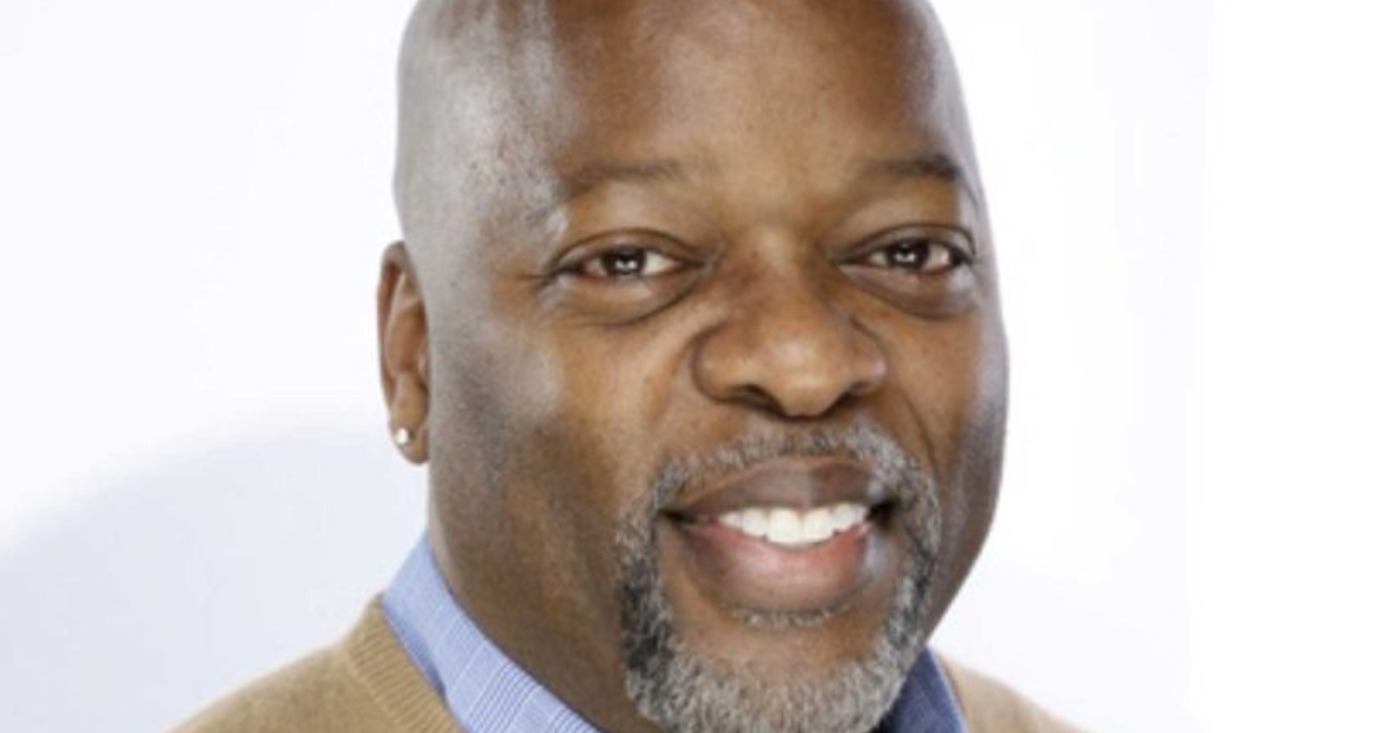
BAY STATE BANNER — Donald Donnalson spent his childhood summers assisting his stepfather with contractor work, a job he initially disliked and vowed to never pursue professionally. After earning degrees from Boston College and Northeastern University Law School, Donnalson practiced law for several years before a return to contracting reignited his interest in the field. In 2011, he launched Beantown Builders, Inc.
Banner Business Sponsored by The Ujima Project
At a young age, Donald Donnalson helped his stepfather with contractor work during his summers off. He always hated it back then and vowed to never go into the profession.
After earning degrees from Boston College and Northeastern University Law School, he practiced law for a number of years. But when his stepfather asked for help with contracting as an adult, Donnalson “caught the bug.” He launched Beantown Builders, Inc. in 2011, which now focuses on housing builds including multifamily conversions, redevelopment of underutilized properties, and accessory dwelling units throughout Greater Boston and eastern Massachusetts.
“There are a lot of contractors in Massachusetts, and discovering what your niche is — for any entrepreneur, but especially in this industry — is super important,” he said, adding that their housing niche is important for its impact on the community.
“Greater Boston faces significant housing affordability and availability challenges, and we think that existing properties represent an opportunity to create additional housing without always requiring entirely new developments,” he said.
Donnalson started his company with incredible personal investment. He left his role as a finance manager for Audi Natick and liquidated his 401k to jumpstart the business.
“I basically just bet on myself. I didn’t have a project. I didn’t have anything. I was just like, I’m gonna go do this because if I don’t do it now, I’m never gonna do it,” he explained.
Today his minority-owned business is addressing the need for more housing while helping dispel broader distrust of contractors.
“Seeing a company like ours in the community that’s willing to learn more, do more, take on these experiences, and fill the gap where there seems like there’s not enough of us around is a big help,” he said, later adding that, “as an MBE [Minority Business Enterprise], we’re focused on building more than a successful construction company. We’re developing the people, systems and capabilities to take on increasingly complex projects while contributing to housing opportunities, economic development and the communities we serve.”
For Director of Marketing Alicia Zuniga, their mission helps guide the work and build trust with customers. Beantown’s clients are a mix of homeowners, families and property investors.
The team “understands construction is about much more than buildings. Behind every project are people with goals, expectations and important decisions to make,” Zuniga said.
Donnalson said one of the biggest obstacles he currently faces is attracting and keeping the best talent to help on projects, which have taken the team as far south as Fall River and North Attleboro and as far north as Lynn.
They recently supported The Guild nonprofit in constructing a community-oriented urban space, turning a hillside into public green space with paths and areas to gather. Landscape architects at Landworks Studio designed the urban forest project while Beantown supported the build, including masonry and permeable paving.
“Projects like this reflect our belief that construction can do more than improve individual properties; it can also contribute to the neighborhoods and communities around them,” Donnalson said
Based on reporting by Bay State Banner.
Black Press
Birmingham on Pace for Fewest Homicides in 75 Years
BAKERSFIELD NEWS OBSERVER — Birmingham, Alabama, is currently on track to record its lowest annual homicide total in approximately 75 years. According to the Birmingham Police Department’s third-quarter briefing, the city recorded 34 homicides through October 1, representing a significant decrease from the 61 reported at the same time last year and the 129 reported by October 2024.
Birmingham, Alabama, is on pace to close 2026 with its fewest homicides in roughly 75 years — a turnaround for a majority-Black city that for decades made national headlines for its murder rate.
Birmingham police counted 34 homicides through Oct. 1, down from 61 at the same point in 2025 and 129 at the same point in 2024, Police Chief Michael Pickett said at the department’s third-quarter briefing. The city’s lowest annual total on record is 44, set in 1951. Just two years ago, Birmingham recorded 152 homicides, its deadliest year.
“I did not think that we would have this much of a reduction but of course that’s always the goal,” Pickett said. He put the drop at 74% compared with 2024 and said the department has cleared 91% of this year’s cases.
“Birmingham is on track for our fewest homicides in 75 years,” Mayor Randall Woodfin wrote on Facebook this month, crediting the officers of the Birmingham Police Department, Pickett, and the city’s community violence intervention workers.
The city’s bet runs on two tracks. On the policing side, Pickett has pointed to the department’s crime reduction plan, enforcement targeting illegal firearms, and cooperation with federal agencies. On the community side, Birmingham has put about $5.4 million in American Rescue Plan money into violence intervention programs: a hospital-based partnership with UAB Hospital, the Jefferson County Department of Health, the Offender Alumni Association, and Violence Intervention and Prevention Partners that places specialists at the bedsides of people wounded by gunfire; a street outreach team run with the Urban League of Alabama; a Group Violence Reduction Strategy with the National Institute for Criminal Justice Reform; and One Hood. With the one-time federal dollars expiring, the city council extended the hospital-linked program through June 2027 with $1.15 million and put $3 million for community violence intervention — a $1.5 million increase — into the city’s fiscal 2027 budget. Whether every program is fully covered once the federal money runs out remains unclear.
The honest caveats: murders are falling across the country, too — crime analyst Jeff Asher projects the lowest U.S. murder rate ever recorded in 2026, after the FBI reported the national homicide rate hit a 75-year low in 2025 — and nobody can prove which piece of Birmingham’s approach drove the drop. One category is moving the wrong way: domestic violence offenses are up 18.3% this year, the chief said. “This is not something the police department can handle alone,” Pickett said of the domestic violence increase.
Two accounting notes readers deserve: the mayor’s latest post says homicides are down 46% from last year, while the police department’s own Oct. 1 numbers work out to about 44% — and a May fact-check by ABC 33/40 found an earlier Woodfin figure slightly overstated. Separately, Bhamwiki counts 38 homicides as of Oct. 1 because it includes police-involved and justified cases; the police count is 34. And the pace math matters: 34 homicides through Oct. 1 projects to roughly 45 for the full year — just above the 1951 record of 44. So “fewest since 1951” is within reach; a new all-time low likely isn’t.
What’s working to make your neighborhood safer? Tell us.
Drafted by News Observed Editorial AI, human reviewed and published.
Based on reporting by Bakersfield News Observer.
Black Press
Ancestral Responsibility: Young Native Voters Fight Political Invisibility
NORTH DALLAS GAZETTE — Native American communities are mobilizing ahead of the November election to challenge long-standing systemic barriers and political invisibility. Recent data from the First Nations Development Institute refutes media narratives regarding Native voting patterns, showing that a majority of self-identified Native voters supported Kamala Harris in the 2024 election.
A mobilization is unfolding across tribal nations ahead of the November election. Driven by real data and a rising wave of young organizers, Native American voters are challenging systemic barriers to political power.
For generations, Native Americans have been treated as an invisible constituency in public life. Michael Roberts, president and CEO of the First Nations Development Institute, said that misrepresentations about native voters have clouded media narratives over recent years. Following the 2024 presidential election, relying on flawed national exit poll data, media placed some blame on Native Americans for the political shift.
“So while the media was trying to find a brown boogeyman on why Mr. Trump was in office … we had real data to show just the opposite,” noted Roberts.
A First Nations sample of 500 to 1,000 self-identified native voters revealed that 57 percent voted for Kamala Harris.
Roberts said the data showed attitudes reflective of the general public. Native voters are deeply concerned with inflation, the economy, affordability, and housing access. Yet they are also uniquely driven by tribal sovereignty, native languages, and cultural traditions. These cultural issues often drive them to the polls more than everyday pocketbook concerns.
Politically, Native Americans are not a monolith. With 475 tribes spread across 38 states and territories, traditional party lines are difficult to find. Roberts noted that analysts cannot view native voters through a simple black-and-white, Republican-or-Democrat lens.
Despite their potential to swing critical regions like Michigan and Alaska, native communities are largely ignored by major campaigns. First Nations data indicates that 50 percent or more of native voters have never been contacted by election campaigns. And nonprofit groups representing these communities remain severely underfunded.
Systemic barriers compound the neglect. Melissa Rogers, a professor of politics and policy at Claremont Graduate University, said upwards of 50 percent of native populations live within 20 miles of tribal homelands, debunking the myth of a sharp urban-rural Indian divide. Yet sadly, voting costs and distance barriers remain high on tribal lands.
Many reservations are so rural that residents must travel to distant county seats to collect mail or to register and vote. In Nevada, Duck Valley Reservation residents historically faced a 100-mile one-way drive to the Elko County seat just to cast a ballot or register in person.
Rogers noted that academic research shows tribal voting surges when registration and polling places are established directly on tribal lands.
Alternative options like mail-in voting face severe trust issues due to recent political attacks. Additionally, strict voter identification laws disproportionately disenfranchise native voters who often lack traditional physical addresses or state driver’s licenses.
In North Dakota, where the native vote is vital to a current Senate race, the state abruptly disallowed non-traditional addresses and post office boxes. Rogers warned that restrictive ballot deadlines, such as Arizona’s requirement that ballots arrive by election night, threaten to disenfranchise voters on the Navajo Nation due to slow rural mail delivery.
A historical skepticism remains, tied to past trauma. Rogers said federal government workers knocking on doors historically meant taking children, land, and resources from native households. The distrust extends to the census, which has long undercounted reservation populations.
A new crisis unfolds as federal proposals threaten to eliminate the American Indian and Alaska Native racial designations from official counts. Policy and funding decisions rely on these figures. Rogers warned that excluding native counts would devastate federal tribes.
In response, Native Organizers Alliance Executive Director Judith LeBlanc, a citizen of the Caddo Tribe of Oklahoma, said a national survey of 16,000 native people showed a fierce commitment to cultural continuity and essential human services.
When Congress pushed to try to make Big Cyprus into a wilderness area, which would have destroyed 11 traditional villages, burial grounds and medicine collection areas, her organization stood up for the rights of natives.
They also stood up for the rights of nature, and with the help of environmental groups, were able to document and mitigate the damage done by Alligator Alcatraz.
The organization’s surveys are fueling a new urgency among young voters. In Maine, Sage Phillips, co-coordinator of the Wabanaki Policy Youth Initiative, is leading youth to register voters, educate elders, and lobby the state house.
Wabanaki youth are pressuring candidates in gubernatorial, congressional, and local races to amend the 1980 Maine Indian Land Claims Settlement Act, which currently blocks local tribes from accessing beneficial federal laws.
Activists say the movement is about fulfilling an ancestral responsibility to protect sovereignty, lands, and future generations. But, the final hurdle rests on the integrity of the polling places themselves.
Over the last decade, targeted attacks on the voting system have made access significantly harder, Rogers said.
For information regarding local polling place availability, hours of operation, and rules ensuring a secure voting environment, citizens should check with official county election authorities and state election boards.
Ensuring that future elections remain open, equitable, and free of intimidation is critical for all citizens—especially American Indian voters.
The post Ancestral Responsibility: Young Native Voters Fight Political Invisibility appeared first on North Dallas Gazette.
Based on reporting by North Dallas Gazette.
Black History
Federal Agents Search Ilhan Omar’s Home Just 22 Days Before Election
WASHINGTON INFORMER — Federal agents searched the D.C.-area home of Rep. Ilhan Omar (D-Minn.) on Monday, 22 days before Election Day. This extraordinary step involved executing a criminal search warrant against a sitting member of Congress.
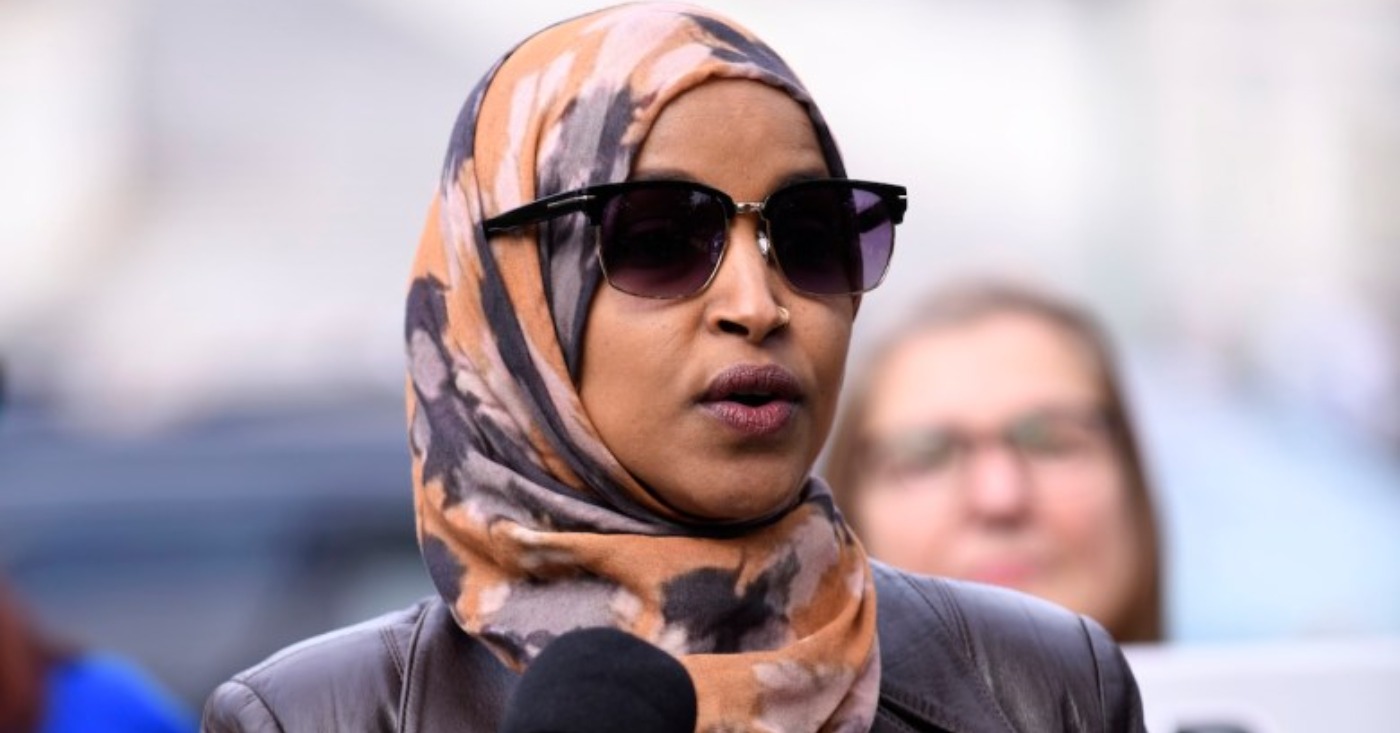
Federal agents searched the D.C.-area home of Rep. Ilhan Omar (D-Minn.) on Monday, taking the extraordinary step of executing a criminal search warrant against a sitting member of Congress just 22 days before Election Day, as the Trump administration investigates allegations involving her family’s immigration records.
The search immediately drew accusations of political intimidation from Omar’s supporters, who pointed to President Donald Trump’s repeated attacks on the Minnesota congresswoman and questioned the timing of an investigation targeting one of his most outspoken critics.
“Representative Omar is a dedicated public servant and a true ally for working families, and Donald Trump has done nothing but use racist tropes and stereotypes to attack her,” said Joel Payne, MoveOn’s chief communications officer. “Now, he’s abusing his power to physically intimidate and harass her.”
A Justice Department spokeswoman acknowledged that Homeland Security Investigations agents, part of Immigration and Customs Enforcement, searched a District residence as part of an ongoing federal criminal investigation.
The spokeswoman declined to provide additional information or publicly identify the person under investigation.
According to published reports, the warrant identified possible violations involving false statements, immigration document fraud and conspiracy. Federal investigators have also examined questions concerning Omar’s finances, campaign funds and interactions with foreign citizens.
No criminal charges against the congresswoman were identified, but Monday’s search occurred less than four weeks before voters decided whether to return Omar to Congress.
The investigation follows months of public accusations from senior Trump administration officials, including Vice President JD Vance, who previously claimed that Omar committed immigration fraud.
In an interview with conservative commentator Benny Johnson, Vance asserted, without publicly presenting evidence, that the administration believed Omar had broken immigration laws. He also said he and White House deputy chief of staff Stephen Miller had discussed how to pursue the allegations.
“What are the legal remedies now that we know that she’s committed immigration fraud?” Vance asked during the interview. “How do you go after her? How do you investigate her?”
Omar has repeatedly rejected the accusations, including claims that she married her brother to facilitate immigration fraud. Her office dismissed Vance’s allegations in March as fabricated and defamatory.
Questions about the investigation intensified in August when Immigration and Customs Enforcement refused to release records sought under the Freedom of Information Act concerning allegations surrounding Omar’s 2009 marriage to Ahmed Nur Said Elmi.
The agency cited an exemption allowing law enforcement authorities to withhold records when disclosure could interfere with enforcement proceedings. The refusal did not establish that Omar committed fraud or, at the time, confirmed that she was personally under investigation.
Omar, who came to the United States as a refugee from Somalia, was elected to Congress in 2018 and became one of the first two Muslim women to serve in the House. She represents Minnesota’s 5th Congressional District, which includes Minneapolis, and has frequently challenged Trump over immigration enforcement, civil rights, and his administration’s treatment of immigrant communities.
Her confrontations with the administration have made her a recurring target of the president’s political attacks. The criminal investigation also follows a frightening incident earlier this year in which Omar was physically attacked during a public appearance.
On Jan. 27, a man attacked Omar during a town hall meeting at the National Urban League’s Twin Cities headquarters in Minneapolis. The incident prompted condemnation from the National Coalition on Black Civic Participation and its Black Women’s Roundtable, which demanded accountability and warned against political violence.
“We are shocked and extremely disturbed by the attack on Rep. Ilhan Omar yesterday while she attempted to address the critical issues and chaos swirling around in Minneapolis,” Melanie L. Campbell, president and CEO of the coalition and national convener of the Black Women’s Roundtable, said in a Jan. 28 statement.
Campbell praised Omar for continuing to speak out despite threats against her.
“We believe that NO public official should be threatened or physically attacked, especially when they are serving in the best interests of their constituents,” Campbell said. “Political violence and intimidation have no place in our democracy.”
MoveOn, the progressive advocacy organization, accused Trump of using federal law enforcement to intimidate a political opponent and urged voters to respond at the ballot box.
“On Nov. 3rd, we get our chance to fight back and hold him and his corrupt administration accountable,” Payne said.
Based on reporting by Washington Informer.
Black History
‘We Are Ready’: NAACP Launches Voter Protection Hub Ahead of Midterms
ATLANTA DAILY WORLD — The NAACP is launching a voter protection hub to protect voting rights ahead of the midterm elections. Voters can report intimidation and suppression via phone and online, with NAACP attorneys and legal volunteers investigating complaints and seeking emergency court intervention.
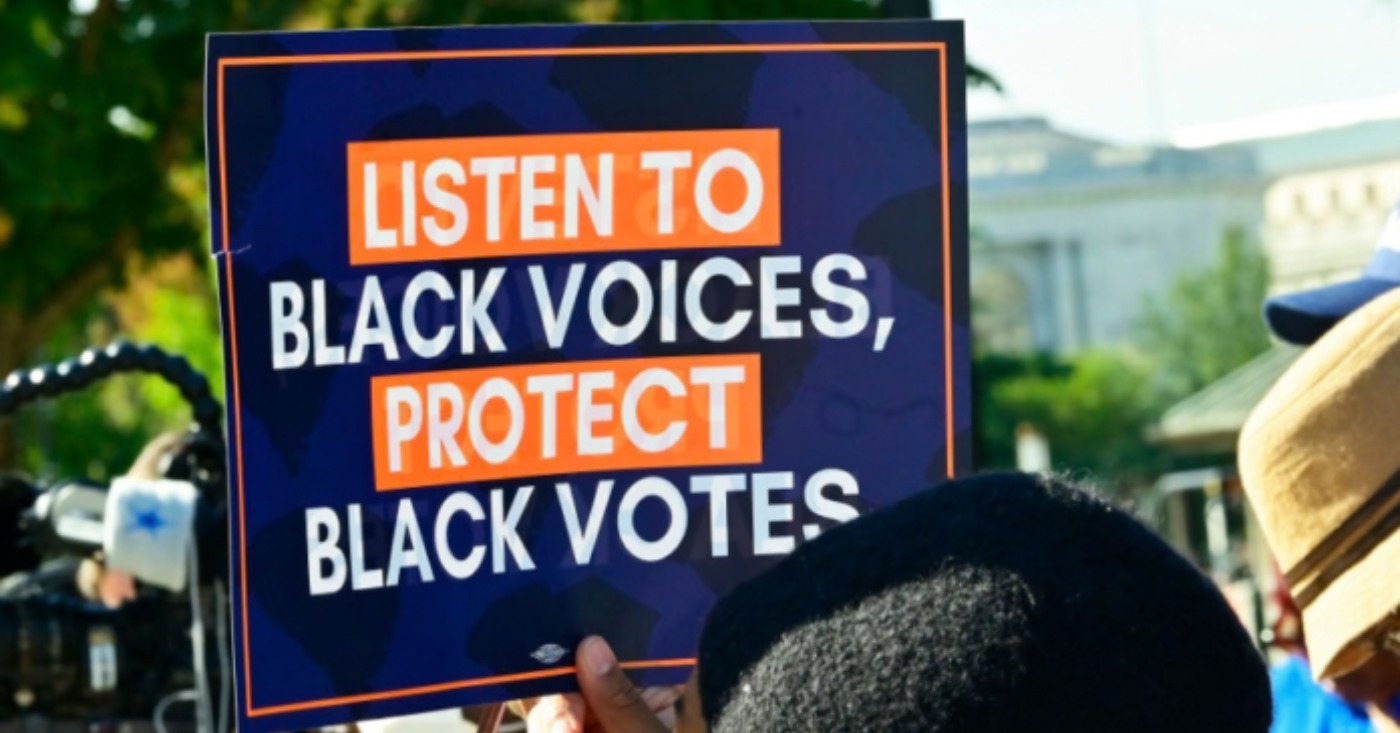
The NAACP is launching a voter protection hub ahead of the 2026 midterm elections as voting rights groups prepare for potential challenges at the polls.
Voters will be able to report allegations of intimidation and suppression by phone and through online submissions, while NAACP attorneys and legal volunteers investigate complaints and seek emergency court intervention when necessary.
According to The Washington Post, the hub is scheduled to launch October 24.
“We are ready,” NAACP General Counsel Kristen Clarke told The Washington Post. “We have an army of legal volunteers across the country and are prepared to activate and seek emergency relief on Election Day where necessary.”
The effort comes as organizations are also working to increase Black voter participation ahead of the midterms. BIN reported in September that the Congressional Black Caucus Institute launched its “SO VOTE” campaign, which plans to spend at least $4.5 million registering and mobilizing Black voters, young voters and rural voters.
The Associated Press reported that the campaign is targeting Georgia and Mississippi statewide, along with 16 congressional districts.
The NAACP is particularly focused on voter intimidation, changes to election rules and the impact of redistricting on Black voting power.
The organization filed a lawsuit against Justice Department Assistant Attorney General Harmeet Dhillon on Friday (October 2), seeking records about the department’s plans to deploy election monitors at polling places during the midterm elections.
“To be clear, there is no federal statute that gives the U.S. Department of Justice the right to send their so-called ‘election monitors’ to polling sites across the country,” Clarke said in a statement.
The NAACP’s voter protection hub will give voters a centralized way to report problems and connect with the organization’s legal team during the election.
The Black Information Network is your source for Black News! Get the latest news 24/7 on The Black Information Network. Listen now on the iHeartRadio app or click HEREto tune in live.
Based on reporting by Atlanta Daily World.
Black Press
OP-ED: If the ‘Cornell 7’ Were Black Men at an HBCU — America Wouldn’t Be This Sympathetic
ATLANTA DAILY WORLD — This article examines how the national conversation surrounding serious allegations against fraternity members might change if the incidents occurred at an HBCU involving Black men, rather than an Ivy League institution. It references recent high-profile cases at Cornell, Penn State, Baylor, and Stanford, prompting a re-evaluation of media scrutiny and public sympathy.
Instead of it taking place at an Ivy League school in Ithaca, New York, what would it look like if a national story concerning rape allegations from fraternity members took place on an HBCU campus in Atlanta, Washington, D.C., or Nashville?
Would President Donald Trump still feel “badly” for the alleged?
Do you think the Kappas, Sigmas, and Alphas would face the same scrutiny?
Might people use more compassionate language when discussing the case’s legalities?
We already know the answers to those questions.
Sunny Hostin from “The View” recounted a call she received from actress Cynthia Erivo, who said, ‘Sis, I know you, and I know your heart and your life’s work has been about protecting women and children. But the clip that I saw doesn’t reflect who you are.” Hostin’s initial remarks about the case focused on its legal aspects, lacking compassion for the alleged victims and other survivors who might have been affected. Hostin reflected, “Instead of leading with the law, I need to lead with empathy so that people can receive the message about the law. I was accused of defending these young men and victim-shaming, which is something I would never do since I spent the majority of my career prosecuting sex crimes.”
If you’re reading this, then you are already aware of the allegations against the “Cornell 7.” The news comes just weeks after 14 people were charged in connection with the alleged trafficking of kilos of cocaine on Penn State’s campus by members of white fraternities. A decade ago, the rape scandal at Baylor University dominated the news, which was around the same time as the Brock Turner case at Stanford.
I ask again: how would the news coverage, social media chatter, and podcast conversations differ if such incidents happened on HBCU campuses and included members of Black Greek-letter organizations?
Based on reporting by Atlanta Daily World.

From Rattler Grad to Retail Guru

Community and Commerce: The Perfect Business Balance #shorts

Largest Park Investment: North Commons Transformation Revealed! #shorts

From Stranger to Family: Unforgettable Southern Hospitality #shorts

The PNBC People’s Revival GOTV 2026 Tour

The Power of Serving: Transform Your Life Today #shorts

NFN live presents 🎙️ THE ROAD TO BEYOND IWDM 50: WE CANNOT STOP NOW! 8-Week Podcast

Your Vote Matters: Avoid Voter Intimidation Now! #shorts

Down-ballot stakes: Black women judges fear voter drop-off

Black-Owned Banks Surge: Deposits Skyrocket in 2020-2021 #shorts

The Youngest American Killed in the Vietnam War

Passing for White, Fighting for Black America: The Courage of Walter White

OP-ED: Haiti TPS: Have We Lost Sense of Humanity?

NFL: Week Two Recap | Jalen Hurts did not fold; Caleb Williams exits game with injury

Remembering Chauncey Bailey as Student Journalists Face Threats to Truth-Telling

Peter Magubane: a Camera Against Apartheid

Mayor Lee Announces $1 Million Kaiser Permanente Grant for Pilot Program to Address Homelessness, Clean Up Public Spaces throughout Oakland

OP-ED: How Head Start Also Helps Parents

Poll: Becerra Widens His Lead Over Hilton; Californians Split on Wealth Tax

Rulings Leave Questions Lingering in Nolan Wells Case
Community and Commerce: The Perfect Business Balance #shorts
Largest Park Investment: North Commons Transformation Revealed! #shorts
From Stranger to Family: Unforgettable Southern Hospitality #shorts
The PNBC People’s Revival GOTV 2026 Tour
The Power of Serving: Transform Your Life Today #shorts
NFN live presents 🎙️ THE ROAD TO BEYOND IWDM 50: WE CANNOT STOP NOW! 8-Week Podcast
Your Vote Matters: Avoid Voter Intimidation Now! #shorts
Down-ballot stakes: Black women judges fear voter drop-off
Black-Owned Banks Surge: Deposits Skyrocket in 2020-2021 #shorts

Journalism’s Black Giants: Elevating Our Future Together #shorts
-
 Black Press1 week ago
All Skinfolk Ain’t Kinfolk
-
 Black Press7 days ago
Oakland Awarded More than $14 Million in State Funding
-

 African American News and Issues5 days ago
Black History: Gladys West Mathematics Helped Make GPS Possible
-
 Black Press7 days ago
Jendayi Arrest Raises Community Concerns Regarding Sheriff’s Chain of Command
-
 Black Press7 days ago
Democrats, Community Groups Back Measure EE to Change How Oakland Is Governed
-

 Black Press7 days ago
Allen Temple Baptist Church Hosts Free Prostate Cancer Screenings on Oct. 17
