
African American News & Issues
Biden Signs Executive Orders Aimed at Tackling Racism in America
NNPA NEWSWIRE — The order prevents federal agencies from providing local police with military-grade equipment, which was used by Ferguson, Missouri, officers after police shot and killed an unarmed Michael Brown.

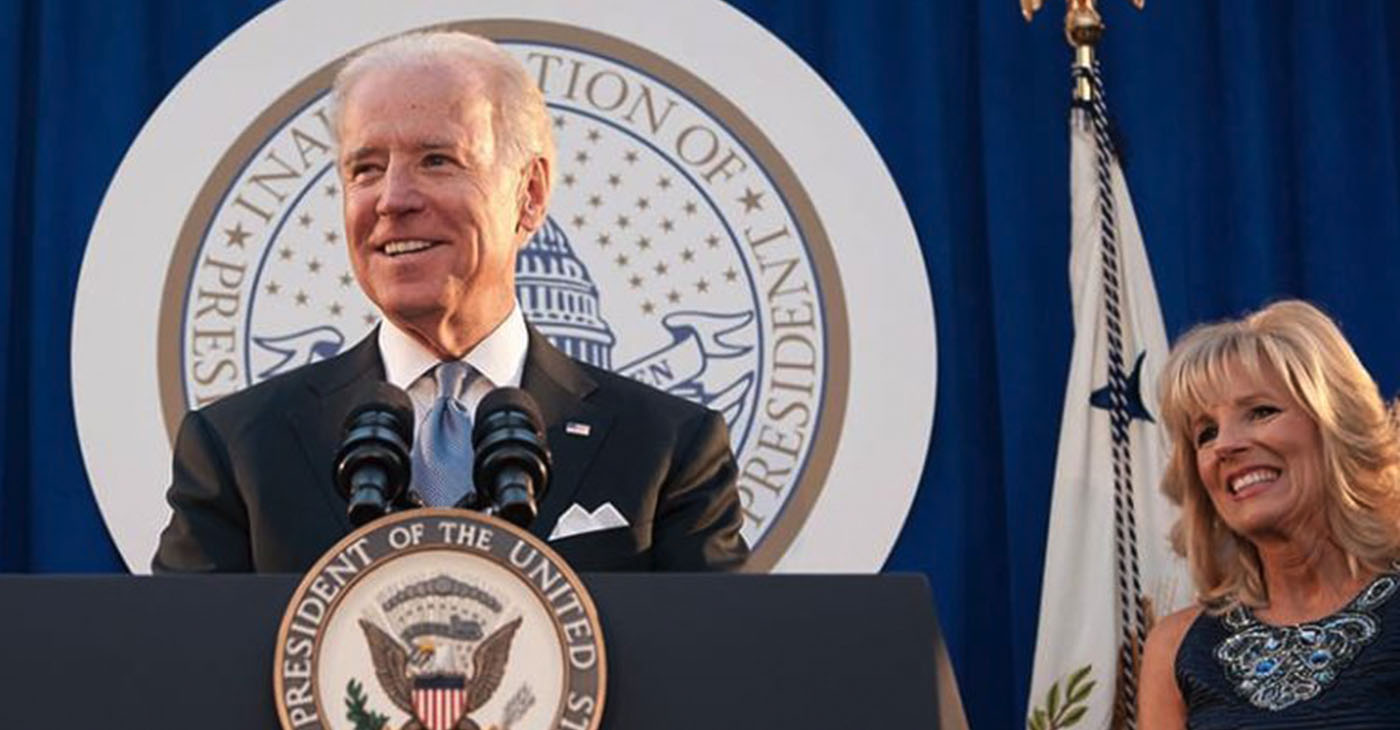
By Stacy M. Brown, NNPA Newswire Senior National Correspondent
@StacyBrownMedia
In arguably the most direct assault on systemic racism by any American President since Abraham Lincoln signed the Emancipation Proclamation, President Joe Biden made a bold case for equity.
On Tuesday, Jan. 26, President Biden signed a series of executive orders – many of them striking right to the heart of American racism.
In doing so, the President made the case that righting centuries-old wrongs is not just about people of color.
The President stated that all Americans should fight against white supremacy, discrimination, and racism.
“For too long, we’ve allowed a narrow, cramped view of the promise of this nation to fester,” the President said.
“One of the reasons I’m so optimistic about this nation is that today’s generation of young Americans is the most progressive, thoughtful, and inclusive generation that America has ever seen. And they are pulling us toward justice in so many ways.”
The address quickly stood as the most presidential America has seen in more than four years.
“President Biden continues to keep his comments to Black America in the first few days of being the 46th president of the United States,” National Newspaper Publishers Association (NNPA) President and CEO Dr. Benjamin F. Chavis Jr., noted.
“His speech today on racial equity, equality, and racial justice is a speech that will go down in history as a courageous stand by the president of the United States. By him saying that now is the time to end systemic racism in America is a profound statement. Hopefully, the majority of Americans will respond with positive action to move our nation forward to a more perfect union.”
In his address, President Biden outlined several actions and how he intended to begin the process of gaining back “the soul of our nation.”
The orders included addressing the history of discriminatory housing policies, directing the U.S. Department of Housing and Urban Development to correct this systemic problem.
The President ordered the Department of Justice not to renew contracts with private prisons.
He recommended the federal government respect Tribal sovereignty and condemned racism toward Asian Americans and Pacific Islanders.
“Today, I’m directing federal agencies to combat the resurgence of xenophobia, particularly against Asian Americans and Pacific Islanders, that we’ve seen skyrocket during this pandemic,” Biden declared.
He also said he would push Congress to enact the John Lewis Voting Rights Act.
“Unity and healing must begin with understanding and truth — not ignorance and lies,” Biden uttered.
“We need to restore and expand the Voting Rights Act named after [Congressman] John Lewis.”
Remaining on the theme, the President discussed the police killing of George Floyd, noting that it was a turning point in many Americans’ views on race and justice.
“It was the knee on the neck of justice,” President Biden observed. “And, it wouldn’t be forgotten.”
The President said the coronavirus pandemic has disproportionately impacted people of color.
He also called the insurrectionists who violently raided the U.S. Capitol on Jan. 6 “thugs” and “white supremacists.”
The attack was spurred by former President Donald Trump and his refusal to accept defeat at the hands of President Biden, whose description of the rioters deferred significantly with the former President who told the insurrectionists, “we love you.”
President Biden also rescinded Trump’s 1776 Commission, which focused on so-called patriotic education.
“I’ve rescinded the previous administration’s harmful ban on diversity and sensitivity training and abolished the offensive, counterfactual 1776 Commission. Unity and healing must begin with understanding and truth, not ignorance and lies,” the President remarked.
Throughout the presidential campaign season, President Biden pledged to do his part in the fight against systemic racism in America.
One of the Jan. 20 executive orders charged all federal agencies with reviewing equity in their programs and actions.
President Biden demanded that the Office of Management and Budget analyze whether federal dollars are distributed equitably in communities of color.
In his Jan. 26 orders, the President reinstated a policy from the Barack Obama administration that prohibited military equipment transfer to local police departments.
The President noted the disturbing trends he and the rest of the country reckoned with in the aftermath of the police killing of George Floyd, Breonna Taylor, and others.
The order prevented federal agencies from providing local police with military-grade equipment, which Ferguson, Missouri used, officers after police shot and killed an unarmed Michael Brown.
The previous administration reinstated the policy to allow federal agencies to provide military-style equipment to local police.
Like Obama, President Biden has said he also would attempt to eliminate the government’s use of private prisons where unspeakable abuses of inmates – mostly those of color – reportedly occur almost daily.
“Our soul will be troubled as long as systematic racism is allowed to persist,” the President declared. “It’s corrosive, it’s destructive, and it’s costly. … We’re also less prosperous. We are less successful. We are less secure. We must change.”








African American News & Issues
Africa Investment Summit Brings $4 Billion Pipeline to Washington as Organizers Seek to Turn Opportunity into Deals
BLACKPRESSUSA—Gathering outside Washington, the Africa Business Investment Summit will present a $4 billion project pipeline to global investors, leveraging curated deal rooms and de-risking mechanisms to convert international and diaspora interest into direct economic investment across the continent.


By Stephen Oduntan | Black Press USA
WASHINGTON — When African government officials, business leaders, and global investors gather outside Washington later this month, organizers will put approximately $4 billion in African investment opportunities before them, betting that changing perceptions of risk and new approaches to financing can help move more global capital toward the continent.
The $4 billion figure, however, represents a pipeline rather than capital already committed.
Nana Agyeman Prempeh, president of the Millennium Excellence Foundation, which is organizing the Africa Business Investment Summit, said it includes projects actively seeking financing as well as deals already in negotiation that are being curated for investors attending the Aug. 27-28 gathering at MGM National Harbor.
“It’s not just capital that is already committed, but it’s an addressable opportunity that we’re putting in front of the investors that are coming,” Prempeh told Black Press USA.
The distinction gets to the larger challenge facing the summit: not simply generating interest in Africa, but converting that interest into investment that reaches projects and ultimately produces jobs, businesses and infrastructure.
Prempeh argues that conditions for doing so have changed considerably.
“Over the past few years, we’ve seen stronger regulatory institutions, more sophisticated blended finance instruments that pair public and private capital, and policy reforms across multiple African markets,” he said.
“The risk-to-return looks materially different from what it was a decade ago.”
Prempeh’s argument comes amid a broader rethink of how African development should be financed—one increasingly centered on investment and the continent’s own financial resources rather than dependence on traditional foreign aid.
That debate has taken on new urgency. Under the Trump administration, the United States sharply reduced foreign assistance and dismantled USAID, while other major donor countries also cut development spending. Official development assistance worldwide fell more than 23% in 2025—the largest annual decline on record, according to the OECD, with the United States accounting for 70% of the reduction. Bilateral aid to sub-Saharan Africa fell 26.3% in 2025 and is projected to decline another 11.6% in 2026, marking a third consecutive year of decline.
But the debate over whether foreign aid should remain central to Africa’s development is much older. In her 2009 book Dead Aid, Zambian-born economist Dambisa Moyo argued that even well-intentioned assistance can undermine local economies. She illustrated the point with a hypothetical African mosquito-net manufacturer employing 10 workers: flooding the community with 100,000 donated nets might meet an immediate public-health need, she reasoned, but could also put the local producer out of business, eliminating jobs and future production capacity.
Moyo’s argument for trade, investment and greater access to capital markets sparked considerable debate. Nearly two decades later, as traditional aid flows shrink, African institutions are increasingly looking to private investment and domestic resources to finance development.
African institutions are trying to unlock substantially larger pools of investment capital. Reuters reported in July that African governments and development banks are increasingly using guarantees to make infrastructure projects attractive to private investors, including the continent’s own pension funds, insurers and sovereign wealth funds. The Africa Finance Corporation estimates that as much as $4 trillion in African domestic capital could potentially be directed toward infrastructure if projects can achieve the credit quality institutional investors require.
“De-risking the opportunities using guarantees … unlocks domestic capital, and domestic capital leads the way for global capital to come in,” Banji Fehintola, head of financial services at the Africa Finance Corporation, told Reuters.
For Prempeh, ABIS is intended to put that argument into practice.
Rather than organizing the summit primarily around speeches and panel discussions, he said the program has been structured around curated deal rooms, sector-specific investment sessions, government roundtables and private meetings between investors and project sponsors.
“Most African investment conferences have been built around panels and photo opportunities,” Prempeh said. “I think it’s less a conference and more of a two-day convening designed to move capital, and not just discuss it.”
Prempeh identified Ghana and Nigeria as the countries currently “leading the pack,” pointing to projects in infrastructure, mining and oil and what he described as a strong appetite for American capital.
“I think American capital should come in now,” Prempeh said. “The Chinese are there. I think that this is the time that America should be quite bullish.”
Nigeria, in particular, is “really, really looking for investor capital,” Prempeh said, pointing to the level of Nigerian participation expected at the summit as evidence of that interest.
But Prempeh said attracting money alone will not determine whether the summit succeeds.
Asked what billions in investment would mean for Africans outside the summit’s private deal rooms, Prempeh pointed to jobs, local ownership, infrastructure and opportunities for African businesses.
The goal, he said, is for communities to see “better roads, more employment, and more local businesses.”
Prempeh said the Millennium Excellence Foundation intends to follow deals beyond the summit, tracking capital ultimately deployed and jobs created over the following six months and year. When pressed for a specific dollar amount or number of completed deals that would define success, however, he did not set a numerical benchmark.
Who Defines African Investment Risk?
But attracting that capital also means confronting how Nigeria—and the risks of investing there—is perceived abroad.
As the continent’s most populous nation and one of its largest economies, the country offers enormous opportunities across infrastructure, energy, technology, and other sectors. Yet international perceptions of Nigeria are also frequently shaped by reports of terrorism, kidnapping, and political instability. Prempeh argued that those distinctions can become lost when Nigeria is viewed primarily through the lens of insecurity.
He pointed to international companies that have successfully operated in Nigeria for years and said that Nigerian officials attending ABIS are expected to address investor concerns directly. Representatives from Lagos and other states, he said, will outline measures they say have been put in place to provide greater security and certainty for investors.
For investors, the distinction matters. Nigeria is a vast and economically diverse country, and security conditions can vary sharply from one region to another. Violence or instability in one part of the country does not necessarily define the investment environment elsewhere.
The question for ABIS organizers is whether they can persuade American investors to evaluate opportunities project by project and market by market rather than through generalized perceptions of risk.
The growing use of guarantees and other financial protections across the continent suggests African institutions themselves are not arguing that risk does not exist. Instead, they are increasingly trying to identify, price, and mitigate it in ways that make projects attractive to institutional capital.
A Call to the African Diaspora
Prempeh’s pitch is not directed solely at Wall Street or institutional investors.
For Black Americans and the broader African diaspora, he framed Africa’s economic development in more personal terms—as an opportunity for ownership, entrepreneurship and reconnection.
“I think the time has come where African Americans [come] to Africa to own what is rightfully theirs,” Prempeh said.
He pointed to opportunities to own property, build businesses, and form partnerships with African entrepreneurs.
“This is the time that African Americans start coming back home and partner with your brothers and sisters in Africa,” he said.
Prempeh also acknowledged that such a relationship is not automatic. Cultural barriers between Africans and African Americans remain, he said, and overcoming them will require greater understanding on both sides.
The summit will be held under the patronage of Otumfuo Osei Tutu II, King of the Asante Kingdom, who is scheduled to deliver the opening royal keynote. Ghana’s Vice President Naana Jane Opoku-Agyemang, government representatives from several African countries, and business leaders are also expected to participate.
Prempeh said details of individual projects within the $4 billion pipeline were still being curated and would be released as the summit approaches.
The larger test comes after Washington: how many conversations become deals, how much capital is actually deployed—and whether Africans themselves can see the benefits.
Asked what Black Press USA should look for if it called him a year from now to determine whether ABIS had succeeded, Prempeh did not respond with a dollar figure.
“I’m very optimistic,” he said. “I believe that what we’ve started is going to be one that is going to make waves.”
Then he invoked Wakanda, the fictional African nation home to the Marvel superhero Black Panther, to describe the future he hopes the summit can help set in motion.
“Wakanda … has started.”
African American News & Issues
VIDEO: The Rev. Dr. Benjamin F. Chavis, Jr. at United Nations Permanent Forum on People of African Descent
African American News & Issues
National Urban League Pres. Marc Morial on Trump’s Assault on Diversity, Equity and Inclusion

https://www.youtube.com/watch?v=6xbnzwzjdem
African American News & Issues
Concerned Georgia voters rally for State Rep. Park Cannon, election rights
THE ATLANTA VOICE – Friday afternoon, voters used their First Amendment right to stand in solidarity with State Rep. Park Cannon who was arrested Thursday after she knocked on Georgia Governor Brian Kemp’s office door while he signed Senate Bill 202, an omnibus election bill that rewrites Georgia’s election rules. The bill creates new voter ID requirements, limits drop boxes, and allows state takeovers of local elections.

By Jesssika Ward, The Atlanta Voice
Friday afternoon, voters used their First Amendment right to stand in solidarity with State Rep. Park Cannon who was arrested Thursday after she knocked on Georgia Governor Brian Kemp’s office door while he signed Senate Bill 202, an omnibus election bill that rewrites Georgia’s election rules. The bill creates new voter ID requirements, limits drop boxes, and allows state takeovers of local elections.
“My colleague, who is the secretary of the caucus knocks on the door and gets arrested? That’s not right. There’s no right in it,” said Rep. Viola Davis who stood alongside voters and protestors, wearing a sweater that read “it’s time to abolish the filibuster”.
Speaking to the words on her clothing, Rep. Davis says she fears Georgia won’t pass the John Lewis Voting Act without abolishing the filibuster. According to documents on the legislation, the legislation would restore and strengthen parts of the Voting Rights Act of 1965 that were weakened by the Supreme Court in 2013.
Rep. Davis told voters she spent 15-20 years as an activist before being elected to serve as a State House Representative, reminding voters that elected officials should be serving the people.
“It is your vote that hires and fires elected officials like me. It is your vote that places us in that gold dome. That gold dome isn’t owned by us, it’s owned by you. It is your tax money that pays for that. It is your tax money that pays my salary,” says Rep. Davis. “The elected officials are the employees. With a humble spirit, I stand here to say I am hired and fired with your vote. I am paid with your tax money.”
Rep. Park Cannon’s colleagues say Cannon is facing federal charges for knocking on Gov. Kemp’s door. They also say Cannon has bruises on her neck and wrists—injuries sustained during her arrest.
Daniel Blackman ran for election to the Georgia Public Service Commission to represent District 4, losing in January of 2021. Advocating for the end of voter suppression, he was one of the people supporting Rep. Cannon and her decision to knock on Gov. Kemp’s door at Friday’s demonstration.
“Our voter rights are under attack,” said Blackman. “Park didn’t do this for notoriety. She wanted to witness what the Governor felt was in the best interest of this state, which we all disagree with.”
Critics are referring to the election bill and the acts of Gov. Brian Kemp as Jim Crow 2.0, saying the bill is a voter suppression bill that will negatively affect people of color and people who vote as a Democrat. Sabrina Rahim and Ann White both spent time away from their families to express their thoughts on SB 202.
“I felt compelled to come out. I have been here for 17 days of the nearly 23 days we have been out here fighting against voter suppression,” said Rahim, a mother of two who left her home right before her household dinner time to be a part of the demonstration. “This is outrageous what they’ve done and we have been out here protesting, hoping that they will come to their senses and do what’s best for all Georgians, but it doesn’t seem to have work.”
“It’s just outright voter suppression not even hidden anymore and then what do they do while he’s signing that into law? They arrest Representative Cannon. It’s just so Jim Crow,” said Ann White, a white female voter who has lived in Atlanta for 21 years.
Devin Barrington-Ward, the Managing Director of the Black Futurists Group says young black people need to vote and remain educated. The Black Futurists Group is an organization that uses public policy, community organizing, media engagement, and political education as tools to build reimagined, equitable, and liberated Black futures.
“We are the ones who are going to end it. This is White Supremacy’s last stand. I’m grateful for the work that our ancestors have done and the ones who come before us that have gotten us to this point. I can truly say that liberation and freedom will be won for our people in my lifetime,” said Barrington-Ward. “That’s why we have to be out here. Our future depends on it.”
This article originally appeared in The Atlanta Voice.
African American News & Issues
Fulton Commissioner Backs Voter-suppression Boycott Against Major Companies
ATLANTA DAILY WORLD — Civil rights activists who spoke also noted that in addition to Coke, other companies including Home Depot, UPS, and Aflac may be targeted once the boycott commences April 7. Organizers say companies will be removed from the boycott list if they agree to support pending federal legislation on Capitol Hill that would invalidate the new Georgia law; help fund legal cases against the State and the new law pending in federal court; and publicly express support for a new session of the General Assembly to rescind SB202.

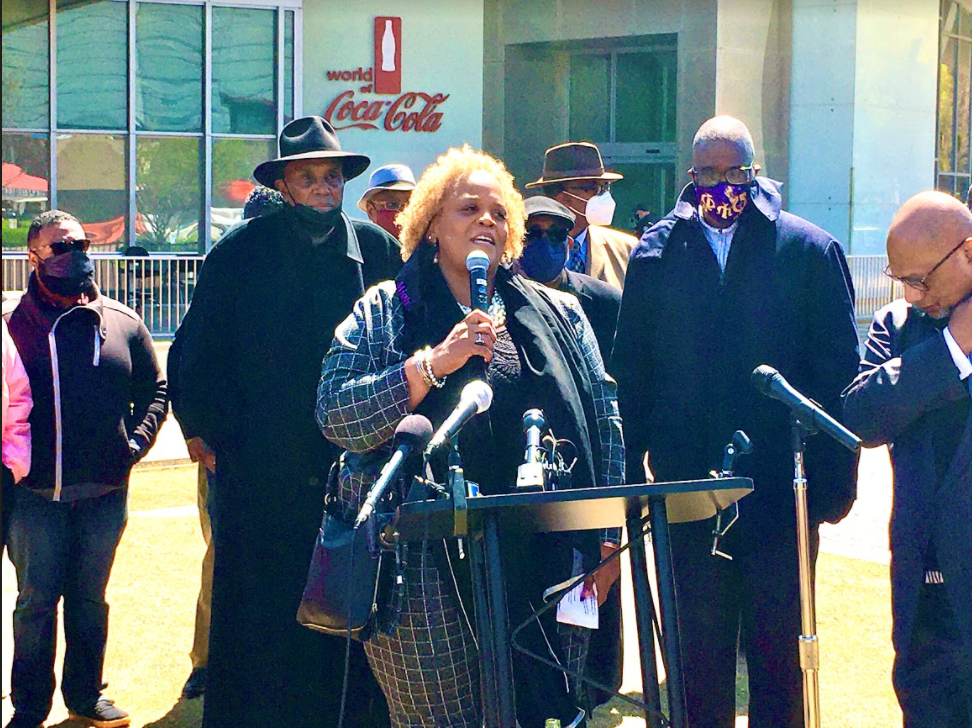
Commissioner Khadijah, faith leaders denounce Georgia corporations’ silence on Senate Bill 202
Pressure is building for high-profile companies in Georgia to express firmer opposition to a sweeping new law that will restrict voter access and make it more difficult to vote there.
Members of the clergy and union leaders joined together with Fulton County Commissioner Khadijah Abdur-Rahman Thursday, to announce a national boycott of Georgia companies that refuse to act against Jim-Crow-racist voter suppression laws and tactics.
Commissioner Khadijah is also sponsoring county legislation and pursuing whether the County will sue the State over passage of Senate Bill 202 in the final days of the Georgia General Assembly session and then immediately signed by Republican Gov. Brian Kemp.
“This voter suppression law, unless overturned by a Court, will deny and inhibit millions of voters in upcoming state and federal elections in Georgia and we will not stand for that,” said Commissioner Khadijah.
Among other hardships, SB202:
- Requires you to know your driver’s license number or other state I.D. to vote absentee.
- Ends 24-hour access to secure ballot drop boxes used in 2020, by restricting ballot drop boxes to inside early voting locations only instead of all county buildings, like libraries, and ONLY during daytime business hours.
- Allows police to arrest you for giving water or food to someone standing in line waiting to vote on Election Day.
During Thursday’s boycott announcement, Commissioner Khadijah was the sole woman and only elected official who spoke to a crowd of news media and onlookers on the grounds of the World of Coca-Cola, the soft drink giant’s internationally famous museum.
Atlanta-based Delta Air Lines bore the brunt of boycott threats on social media over the weekend after it released a statement praising some aspects of the law and noting that it “improved considerably during the legislative process.”
Similarly, Coca-Cola is facing boycott threats after it released a statement “expressing our concerns and advocating for positive change in voting legislation” but fell short of taking a stance against the law.
Civil rights activists who spoke also noted that in addition to Coke, other companies including Home Depot, UPS, and Aflac may be targeted once the boycott commences April 7. Organizers say companies will be removed from the boycott list if they agree to support pending federal legislation on Capitol Hill that would invalidate the new Georgia law; help fund legal cases against the State and the new law pending in federal court; and publicly express support for a new session of the General Assembly to rescind SB202.
“At Fulton County, we have a whole floor full of lawyers, who work for the people and take direction from me and six other commissioners,” Khadijah said. “Trust me, we are going to put them to work to make sure Fulton County and its citizens are not injured by this Jim-Crow-racist law.”
The post Fulton Commissioner Backs Voter-suppression Boycott Against Major Companies appeared first on Atlanta Daily World.
African American News & Issues
Gov. Kemp signs off on worst elections reform bill in the nation
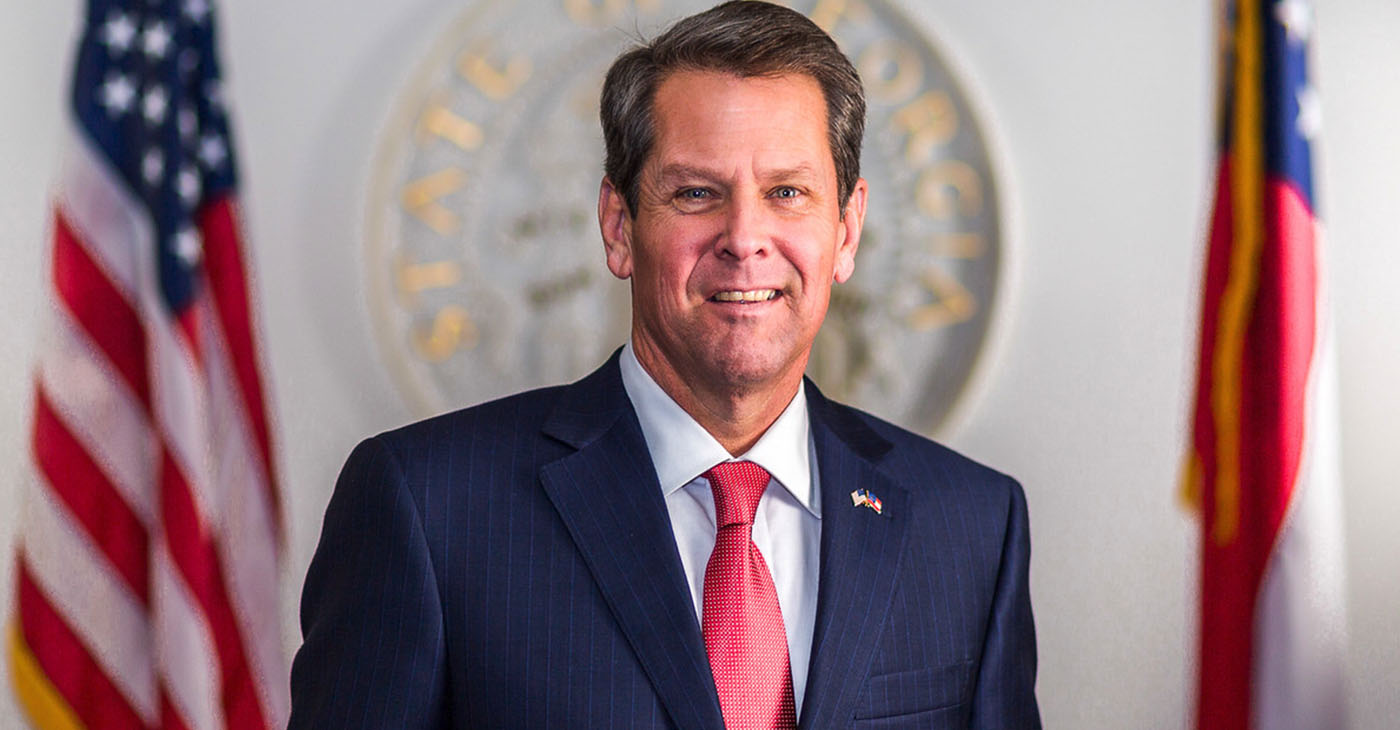
ATLANTA DAILY WORLD – “This is nothing more than retaliation for the successes of the 2020 Election. Now, Governor Kemp and Republican legislators want to change the rules because they didn’t like the outcome,” said Georgia Congresswoman Williams. “They’re trying to turn back the clock and enact Jim Crow 2.0 laws. We may not be counting jelly beans in a jar, but the end result is the same – to keep people who look like me away from the ballot box.
By Roz Edward
Some call it “a solution looking for a problem” when referring to the wave of election reform initiatives sprouting up in at least 43 states. Critics of the reform initiatives cite that the wave of GOP sponsored bills are in large part a reaction to the “big lie” perpetrated by the Trump administration’s claims that the 2020 presidential election was rife with illegal voting and voter fraud, although Trump’s claims proved to be false.
Now Georgia governor Brian Kemp who has been the target of much criticism from fellow Republicans expressing disappointment and resentment for the state going from red to blue and sending two democratic senators to Jon Ossoff and Rev. Raphael Warnock to Washington and giving Democrats a majority in the U.S. Senate.
“This is nothing more than retaliation for the successes of the 2020 Election. Now, Governor Kemp and Republican legislators want to change the rules because they didn’t like the outcome,” said Georgia Congresswoman Williams. “They’re trying to turn back the clock
and enact Jim Crow 2.0 laws. We may not be counting jelly beans in a jar, but the end result is the same – to keep people who look like me away from the ballot box.
“This fight is far from over. That is why our focus must be on passing legislation like H.R.1 at the federal level, which has already passed the House and is now in the Senate, and move H.R.4 across the finish line. No matter where you live in this country you should have the
same access to the ballot box. In Congress, we must pass these key pieces of voting rights legislation to protect the sacred right to vote and preserve our democracy,” Williams added in a statement.
The 96-page bill makes dramatic alterations to Georgia’s absentee voting rules, adding new identification requirements, moving back the request deadline and other changes after a record 1.3 million absentee ballots overwhelmed local elections officials and raised Republican skepticism of a voting method they created.
Democrats opposed several pieces of the bill, including language that would remove the secretary of state as chair of the State Election Board, allowing the SEB and lawmakers a process to temporarily take over elections offices and severely limiting the number, location and access of secure absentee drop boxes.
Following the passage of Georgia’s #SB202 voter suppression bill, People For the American Way President Ben Jealous released the following statement:
“The Republican party has surely lost whatever shred of credibility they had as being a party concerned about protecting democracy and the voting rights of Black and brown communities. Yesterday’s actions were a throwback to the Jim Crow era — a room full of white men signing laws to take away the rights of African Americans and using law enforcement to squash peaceful dissent. Georgia State Representative Park Cannon is a hero and her arrest sends a chilling message about how far the right wing will go to destroy democracy. Jim Crow is alive and well and it’s time for Congress and the Biden Administration to act. We need to immediately end the Jim Crow filibuster and pass the John Lewis Voting Rights Act and the For the People Act, S.1.”
Had the bill been enacted prior to the 2020 election it would have eliminated the 20-candidate special election to fill the remainder of Sen. Johnny Isakson’s term and accompanying runoff between then-Sen. Kelly Loeffler and current Sen. Raphael Warnock would not have happened: special elections would have special primaries.
Fulton County would no longer be able to use its two mobile voting buses for early voting, as the bill would limit mobile polls to emergencies.
Third-party supporters would also be restricted from giving food and water to voters waiting in line to cast their ballots.
The post Gov. Kemp signs off on worst elections reform bill in the nation appeared first on Atlanta Daily World.


2027 Buick Enclave Sport Touring Interior 360 Video

FAMU Shooting Arrest, New Trump and ICE Activity Near Florida Polling Site 📱

FAMU Shooting Arrest, New Trump and ICE Activity Near Florida Polling Site

Buying a Subaru WRX? Get the FULL Price Before You Sign #shorts

Houston Screenwriter Shannan E. Johnson on Making It in Hollywood

Golf Opportunities Beyond the Pros: Mentors, Scholarships & Mental Health #shorts

This Election Is Critical: Potecting Our Freedoms

Passion for Gopher Sports: The Podcast Origin Story! #shorts

Super Cruise: Hands-Free Driving on Your Routes #shorts

The People’s Revival GOTV 2026 Tour | Atlanta

OP-ED: Haiti TPS: Have We Lost Sense of Humanity?

Remembering Chauncey Bailey as Student Journalists Face Threats to Truth-Telling

All Skinfolk Ain’t Kinfolk

Poll: Becerra Widens His Lead Over Hilton; Californians Split on Wealth Tax

Rulings Leave Questions Lingering in Nolan Wells Case

Latinas Deserve Equal Pay. Unions Help Make It Happen.

Zakiya Jendayi Arrested, Locked Out of Home by Sheriff’s Deputies

Why Black Artists Struggle to Sell Tours

COMMENTARY: The Audacity of Joyce Beatty

A $2.1 Trillion Wellness Industry Never Built a Daily Practice for Black Children. So This Atlanta Family Did.
2027 Buick Enclave Sport Touring Interior 360 Video
FAMU Shooting Arrest, New Trump and ICE Activity Near Florida Polling Site
FAMU Shooting Arrest, New Trump and ICE Activity Near Florida Polling Site 📱
Buying a Subaru WRX? Get the FULL Price Before You Sign #shorts
Houston Screenwriter Shannan E. Johnson on Making It in Hollywood
Golf Opportunities Beyond the Pros: Mentors, Scholarships & Mental Health #shorts
This Election Is Critical: Potecting Our Freedoms
Passion for Gopher Sports: The Podcast Origin Story! #shorts
Super Cruise: Hands-Free Driving on Your Routes #shorts
The People’s Revival GOTV 2026 Tour | Atlanta
-

 Black History1 week ago
OP-ED: The Black Church Writes AI’s Next Chapter
-

 Featured1 week ago
Tamiko Armstead | 2026 Lifetime Achiever in Education
-

 Black History1 week ago
Practitioners of African Traditional Spirituality Offer Ancestral Reverence Ritual Oct. 31
-
 Art1 week ago
Kickstarter CEO Everette Taylor Shares Tips on Creating and Growing a Business
-

 Black History1 week ago
Columbus’s Oldest Businesses Still Open: 10 That Have Lasted 75+ Years
-
 Black History1 week ago
COMMENTARY: BIG MAMA SAID: Don’t Throw Away the Gift Just Because It Came Wrapped Wrong
