
Politics
Ben Bradlee Remembered for Invigorating Journalism


In this Nov. 20, 2013 file photo, President Barack Obama awards former Washington Post executive editor Ben Bradlee with the Presidential Medal of Freedom during a ceremony in the East Room of the White House in Washington. Bradlee died Tuesday, Oct. 21, 2014, according to the Washington Post. (AP Photo/ Evan Vucci, File)
NANCY BENAC, Associated Press
WASHINGTON (AP) — In a charmed life of newspapering, Ben Bradlee seemed always to be in just the right place.
The raspy-voiced, hard-charging editor who invigorated The Washington Post got an early break as a journalist thanks to his friendship with one president, John F. Kennedy, and became famous for his role in toppling another, Richard Nixon, in the Watergate scandal.
Bradlee died at home Tuesday of natural causes, the Post reported. He was 93.
Ever the newsman and ever one to challenge conventional wisdom, Bradlee imagined his own obituary years earlier and found something within it to quibble over.
“Bet me that when I die,” he wrote in his 1995 memoir, “there will be something in my obit about how The Washington Post ‘won’ 18 Pulitzer prizes while Bradlee was editor.” That, he said, would be bunk. The prizes are overrated and suspect, he wrote, and it’s largely reporters, not newspapers or their editors, who deserve the credit.
Yet the Post’s Pulitzer-winning coverage of the Watergate scandal is an inextricable part of Bradlee’s legacy, and one measure of his success in transforming the Post from a sleepy hometown paper into a great national one.
As managing editor first and later as executive editor, Bradlee engineered the Post’s reinvention, bringing in a cast of talented journalists and setting editorial standards that brought the paper new respect.
When Bradlee retired from the Post newsroom in 1991, then-publisher Donald Graham said, “Thank God the person making decisions in the last 26 years showed us how to do it with verve and with guts and with zest for the big story and for the little story.”
With Watergate, Bradlee himself became a big part of a story that epitomized the glory days of newspapers — back before websites, cable chatter and bloggers drove the talk of the day.
Actor Jason Robards turned Bradlee into a box-office hit with his Oscar-winning portrayal of the editor in the 1976 movie “All the President’s Men,” which recounted the unraveling of Watergate under the reporting of Bob Woodward and Carl Bernstein. Bradlee’s marriage in 1978 to Post star reporter Sally Quinn (his third) added more glamour to his image.
He was one of the few to know the identity early on of the celebrated Watergate source dubbed Deep Throat, revealed publicly in 2005 to be FBI official W. Mark Felt.
“I think he did a great service to society,” Bradlee said after Felt’s role finally came out.
In enduring partnership with publisher Katharine Graham, Bradlee took a stand for press freedom in 1971 by going forward with publication of the Pentagon Papers, a secret study of the Vietnam War broken by The New York Times, against the advice of lawyers and the entreaties of top government officials. The ensuing legal battle went all the way to the Supreme Court, which upheld the right of newspapers to publish the leaked papers.
The Post’s decision to publish helped pave the way for all of the smaller, difficult ones that collectively produced the newspaper’s groundbreaking coverage of Watergate.
Bradlee “set the ground rules — pushing, pushing, pushing, not so subtly asking everyone to take one more step, relentlessly pursuing the story in the face of persistent accusations against us and a concerted campaign of intimidation,” Katharine Graham recalled in her memoir.
In November 2013, at age 92, Bradlee stood in the White House East Room and received the Presidential Medal of Freedom from President Barack Obama, who saluted Bradlee for bringing an intensity and dedication to journalism that served as a reminder that “our freedom as a nation rests on our freedom of the press.”
Quinn disclosed in September 2014 that her husband had suffered from Alzheimer’s disease for several years. She described him as happy to be fussed over and content even in decline. “Ben has never been depressed a day in his life,” Quinn said in a C-SPAN interview.
Impatient, gruff, profane, Bradlee was all that. But also exuberant, innovative, charismatic.
“Ideas flew out of Ben,” wrote Katharine Graham, who died in 2001. “He was always asking important ‘why’ questions. … Ben was tough enough and good enough so that for the most part I not only let him do what he thought was right, I largely agreed with him.”
The low point in Bradlee’s career involved a 1981 Pulitzer for the Post that was rescinded after the Post itself revealed that reporter Janet Cooke had invented her story of an 8-year-old heroin user. Bradlee, whose offer to resign over the debacle was rejected, said it was a cross he would bear forever. Critics faulted editors for failing to ask enough questions about the story and said the incident was in part a reflection of the competition and tension within Bradlee’s newsroom.
Benjamin Crowninshield Bradlee was born Aug. 26, 1921, a Boston Brahmin reared in comfort but for family financial setbacks in the Depression and a six-month bout with polio at age 14.
He hurried through Harvard in three years to take his place on a Pacific destroyer during World War II. On his return in 1945, he helped start a daily newspaper in New Hampshire, but it folded 2½ years later for lack of advertising.
From there, Bradlee experienced a series of lucky breaks.
He landed his first job at the Post in 1948 when a rainstorm in Baltimore prompted him to skip a job interview there and stay on the train to Washington.
He happened to be riding a trolley car past Blair House in 1950 when Puerto Rican extremists opened fire on the presidential guest house while President Truman was staying there. Bradlee turned it into a page-one eyewitness story.
Restless at the Post, he left the paper in 1951 to become press attache at the U.S. Embassy in Paris. Two years later, he joined Newsweek’s Paris bureau and spent four years as a European correspondent before returning to Washington to write politics.
He happened to buy a home in Georgetown in 1957, a few months before Sen. John F. Kennedy and his wife moved in across the street, the beginning of an intimate friendship and a proximity to power that burnished his credentials as a journalist and brought him rare insights into government.
“I was on a roll being in the right place at the right time, a luck that has stayed with me,” Bradlee wrote in his best-selling memoir, “A Good Life: Newspapers and Other Adventures.”
Long after his newspapering days were finished, even in his declining years, Bradlee would head over to the Post once a week to have lunch with “the guys” and “talk about the good old days in journalism,” Quinn recounted.
Bradlee’s access to Kennedy continued through JFK’s presidency, bringing Bradlee scoops for Newsweek, and experiences that he ultimately turned into the 1975 book, “Conversations with JFK.” The release brought Bradlee much attention and cost him a valued friend, Jacqueline Kennedy, who thought the book a violation of privacy and stopped speaking to Bradlee.
Bradlee had been in Newsweek’s Washington bureau four years when he found the nerve in 1961 to telephone Post publisher Philip Graham to propose that The Washington Post Co. buy Newsweek.
“It was the best telephone call I ever made — the luckiest, most productive, most exciting, most rewarding,” Bradlee wrote. The deal came together and Bradlee ended up with a cache of Post stock and the title of Washington bureau chief for Newsweek.
Four years later, it was a conversation with Philip Graham’s widow that proved pivotal for Bradlee. Katharine Graham had taken over the Post after her husband’s suicide and was looking to inject new life into the paper. In a quotation that has become Post lore, Bradlee told her over lunch that if the managing editor’s job ever opened up, “I’d give my left one for it.”
Bradlee soon had the title of deputy managing editor and an understanding he would move up quickly. As recounted in Howard Bray’s book, “The Pillars of the Post,” managing editor Al Friendly cautioned Bradlee, “Look, buster, don’t be in a hurry.” Bradlee smiled and replied, “Sorry, but that’s my metabolism.” He succeeded Friendly three months later.
Bradlee had four children from three marriages: Benjamin C. Jr., Dino, Marina and Quinn. His first two marriages, to Jean Saltonstall and Antoinette Pinchot, ended in divorce. Quinn Bradlee, his son with Sally Quinn, has battled a variety of ailments, including a hole in the heart and epilepsy, and was eventually diagnosed with a genetic syndrome called VCFS.
_
Follow Nancy Benac on Twitter at https://twitter.com/nbenac
Copyright 2014 The Associated Press. All rights reserved. This material may not be published, broadcast, rewritten or redistributed.






Black History
MHU Commemorates ASCORE and Anniversary of Desegregation
THE URBAN NEWS — UNC Asheville and Mars Hill University are collaborating to host a series of commemorative events marking the 65th anniversary of their desegregation. The programming honors Etta Mae Whitner Patterson and Oralene Anderson Graves Simmons, two former members of the Asheville Student Committee on Racial Equality (ASCORE) who became the first Black students at their respective institutions in 1961.
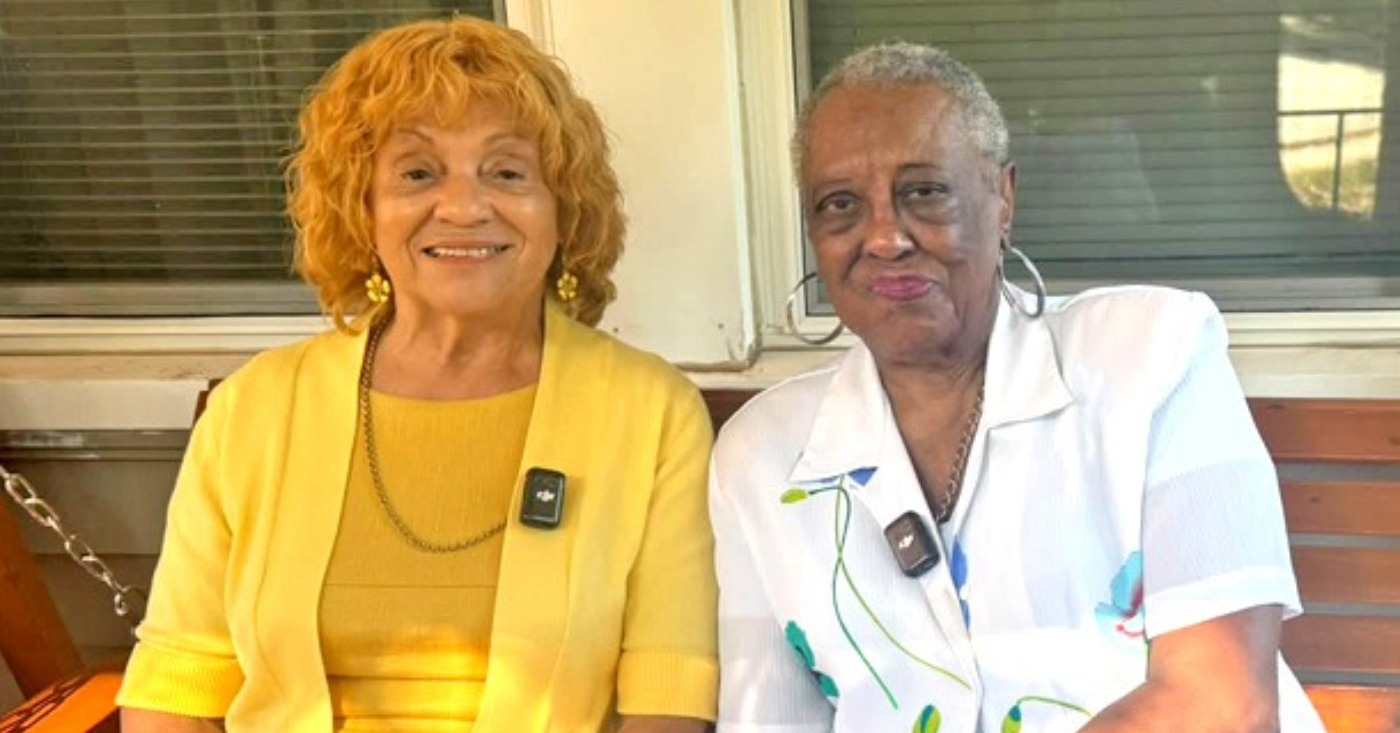
A week of events at UNC Asheville, Mars Hill University, and downtown Asheville.
In 1961, two young women broke the color barrier to become the first African American students at two Western North Carolina colleges: Etta Mae Whitner Patterson at UNC Asheville and Oralene Anderson Graves Simmons at Mars Hill University (then Mars Hill College).
Both women were students at Asheville’s Stephens-Lee High School, where they were members of the Asheville Student Committee on Racial Equality (ASCORE). Through nonviolent protest, ASCORE led efforts to desegregate many Asheville stores and businesses.
Patterson and Simmons, who later founded the Martin Luther King Jr. Association of Asheville and Buncombe County, have since received honorary doctorates from their alma maters in recognition of their achievements and lifelong service to their communities.
To commemorate ASCORE, honor the leadership of Etta Patterson and Oralene Simmons, and mark the 65th anniversary of the desegregation of UNC Asheville and Mars Hill University, UNC Asheville’s Department of History and Mars Hill University’s Liston B. Ramsey Center for Appalachian Studies invite the public to attend “Stories of ASCORE: Lessons in Courage, Desegregation, and Community Activism.”
The program will feature two panel discussions with Drs. Patterson and Simmons, along with other former members of ASCORE. Panelists will discuss how their experiences integrating Asheville’s businesses and institutions prepared them for their college careers, professional lives, and continued community activism.
The first panel discussion will take place at 6 p.m. on Tuesday, November 10, 2026, in the Blue Ridge Room of Highsmith Union at UNC Asheville. The event will feature a presentation by Dr. Patterson and a panel discussion with Dr. Simmons, Marvin Chambers, Jesse Ray, and Al Whitesides. The panel will be moderated by Deborah Miles, retired director of the former UNC Asheville Center for Diversity Education.
This event is sponsored by UNC Asheville’s Department of History and Africana Studies Program, with generous support from King and Pam Prather. A free visitor parking permit is required for the UNC Asheville event. Please visit the university’s parking website for instructions on obtaining a permit for the evening’s program.
The second panel discussion will take place at 5 p.m. on Thursday, November 12, 2026, in the Tony and Terry Floyd Conference Center in the Mars Hill University Campus Center. The event will feature Dr. Simmons, Annette Coleman, and Elizabeth Colton. The panel will be moderated by Jonathan McCoy, professor of history at Mars Hill University.
This event is sponsored by the Liston B. Ramsey Center for Appalachian Studies, with generous support from the university’s Provost’s Office.
In addition, at 12 noon on Wednesday, November 11, 2026, in Pack Square in downtown Asheville, Mayor Esther Manheimer and the Buncombe County Commission Chair will proclaim ASCORE Day and present honors to Etta Patterson and Oralene Simmons. Holly Jones of the North Carolina Governor’s Office will also participate in the ceremony.
For more information, contact Leila Weinstein at Mars Hill University ([email protected]) or Ellen Holmes Pearson at UNC Asheville ([email protected]).
Based on reporting by The Urban News.
Black History
HBCU Love: Spelman’s Dr. Letitia Plummer Makes History as Harris County’s First Black Elected County Judge
TEXAS METRO NEWS — Former Houston City Council member Dr. Letitia Plummer has made history as the first Black person elected to serve as the Harris County Judge. The Spelman College alumna defeated Republican Orlando Sanchez in the general election for Texas’ most populous county, receiving approximately 62% of the vote.
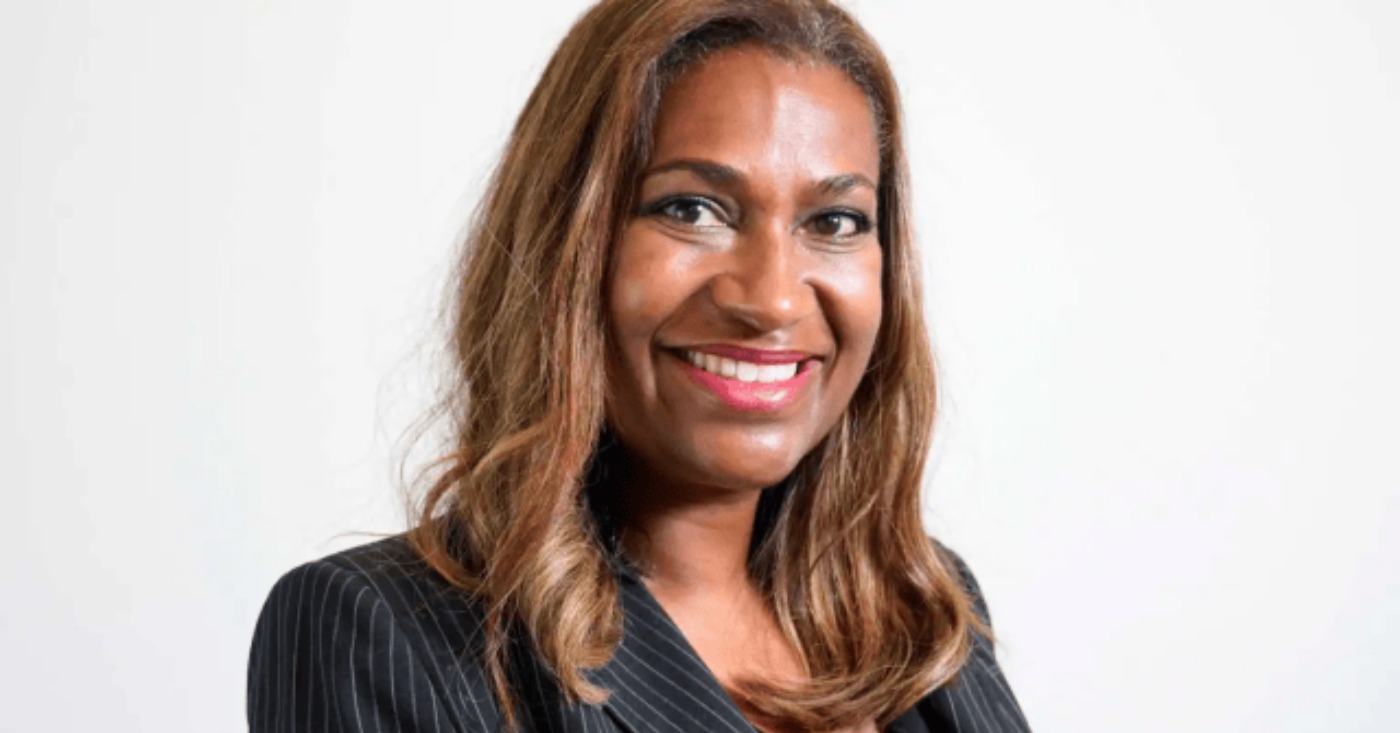
Letitia Plummer is the next Harris County judge, and the Spelman College alumna made history in Texas’ most populous county. On Tuesday night, the former Houston City Council member defeated Republican Orlando Sanchez. As a result, she becomes the first African American elected to lead Harris County.
Early unofficial results showed Plummer with about 62% of the vote to Sanchez’s 38%. Shortly after 9 p.m., Sanchez called Plummer to concede. He then asked his supporters to back her once she takes office.
The win also makes her the first Muslim elected to the post. According to the Houston Chronicle, that makes her the highest-ranking Muslim executive official in Texas history.
A Historic Night in Houston
Plummer succeeds Lina Hidalgo, who chose not to seek another term. Now, a Spelman woman takes over the top job in a county of nearly 5 million people.
ADVERTISEMENT
In Texas, the county judge is not a courtroom role. Instead, the job leads the Commissioners Court, which runs the county’s budget, roads, flood control and public health. So the seat carries real power over daily life in the Houston region.
The general election was never especially close. However, the road to November was brutal. In the March 3 primary, Plummer finished second behind former Houston Mayor Annise Parker. Parker took about 47% to Plummer’s 37%, sending the race to a runoff.
Then Plummer flipped the script. On May 26, she beat Parker in the runoff with about 51% of the vote. From there, she turned to Sanchez and never looked back. Houston Public Media has full coverage of election night.
Letitia Plummer’s Road From Linkwood to Harris County Judge
Plummer grew up in Linkwood, a neighborhood south of Brays Bayou near Buffalo Speedway. Her family history runs deep in Houston. Her grandfather was a Tuskegee Airman flight instructor. After the war, he became the first African American investigator for the Harris County district attorney.
ADVERTISEMENT
Her father, Matthew Plummer Jr., studied dentistry at Harvard. Later, he served in the Peace Corps, where he met her mother in Africa. Her mother brought Yemeni and Indian roots to the family. As a result, Plummer grew up in a multicultural household that shaped her outlook.
As a teen, she attended what is now DeBakey High School for Health Professions. Then she headed to Atlanta for Spelman. There, she joined Alpha Kappa Alpha Sorority, Inc.
After Spelman, she came home to Texas for dental school at Baylor College of Dentistry. Like her father, she became a dentist. She went on to own dental practices in the Houston area, including in Pearland.
From Dental Chair to City Hall
Plummer’s political career started with a 2018 run for Congress. She made the Democratic runoff in Texas’ 22nd District but lost to Sri Preston Kulkarni. Still, the campaign put her on the map.
A year later, she won Houston City Council At-Large Position 4. She took office in January 2020. In doing so, she became the first Muslim woman elected to the Council.
On the Council, she focused on police reform, food deserts and apartment inspections. She also chaired the Government Operations Committee. Notably, fellow Spelman alumna Carolyn Evans-Shabazz served alongside her on the Council.
In 2025, she launched her campaign for county judge. Then she timed her exit from the Council so the city could fill her seat during a regular election. That move saved Houston the cost of a standalone special election.
What She Ran On
Plummer pitched herself as a unifier for a Commissioners Court that has often split along party lines. She promised to build stronger working relationships among its members.
She also called for better county services and changes to the county’s Flock camera contract. In addition, she pushed back on state leaders for exerting authority over Harris County.
On election night, she spoke about her personal struggles with surrogacy. She said that experience helped inspire her decision to run.
Why Letitia Plummer’s Win Matters for Spelman
Spelman women had a big night across the country Tuesday. In New York, alumna Adrienne Adams won the lieutenant governor’s race. Now Plummer will run one of the largest counties in America.
Together, the wins show how far the Spelman network reaches in politics. Both women built careers outside government before winning office. And both broke barriers on the way up. For more on the school, check out our Spelman College coverage. You can also follow our Keisha Lance Bottoms coverage for more HBCU wins from election night.
What Comes Next
Plummer will take office in January. Between now and then, she will build her team and prepare for the county budget fight. For more on her path, the Houston Chronicle tracked her rise through a political roller coaster year.
Stay with HBCU Buzz for continued coverage of Harris County Judge-elect Letitia Plummer as she prepares to take office.
In this article:HBCU LOVE, Letitia Plummer, Spelman’s Dr. Letitia Plummer Makes History as Harris County’s First Black Elected County Judge
Based on reporting by Texas Metro News.
Black History
Meet Scott Colom, the Mississippi Democrat Leading Tight Mississippi Senate Race
ATLANTA DAILY WORLD — Mississippi Democrat Scott Colom holds a narrow lead over Republican incumbent Cindy Hyde-Smith in a high-stakes U.S. Senate race that remains too close to call. A longtime prosecutor from Columbus, Colom seeks to become the first Black person to represent Mississippi in the Senate since Reconstruction.
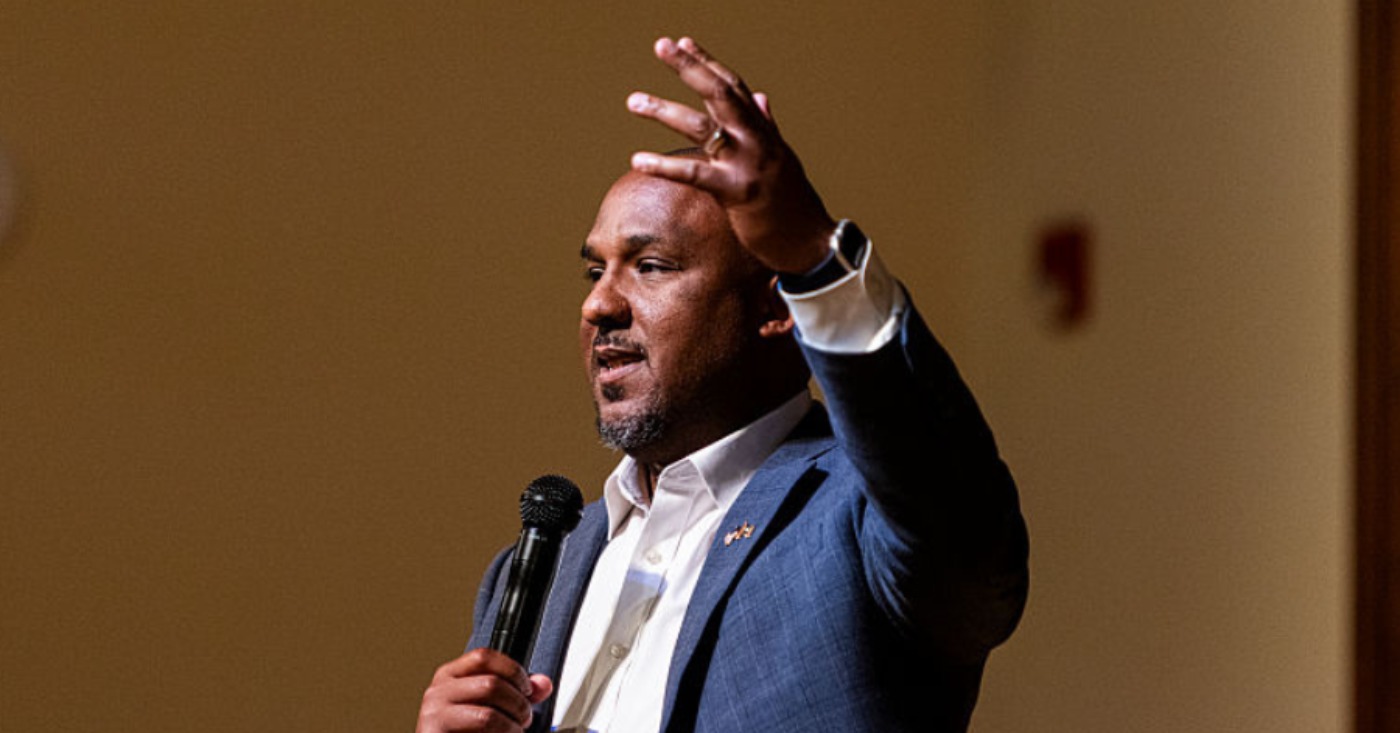
Scott Colom, a Mississippi Democrat challenging Republican Sen. Cindy Hyde-Smith, could become the first Black person elected to represent the state in the U.S. Senate since Reconstruction.
As of Thursday afternoon (November 5), unofficial results showed Colom leading Hyde-Smith by 1,138 votes, with 96% of estimated votes counted, according to Associated Press election results. The race has not been called.
If Colom wins, the longtime prosecutor would become the first Democrat elected to the U.S. Senate from Mississippi since John C. Stennis won reelection in 1982. A seventh-generation Mississippian raised in Columbus, Colom comes from a family with deep legal and political ties.His mother, retired Judge Dorothy Colom, was the first Black person elected to serve on her region’s Chancery Court. His father, Wilbur Colom, is an attorney and former Republican who worked for President Ronald Reagan.
In 2015, Colom defeated 27-year incumbent Forrest Allgood to become district attorney for Mississippi’s 16th Circuit District at age 32, making him the first Black person to hold the position, Mississippi Public Broadcasting reported. His campaign says his office has won 94% of its trials and secured convictions in more than 15 high-profile murder cases.
Colom’s history with Hyde-Smith dates back to 2023 when she blocked his nomination to a federal judgeship despite support from Republican Sen. Roger Wicker, according to CNN.
Colom told CNN, “I’m a Christian. I forgive her,” adding that the blocked nomination was not motivating his Senate campaign.
His campaign website outlines priorities that include raising the federal minimum wage, lowering costs for families, protecting rural hospitals and restoring Affordable Care Act tax credits. He also wants to require data center companies to cover their own electricity and water costs.
Mississippi’s last two Black U.S. senators were Hiram Revels, who was elected in 1870 and became the first Black senator in the country, and Blanche K. Bruce, who was elected in 1875 and served until 1881, according to the U.S. Senate Historical Office.
The Black Information Network is your source for Black News! Get the latest news 24/7 on The Black Information Network. Listen now on the iHeartRadio app or click HEREto tune in live.
The post Meet Scott Colom, The Mississippi Democrat Leading Tight Mississippi Senate Race appeared first on Atlanta Daily World.
Based on reporting by Atlanta Daily World.
Black History
COMMENTARY: Big Mama Said: Don’t Just Remember the Village When You Need Votes!
TEXAS METRO NEWS — With the conclusion of Election Day, political campaign signs have disappeared and the frequent visits from candidates to local churches, barbershops, and community centers have come to an abrupt halt.
Big Mama used to say, “Baby, don’t come knocking on my door only when you need something. Come see about me when you need something, too!” And if you knew my Big Mama, you knew that wasn’t a suggestion. That was a standard!
Well, Election Day has come and gone. The campaign signs are coming down, the political commercials have disappeared, and some politicians have already forgotten the roads leading into our neighborhoods. Isn’t it amazing how quickly folks can find our churches, barbershops, restaurants, and community centers when they need our votes? They shake hands, hug babies, take pictures, and some even learn a gospel song! But Big Mama would ask, “Baby, now that they’ve counted our votes, who’s counting our needs?”
Where are they when our schools need resources, seniors need assistance, Black-owned businesses need contracts, and young people need mentors and jobs? Big Mama would remind us, “You can’t eat a handshake, and a photograph won’t pay the light bill!”
But here’s where the village must accept some responsibility. We cannot keep building election machines that disappear after Election Day. We need an ecosystem, connecting our churches, businesses, nonprofits, fraternities, sororities, educators, and community leaders into a year-round network of opportunity, accountability, and collective progress.
Imagine turning voter mobilization into economic mobilization. Imagine churches connecting families to resources, businesses opening doors for young entrepreneurs, and elected officials reporting measurable results instead of delivering another campaign speech. That’s how we turn political influence into community investment.
And let’s stop measuring success by how many politicians attend our events. Let’s count jobs created, contracts awarded, young people mentored, and promises kept. Accountability isn’t partisan. It’s personal, and it belongs to the entire village.
Now, I’m asking you, my readers: Send me the name of an organization, business, or community initiative we should invest in and support. Let’s connect our resources and build an ecosystem that strengthens the entire village! I have two organizations I’d like to add to the conversation: Don’t Believe the Hype, which focuses on scholarships and educational opportunities, and City Men Cook, which provides mentoring, leadership development, and opportunities to invest in the next generation of young men. Both are about more than talking about change. They’re about putting resources, relationships, and opportunities into action.
Big Mama understood that relationships require reciprocity. You cannot keep withdrawing from a community without making deposits. So whether your candidate won or lost, our responsibility remains. The election determines who holds office, but the village determines what accountability looks like.
Big Mama said, “Baby, if they know the road to your house when they need your vote, make sure they know the road back when you need results!”
The election is over. Now let’s build something that outlives the campaign!
Based on reporting by Texas Metro News.
Black Press
Gov. Gavin Newsom to Commute All 548 California Death Row Sentences
ATLANTA DAILY WORLD — Governor Gavin Newsom has initiated the process to commute the death sentences of all 548 inmates on California’s death row to life in prison without parole. This historic move would empty the largest death row in the United States, representing more than a quarter of the nation’s condemned population.

California Gov. Gavin Newsom has begun the process of commuting the death sentences of all 548 people on the state’s death row to life in prison without the possibility of parole, The Washington Post reported.
If completed, the move would empty the nation’s largest death row, affecting more than a quarter of the country’s death-sentenced population.
However, the commutations will not be automatic for everyone. Approximately 70% of the inmates have multiple felony convictions and will need approval from at least four of the California Supreme Court’s seven justices before their sentences can be changed.
Newsom defended his decision in an open letter to Californians, arguing that he believes capital punishment is incompatible with California’s values and undermines the justice system.
“I take this action because I firmly believe that state-sanctioned killing is incompatible with California’s values, undermines the foundations of our legal system, and diminishes each of us,” Newsom wrote.
He also acknowledged that his decision could reopen painful memories for victims’ families, writing that the announcement “may surface excruciating memories for victims’ families.”
California voters previously rejected a ballot measure to repeal the death penalty in 2016, but Newsom argued that the state Constitution gives the authority to grant clemency.
“California voters have voted to keep the death penalty on the books and I respect that,” he wrote. “But the Constitution also gave every governor clemency authority, and that power exists for moments when law as applied cannot be squared with justice. For me, this is that moment.”
The Washington Post reported that California has not executed anyone since 2006. Newsom previously imposed a moratorium on executions in 2019, dismantled the state’s death chamber, and repealed its lethal injection protocol.
The Black Information Network is your source for Black News! Get the latest news 24/7 on The Black Information Network. Listen now on the iHeartRadio app or click HEREto tune in live.
The post Gov. Gavin Newsom To Commute All 548 California Death Row Sentences appeared first on Atlanta Daily World.
Based on reporting by Atlanta Daily World.
Black History
COMMENTARY: We’ve Got Some Difficult Days Ahead
GARY CRUSADER — The present administration and those driving a malicious agenda of anti-human policies driven by greed will likely ratchet up the rhetoric of ruin against safety-net programs. These are the very programs that support the people who actually do the living and dying in this country.
On April 3, 1968, at Mason Temple in Memphis, Dr. Martin Luther King Jr. delivered his famous “I’ve Been to the Mountaintop” sermon.
As he prepared to close, he told the overflowing crowd: “We’ve got some difficult days ahead.”
Those words ring just as true today as they did nearly six decades ago. We, too, have some difficult days ahead.
By the time this article hits the newsstands (I’m dating myself), the midterm elections will be over. Regardless of the outcome, the fight for justice and humanity will continue with full force.
We’ve got some difficult days ahead.
The present administration and those driving a malicious agenda of anti-human policies driven by greed will likely ratchet up the rhetoric of ruin against safety-net programs. These are the very programs that support the people who actually do the living and dying in this country.
We’ve got some difficult days ahead.
Following the midterms, people who believe in the sacredness of humanity must turn their attention to holding elected officials accountable. Senators and representatives promised to protect the people’s agenda: health care for all, quality education for all, and ensuring billionaires pay their fair share of taxes to fund programs for “the least of these.”
If sober, principled leaders are not elected, and the hounds of hell break through the gates of Congress, then those who believe that every person has inherent dignity, regardless of race, ethnicity, gender, sexuality, age, or economic status, will have to redouble their efforts. We must resist the fanatical intent of those who believe one race is superior to others.
We’ve got some difficult days ahead.
Churches must stand in the tradition of the prophet Amos. They must declare to wannabe kings and sycophants who trade human principles for profit that God says: “Let justice roll down like waters, and righteousness like an ever-flowing stream.”
Black churches in particular must make a Sankofa move, reaching back to reclaim the lessons of ancestors who waged heroic battles against white supremacy and settler colonialism, forcing this country to make drastic changes for the better.
We’ve got some difficult days ahead.
Black churches and people of goodwill must reclaim the narrative. We must prevent the masses, often captivated by social media talking heads who lack the bandwidth for deep theology, ideology, or political literacy, from falling under the influence of rampant ignorance online.
We’ve got some difficult days ahead.
Those who have always wondered what they would have done during the Civil Rights Movement will soon confront a hard truth: what they are doing right now is exactly what they would have done back then. For many, that means doing nothing but talking. Others will realize they are the kind of people Harriet Tubman would have left behind, because they did nothing but get in the way.
We must answer the question Dr. King posed in the title of his final book: Where Do We Go from Here: Chaos or Community?
We’ve got some difficult days ahead.
That sentiment reflects the words Jesus left with His disciples, hours before He was executed by the Roman Empire on a cross. In John 16:33, Jesus told them: “I have told you these things, so that in me you may have peace. In this world you will have trouble. But take heart! I have overcome the world.”
Yes, we have difficult days ahead, but we have truth on our side. We have justice on our side. We have our ancestors on our side. We have history on our side.
And for those of us who follow that barefoot preacher from the northeast African region of biblical Palestine, Jesus of Nazareth, we know that victory ultimately triumphs over defeat, because resurrection is a living reality.
Be vigilant, be authentic, and stay woke. Uhuru Sasa!
The Rev. Dr. John E. Jackson, Sr. Senior Pastor of Trinity United Church of Christ-Gary, 1276 W. 20th Ave. Gary, IN. Contact the church at [email protected] or by phone at 219-944-0500.
Based on reporting by Gary Crusader.


San Diego Supervisors’ Power Grab & Discretionary Funds

How Restaurant Apprenticeships Taught Me to Run a Business #shorts

Documenting History: Why Today’s Stories Matter Tomorrow #shorts

Planning to Buy an EV? Check Charging Before You Buy #shorts

A Black Culture Café Rooted in Community and Connection #shorts
The Mission to Cultivate Black Leadership

Black Music Awards: The Fight to Recognize Prince and Black Artists #shorts

The Black Entrepreneurs Building the EV Green Book #shorts

Shaunie Grigsby on Building Flava Cafe, a Social Enterprise in St. Paul | On The Radar | MSR

Chevy Bolt RS Charging Specs: 65 kWh Battery and 150 kW Fast Charging #shorts

All Skinfolk Ain’t Kinfolk

Practitioners of African Traditional Spirituality Offer Ancestral Reverence Ritual Oct. 31

Tamiko Armstead | 2026 Lifetime Achiever in Education

Oakland Awarded More than $14 Million in State Funding

HISTORY MADE: Keisha Lance Bottoms Becomes First Black Woman Elected Governor in American History

OP-ED: The Black Church Writes AI’s Next Chapter

Inside 820 S. Michigan: New Book Captures the Lost World of Ebony and Jet

Jendayi Arrest Raises Community Concerns Regarding Sheriff’s Chain of Command

OP-ED: If the ‘Cornell 7’ Were Black Men at an HBCU — America Wouldn’t Be This Sympathetic

Kickstarter CEO Everette Taylor Shares Tips on Creating and Growing a Business
San Diego Supervisors’ Power Grab & Discretionary Funds
How Restaurant Apprenticeships Taught Me to Run a Business #shorts
Documenting History: Why Today’s Stories Matter Tomorrow #shorts
Planning to Buy an EV? Check Charging Before You Buy #shorts
A Black Culture Café Rooted in Community and Connection #shorts
Black Music Awards: The Fight to Recognize Prince and Black Artists #shorts
The Black Entrepreneurs Building the EV Green Book #shorts
Shaunie Grigsby on Building Flava Cafe, a Social Enterprise in St. Paul | On The Radar | MSR
Chevy Bolt RS Charging Specs: 65 kWh Battery and 150 kW Fast Charging #shorts

L I V E | Mississippi Senate Race UPDATE
-
 Black History5 days ago
HISTORY MADE: Keisha Lance Bottoms Becomes First Black Woman Elected Governor in American History
-
 Featured1 week ago
Multi-Faith Leaders Representing 10 Million People Launch National Anti-Authoritarian Initiative
-
 Black History7 days ago
Christianity’s Racial History
-
 Black History7 days ago
Michael Shiner: The Enslaved Man Who Wrote His Way into American History
-

 Black History7 days ago
Five Hospitals Said No! Who Will Help Annette Henry Recover?
-
 Black History6 days ago
Hundreds of Black Christian Leaders Arriving in Israel for Martin Luther King-Inspired Mission
