The 2022 Russian invasion of Ukraine caught American chipmakers in an awkward position. Suddenly, access to high-purity neon — the gas that makes modern chip manufacturing possible — became precarious. Ukraine wasn't just another supplier in the mix; it was essentially the supplier. For decades, the country's metallurgical hubs in places like Mariupol and Odesa (as a major logistics hub) had quietly become the world's neon factory, responsible for roughly half of global high-purity production. When those deliveries stopped, the alarm bells started ringing across Silicon Valley, Texas, and every fab plant in between.
Intel scrambled. TSMC started panic-buying. Companies that had never worried about gas supplies suddenly realized they were playing a dangerous game of geographic roulette. A $150 million extreme ultraviolet lithography machine from ASML needs neon the way a car needs gasoline — except getting it suddenly became a geopolitical negotiation.
Understanding the Neon Problem
Why is neon so irreplaceable? Because semiconductor manufacturing at the cutting edge operates in a world most people never see. Deep ultraviolet and extreme ultraviolet lithography — the techniques that let engineers carve silicon into patterns measuring just nanometers — require lasers that perform their delicate work inside chambers filled with ultra-pure neon. A single dust particle, a stray moisture molecule, or any impurity could wreck a wafer worth tens of thousands of dollars.
The math on ASML's EUV machines makes the point brutally clear. Each device costs over $150 million. Each one needs neon purity measured at 99.9995% or better. Downtime measured in days translates to millions in losses. When supply chains break, the ripple effects move fast and they hurt.
The historical oddity is how this concentration happened. Ukraine's steel mills and chemical plants generated gas mixtures as byproducts. Someone figured out decades ago that with the right cryogenic equipment — machinery that operates at temperatures around -200°C — you could separate those mixtures and extract neon, krypton, and xenon at extraordinary purity levels. Plants in the Donbas developed this expertise. The infrastructure followed. Suddenly, the world's most advanced chip fabs were dependent on refrigeration technology and rare gas extraction happening in Ukraine.
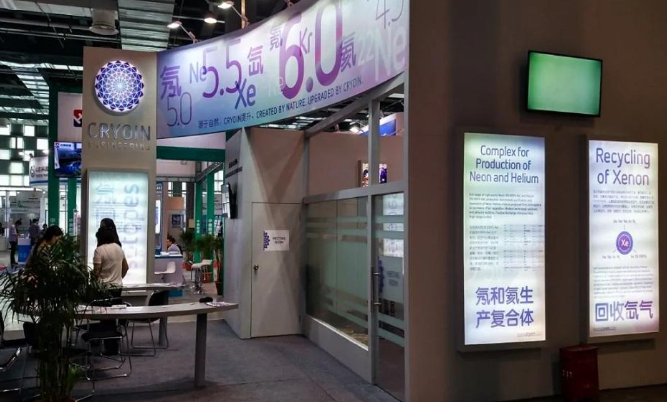
Cryoin Engineering has developed and manufactured such systems for over 15 years, and their expertise in Cryoin engineering US semiconductor supply has become increasingly valuable as American companies seek alternatives to Asian suppliers.
When February 2022 arrived, that dependency became a visibility problem.
Cryoin Engineering's Role in Crisis and Recovery
Cryoin Engineering, which had been developing cryogenic separation systems for over 15 years, found itself operating under circumstances that seemed impossible. The company didn't fold. Instead, its engineering team executed what amounted to a wartime logistics operation: evacuated equipment, rebuilt supply chains from scratch, established production at new locations. The company kept producing.
That recovery mattered more than it might seem from a distance. Yes, the quantities differ now. The geography has shifted. But the proof that Ukrainian rare gas exports could continue — could actually restart and gain momentum despite everything — showed that the supply chain wasn't just broken; it was repairable. More importantly, it was defensible.
American semiconductor manufacturers were paying attention to the lesson, though they didn't particularly enjoy learning it. Samsung's Austin facility in Texas had to reduce output. GlobalFoundries in upstate New York was shopping around for emergency neon, and when you're in that position, you pay whatever anyone asks — prices jumped 300% above normal rates. The kind of margins that get everyone's attention.
That's when the strategic rethinking began in earnest.
Building Something More Durable
The investment America made through the CHIPS Act — $52 billion committed to bringing manufacturing capacity home — was only part of the equation. Money builds factories, but factories need materials. They need reliable, stable access to materials. And the materials that matter for advanced semiconductors aren't the kind you dig out of a mine and move along easily.
TSMC announced a $40 billion commitment to Phoenix. Intel committed $20 billion to Ohio. These facilities, once operational, were going to need guaranteed access to specialized gas equipment and suppliers. You can't hedge bets the way you might with other supply chain problems. You need partners you trust, and you need them positioned thoughtfully.
That's where the strategic partnership angle started mattering. Micron Technology revised its entire procurement approach after the crisis. Instead of relying on suppliers clustered in particular regions, the company spread its relationships across five different countries, including Ukraine, Japan, and domestic producers. The added logistics cost ran around 8-12%, but the reduction in catastrophic risk exposure was worth the expense. You pay for redundancy, and redundancy buys peace of mind.
Krypton and xenon demand matters separately. Krypton powers the ion lasers that etch silicon wafers. Xenon gets used for ion beam deposition when manufacturers are building thin films in memory devices. These gases are even scarcer than neon. Global krypton production totals roughly 8,000 tons annually; xenon production barely reaches 400 tons. Ukraine historically contributed up to 30% of global xenon using the same cryogenic infrastructure that produces neon.
That's concentrated risk on top of concentrated risk.
Rethinking Technological Independence
The semiconductor equipment manufacturers themselves started developing technologies to reduce vulnerability. Applied Materials, which builds the largest share of the world's semiconductor equipment, began working on closed-loop rare gas systems that can recirculate and repurify up to 95% of the neon consumed in lithographic processes. It's clever engineering, but it doesn't eliminate the need for primary supplies of extremely high-quality gas.
Lam Research tackled consumption from the other direction, developing new equipment generations that use 40% less neon compared to earlier designs. The problem, though, is that absolute demand keeps expanding anyway. A single new 3nm chip plant consumes more neon than three older 28nm plants combined.
Analog Devices started exploring something more ambitious: a joint venture with Ukrainian manufacturers to establish a rare gas production facility in Massachusetts. The concept involved using Cryoin's equipment and Ukrainian engineering expertise to create full-cycle production directly on American territory. It represents a shift in how American companies think about technological independence. The goal isn't complete self-sufficiency in isolation; it's smart partnerships with verified, reliable suppliers positioned across different geographies.
The Practical Reality of Logistics and Quality
Moving cryogenic gases from Ukraine to American fab plants is its own specialized operation. Neon travels in insulated containers under 150-200 atmospheres of pressure at -196°C. Violate the temperature regime, and you contaminate the entire shipment. The supply route moves from ground transport through specialized cryogenic tanks to port facilities, then ocean shipping in isothermic containers with autonomous cooling systems, then unloading at American ports with full quality verification, and finally delivery to fab plants for transfer into stationary storage.
The whole process takes three to five weeks, which is why semiconductor plants typically maintain two to three months of production reserves. That requires warehouse space, specialized equipment to maintain cryogenic conditions, and rigorous inventory management.
NXP Semiconductors in Austin established acceptance standards that border on obsessive. Each batch of neon undergoes re-analysis in the company's own laboratory before a single molecule enters the production line. Even certified 99.9999% purity materials get additional verification for oxygen, moisture, carbon dioxide, and hydrocarbon content. It's redundant verification of something already verified, but the stakes justify the paranoia.
Qorvo, which manufactures RF components for 5G networks, installed online quality monitoring directly on production lines. The system performs real-time analysis of neon composition and automatically cuts supply the instant it detects any deviation from specification. In one calendar year, the system identified three batches that didn't meet standards — batches that would have otherwise entered production and potentially cost millions in defective components.
Ukraine as a reliable neon supplier for American industry
The strategic picture shifts when you view Ukraine not as a backup plan but as a foundational element of American semiconductor resilience. The country possesses accumulated technological expertise, proven operational capability even under extreme conditions, and genuine motivation for long-term Western partnership. Companies like Cryoin Engineering aren't hypothetical future suppliers; they're operating today, proving they can maintain product quality and meet client commitments despite circumstances that would have caused most operations to simply stop.
Cryoin has already begun supplying neon production equipment to North American clients, helping develop local supply chain capacity. This reduces dependency on Asian suppliers and creates a more distributed, resilient ecosystem for American chipmakers.
Partnership with Ukrainian manufacturers carries other advantages beyond risk distribution. Ukraine genuinely needs long-term contracts with Western partners, which creates aligned incentives around supply reliability. American companies get access to world-class engineering and equipment at competitive pricing. It's not charity; it's mutual interest finding expression through commercial relationships.
The Final Consideration
Fab plants being built today in Arizona, Ohio, Texas, and New York will operate for decades. Semiconductor facilities have extraordinarily long operational lives. The suppliers chosen today become embedded in those operations' infrastructure for years or decades afterward. Choosing reliable partners for critical materials now essentially determines operational efficiency and competitiveness across that entire timespan.
Ukrainian experience in rare gas production, supported by modern technologies and demonstrated supply reliability, positions the country naturally as a strategic partner for American semiconductor manufacturing. The CHIPS Act provided capital for construction, but capital doesn't guarantee supply chain stability. That requires partners, relationships, and strategic choices about who controls access to the materials that make everything else possible.
In a world where technological leadership increasingly determines geopolitical weight, supporting reliable allies while building resilient supply chains isn't separate from national strategy — it's central to it.