
Black History
#ACCESS901: Memoir provides lens to ‘see’ Cyntoia Brown-Long
NNPA NEWSWIRE — As for “Young Cyntoia” specifically, “I would tell her, you don’t know half the things that you think you know,” she said. “I thought I knew better than my mother and anyone else around me. You couldn’t tell me anything! I would tell (Young Cyntoia), ‘you have no idea what life is really about. You’re not equipped, you’re not ready…to be grown… God has it so you’re in your home with your parents for a reason… so you learn the ways of the world.’”

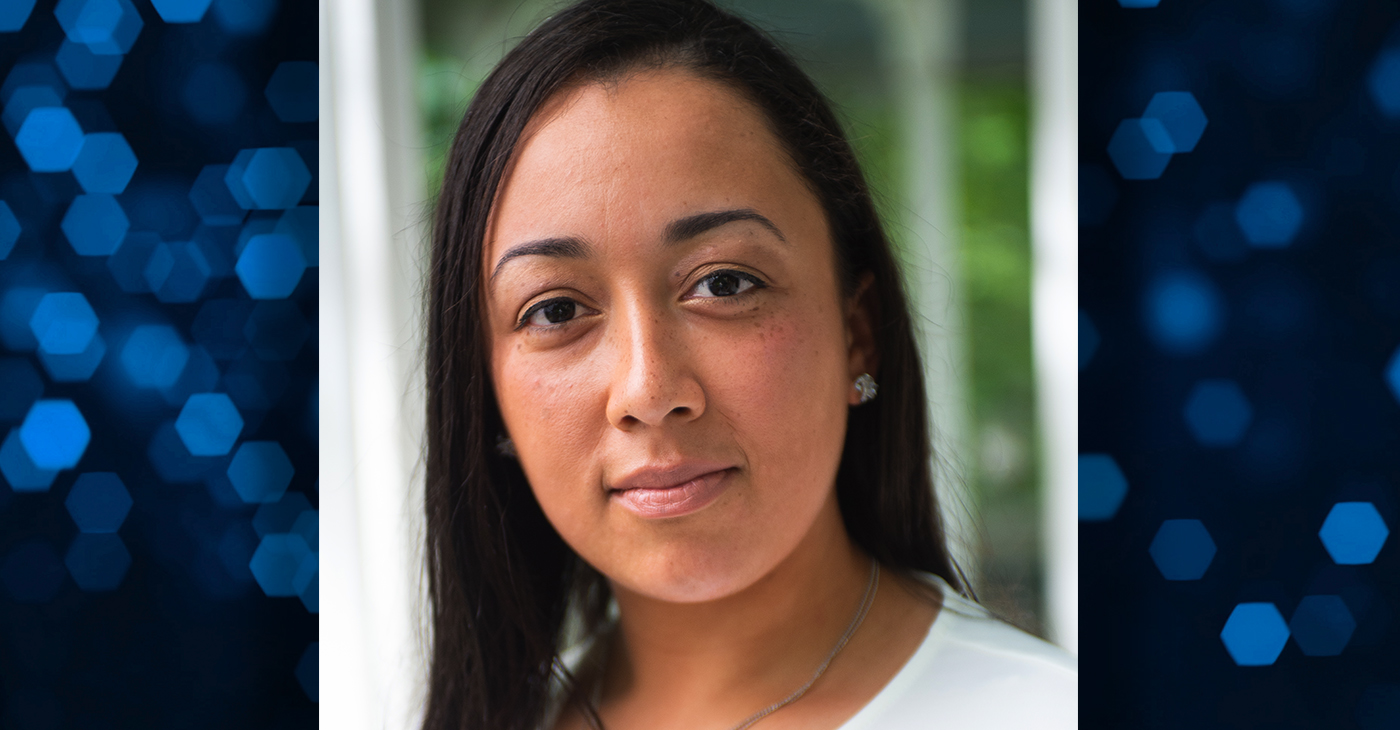
By Joy Doss, Special to the New Tri-State Defender
Cyntoia Brown’s story sent waves of nausea across my stomach and a riptide of ire through my mind. The ham-fisted “morality” and the way in which “justice” was meted out did not sit right in my spirit.
Where was the compassion? Where were the courtroom hugs and Bible? Where was the forgiveness that is often required of us? Do you mean to tell me there’s more compassion for a serial predator and frequent flyer with prostitutes than for this girl-child?
Last week, in advance of the Oct. 15 release of her memoir: “Free Cyntoia (My Search for Redemption in the American Prison System),” I interviewed her for my TSD column #Access901. There was so much running through my mind as I read the book in preparation for our conversation. A few takeaways and most salient points (without spoilers):
- My own foolish young girl behavior.
- The simultaneous invisibility and sexualization of young black and brown girls and resulting normalization of this.
- She was spiraling for some time, but the big fall happened in a matter of weeks.
- Who’s to blame? Where was the fail?
- How remarkable this woman is!
Who doesn’t want to be grown, especially as a teenager? I know I did. I pushed boundaries. But I quickly realized I was NOT ready for grown up stuff. When the grown stuff came at me around age 15, I said to myself, “Oh. This? NOPE.”
But I also remember wanting to be loved by someone, not to fill a void or resolve daddy issues. I just wanted to feel beautiful, special and adored like the girls in the movies. Cyntoia was no different than me or most of us. She just had the follow through and boldness I didn’t!
As with many teenagers, she was seeking freedom, belonging and acceptance, which she found in the streets. Although at home she was loved, accepted and never isolated. From most angles, it looked as if she had a good life. Most girls (or boys) that are drawn to the streets do so because there’s something lacking in their family life; not so much here.
So, what made her feel so disenchanted and at times angry?
In its simplest form, it was challenges with her identity and her otherness.
“I struggled with feeling different, feeling like an outcast… Now, we’ve done more to make people feel like it’s OK to be different. We’ve done more for inclusiveness,” she told me. “I was feeling like I didn’t belong where I was. And I just didn’t know what to do with those feelings.”
One thing is crystal clear. There was this dichotomy of being a girl in a woman’s body. This woman-child was doing grown stuff with her body but still thinking like a child. She believed in fairytales in the midst of this madness; Prince Charming will save the day.
Cyntoia was 16 when she had the fateful encounter that ended with her killing a man she said picked her up for a paid sexual encounter.
Of course, her logic was faulty. Sometimes the stranger-danger alert kicked in, other times it didn’t; and other times it did but she walked right into danger anyway. How did she distinguish one situation from another? What made her decide that this bad thing/person wasn’t as bad as this other bad thing/person?
“I really didn’t do evaluations. There was no real risk assessment,” she said.
“I was just walking into situations and pretty much just reacting as they happened. I was just blindly walking in…I didn’t think about the consequences…so it wasn’t always consistent. And (consequently) I ended up dealing with things no one else my age would be able to navigate.”
She continued: “I wanted all this freedom but when I was legally declared grown at the age of 16, I was like, whoa, ‘I’m really in over my head this time.’ You realize how wrong you were. You’re forced to be grown without understanding what it means to be adult or even be a woman. Having to face life as an adult, you realize what mom was saying. It’s difficult to grow up like that.”
A useful tool in healing, self-forgiveness and uncovering personal truths is writing to your younger self. What she would tell Young Cyntoia and young girls?
“Slow down. I remember saying, ‘This is it, this is life,’ without slowing down to think about, ‘Where am I going? What do I want to do?’ Take the time to stop and think through things? Who are you? What do you want to see happen?
“We don’t think through things at that age. Ask yourselves, ‘Who are you and who do you want to be? What do you see coming from this course of behavior?’”
As for “Young Cyntoia” specifically, “I would tell her, you don’t know half the things that you think you know,” she said.
“I thought I knew better than my mother and anyone else around me. You couldn’t tell me anything! I would tell (Young Cyntoia), ‘you have no idea what life is really about. You’re not equipped, you’re not ready…to be grown… God has it so you’re in your home with your parents for a reason… so you learn the ways of the world.’”
Tried as an adult, she was convicted of first-degree murder and robbery. Tennessee law mandated that she not be eligible for parole for at least 51 years. She was 31 when her sentence was commuted by then-Gov. Bill Haslam on Aug 7, 2019.
Throughout the criminal court process, she continued to believe the criminal justice system would protect her and see her. Which raises the point of invisibility and sexualization of black and brown girls. This is a story in and unto itself, pegged to the larger community.
As a mother to a young daughter, I find this distressing. It’s not just white people, it’s us too. Invisibility is a twin demon of sexualizing children. Some people just don’t see their girlhood or their innocence. Somehow the lens through which people view our children is distorted. Since slavery, our bodies were never our own; they were up for grabs for whoever was interested. Clearly, there are remnants of this disposition today.
Without spoiling the book and going too deep into the weeds, I encourage people to just stop and see our girls. See their worth, even when they don’t. It’s doesn’t matter if she’s “fass” or womanish or “developed.” DOES. NOT. MATTER. It’s our job as adults to shepherd children through the growing up process in the healthiest way possible. Even when they aren’t our kids, it’s still our village!
When we hear of these stories, our instinct often is to immediately assign blame. In between expletives and invectives, I was seeking a target. Whose fault is this? How did this happen?
However, there is no blame assignation anywhere in this book, which is one of the ways in which Cyntoia is absolutely remarkable. She doesn’t even seem to blame any of the predatory grown men who passed through her life.
How?
I think this is part of being “Free Cyntoia.” Letting go and letting God. Through all of the trama, she managed to reconnect spiritually. The entire book, her entire story is a testimony. BUT. GOD. Sometimes there isn’t anything else to say.
Cyntoia came through this 15-year battle not weary, not worn, not weak. Still, how do you reprogram emotionally and find forgiveness for the people who have inflicted this kind of pain and trauma? How do you shed that armor? I am confounded by how much strength, resolve and, yes, faith, it must take to be in this place of peace.
“The crazy thing is that I really didn’t have a difficult time shedding the armor,” she said. “When I got out, I was like, ‘OK, I’m free.’ … I didn’t have a hard time transitioning. It’s natural. God made us to be free individuals.”
Now she can move how she wants.
“Lights out would be at 9:30,” she recalled. “So now, sometimes I’ll be up until 3 o’clock in the morning!”
There’s a freedom in “just cause” too!
She credits her support system as a huge reason her transition was so seamless.
“My husband has been incredible. Support matters. I’m super blessed coming out into the situation that I did.” (She’s now Cyntoia Brown-Long, having married Christian hip hop artist Jamie Long while in prison.)
What’s next? She looks forward to working with young people, the legal community and generally being of service.
“Free Cyntoia” puts humanity at the forefront. Everyone has a story. It’s up to us to see that and see them.
(“Free Cyntoia: My Search For Redemption in the American Prison System” is available for purchase on all platforms. On Sunday (Oct. 20), she will be in Memphis at New Direction Christian Church. The 6 p.m. event is free.)






Black History
Federal Agents Search Ilhan Omar’s Home Just 22 Days Before Election
WASHINGTON INFORMER — Federal agents searched the D.C.-area home of Rep. Ilhan Omar (D-Minn.) on Monday, 22 days before Election Day. This extraordinary step involved executing a criminal search warrant against a sitting member of Congress.

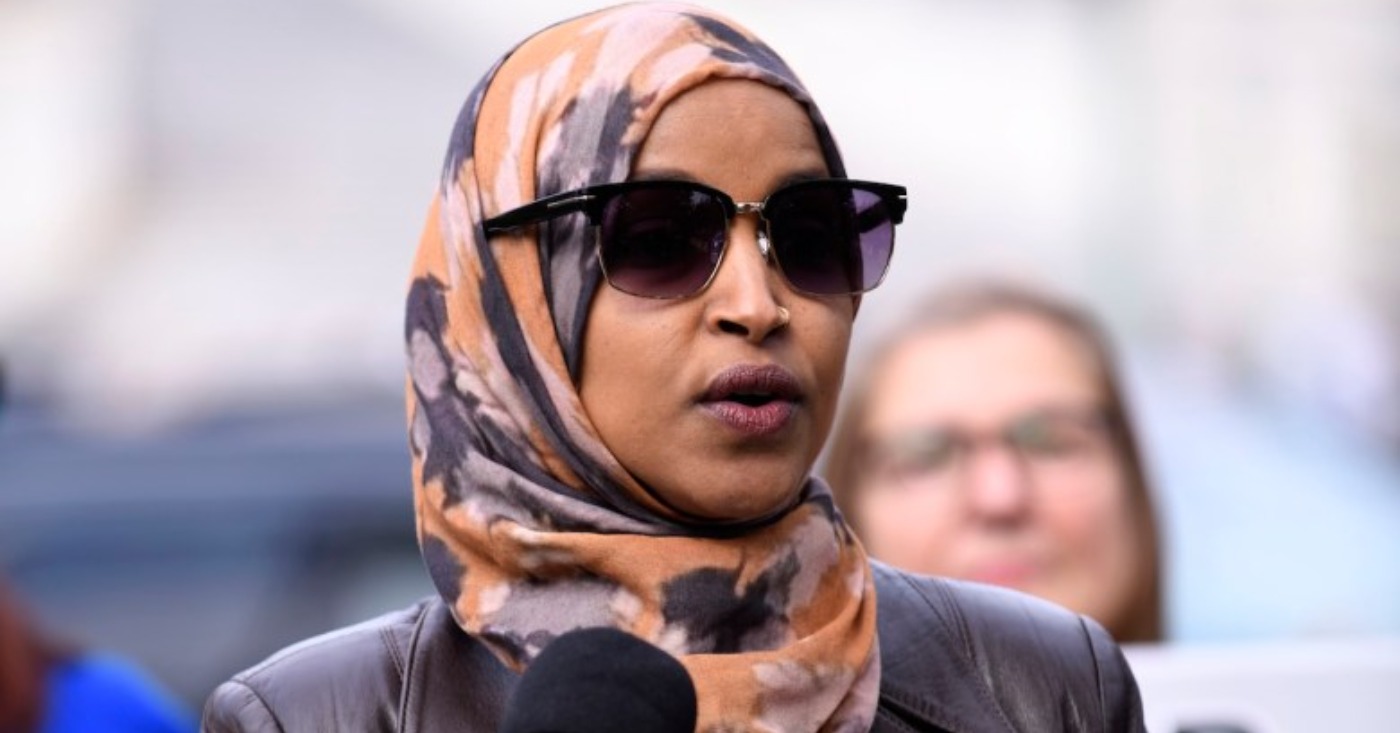
Federal agents searched the D.C.-area home of Rep. Ilhan Omar (D-Minn.) on Monday, taking the extraordinary step of executing a criminal search warrant against a sitting member of Congress just 22 days before Election Day, as the Trump administration investigates allegations involving her family’s immigration records.
The search immediately drew accusations of political intimidation from Omar’s supporters, who pointed to President Donald Trump’s repeated attacks on the Minnesota congresswoman and questioned the timing of an investigation targeting one of his most outspoken critics.
“Representative Omar is a dedicated public servant and a true ally for working families, and Donald Trump has done nothing but use racist tropes and stereotypes to attack her,” said Joel Payne, MoveOn’s chief communications officer. “Now, he’s abusing his power to physically intimidate and harass her.”
A Justice Department spokeswoman acknowledged that Homeland Security Investigations agents, part of Immigration and Customs Enforcement, searched a District residence as part of an ongoing federal criminal investigation.
The spokeswoman declined to provide additional information or publicly identify the person under investigation.
According to published reports, the warrant identified possible violations involving false statements, immigration document fraud and conspiracy. Federal investigators have also examined questions concerning Omar’s finances, campaign funds and interactions with foreign citizens.
No criminal charges against the congresswoman were identified, but Monday’s search occurred less than four weeks before voters decided whether to return Omar to Congress.
The investigation follows months of public accusations from senior Trump administration officials, including Vice President JD Vance, who previously claimed that Omar committed immigration fraud.
In an interview with conservative commentator Benny Johnson, Vance asserted, without publicly presenting evidence, that the administration believed Omar had broken immigration laws. He also said he and White House deputy chief of staff Stephen Miller had discussed how to pursue the allegations.
“What are the legal remedies now that we know that she’s committed immigration fraud?” Vance asked during the interview. “How do you go after her? How do you investigate her?”
Omar has repeatedly rejected the accusations, including claims that she married her brother to facilitate immigration fraud. Her office dismissed Vance’s allegations in March as fabricated and defamatory.
Questions about the investigation intensified in August when Immigration and Customs Enforcement refused to release records sought under the Freedom of Information Act concerning allegations surrounding Omar’s 2009 marriage to Ahmed Nur Said Elmi.
The agency cited an exemption allowing law enforcement authorities to withhold records when disclosure could interfere with enforcement proceedings. The refusal did not establish that Omar committed fraud or, at the time, confirmed that she was personally under investigation.
Omar, who came to the United States as a refugee from Somalia, was elected to Congress in 2018 and became one of the first two Muslim women to serve in the House. She represents Minnesota’s 5th Congressional District, which includes Minneapolis, and has frequently challenged Trump over immigration enforcement, civil rights, and his administration’s treatment of immigrant communities.
Her confrontations with the administration have made her a recurring target of the president’s political attacks. The criminal investigation also follows a frightening incident earlier this year in which Omar was physically attacked during a public appearance.
On Jan. 27, a man attacked Omar during a town hall meeting at the National Urban League’s Twin Cities headquarters in Minneapolis. The incident prompted condemnation from the National Coalition on Black Civic Participation and its Black Women’s Roundtable, which demanded accountability and warned against political violence.
“We are shocked and extremely disturbed by the attack on Rep. Ilhan Omar yesterday while she attempted to address the critical issues and chaos swirling around in Minneapolis,” Melanie L. Campbell, president and CEO of the coalition and national convener of the Black Women’s Roundtable, said in a Jan. 28 statement.
Campbell praised Omar for continuing to speak out despite threats against her.
“We believe that NO public official should be threatened or physically attacked, especially when they are serving in the best interests of their constituents,” Campbell said. “Political violence and intimidation have no place in our democracy.”
MoveOn, the progressive advocacy organization, accused Trump of using federal law enforcement to intimidate a political opponent and urged voters to respond at the ballot box.
“On Nov. 3rd, we get our chance to fight back and hold him and his corrupt administration accountable,” Payne said.
Based on reporting by Washington Informer.
Black History
‘We Are Ready’: NAACP Launches Voter Protection Hub Ahead of Midterms
ATLANTA DAILY WORLD — The NAACP is launching a voter protection hub to protect voting rights ahead of the midterm elections. Voters can report intimidation and suppression via phone and online, with NAACP attorneys and legal volunteers investigating complaints and seeking emergency court intervention.
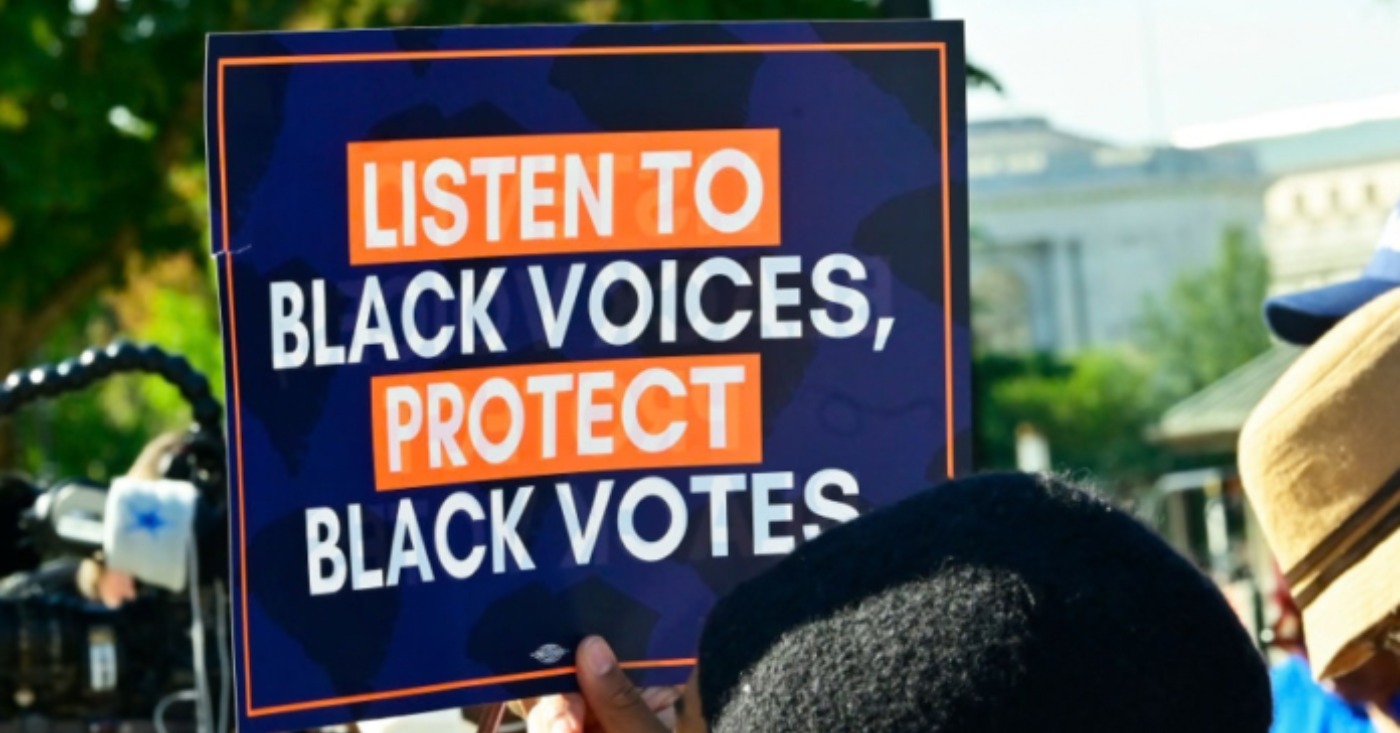
The NAACP is launching a voter protection hub ahead of the 2026 midterm elections as voting rights groups prepare for potential challenges at the polls.
Voters will be able to report allegations of intimidation and suppression by phone and through online submissions, while NAACP attorneys and legal volunteers investigate complaints and seek emergency court intervention when necessary.
According to The Washington Post, the hub is scheduled to launch October 24.
“We are ready,” NAACP General Counsel Kristen Clarke told The Washington Post. “We have an army of legal volunteers across the country and are prepared to activate and seek emergency relief on Election Day where necessary.”
The effort comes as organizations are also working to increase Black voter participation ahead of the midterms. BIN reported in September that the Congressional Black Caucus Institute launched its “SO VOTE” campaign, which plans to spend at least $4.5 million registering and mobilizing Black voters, young voters and rural voters.
The Associated Press reported that the campaign is targeting Georgia and Mississippi statewide, along with 16 congressional districts.
The NAACP is particularly focused on voter intimidation, changes to election rules and the impact of redistricting on Black voting power.
The organization filed a lawsuit against Justice Department Assistant Attorney General Harmeet Dhillon on Friday (October 2), seeking records about the department’s plans to deploy election monitors at polling places during the midterm elections.
“To be clear, there is no federal statute that gives the U.S. Department of Justice the right to send their so-called ‘election monitors’ to polling sites across the country,” Clarke said in a statement.
The NAACP’s voter protection hub will give voters a centralized way to report problems and connect with the organization’s legal team during the election.
The Black Information Network is your source for Black News! Get the latest news 24/7 on The Black Information Network. Listen now on the iHeartRadio app or click HEREto tune in live.
Based on reporting by Atlanta Daily World.
Black History
Pleasant Zion Missionary Baptist Church Celebrates 100 Years of Spiritual, Mind, Body, and Soul Ministries
LOUISIANA WEEKLY — Pleasant Zion Missionary Baptist Church, located at 3317 Toledano Street in uptown New Orleans, is celebrating its 100th anniversary with a Centennial Weekend on October 17-18.
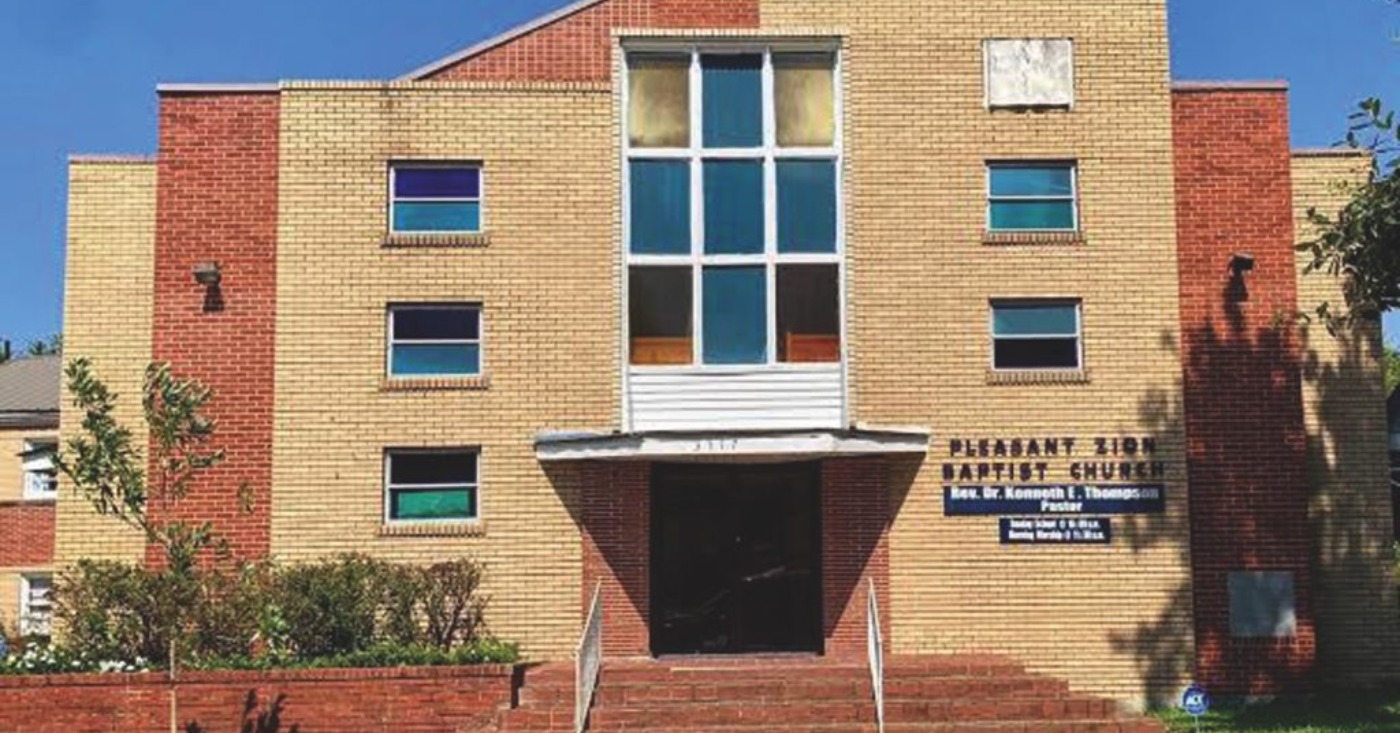
The legacy of the African-American church in the United States is that of a refuge, a caring and welcoming institution, a port in the storm, that has fed African Americans spiritually, economically, mentally and physically, and has nurtured the souls of people of African ancestry throughout their existence in America.
Pleasant Zion Missionary Baptist Church has carried on that legacy for the past 100 years. Established in 1926, Pleasant Zion MBC, located at 3317 Toledano Street, is a cornerstone of faith in uptown New Orleans and a beacon of hope for the Hoffman Triangle/Central City neighborhood.
Pleasant Zion MBC continues its mission of faith, education and empowerment for future generations. The church celebrates its 100th anniversary with a forward-looking Centennial Weekend, October 17-18.
Throughout its long history, Pleasant Zion has served its community by providing religious training and cultural, educational and recreational activities for children and adults. For decades, PZMBC has worked with neighborhood leadership to address issues such as neighborhood blight, housing and safety concerns.
Many have sought Pastor Kenneth E. Thompson’s confidential, wise counsel and comfort.
Pleasant Zion Missionary Baptist Church’s Centennial Celebration focuses on youth. “Our Centennial is not just about looking back – it’s about investing in our youth and building the future of our community,” Pastor Thompson affirms.
For decades, PZMBC has worked with neighborhood leadership to address issues such as neighborhood blight, housing, and safety concerns, Pastor Thompson adds.
During the summer, PZMBC sponsored summer enrichment camps for children with a range of activities, including culinary arts, STEM, music and field trips to museums and Black historic sites such as Armstrong Park.
The church has provided free food baskets, placed homeless women in hotel rooms, and provided financial assistance to people at risk of eviction or homelessness.
“Throughout its long history, Pleasant Zion has served the needs of its community by providing religious training, cultural, educational and recreational activities for both children and adults.
This upcoming Centennial Celebration honors a century of spiritual leadership while investing in the next generation, uplifting youth voices, education and sacred music.
Special guests at the celebration include the famous Zion Harmonizers. The world-renowned gospel group celebrated 87 years in gospel music with a special anniversary performance in March 2026 at St. John Institutional Missionary Baptist Sanctuary.
The program also features acclaimed Bishop Tyrone Jefferson, Voices of SUNO and the NORD Choir.
This article originally published in the October 12, 2026 print edition of The Louisiana Weekly newspaper.
Based on reporting by Louisiana Weekly.
Black History
Cash for Moms: As Medicaid Cuts Loom, Cities Test a New Approach to Black Maternal Health
LOUISIANA WEEKLY — WORD IN BLACK — A maternal health crisis continues to disproportionately impact the Black community, with Black mothers experiencing significantly higher mortality rates during childbirth and their infants facing increased risks of prematurity and death. Data indicates Black moms die at three times the rate of white moms, and Black infants are about twice as likely to die as white infants in some states.

By now, there’s little question that a maternal health crisis is rocking the Black community. The data tells the story: Black moms are dying during childbirth at three times the rate of white moms, a disproportionately high percentage of Black children are born prematurely, and Black infants are about twice as likely to die as white infants in states like Louisiana.
But new data from a handful of pilot projects also suggests a potential solution that could significantly improve outcomes for Black mothers and their babies: cash payments, no strings attached.
Studies show the unrestricted money led to fewer preterm births, higher newborn birth weights, and fewer critical-care infant hospitalizations. It also reduced stress among new moms who would otherwise struggle to attend prenatal check-ups, pay for food and formula, or keep a roof over their heads.
“This makes so much sense to me,” says Tamara Mason, an official with the nonprofit March of Dimes who worked on an Atlanta project distributing money to low-income pregnant women. “Why isn’t everyone doing this?”
Sen. Cory Booker, a New Jersey Democrat, is among several sponsors of legislation that would provide direct financial aid to new mothers, similar to the expanded child tax credit in 2021. The credit sent monthly payments of up to $300 per child straight to most families’ bank accounts; experts credit it with lifting millions of children out of poverty.
When it expired, child poverty rose again.
“I believe that we need to, for moms, flood resources to them through things like the child tax credit,” Booker said during an August press briefing on the Black Maternal Health Momnibus Act. “We were able to cut child poverty virtually in half for our communities, and that actually does affect child outcomes.”
Those positive outcomes in part spurred the March of Dimes to launch trial programs providing universal basic income, or UBI, to pregnant women and new moms in two cities: Atlanta, which Bloomberg ranked as the most economically unequal large city in the country, and New Orleans, which March of Dimes gave an F grade.
No strings attached
In Atlanta, the Guaranteed Basic Income Program gave each participant $1,000 a month during pregnancy and her baby’s first year. Women most likely to live in poverty in that city are Black women of reproductive age; 25 pregnant women in two of the area’s highest-need ZIP codes received the cash.
March of Dimes ran the pilot through an Atlanta collective-impact partnership known as the collaborative. It is modeled on San Francisco’s Abundant Birth Project and, organizers say, rooted in an idea the Rev. Martin Luther King Jr. championed decades ago.
Funders Skeptical at First – Then All In
Mason said she spent months pitching foundations on the idea, which some considered outside her organization’s lane.
“I was honestly surprised that a couple of foundations,” Mason says. “Funders were like, ‘Why is March of Dimes in this space? You all are the birth defects people. You’re the preterm birth people.’”
The Community Foundation for Greater Atlanta signed on as the primary funder. The Liz Blake Giving Fund and the Jesse Parker Williams Foundation funded data gathering and evaluation Emory University conducted.
The nonprofit Center for Black Women’s Wellness handled recruitment, and more than 110 women applied for the 25 spots, Mason said. Applicants had to live in one of the two ZIP codes, earn no more than 200 percent of the federal poverty level, and be 12 to 28 weeks pregnant.
Cash, Diapers and a Network
Stipends were paid through a prepaid card, letting evaluators track spending without restricting it. Helping Mamas, a nonprofit focused on diaper insecurity, supplied 300 diapers and eight packs of wipes a month, plus a car seat and other essentials. The Georgia Black Doula Network encouraged, but didn’t require, participants to hire doulas.
Early results from Emory’s evaluation, as described by Mason, show a 20 percent decrease in financial stress and a 66 percent decrease in hopelessness, a figure she called striking. Prenatal outcomes trended better than average.
Mason was careful not to oversell what $1,000 a month can fix. Several participants lost housing; one or two dealt with domestic violence.
Even though GBI reduced financial stress, “it still is one piece of the puzzle,” Mason said.
New Orleans: Overcoming Crisis
March of Dimes runs a similar program in New Orleans, GBI Rx, offering pregnant patients in their first or second trimester $12,000, as a lump sum or $1,000 a month. Two partner medical clinics enroll patients for healthcare, and the payment card blocks cash withdrawals and spending on liquor and gambling.
In Louisiana, “we have a maternal and infant health crisis – specifically, a Black maternal and infant health crisis,” said Robin Gruenfeld, director of collective impact for March of Dimes in New Orleans. ”And it’s been that way for a long time.”
Black infants there died at about twice the rate of white infants from 2021 to 2023. Gruenfeld said Orleans Parish has the state’s lowest prenatal care utilization rate.
Gruenfeld said the program’s city seed money, federal pandemic relief funds, and foundation funding were “zeroed out” without notice. Most funds were later restored at a lower level, forcing organizers to scale down to 94 participants instead of the 100 planned. They also enrolled on a first-come, first-served basis.
Recipients spent lump sums on housing, cars and insurance. But spending priorities for the participants changed when the federal government stopped paying out SNAP food benefits during last fall’s federal shutdown.
“During that time, more than a quarter of the funds that we gave folks was going to groceries,” Gruenfeld said.
Several New Orleans city government officials are now weighing a program modeled on Michigan’s Rx Kids, which a study credits with nearly halving neonatal deaths in Flint, one of the poorest cities in the state.
“We are seeing policies pushed by the political will of predominantly Black women come into effect, and then also the backlash,” says Danielle Atkinson of Mothering Justice Action Fund, a nonprofit advocacy organization. “In Michigan, we have Rx Kids, which is extremely popular [and] the data on the impact is undeniable.”
But recent changes are endangering the success of such programs, particularly amid President Donald Trump’s hostility towards programs focused on diversity, equity and inclusion.
“We’re getting this pushback around identifying race and parental status as systemic areas of oppression,” Atkinson says. It remains to be seen, she says, “whether or not we are going to be able to prevail with the political power and the popular will of these issues, or the rhetoric and the history of racism in our country.”
Washington Looks Elsewhere
That includes the Republican-controlled Congress, which has shown little appetite for cash aid tied to pregnancy.
The Black Maternal Health Momnibus Act, which Booker reintroduced along with Democratic Reps. Lauren Underwood of Illinois and Alma Adams of North Carolina, bundles 14 bills on housing, nutrition, WIC and the perinatal workforce, but not direct cash.
Still, signs suggest the issue – providing cash aid to low-income mothers and their babies – may stay on the front burner as the midterm elections approach in November.
This month, former Vice President Kamala Harris and Michigan Senate nominee Abdul El-Sayed, both Democrats, hosted a Black maternal health roundtable in Detroit. Danielle Atkinson of Mothering Justice took part.
“Black mamas deserve access to quality healthcare that sees us, listens to us, and understands us at every step of the way,” Atkinson said afterward. “The responsibilities we carry do not end at pregnancy, nor do they disappear when we give birth and want to spend time with our newborn. They stay with us throughout all that we experience.”
Based on reporting by Louisiana Weekly.
Black History
Jamika Phillips: Software Engineer Turned Manicurist Entrepreneur
HOUSTON DEFENDER — Jamika Phillips transformed a two-decade-old dream into Shades The Nail Bar, a Sienna-area salon she opened in January 2022. Phillips, who spent over 20 years in software engineering and global process management, envisioned a nail salon that fosters community, quality care, and client education, aspiring to be the “Cheers” of nail salons.
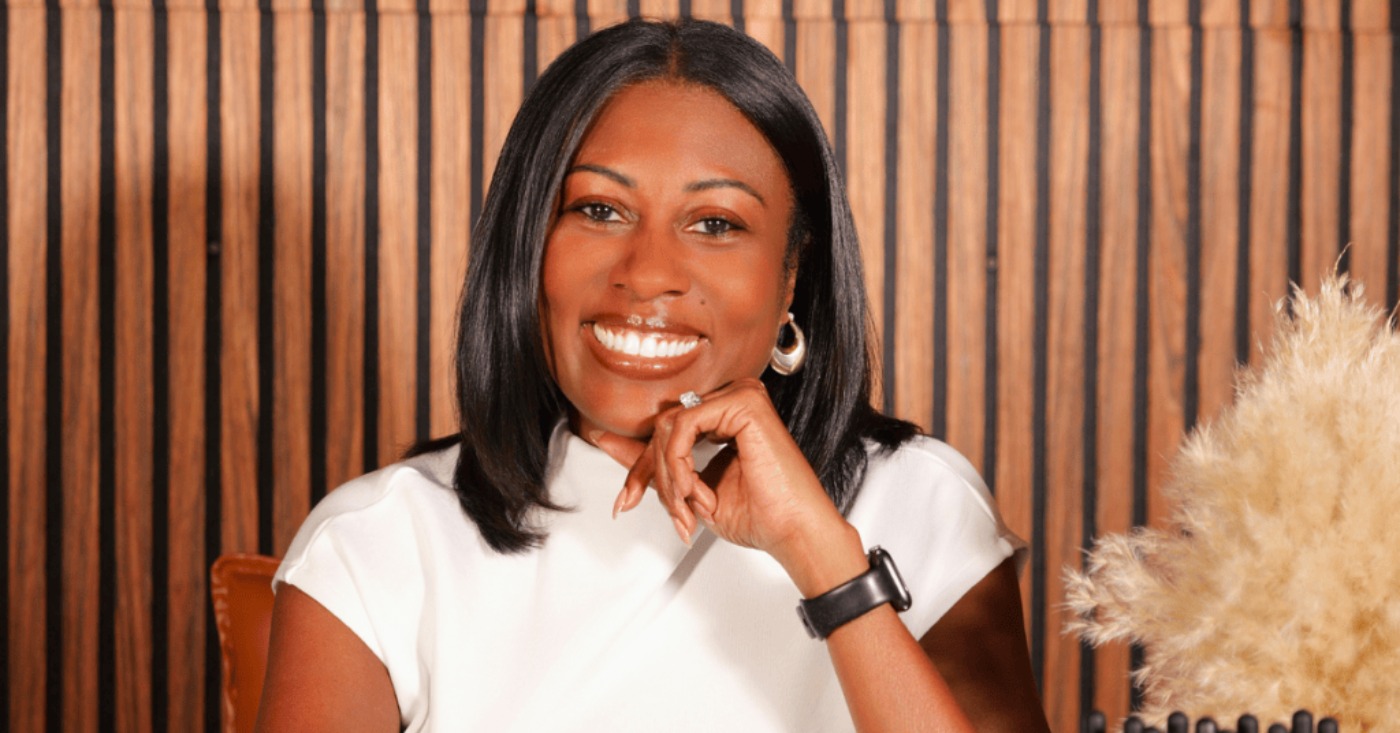
For Jamika Phillips, getting your nails done should feel like more than another appointment squeezed onto an already crowded calendar.
She wanted a place where the person doing your nails knows your name, remembers what you drink, what colors you like, and maybe even what was happening in your life the last time you sat in their chair.
“I kind of wanted to be the ‘Cheers’ of nail salons,” Phillips said. “I wanted clients to be able to have a community where they could come and know their nail techs, know that they were getting quality care with their nails, and know that we would give them education.”
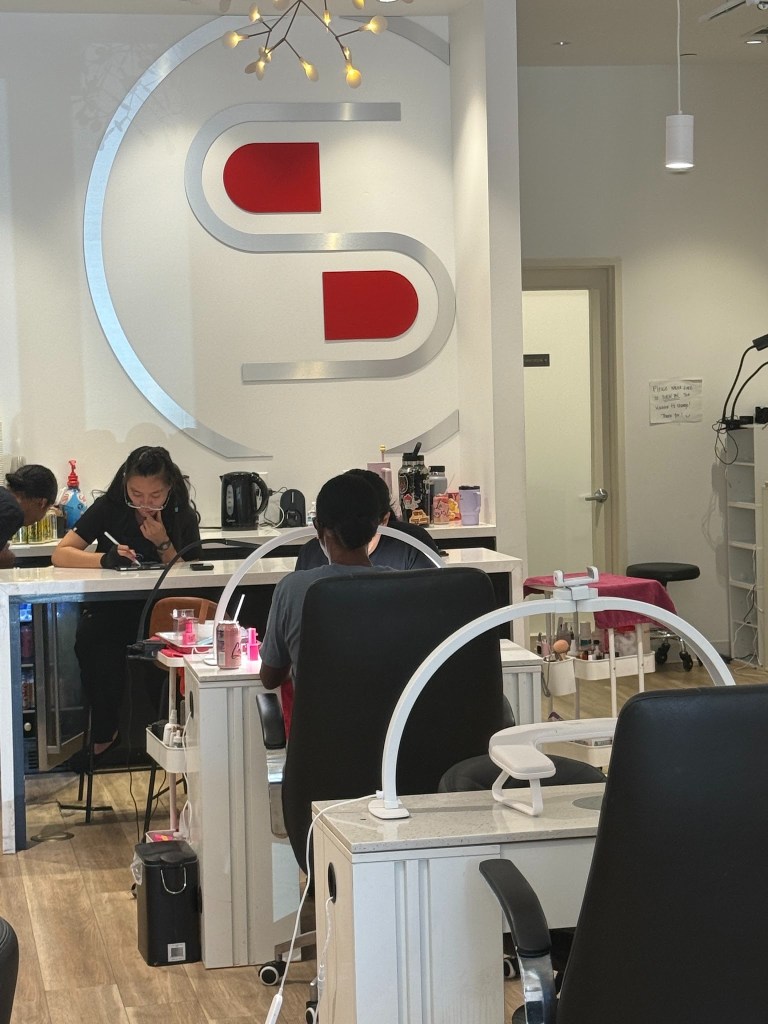
That vision became Shades The Nail Bar, the Sienna-area salon Phillips opened in January 2022 after leaving a career that had nothing to do with the beauty industry.
A dream decades in the making
Phillips spent more than 20 years in corporate America, working in software engineering and global process management. Her background is in computer science, but the idea of owning a nail salon wouldn’t go away.
“I have notes back from probably 2000 where I would think about the names of the salons that I wanted,” Phillips said. “I still have these pages, and I look back at them and thank God for them every day.”
While still working full time, Phillips enrolled in manicurist school, working her corporate job during the day and attending classes at night and on Saturdays until she earned her license.
“I would work from 9 to 5. I would go to school from 5 to 9 Monday through Friday, on Saturdays from like 8 to 2,” she recalled.
“There were a lot of people that said, ‘Are you sure you want to do this?’…’ `There’s a lot of competition’… ‘Typically, not a lot of Black people own nail salons.’ I refused to let that stop me.”
Jamika Phillips
After moving to Houston with her husband, Phillips prepared to open a salon in the city. She had signed a letter of intent and was about a week away from signing a lease when the COVID-19 pandemic hit.
“I thank God I did not sign the lease,” Phillips said.
The setback redirected her closer to home. While driving through Sienna, where her family lives, Phillips spotted an available space, pulled over, and called the number. The space was available. Shades The Nail Bar was on its way.
Creating a different kind of nail salon

Phillips knew she was entering a crowded industry, but she also saw an opportunity as a Black woman entering a business where few salon owners looked like her.
“There were a lot of people that said, ‘Are you sure you want to do this?’” she said. “There’s a lot of competition. There are nail salons every two miles from each other. Typically, not a lot of Black people own nail salons.”
Instead of discouraging her, Phillips said the skepticism became “ammunition” to keep going.
“Black women spend tons of money in the nail care industry,” Phillips said. “So it was something that I said, we got to do this.”
Even the name Shades was intentional.
“I wanted shades to represent not just the nail polish colors, but I wanted it to represent different shades of nail technicians as well as clientele,” she said.
Today, her staff includes Black, Hispanic, and Asian nail technicians, reflecting the diverse community the business serves.
The salon is also acrylic-free, offering alternatives including builder gel, polygel, and Gel-X. Phillips researches products and often tries them herself before introducing them to clients.
“I’m always looking at new ways to make Shades different.”
Those differences extend beyond nail services. Shades offers complimentary beverages, cleans clients’ rings during appointments, and emphasizes sanitation and nail health.
@shadesthenailbar 50 looks GOOD on you, Lolita! 🥂✨💅🏾 We had the pleasure of being part of Lolita’s 50th birthday celebration, and hearing her share her experience at Shades made it even sweeter. ❤️ There’s something special about celebrating a milestone with a little self-care, beautiful nails, and GOOD energy. Thank you, Lolita, for choosing Shades to be part of such a special birthday. Here’s to 50 and FABULOUS! 🎂✨ Celebrating something special? Come celebrate with us. Book now at ShadesTheNailBar.com 📍 9101 Sienna Crossing Dr., Suite 160 Missouri City, TX 77459 #ShadesTheNailBar#50thBirthday#BirthdayNails#MissouriCityNails#SiennaTX#HoustonNails#BirthdayCelebration♬ original sound – Shades The Nail Bar
But Phillips said its biggest distinction is the relationships.
“We’ve seen them have babies. We’ve seen them lose their babies. We’ve seen them lose their parents. We’ve seen marriages, divorces,” Phillips said. “I mean, we are there for them.”
Staff members send cards and cookies during important moments and often know a regular client’s preferred drink before the client asks.
“We really do try to build and bond a relationship with our clientele so that they know that, hey, we are here for them,” Phillips said.
Shades also supports local schools, churches, and Fort Bend-area charitable efforts.
Corporate lessons meet entrepreneurship
Phillips may have traded software engineering for nail polish, but she didn’t leave her corporate experience behind. She said the leadership, teamwork, and organizational skills she developed during more than two decades in corporate America became the foundation for running Shades.
“I can’t say that I was an entrepreneur by trade,” she said. “A lot of those things — the leadership, the teamwork, the organizational skills — all those things were built over my corporate career.”
Entrepreneurship brought its own lessons, from finding vendors who understood her vision to keeping detailed financial records, building the right team, and maintaining strong customer service.
Phillips credits her husband and children with supporting her through missed family dinners and soccer games. She also credits mentor LeeVera Smith, a business adviser with the Small Business Development Center, with helping her develop the business plan that became Shades’ foundation.
“Jamika is one of those people who wants to learn everything to bring her customers the best experience,” Smith said. “I’m supposed to be her mentor, but I learn so much from her.”
Phillips’ girlfriends also pitched in, proofreading her website, organizing supplies, offering feedback, and talking her through the inevitable difficult days.
Because Phillips knows better than most that dreams don’t always arrive on schedule. Sometimes they sit quietly in notebooks for 20 years before you finally decide it’s time to bet on yourself.
Based on reporting by Houston Defender.
Art
Inside 820 S. Michigan: New Book Captures the Lost World of Ebony and Jet
CHICAGO DEFENDER — A new photography book offers a rare look inside the former Johnson Publishing Company headquarters at 820 S. Michigan Ave., the longtime home of Ebony and Jet magazines. Titled 820 Ebony/Jet: Visions of the Johnson Publishing Company, an American Icon, the book features photographs by Barbara Karant documenting the building’s interiors.

A new photography book is giving readers a rare look inside one of the most important buildings in Black media history.
820 Ebony/Jet: Visions of the Johnson Publishing Company, an American Icon, published Tuesday by MW Editions, features photographs by Chicago photographer Barbara Karant documenting the former Johnson Publishing Company headquarters at 820 S. Michigan Ave., the longtime home of Ebony and Jet magazines. Pasted markdown
The 240-page book preserves the building’s striking interiors, many of which no longer exist in their original form, while also examining the larger cultural legacy of Johnson Publishing Company and its influence on Black media, design, photography and American culture.
Designed by architect John W. Moutoussamy and completed in 1972, the building was the first, and remains the only, high-rise in downtown Chicago designed by an African American architect. Built for publisher John H. Johnson, the headquarters became a physical expression of the ambition and influence of one of the nation’s most important Black-owned media companies.
While the building’s exterior reflected Moutoussamy’s restrained modernist style, the inside told a very different story.
Designers Arthur Elrod and William Raiser filled the headquarters with bold colors, geometric patterns, mirrored surfaces, rich textures and dramatic materials across 11 floors. The result was a workplace that looked unlike the traditional corporate offices of its era. Pasted markdown
Karant began photographing the building after Johnson Publishing sold the property in 2010 and relocated in 2012. Between 2013 and 2015, and again in 2018, she documented the largely vacant interiors after employees and much of the furniture had been removed.
What remained were the colors, patterns and architectural details that had helped define the company’s visual identity.
Her photographs capture spaces ranging from the cafeteria’s orange, purple and gold designs to Eunice Johnson’s cream-and-honey office, mirrored dressing rooms and the executive floor’s expansive views of Lake Michigan and Grant Park. Pasted markdown
Among the building’s most memorable spaces was the famed Ebony Test Kitchen.
Known for its vivid colors, psychedelic patterns and distinctive cabinetry, the kitchen became a visual reflection of Ebony magazine’s influence on food, lifestyle and Black culture. Karant photographed the kitchen as part of the larger architectural story of the headquarters. Pasted markdown
“The building was almost like a portrait of Johnson Publishing Company itself,” Karant said. “Even after the people and furnishings were gone, the colors, patterns, textures and spaces still conveyed the creativity, confidence and extraordinary cultural presence of the company.”
The photographs have taken on even greater significance because much of what Karant documented has since disappeared.
Following the building’s conversion, substantial portions of the original interiors were removed. The Ebony Test Kitchen was dismantled and preserved separately, making Karant’s images one of the most extensive visual records of how the headquarters looked during Johnson Publishing Company’s decades on Michigan Avenue. Pasted markdown
The book also includes photographs of sculptor Richard Hunt’s Expansive Construction, a work commissioned for the building’s lobby, as well as images of the company’s in-house photography studio and archival views of the original interiors.
But 820 Ebony/Jet goes beyond architecture.
The book includes a foreword by photography historian Deborah Willis, six scholarly essays and personal reflections from former Johnson Publishing Company employees. Together, the contributions explore the company’s role in Black visual representation, media, photography, art and design, while offering firsthand accounts of what it was like to work inside the building. Pasted markdown
For generations, Ebony and Jet helped shape how Black America saw itself and how the country saw Black America.
The magazines documented everything from politics and the civil rights movement to fashion, entertainment, family life and culture. Johnson Publishing Company also became an influential force in photography, beauty, design and popular culture.
That legacy extended well beyond the pages of its magazines.
The new book examines Johnson Publishing Company’s continuing influence on artists including Theaster Gates, Hank Willis Thomas, Kwame Brathwaite, Lorna Simpson, Martine Syms and David Hartt. Pasted markdown
For Chicago, the book serves as both an architectural record and a cultural archive. It preserves a place where Black entrepreneurship, media, art and design converged at a scale rarely seen before or since.
820 Ebony/Jet: Visions of the Johnson Publishing Company, an American Icon is available now from MW Editions. The hardcover volume includes 150 photographs and is priced at $65. Pasted markdown
Karant is also scheduled to present the book during Modernism Week at the Palm Springs Art Museum on Feb. 15, 2027, where she will discuss the connection between the Johnson Publishing Company headquarters and the design legacy of Arthur Elrod and William Raiser.
The post Inside 820 S. Michigan: New Book Captures the Lost World of Ebony and Jet appeared first on Chicago Defender.
Based on reporting by Chicago Defender.


Optimize Your Seating: Essential Household Setup Guide #shorts

Brake Pedal Test Drive: Smooth Stops for Your Truck! #shorts

Life Lessons Learned Through Adversity: My Journey #shorts

From Claflin Alum to ColorBlind Artist

Turning Abolitionist Design Research Into Real-World Business #shorts

Black Journalists: Community, Excellence, and Lifting Up #shorts

NFN Exclusive: Muslims in AI

NFN Live presents The State of the Westward

Alliance of Civil Rights Orgs launch Week of Action; National Black Man Voter Day set for Oct. 24

MC’ing a Gala: A Night of Love & Black Excellence #shorts

The Youngest American Killed in the Vietnam War

Passing for White, Fighting for Black America: The Courage of Walter White

OP-ED: Haiti TPS: Have We Lost Sense of Humanity?

NFL: Week Two Recap | Jalen Hurts did not fold; Caleb Williams exits game with injury

Remembering Chauncey Bailey as Student Journalists Face Threats to Truth-Telling

Peter Magubane: a Camera Against Apartheid

Mayor Lee Announces $1 Million Kaiser Permanente Grant for Pilot Program to Address Homelessness, Clean Up Public Spaces throughout Oakland

OP-ED: How Head Start Also Helps Parents

Community Action Group ‘Friends of Zakiya’ Ask Sheriff for Time

Poll: Becerra Widens His Lead Over Hilton; Californians Split on Wealth Tax
Optimize Your Seating: Essential Household Setup Guide #shorts
Brake Pedal Test Drive: Smooth Stops for Your Truck! #shorts
Life Lessons Learned Through Adversity: My Journey #shorts
From Claflin Alum to ColorBlind Artist
Turning Abolitionist Design Research Into Real-World Business #shorts
Black Journalists: Community, Excellence, and Lifting Up #shorts
NFN Exclusive: Muslims in AI
NFN Live presents The State of the Westward
MC’ing a Gala: A Night of Love & Black Excellence #shorts

Entrepreneurship Needs a Plan—and a Life Beyond Work #shorts
-
 BlackPressUSA1 week ago
Latinas Deserve Equal Pay. Unions Help Make It Happen.
-

 Black Press5 days ago
All Skinfolk Ain’t Kinfolk
-

 Black Press4 days ago
Oakland Awarded More than $14 Million in State Funding
-

 African American News and Issues3 days ago
Black History: Gladys West Mathematics Helped Make GPS Possible
-
 Black Press4 days ago
Jendayi Arrest Raises Community Concerns Regarding Sheriff’s Chain of Command
-

 Black Press4 days ago
Allen Temple Baptist Church Hosts Free Prostate Cancer Screenings on Oct. 17
