
Featured
Is the FBI’s New Focus on “Black Identity Extremists” the New COINTELPRO?


By Rep. Cedric L. Richmond (D-LA-02) (Chairman, Congressional Black Caucus)
If you’ve been to a Black Lives Matter rally or tweeted the related hashtag recently, then the FBI might consider you a “Black Identity Extremist,” at least according to a report published by one of the nation’s top law enforcement agencies.
In October, an internal FBI report titled “Black Identity Extremists Likely Motivated to Target Law Enforcement Officers,” was leaked to the public, raising concerns of activists, civil rights groups, and policy makers, including myself and other members of the Congressional Black Caucus.
The report concludes, based on a limited total number of incidents, that:
“…it is very likely Black Identity Extremist (BIE) perceptions of police brutality against African Americans spurred an increase in premeditated, retaliatory lethal violence against law enforcement and will very likely serve as justification for such violence. The FBI assess[es] it is very likely this increase began following the 9 August 2014 shooting of Michael Brown in Ferguson, Missouri, and the subsequent Grand Jury November 2014 declination to indict the police officers involved.”
These unsubstantiated conclusions are troubling, especially in the context of the FBI’s history of targeting African American activists and leaders, including Martin Luther King, Jr., and members of the Congressional Black Caucus. But what is more troubling is the FBI’s creation of the term “Black Identity Extremist” and the definition of it.
According to the report, Black Identity Extremists are individuals who, “in response to perceived racism and injustice,” commit violent acts in the name of those beliefs, and, in some cases, desire a “separate Black homeland…social institutions, communities, or governing organizations within the United States.”
The report continues: “The mere advocacy of political or social positions, political activism, use of strong rhetoric, or generalized philosophic embrace of violent tactics ‘may not’ (emphasis mine) constitute extremism, and may be constitutionally protected.”
I think the words “may not” leave people who organize under the Black Lives Matter movement and other well-meaning African American activist groups vulnerable to the type of monitoring and manipulation that the FBI engaged in as part of COINTELPRO, a counter intelligence program that unfairly and, in some cases, unlawfully destroyed movements, careers, relationships, and lives.
I’m also concerned about the FBI’s definition of “extremism.” The question becomes: What does the FBI consider extreme? The report never provides an answer to that question and further complicates the issue on page 4 in talking about the case of Micah Johnson, the African American man who shot 11 police officers in downtown Dallas, Texas, on July 7, 2016:
“Johnson searched and liked social media pages of BIE and Black separatist groups, and had been ousted from a local BIE group for being too radical, according to an open source news article.”
I agree that Johnson was an extremist, but here are some questions I have: What group kicked him out? Was it Black Lives Matter, a non-extremist group? Does the FBI consider this group representative of extremism? If so, then its definition of Black Identity Extremists is extreme and ineffective. Also, what does the FBI mean by “perceived racism and injustice” and “perceived past police brutality incidents?” Does the FBI believe racism, injustice, and police brutality don’t exist?
Here are some other questions I have: Why is one of the most powerful federal law enforcement organizations in the nation relying on news articles to figure out whether Johnson was kicked out of a local Black Identity Extremist group? Also, if this is a problem that’s on the rise as the FBI indicates, why isn’t clear and convincing incident data illustrating this included in the report? Finally, is the FBI devoting as much time on this issue as it is on White extremism? If they are, then they are not spending their time wisely when it comes to domestic extremists.
According to a 2015 report by the Anti-Defamation League, when it comes to extremist movements in the United States:
“…White supremacists are by far the most violent, committing about 83 percent of the extremist-related murders in the United States in the past 10 years and being involved in about 52 percent of the shootouts between extremists and police. White supremacists also regularly engage in a variety of terrorist plots, acts and conspiracies.”
White supremacist violence is even more concerning in the context of the 2016 election, the current political climate, and President Trump’s decision after zehite supremacist violence in Charlottesville, Va., to morally equate zehite supremacists with anti-racist protesters. In regard to the 2016 presidential election specifically, the Southern Poverty Law Center found:
“…in the 34 days after the election, there were 1,094 incidents involving bias and almost 80 percent of them were anti-immigrant (315), anti-Black (221), anti-Muslim (112), swastika (108), White nationalist (47), anti-Semitic (33) or involved the KKK (7). Approximately 37 percent of the 1,094 incidents, directly referenced either then President-elect Donald Trump, his campaign slogans, or his infamous remarks about sexual assault.”
A few weeks after the FBI’s “Black Identity Extremists” report was leaked, the Congressional Black Caucus met with Facebook about ads that Russian operatives purchased through the social media platform to target the Black Lives Matter movement. During the meeting, the caucus explained to Facebook that their social media platform plays a role in how African Americans are perceived across the country and around the world. In this case, the perception Facebook played a role in creating was negative and could have had life and death consequences.
The FBI’s “Black Identity Extremist” report is an example of how perception becomes reality and affects people’s lives on the ground. We don’t need Facebook and other social media platforms playing a role in creating negative perceptions of African Americans and we don’t need the FBI and other law enforcement organizations buying into these perceptions. In response to a letter from the Congressional Black Caucus, FBI Director Christopher Wray agreed to meet. We hope he walks away from the meeting with this understanding. We also hope he’s able to answer our questions.
Congressman Cedric L. Richmond (D-LA-02) is the chair of the Congressional Black Caucus. He represents the 2nd District of Louisiana, which includes parts of New Orleans and Baton Rouge. You can follow him on Twitter at @RepRichmond and you can follow the CBC on Twitter at @OfficialCBC.







Black History
Listening as a Lifeline: A Doula’s Witness to Black Maternal Health
OAKLAND POST — Maternal mortality and pregnancy-related mortality use different time frames and methods and are not interchangeable. Finalized 2024 CDC data recorded 649 maternal deaths nationally. The overall rate was 17.9 deaths per 100,000 live births, but for non-Hispanic Black women it was 44.8, compared with 14.2 for White women and 12.1 for Hispanic women.
Word Count: 1058
Note: Client A, B & C, names are withheld for privacy; these accounts reflect my recollections as theirDoula.
Client A rocked her hips on a birthing ball, surrounded by pale wood and warm textiles in a softly lit Scandinavian-style office. I was her doula through a Southern California maternal health company combining nurse-led care, technology, and wraparound support.
She was a healthy Black woman in her thirties. Her baby girl was doing well; her partner took notes as we discussed labor and advocacy.
Then we turned to their chosen hospital. I knew it well—and remembered a phrase from another client’s experience: “Policy of Sovereignty.”
Client B had been told she needed a repeat cesarean as a precaution, though the reasoning was unclear. Her obstetrician, who performed her first cesarean two years earlier, had assured her throughout pregnancy that she was healthy, healed, and ready for a vaginal birth. We asked staff to review her chart, consult her obstetrician, and reconsider immediate surgery. Instead, they invoked the “Policy of Sovereignty.”
The physician on duty, we were told, had final authority, regardless of her established care plan. I asked whether an ultrasound or reassessing the baby’s position could offer clarity. Cesareans can be lifesaving. But were Client B’s history, informed consent, and circumstances guiding this decision—or was routine overriding individualized care? We kept asking for her obstetrician. Beneath every request was a deeper question: Was she being heard?
The Numbers Behind the Stories
Statistics arrive in clean columns. The experiences behind them do not.
Maternal mortality and pregnancy-related mortality use different time frames and methods and are not interchangeable. Finalized 2024 CDC data recorded 649 maternal deaths nationally. The overall rate was 17.9 deaths per 100,000 live births, but for non-Hispanic Black women it was 44.8, compared with 14.2 for White women and 12.1 for Hispanic women.
In California, Black birthing people experienced 56.5 pregnancy-related deaths per 100,000 live births during 2020–2022—3.8 times the White rate and four times the Asian rate.
As a doula serving Los Angeles and San Bernardino Counties, I see faces behind those numbers. I remember concerns raised softly, then firmly, then desperately. I am tired of watching Black families enter spaces meant to protect them, only to discover they must defend themselves while laboring, bleeding, trembling, or recovering.
Returning to Client A
Client A’s labor stretched nearly 48 hours. As her condition worsened, she, her partner, and I asked whether a cesarean should happen sooner. A provider questioned my place as a doula, then said she was next.
Six more hours passed.
She entered surgery visibly ill with a serious uterine infection, her baby malpositioned and stuck. Her partner later recalled the provider saying, “This baby would never have made it through the birth canal.”
Those words landed like a blow. Our urgency had been treated as ignorance. With Client B, we questioned why surgery was inevitable. With Client A, why it was delayed. Doula advocacy is not about one kind of birth. It is about informed consent, individualized care, and timely action. Hospital routine should never outweigh the person carrying the risk.
Survival Cannot Be the Standard
The Black maternal health crisis includes unequal care, untreated conditions, racial bias, delayed referrals, poor communication, and inadequate postpartum support. It is about birth plans respected only until a hospital becomes less busy and postpartum care that asks whether a mother survived, not whether she has what she needs to recover.
Survival cannot be the standard. Technology can support care, but it cannot replace human connection. An algorithm cannot detect fear in a patient’s eyes, and a mission statement alone cannot ensure adequate staffing or culturally responsive care.
The Story of Client C
Before I arrived, I heard the chaos through Client C’s phone. Staff struggled to locate her baby’s heartbeat on an external monitor as her fear and blood pressure rose. I pleaded for an internal electrode before surgery.
“There’s not enough time,” a nurse said.
“I would like to wait for my doula,” Client C called out.
But she was medicated, hurried through consent, and wheeled away while I listened.
In the operating room, after a shift change, another nurse placed an internal electrode and said, “The previous monitor wasn’t working.”
No one responded.
According to her father, the obstetrician avoided eye contact: “We need to move forward.”
Surgery may still have been necessary; that was not mine to determine. But if faulty equipment helped create the emergency, the family deserved acknowledgment and explanation—not silence. No family should have to wonder whether major surgery followed an unavoidable crisis or a machine failure no one recognized in time.
From Prevention to Accountability
After supporting nearly 100 families, I have learned that danger often begins before admission. I have urged clients to seek care—and heard why they feared returning: dismissed pain, harsh words, shame for asking questions.
Care cannot be holistic where Black families do not feel safe enough to speak or return. Representation matters, but providers of color cannot repair inequity alone. They need adequate staffing, mentorship, culturally responsive training, reliable equipment, and colleagues that are reflective of all the aforementioned. It’s not the Black providers job to care for just the Black patients, everyone should have the same goal.
The Momnibus Act, California’s Medi-Cal doula benefit, the Transforming Maternal Health Model and the Perinatal Equity Initiative require more than promises; they need sustained funding, reliable reimbursement and accountable implementation.
Birth should be sacred. Yet too many Black birthing people arrive carrying the burden of proving their pain is real. A doula can listen, educate, comfort, and advocate—but cannot repair a system that refuses to listen. The true measure of progress is what happens when a Black birthing person says, “Something is wrong.”
Are they believed? When equipment fails, is that failure acknowledged? Do families leave not merely alive, but safe, respected, supported, and whole?
Until those answers are consistently yes, California’s maternal health success story remains unfinished.
About the Author
Antoinette Stewart-Eneh is a mother of two, holistic maternal wellness advocate, and birth and postpartum doula who has supported families since 2019. She serves as program operations coordinator for Frontline Doulas, a volunteer client coordinator with the Joy in Birthing Foundation and a childbirth educator in South Los Angeles. She is studying to become a midwife and lactation educator.
Black Press
New Protections for Ticket Buyers: Gov. Newsom Signs Assemblymember Isaac Bryan’s Bill
OAKLAND POST — Assembly Bill 1349 expands state regulation of original ticket sellers, resellers and online resale marketplaces. The law targets deceptive sales practices, ticket-buying software and speculative listings — tickets advertised for sale by sellers who do not possess them or have authorization to sell them.
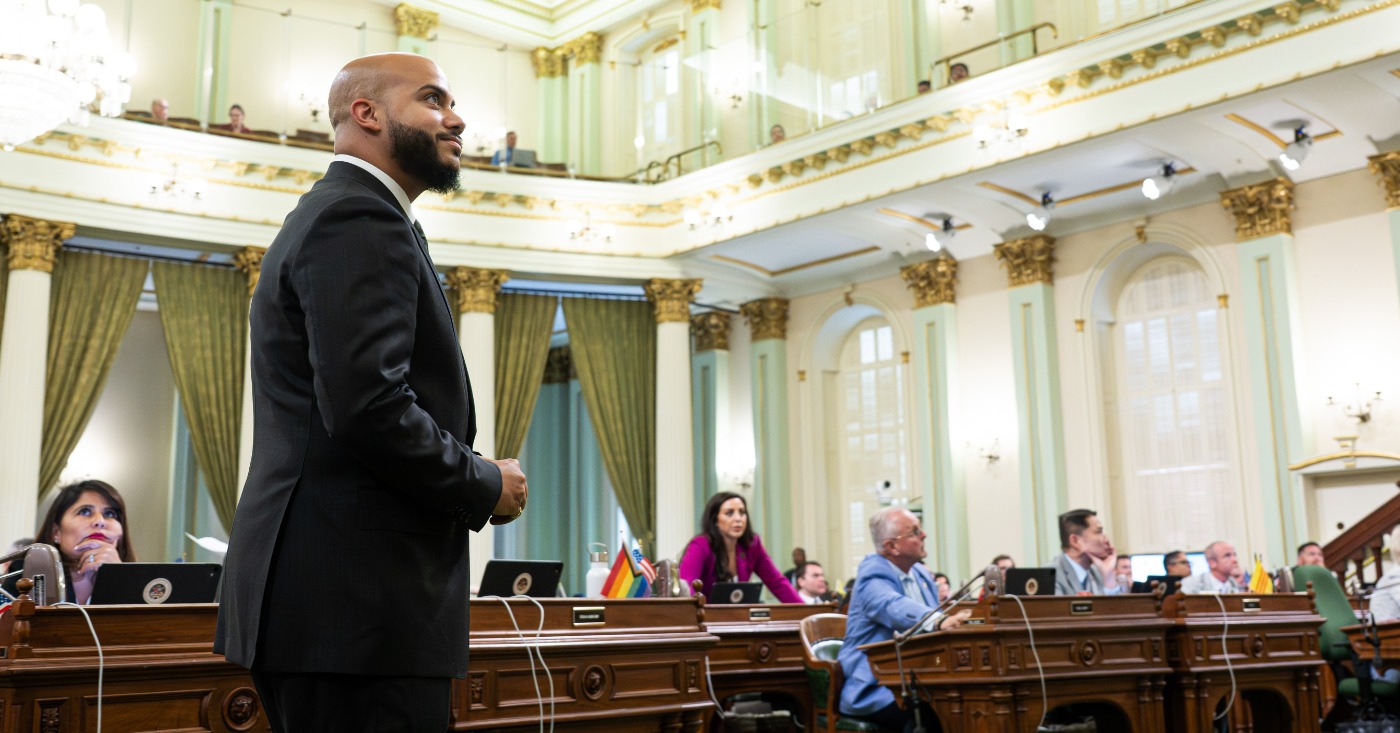
Gov. Gavin Newsom signed legislation on Sept. 27 authored by Assemblymember Isaac Bryan (D-Ladera Heights) that strengthens consumer protections for Californians purchasing tickets to concerts, sporting events and other live entertainment.
Assembly Bill 1349 expands state regulation of original ticket sellers, resellers and online resale marketplaces. The law targets deceptive sales practices, ticket-buying software and speculative listings — tickets advertised for sale by sellers who do not possess them or have authorization to sell them.
“Buying a ticket shouldn’t come with hidden risks or unfair practices,” Newsom wrote on social media after signing the measure.
Under AB 1349, ticket sellers are prohibited from listing tickets before they have been officially released unless they have authorization or a legally enforceable right to receive them. Online marketplaces must also take reasonable steps to prevent speculative ticket sales on their platforms.
The law prohibits sellers from using bots, multiple accounts, email addresses or internet protocol addresses to circumvent ticket limits, presale restrictions, electronic queues and other controls. It also bans websites and advertisements designed to mislead buyers into believing they are purchasing tickets from an authorized seller, venue or event organizer.
Sellers who violate certain provisions and fail to provide a promised ticket may be held liable for twice the ticket’s contracted price. Buyers may also recover nonrefundable expenses incurred while attempting to attend an event, along with reasonable attorney’s fees and court costs.
Pastor Tecoy Porter Sr., president of the National Action Network’s Sacramento chapter, said the law establishes needed accountability.
“Buying a ticket to a concert or show shouldn’t mean entering a marketplace where the rules are stacked against you. This year, we worked with a coalition of consumers, civil rights advocates, community groups, and businesses to make AB 1349 stronger. Consumers deserve enforceable rules that protect them. We thank Assemblymember Bryan for his leadership, and we will keep working to make ticketing fair for every Californian.”
Jose L. Barrera, national vice president for the Far West Region of the League of United Latin American Citizens, also praised the measure.
“Californian families deserve certain protections when they buy tickets. Assemblymember Bryan listened to communities across California and delivered a bill that puts fans first. We thank him and Governor Newsom for making it law.”
Black Press
‘We Don’t Talk Trash — We Pick Up Trash!’
OAKLAND POST — Following the cleanup, Jones talked with Richard Johnson, CEO of Formerly Incarcerated Giving Back (FIGB). Johnson said he wanted to bring formerly incarcerated nonprofits together not only to help clean up the city, but also to bring youth with them to mentor the next generation.
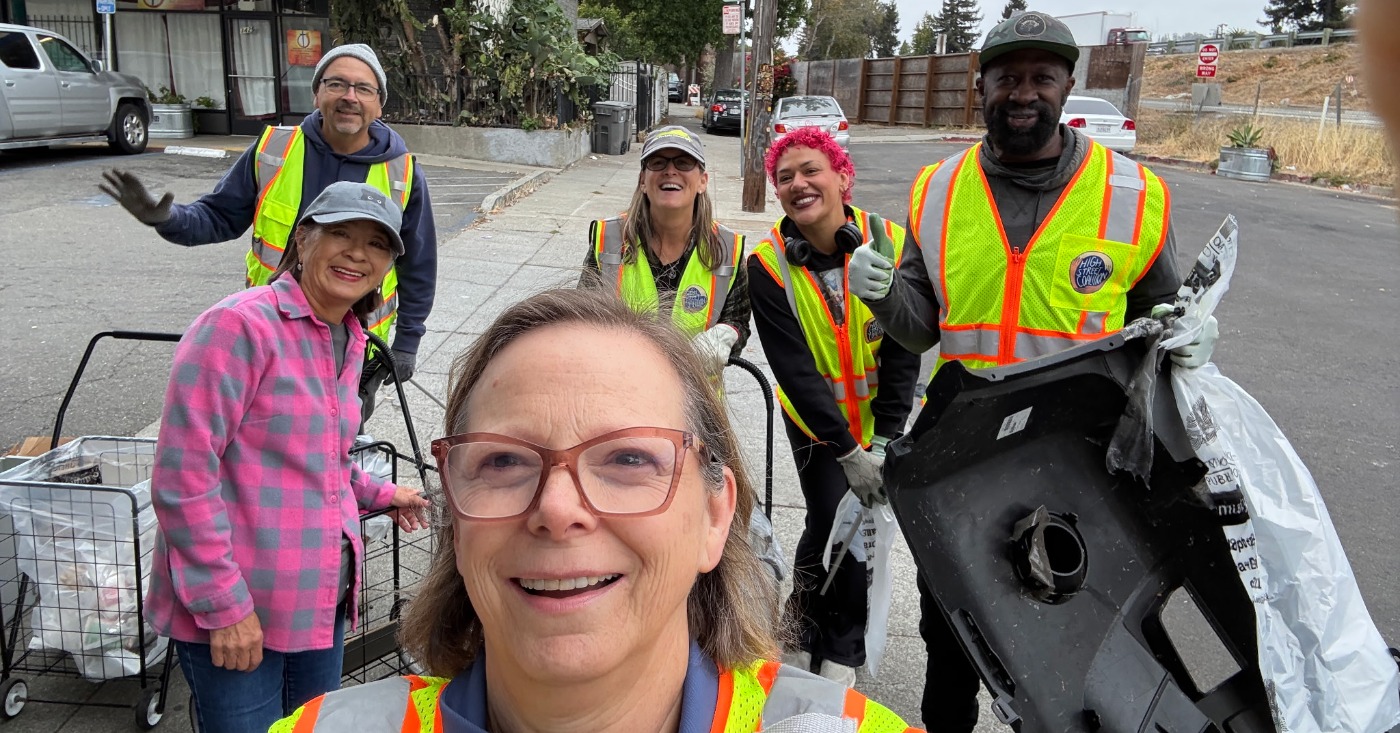
When community activist Jonathan “Fitness” Jones heard concerns from senior residents in East Oakland about illegal dumping, recurring trash issues and the health hazards they created, he decided that watching the problem was not enough.
Jones, a member of the African American Sports and Entertainment Group (AASEG) and an Oakland Private Industry Council board member, learned that seniors were frustrated by the recurrence of illegal dumping even when trash has been cleared. Recurring trash can contribute to unsanitary conditions, attract rodents and leave residents feeling that their neighborhoods are being overlooked.
On Saturday, Sept. 26, Mr. Jones joined High Street Coalition volunteers at Dick’s Donuts near High Street and Quigley Street, spending the morning picking up trash and helping beautify the surrounding neighborhood.
High Street Coalition volunteers organize community cleanups on the second and fourth Saturdays of each month.
Following the cleanup, Jones talked with Richard Johnson, CEO of Formerly Incarcerated Giving Back (FIGB). Johnson said he wanted to bring formerly incarcerated nonprofits together not only to help clean up the city, but also to bring youth with them to mentor the next generation.
Jones and Johnson discussed developing a community model that brings formerly incarcerated individuals, Oakland youth and nonprofit organizations together to clean and beautify the city.
The vision is to create opportunities for formerly incarcerated adults to take leadership roles while mentoring young people through hands-on community service. The program could also provide youth with opportunities to develop leadership skills, learn teamwork and responsibility, and potentially gain employment experience.
The goal is bigger than removing trash from the streets. It is about restoring neighborhoods while building relationships between generations and creating opportunities for people with lived experience to give back to their communities.
Jones believes the message is simple:
“We don’t talk trash, we pick up trash.”
The proposed collaboration seeks to bring Oakland nonprofits, formerly incarcerated leaders, youth, residents, businesses and community organizations together around a shared purpose — cleaning the town, beautifying Oakland and building a stronger community together.
Black Press
Zakiya Jendayi Arrested, Locked Out of Home by Sheriff’s Deputies
OALAND POST — On Tuesday, deputies followed Jendayi as she left her residence of 13 years to file documents in her case at the Appellate Court. Deputies arrested her upon arrival and transported her to Santa Rita Jail.

Yesterday, more than 10 Alameda County Sheriff’s deputies arrived to take possession of Zakiya Jendayi’s home on behalf of a court-appointed administrator. Jendayi was arrested at the courthouse and transported to Santa Rita Jail around the same time.
Jendayi, who has been embroiled in a probate court battle to retain the inheritance bestowed on her by a longtime friend and colleague who passed away in 2013, had received a notice of eviction last month.
With help from neighbors, friends and clergy, she was able to fend off the eviction from 3614 Randolph Ave. in Oakland and even obtained a reprieve when her bid to file bankruptcy was approved by a county court.
But Philip Campbell, the court-appointed administrator, had already placed Jendayi’s home in his name in October 2025.
On Tuesday, deputies followed Jendayi when she left her residence of 13 years to go to the Appellate Court to file documents in her case. Deputies arrested her upon arrival and transported her to Santa Rita jail.
Undersheriff April Luckett-Fahini said Jendayi was arrested for “safety reasons.” At this time, it is unknown what charges were used for the arrest.
In Jendayi’s absence, Campbell came to her residence accompanied by deputies, had the property taped off with yellow crime tape, and had the locks changed.
Afterward, Campbell requested a police escort to his car amid several angry neighbors who had been advocating that officials pause the eviction pending Jendayi’s appeal.
“Zakiya Jendayi is a respected Black elder in our community,” said Alameda County Supervisor Nikki Fortunato Bas, who has been working with Jendayi to prevent her eviction. “It’s outrageous that she was arrested. There needs to be more justice and equity in our probate system.”
Black Enterprise
Leading the Way in HBCU Research
HBCUs are exceeding expectations in research and STEM, outperforming their share of higher education enrollment and graduation rates. Learn more from Dr. Jelani M. Favors of UNCF’s FDPRI.

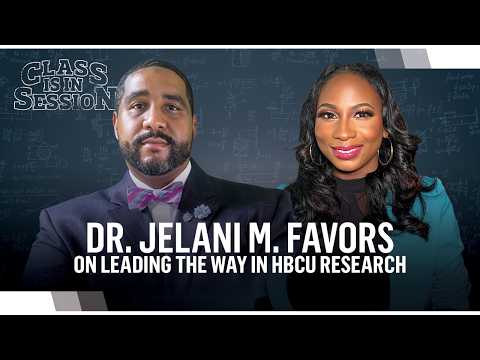
HBCUs continue to outperform expectations as engines of opportunity; enrolling and graduating students at rates that far exceed their share of higher education, particularly in STEM fields. That’s one of the major findings of a new report, “Still Punching Above their Weight,” released by UNCF’s Frederick D. Patterson Research Institute (FDPRI). We’ll hear from FDPRI’s Vice President –an HBCU historian, scholar, and N.C. A&T Aggie– Dr. Jelani M. Favors, on the work of FDPRI in being a leading research voice and authority on HBCUs and keep telling the valuable stories of these historic institutions.
Featured
61 years since Selma, Houston leaders say the bridge remains to be crossed
61 years after Selma, Houston leaders say the fight for equality continues. The issues that sparked the marches still impact Black Americans today.
It has been 61 years since the Selma marches. But political leaders in Houston say that the issues protesters were marching for still plague the lives of Black Americans.
Visit Our Website
Read more stories by our team
https://defendernetwork.com/category/news/opinion/
Sign-up for the Top 5 newsletter
Donate/ Support Our Work


Listening as a Lifeline: A Doula’s Witness to Black Maternal Health

New Protections for Ticket Buyers: Gov. Newsom Signs Assemblymember Isaac Bryan’s Bill

‘We Don’t Talk Trash — We Pick Up Trash!’

Zakiya Jendayi Arrested, Locked Out of Home by Sheriff’s Deputies

2027 Chevy Bolt EV: Is It Worth Under $30K? #shorts

Leading the Way in HBCU Research

Smooth Ride! Car Suspension & Comfort Tested #shorts

61 years since Selma, Houston leaders say the bridge remains to be crossed

Here is what you need to know about finding unique white elephant gift ideas that everyone wants to steal

Check out these proven ways to increase property value for commercial business locations

Latest Massacre in Haiti Reveals Cruelty U.S. Deportations

Black Americans Have Doubts About the U.S. Food System

When Praises Go Up: SUGC Nominated for Prestigious Stellar Award.

Booked and Unbound: The Legacy of Black Women’s Literary Circles

U.S. Sole Nation to Oppose U.N. Resolution Correcting Africa’s Size on World Maps

The Youngest American Killed in the Vietnam War

COMMENTARY: Big Mama Said ‘Don’t Let Grief Break the Bank’

U.S. Open Influencers Spark Backlash over Ring Lights, Filming as Gauff and Osaka Speak Out

Prostate Cancer is Twice as Likely to Kill Black Men. Talking to Your Doctor Could Help Save Your Life

Outnumbered: Elbert Cox’s Equation for Greatness
2027 Chevy Bolt EV: Is It Worth Under $30K? #shorts
Leading the Way in HBCU Research
Smooth Ride! Car Suspension & Comfort Tested #shorts
61 years since Selma, Houston leaders say the bridge remains to be crossed

Lutheran North Celebrates Homecoming With 40 to 19 Win Over Westminster Christian

Luxury Car Features: Harman Kardon & More! #shorts

Tuskegee Airmen Field Reopens in The Ville, Giving St. Louis Youth a Place to Grow

2027 Chevy Bolt: Worth $29,990? Hidden Flaws Revealed! #shorts

Kia Seltos Luxury Car Tech: Prestige Package Features Explained! #shorts

Serena Williams: The Beast Narrative & Black Womanhood #shorts
-
 Black History7 days ago
Remembering Chauncey Bailey as Student Journalists Face Threats to Truth-Telling
-

 Black Press4 days ago
OP-ED: Haiti TPS: Have We Lost Sense of Humanity?
-
 Black Press7 days ago
Poll: Becerra Widens His Lead Over Hilton; Californians Split on Wealth Tax
-
 Black History6 days ago
COMMENTARY: The Audacity of Joyce Beatty
-

 Black History6 days ago
Rulings Leave Questions Lingering in Nolan Wells Case
-
 Black History6 days ago
Baptist Minister Says Black Church Champions for Civil Rights to Reign but Hesitates to Let Black Women Lead
