
National
Baltimore Gets Bloodier as Arrests Drop Post-Freddie Gray


In this May 24, 2015, file photo, police pick up a pair of shoes after a double shooting in Baltimore. Residents in West Baltimore say they’ve been victims of excessive policing in this neighborhood where street crime and drug-dealing have been endemic. Now, one month after riots erupted in the wake of the death of Freddie Gray in police custody, homicides and shootings are up and those same residents feel like they’ve been abandoned and left to fend for themselves. (Colin Campbell/The Baltimore Sun via AP, File)
JULIET LINDERMAN, Associated Press
BALTIMORE (AP) — A 31-year-old woman and a young boy were shot in the head Thursday, becoming Baltimore’s 37th and 38th homicide victims so far this month, the city’s deadliest in 15 years.
Meanwhile, arrests have plunged: Police are booking fewer than half the number of people they pulled off the streets last year.
Arrests were already declining before Freddie Gray died on April 19 of injuries he suffered in police custody, but they dropped sharply thereafter, as his death unleashed protests, riots, the criminal indictment of six officers and a full-on civil rights investigation by the U.S. Justice Department that has officers working under close scrutiny.
“I’m afraid to go outside,” said Antoinette Perrine, whose brother was shot down three weeks ago on a basketball court near her home in the Harlem Park neighborhood of West Baltimore. Ever since, she has barricaded her door and added metal slabs inside her windows to deflect gunfire.
“It’s so bad, people are afraid to let their kids outside,” Perrine said. “People wake up with shots through their windows. Police used to sit on every corner, on the top of the block. These days? They’re nowhere.”
West Baltimore residents worry they’ve been abandoned by the officers they once accused of harassing them, leaving some neighborhoods like the Wild West without a lawman around.
“Before it was over-policing. Now there’s no police,” said Donnail “Dreads” Lee, 34, who lives in the Gilmor Homes, the public housing complex where Gray, 25, was chased down. “People feel as though they can do things and get away with it. I see people walking with guns almost every single day, because they know the police aren’t pulling them up like they used to.”
Police Commissioner Anthony Batts said his officers “are not holding back,” despite encountering dangerous hostility in the Western District.
“Our officers tell me that when officers pull up, they have 30 to 50 people surrounding them at any time,” Batts said.
Batts provided more details at a City Council meeting Wednesday night, saying officers now fear getting arrested for making mistakes.
“What is happening, there is a lot of levels of confusion in the police organization. There are people who have pain, there are people who are hurt, there are people who are frustrated, there are people who are angry,” Batts said. “There are people, and they’ve said this to me, ‘If I get out of my car and make a stop for a reasonable suspicion that leads to probable cause but I make a mistake on it, will I be arrested?’ They pull up to a scene and another officer has done something that they don’t know, it may be illegal, will they be arrested for it? Those are things they are asking.”
Protesters said Gray’s death is emblematic of a pattern of police violence and brutality against impoverished African-Americans in Baltimore. In October, Batts and Mayor Stephanie Rawlings-Blake invited the Justice Department to participate in a collaborative review of police policies. The fallout from Gray’s death prompted the mayor to ramp that up, and U.S. Attorney General Loretta Lynch agreed to a more intensive probe into whether the department employs discriminatory policing, excessive force and unconstitutional searches and arrests.
Baltimore was seeing a slight rise in homicides this year even before Gray’s death April 19. But the 38 homicides so far in May is a major spike, after 22 in April, 15 in March, 13 in February and 23 in January.
With one weekend still to go, May 2015 is already the deadliest month in 15 years, surpassing the November 1999 total of 36.
Ten of May’s homicides happened in the Western District, which has had as many homicides in the first five months of this year as it did all of last year.
Non-fatal shootings are spiking as well — 91 so far in May, 58 of them in the Western District.
The mayor said her office is “examining” the relationship between the homicide spike and the dwindling arrest rate.
Even before Gray’s death, police were making between 25 and 28 percent fewer arrests each month than they made in the same month last year. But so far in May, arrests are down roughly 56 percent. Police booked just 1,045 people in the first 19 days of May, an average of 55 a day. In the same time period last year, police arrested 2,396 people, an average of 126 a day.
In fact, police did not make any arrests in the triple digits between April 22 and May 19, except on two occasions: On April 27, when protests gave way to rioting, police arrested 246 people. On May 2, the last day of a city-wide curfew, police booked 140 people.
At a news conference Wednesday, Rawlings-Blake said there are “a lot of reasons why we’re having a surge in violence.”
“Other cities that have experienced police officers accused or indicted of crimes, there’s a lot of distrust and a community breakdown,” Rawlings-Blake said. “The result is routinely increased violence.”
“It’s clear that the relationship between the commissioner and the rank-and-file is strained,” she added. “He’s working very hard to repair that relationship.”
Emergency response specialist Michael Greenberger cautions against directly blaming police. The founder and director of the University of Maryland Center for Health and Homeland Security, the spike in homicides is more likely a response to Gray’s death and the rioting.
“We went through a period of such intense anger that the murder rate got out of control. I think it’s been really hard for the police to keep on top of that,” he said.
Lee disagrees. He says rival gang members are taking advantage of the police reticence to settle old scores.
“There was a shooting down the street, and the man was standing in the middle of the street with a gun, just shooting,” Lee added. “Usually, you can’t walk up and down the street drinking or smoking weed. Now, people are everywhere smoking weed, and police just ride by, look at you, and keep going. There used to be police on every corner. I don’t think they’ll be back this summer.”
Batts acknowledged that “the service we’re giving is off-target with the community as a whole” and he promised to pay special attention to the Western District.
Veronica Edmonds, a 26-year-old mother of seven in the Gilmor Homes, said she wishes the police would return, and focus on violent crime rather than minor drug offenses.
“If they focused more on criminals and left the petty stuff alone, the community would have more respect for police officers,” she said.
Copyright 2015 The Associated Press. All rights reserved. This material may not be published, broadcast, rewritten or redistributed.







Black History
OPINION: Black Capitalism Re-Analyzed: June 5, 1971 – Huey Newton
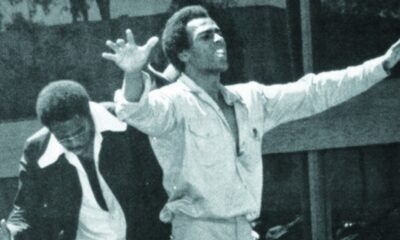
SF BAY VIEW — Huey P. Newton, writing on June 5, 1971, reaffirmed the Black Panther Party’s foundational stance against capitalist robbery within the Black community, a position held since October 1966. While acknowledging that many have proposed Black capitalism as a solution, Newton asserted that the community’s general acceptance of the concept does not stem from an affinity for capitalism itself.
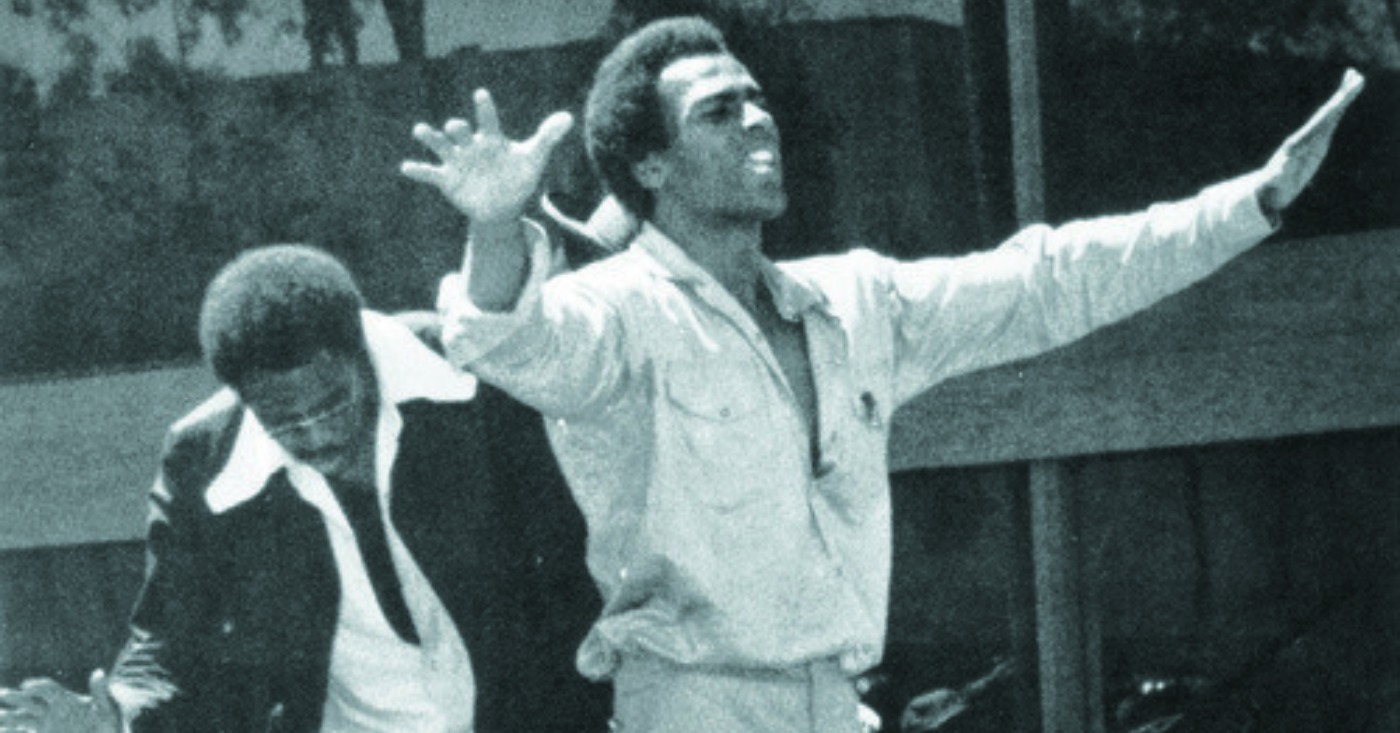
“We want an end to the robbery by the CAPITALISTS of our Black community.” That was our position in October 1966 and it is still our position … However, many people have offered the community Black capitalism as a solution to our problems. We recognize that people in the Black community have no general dislike for the concept of Black capitalism, but this is not because they are in love with capitalism. Not at all.”
The Black Panther Party, as we begin to carry out the original vision of the Party. When we coined the expression “All Power to the People,” we had in mind emphasizing the word “Power,” for we recognize that the will to power is the basic drive of man. But it is incorrect to seek power over people. We have been subjected to the dehumanizing power of exploitation and racism for hundreds of years; and the Black community has its own will to power also. What we seek, however, is not power over people, but the power to control our own destiny. For us the true definition of power is not in terms of how many people you can control. To us power is, first of all, the ability to define phenomena, and secondly the ability to make these phenomena act in a desired manner.
We see then that power has a dual character and that we cannot simply identify and define phenomena without acting, for to do so is to become an armchair philosopher. And when Bobby and I left Merritt College to organize brothers on the block, we did so because the college students were too content to sit around and analyze without acting. On the other hand, power includes action, for it is making phenomena perform in the desired manner. But action without thinking and theory is also incorrect. If the social forces at work in the community have not been correctly analyzed and defined, how can you control them in such a way that they act in a desired manner? So the Black Panther Party has always merged theory and practice in such a way as to serve the true interests of the community.

In merging theory with practice, we recognized that it was necessary to develop a theory which was valid for more than one time and place. We wanted to develop a system of thinking which was good anywhere, thus it had to be rather abstract. Yet our theory would relate to a concrete analysis of concrete conditions so that our actions would always be relevant and profitable to the people. Yet, at the same time, it had to advance their thinking so that they would move toward a transformation of their situation of exploitation and oppression. We have always insisted on good theory and good practice, but we have not always been successful in carrying this through.
‘When the Black Panther Party defected from the Black community, we became, for a while, revolutionary cultists. One of the primary characteristics of a revolutionary cultist is that he despises everyone who has not reached his level of consciousness, or the level of consciousness that he thinks he has reached, instead of acting to bring the people to that level. In that way the revolutionary cultist becomes divided from the people; he defects from the community. Instead of serving the people as a vanguard, he becomes a hero. Heroes engage in very courageous actions sometimes, and they often make great sacrifices, including the supreme sacrifice, but they are still isolated from the people. Their courageous actions and sacrifices do not lead the people to a higher level of consciousness, nor do they produce fundamental changes in the exploitation and oppression of the people. A vanguard, however, will guide the people onto higher levels of consciousness and that way bring them to the point where they will take sterner actions in their own interests and against those who continue to oppress them. As I’ve said previously, revolution is a process, not a conclusion. A true revolutionist will not only take courageous actions, he will also try to advance the people in such a manner that they will transform their situation. That I, by delivering power to the people the true revolutionist will help them define the social phenomena in their community and lead them to the point where they will seize the time and make these phenomena act in a desired manner.
Therefore, as revolutionaries we must recognize the difference between what the people can do and what they will do. They can do anything they desire to do, but they will only take those actions which are consistent with their level of consciousness and their understanding of the situation. When we raise their consciousness, they will understand even more fully what they in fact can do, and they will move on the situation in a courageous manner. This is merging your theory with your practices. Point 3 of the original Ten-Point Program of the Black Panther Party is “We want an end to the robbery by the CAPITALISTS of our Black Community.”
That was our position in October 1966 and it is still our position. We recognize that capitalism is no solution to the problems we face in our communities. Capitalist exploitation is one of the basic causes of our problem. It is the goal of the Black Panther Party to negate capitalism in our communities and in the oppressed communities throughout the world.
However, many people have offered the community Black capitalism as a solution to our problems. We recognize that people in the Black community have no general dislike for the concept of Black capitalism, but this is not because they are in love with capitalism. Not at all. The idea of Black capitalism has come to mean to many people Black control of another one of the institutions in the community. We see within this characteristic the seeds of the negation of Black capitalism and all capitalism in general. What we must do then is increase the positive qualities until they dominate the negative and therefore transform the situation.
In the past the Black Panther Party took a counter revolutionary position with our blanket condemnation of Black capitalism. Our strategy should have been to analyze the positive and negative qualities of this phenomenon before making any condemnation. Even though we recognized, and correctly so, that capitalism is no solution or answer, we did not make a truly dialectical analysis of the situation. We recognized that in order to bring the people to the level of consciousness where they would seize the time, it would be necessary to serve their interests in survival by developing programs which would help them to meet their daily needs. For a long time we have had such programs not only for survival but for organizational purposes. Now we not only have a breakfast program for schoolchildren, we have clothing programs, we have health clinics which provide free medical and dental services, we have programs for prisoners and their families, and we are opening clothing and shoe factories to provide for more of the needs of the community.In a way our new position has the simplicity and completeness of a mathematical formula.
When the Black capitalist contributes to the survival programs and makes a contribution to the community, the community will give him their support and thus strengthen his business. If he does not make any contribution to the survival of the community, the people will not support him and his enterprise will wither away because of his own negligence. By supporting the community, however, he will be helping to build the political machine that will eventually negate his exploitation of the community, but also negate his being exploited and victimized by corporate capitalism.
So we will heighten the contradiction between the Black community and corporate capitalism, while at the same time reducing the contradiction between the Black capitalist and the Black community. In this way Black capitalism will be transformed from a relationship of exploitation of the community to a relationship of service to the community, which will contribute to the survival of everyone.
Original publication: Huey P. Newton, “Black Capitalism Re-Analyzed,” The Black Panther: Intercommunal News Service, June 5, 1971 (supplement). Archival scan: https:// cdn.filepicker.io/api/file/Mum1pt7RZ6jYSUs1kh2v?fit=max
The post BLACK CAPITALISM RE-ANALYZED I: JUNE 5, 1971- HUEY NEWTON appeared first on San Francisco Bay View.
Based on reporting by SF Bay View.
Black Press
More Families to Benefit from Evidence-Based Home Visiting
BLACKPRESSUSA NEWSWIRE — The MIECHV program reaches families where services are needed most, including those who are rural, low-income, and at greater risk of poor health outcomes. Trained home visitors meet regularly with expecting mothers and families with young children. Decades of gold-standard scientific research show that voluntary home visits during pregnancy and early childhood can help prevent chronic disease and child abuse and neglect.

The Maternal, Infant, and Early Childhood Home Visiting (MIECHV) program supports voluntary, evidence-based home visiting for expectant parents and families with young children, particularly in communities facing greater barriers to positive maternal and child health outcomes.
The U.S Department of Health and Human Services’ agency Health Resources and Services Administration (HRSA) recently announced more than $525 million in fiscal year (FY) 2026 Maternal, Infant, and Early Childhood Home Visiting (MIECHV) Program awards to 56 state and jurisdiction recipients — the largest federal investment in the program’s history.
There are examples of the program success across the country. For instance, in Florida, Tracy says she gained the confidence and support to overcome challenges and achieve her goals. With the guidance of her home visitor, she strengthened her parenting skills, prioritized her well-being, and advanced her career. Today, Tracy continues to set goals for herself and her family and says, “This program has provided me with the tools to not just survive but to thrive.”
In California, Faraha said “I became pregnant and…I knew I wanted to make a difference in my life and that of my child. The home visiting program not only helped me as a mom, but also with my growth to….better myself, and now I’m in a position that I’ve always wanted to be in.” Faraha is currently employed and pursuing a master’s degree to become a licensed counselor.
HRSA Administrator Tom Engels announced the new awards in Columbus, Ohio, on Child Health Day. The awards will expand access to evidence-based home visiting services that improve maternal and child health, promote healthy child development, and connect families with the support they need during pregnancy and early childhood.
“MIECHV reflects a simple idea: supporting parents early gives children a stronger start. Parents are a child’s first and most important teacher, and by giving them the tools and support they need, we help create a strong foundation for children to thrive,” said Administrator Engels.
The MIECHV program reaches families where services are needed most, including those who are rural, low-income, and at greater risk of poor health outcomes. Trained home visitors meet regularly with expecting mothers and families with young children. Decades of gold-standard scientific research show that voluntary home visits during pregnancy and early childhood can help prevent chronic disease and child abuse and neglect, promote school readiness, and boost families’ economic self-sufficiency.
These awards include both base and matching grants. Base grants provide foundational support for evidence-based home visiting programs in every eligible state and jurisdiction, while matching grants help recipients expand services and reach more eligible families. In FY 2026, 55 of the 56 award recipients applied for and received matching grant awards, reflecting the continued commitment of our state partners to expand evidence-based home visiting services in communities across the country.
Since its reauthorization in 2022, the MIECHV program has served 15 percent more parents and children and delivered 23 percent more home visits. In FY 2025, the program provided more than 1 million home visits to more than 158,000 parents and children across one-third of all U.S. counties, helping connect families with services that support healthy pregnancies, positive parenting, child development, and family economic well-being.
As home visiting services expand, a strong and well-supported workforce is essential to meeting the needs of more families.
Black Press
WCCUSD Joins Statewide Organic School Food Purchasing Cooperative
Other districts involved include: Alameda USD, Albany USD, Berkeley USD, Capistrano USD, Cupertino Union SD, Hayward USD, Laguna Beach USD, Lagunitas Elementary SD, Mt. Diablo USD, North Monterey County USD, Pajaro Valley USD, San Leandro USD, San Ramon Valley USD, Santa Clara USD, Sausalito Marin City SD, Tahoe-Truckee USD and West Contra Costa USD.
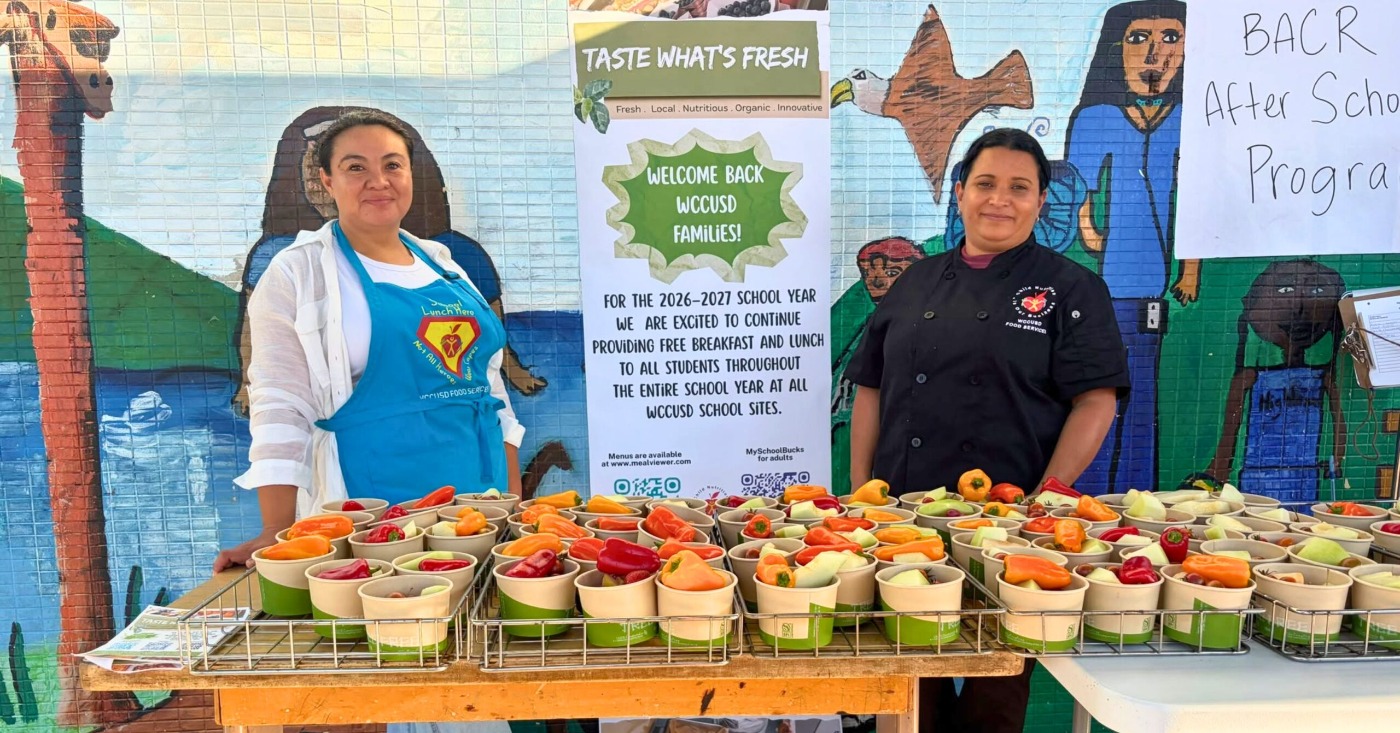
Seventeen California public school districts, including West Contra Costa Unified (WCCUSD), have joined a purchasing cooperative to pool their buying power and expand access to organic food in school meals.
The nonprofit Conscious Kitchen recently announced the launch of the Conscious Organic School Food Purchasing Cooperative. Its founding districts serve more than 300,000 students combined.
The cooperative partnered with food distributors UNFI and Sysco to expand the organic products available to participating districts. Combining schools’ purchasing demand helps distributors plan with suppliers while creating more dependable markets for organic farmers and food makers, according to Conscious Kitchen.
Other eligible California school districts can access the cooperative’s products and pricing through its existing contracts without conducting their own bids. Mt. Diablo Unified School District serves as the lead district for the cooperative’s grocery bid.
Other districts involved include: Alameda USD, Albany USD, Berkeley USD, Capistrano USD, Cupertino Union SD, Hayward USD, Laguna Beach USD, Lagunitas Elementary SD, Mt. Diablo USD, North Monterey County USD, Pajaro Valley USD, San Leandro USD, San Ramon Valley USD, Santa Clara USD, Sausalito Marin City SD, Tahoe-Truckee USD and West Contra Costa USD.
Barbara Jellison, WCCUSD’s executive director of food services, said the cooperative builds on years of work bringing fresh, organic food into school kitchens.
“The next challenge has always been how to make that possible for more districts,” Jellison said. “The Co-op gives schools a way to take what we have learned and move it to a completely different scale.”
Black Press
Democrats, Community Groups Back Measure EE to Change How Oakland Is Governed
Along with clearer executive responsibility, the Charter reform would also create new checks and balances, including an independent Budget and Legislative Analyst office, City Council confirmation of key appointments, expanded council hearing and subpoena authority, and give the council the ability to override a mayoral veto with six votes.
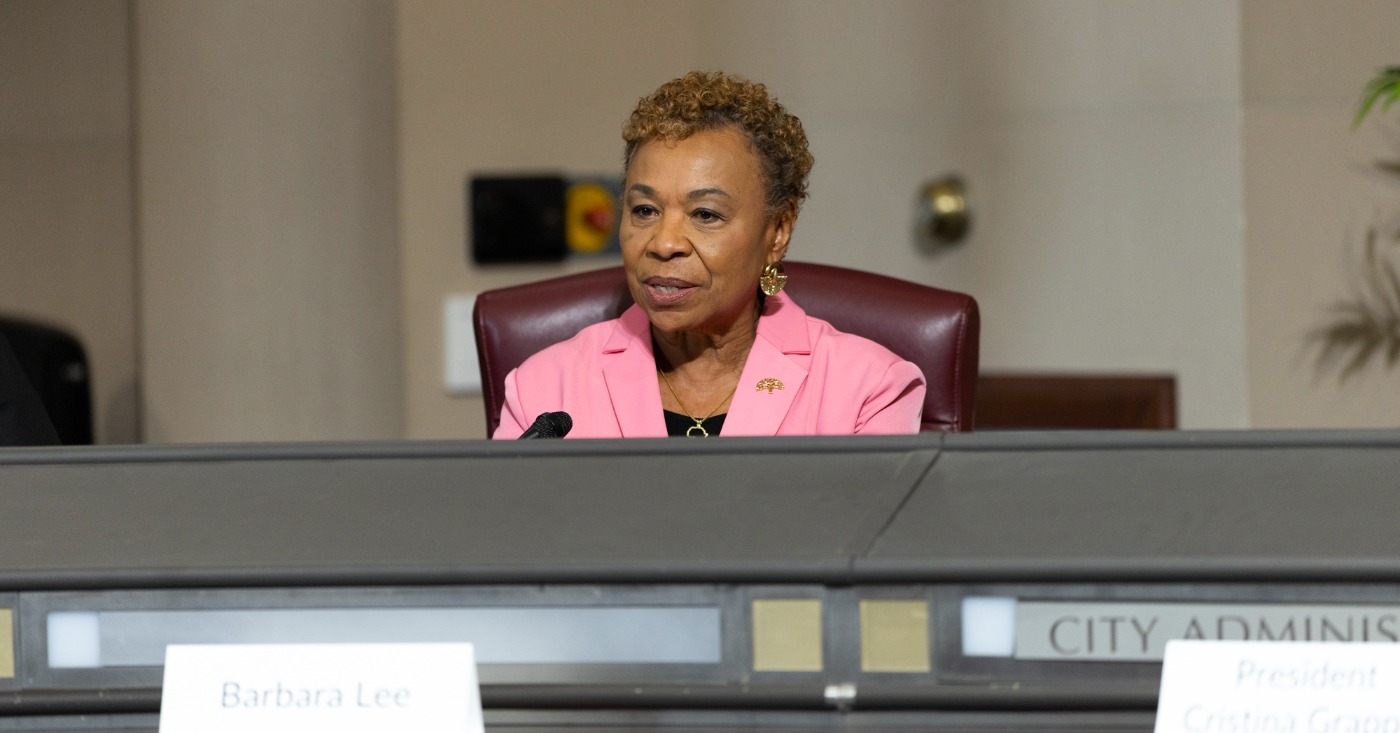
The Alameda County Democratic Party has voted to endorse Measure EE, the Oakland Charter reform measure on the November 2026 ballot. The party’s endorsement is announced alongside a broad coalition of organizations spanning labor, business, faith, and community advocacy, including Oakland Rising Action that are also supporting the measure.
Those supporters include:
- League of Women Voters of Oakland
- AFSCME Council 57
- SPUR
- Bay Area Council
- Black Women Organized for Political Action
- Faith in Action East Bay
- Oakland Chamber of Commerce
- Oakland Rising Action
- Revitalize East Bay
- Empower Oakland
Measure EE would reform Oakland’s hybrid governance system by establishing a strong-mayor structure, making the mayor the city’s chief executive, responsible for delivering effective, efficient services.
The measure would also reform and expand responsibilities of City Councilmembers.
Measure EE would create clearer lines of responsibility for the performance of city government, allowing voters to evaluate the mayor based on how effectively the city delivers services and produces results.
Along with clearer executive responsibility, the Charter reform would also create new checks and balances, including an independent Budget and Legislative Analyst office, City Council confirmation of key appointments, expanded council hearing and subpoena authority, and give the council the ability to override a mayoral veto with six votes.
“Oakland voters deserve a City Hall where they know exactly who’s responsible when something goes wrong and exactly who to credit when it gets fixed. Measure EE puts that responsibility squarely with the mayor, backed by real checks and balances, so Oakland can finally move as fast as its problems demand. That’s why the Alameda County Democratic Party is proud to stand behind it,” said Igor Tregub, chair of the Alameda County Democratic Party.
Oakland Rising Action, a collaboration of racial, economic, and environmental justice organizations, has also issued a press statement explaining its support for Measure EE.
Measure EE “represents a critical opportunity for residents to clarify the governance role of the Oakland Mayor and City Council, so we, as residents, know who to hold accountable for the execution of voter-approved and budgeted services within city departments,” the statement said.
Measure EE would reform Oakland’s Charter, which is the city’s Constitution, strengthening “the role of the mayor as the CEO of Oakland, with the city administrator being hired and managed by the mayor explicitly.”
The measure would also strengthen oversight of city departments by mandating reporting directly to the City Council and provide the mayor with veto power in approving policies and the budget.
Measure EE was placed on the ballot by the Oakland City Council in June 2026. For more than half a year, the mayor’s working group on Charter reform engaged residents and elected officials on the options for governance of Oakland, which led to Measure EE.
“Oaklanders need clarity about who is responsible for the management of our city departments, our tax dollars, and our voter-approved ballot measures,” said Pecolia Manigo, executive director of Oakland Rising.
“The average resident believes that we already have a strong mayor system,” she continued. “However, this is simply not the truth in our City Charter. It is time for us to stop talking about the Charter changes Oakland needs. This is the first of many Charter reforms that are needed to improve conditions in Oakland, especially the flatlands. It’s time all voters start paying attention to who is making decisions for Oakland. This election allows us to say how we believe Oakland should be governed.”
Black Press
Four Tips to Help You Plan a Holiday “Staycation”
“A great staycation starts when you treat your hometown like a destination – book one ‘anchor’ experience, stay somewhere that changes your scenery, and leave room for a little spontaneity,” said Steve Orens, President of FROSCH by Chase Travel, a leading travel agency. “My favorite staycation tip is to make it easy on yourself: choose a walkable area, plan one highlight each day, and let the hotel do the heavy lifting – warm beds, quick breaks, and fewer logistics.”

Holiday travel can be exciting, but between costs, crowded airports and packed schedules, sometimes the idea of staying home can be much more appealing.
If you still want to get away without the hassle of an actual getaway, consider a holiday staycation.
By remaining close to home, you can experience your city from a fresh perspective without the stress of a long trip. Whether you book a night at a local hotel, check out a new neighborhood or just finally get around to seeing that landmark attraction that’s been on your to-do list, you can make staying at home feel like a real getaway.
Here are four tips you can use to create an amazing holiday at home this season:
1. Treat your hometown like a destination
One common theme surrounding area attractions is that they’re more likely to be packed with tourists than locals. If that popular museum, tour or other institution is always “there,” it can be easy to avoid it and say you’ll get there eventually.
A staycation provides a great opportunity to approach those kinds of places like a tourist. Start by making a short list of places or experiences you’ve always wanted to try but never seem to prioritize. You might include a museum, holiday market, historic site, restaurant or neighborhood, or you might attend a holiday-related performance that’s an annual late fall or winter tradition in your area.
“A great staycation starts when you treat your hometown like a destination – book one ‘anchor’ experience, stay somewhere that changes your scenery, and leave room for a little spontaneity,” said Steve Orens, President of FROSCH by Chase Travel, a leading travel agency. “My favorite staycation tip is to make it easy on yourself: choose a walkable area, plan one highlight each day, and let the hotel do the heavy lifting – warm beds, quick breaks, and fewer logistics.”
2. Spend the night away
A hotel stay can provide a change of scenery that makes you feel like you’re enjoying a getaway.
Consider a traditional hotel, bed and breakfast or rental property where you can walk to restaurants, shopping, entertainment or holiday activities. An upscale hotel can also be the centerpiece of your staycation, allowing you to enjoy fine dining, a fitness center, spa services or other on-site experiences.
If you want a quieter, more relaxed experience, find a hotel “off the beaten path,” but still close to home, to enjoy the rhythms and sounds of nature.
3. Be flexible
If your schedule allows, plan your staycation for a weekday or less crowded period — like the days between Christmas and New Year’s Eve — rather than a peak weekend. Hotel rates in the middle of the week tend to be cheaper, and it might be easier to grab a restaurant reservation or performance tickets. Locations might be less crowded as well during the week, making it easier to get around.
Book some experiences in advance to save money but stay open to spontaneous opportunities once you arrive. You might find some great last-minute deals.
4. Try something new
Even if you think you’ve seen everything your hometown has to offer, there’s always something new to explore or discover.
Check out a neighborhood you usually drive through and visit the local shops and other businesses. You can also try a new cuisine at a neighborhood restaurant or kitchen.
Sometimes what’s old can be new again during the holiday season, so if you want to go back to your favorite restaurants and other popular spots, do so with fresh eyes. Order from the eatery’s holiday menu or take a walk when lights, decorations and seasonal programming transform many communities.
Other helpful tips
Although staying at home can eliminate major travel costs, expenses can still add up quickly. Make a staycation budget and then consider ways to help keep costs down.
“A ‘smart’ staycation is one you can pay for comfortably: choose dates with better rates, book flexible options, and keep a small buffer for surprises,” added Orens. “The goal of a staycation is a real reset. Even if you’re close to home, give yourself permission to unplug and find moments to treat yourself – say yes to room service, a spa hour, or a new restaurant you’ve been saving for ‘someday.’”
If you have rewards points from credit cards or loyalty programs, put them toward your hotel to get a free or cheaper night’s stay. Local museums, cultural institutions and attractions often have resident discounts, reduced-price admission days or seasonal offers. Community calendars can provide information about free or low-cost events like holiday concerts, light displays, markets, park activities and other events. If a performance doesn’t normally sell out, wait until the day before or day of to buy tickets, as prices are often reduced and you can find great seats.
With a little creativity, you might find everything you’d want in a holiday vacation. You can enjoy good food, new experiences and an escape from your daily routine – all right at home.
For more financial health tips, visit https://www.chase.com/travel/guide.
For informational/educational purposes only: Views and strategies described in this article or provided via links may not be appropriate for everyone and are not intended as specific advice/recommendation for any business. Information has been obtained from sources believed to be reliable, but JPMorgan Chase & Co. or its affiliates and/or subsidiaries do not warrant its completeness or accuracy. The material is not intended to provide legal, tax, or financial advice or to indicate the availability or suitability of any JPMorgan Chase Bank, N.A. product or service. You should carefully consider your needs and objectives before making any decisions and consult the appropriate professional(s). Outlooks and past performance are not guarantees of future results. JPMorgan Chase & Co. and its affiliates are not responsible for, and do not provide or endorse third party products, services, or other content.
Deposit products provided by JPMorgan Chase Bank, N.A. Member FDIC. Equal Opportunity Lender.
© 2026 JPMorgan Chase & Co.
Black Press
Veterans Housing Project Proposed for South Richmond
According to the development team’s presentation, the project has an estimated total cost of nearly $158 million. The presentation outlines five phases encompassing entitlement and construction documents, community outreach, soil remediation and utility work, podium and building construction, solar technology integration, and interior buildouts.
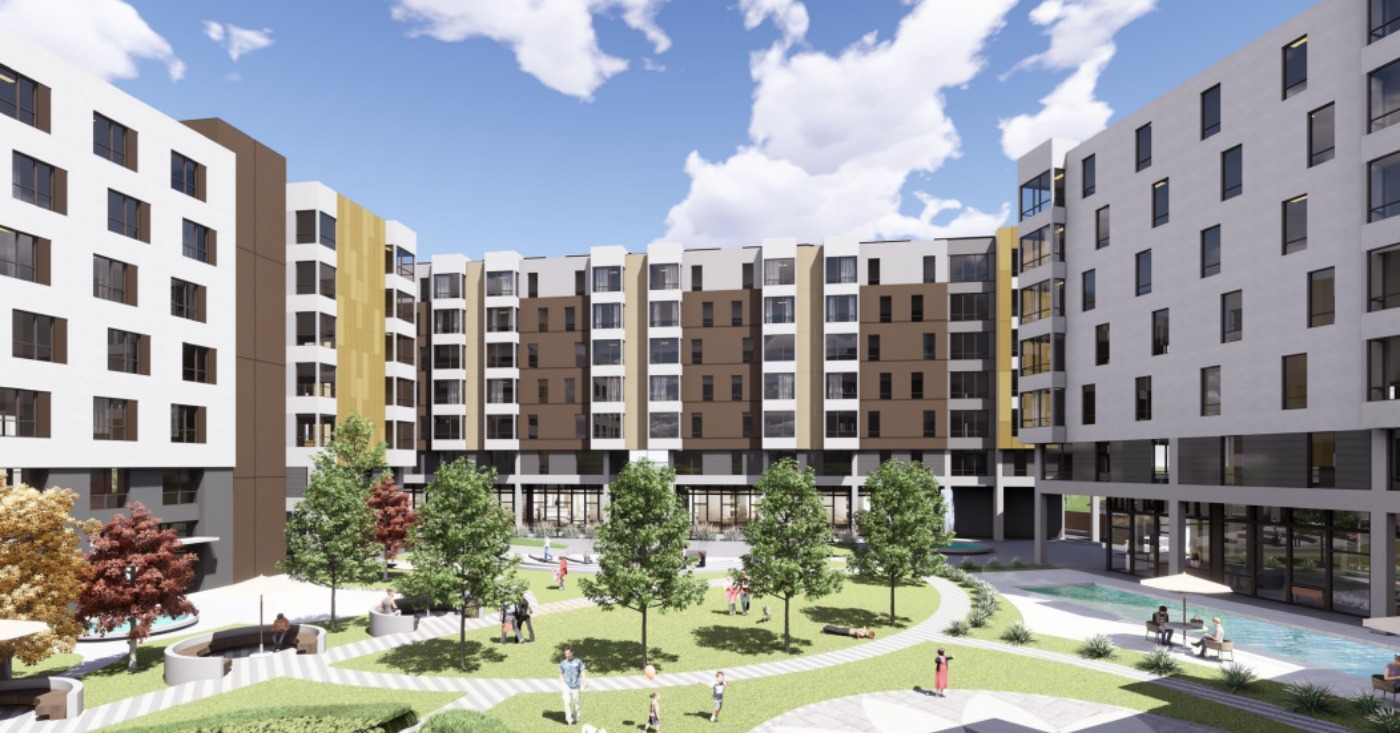
A proposed mixed-use development at 338 Carlson Blvd. could bring hundreds of homes and support services for military veterans to South Richmond.
Led by the Richmond-based Veterans Resource Program in partnership with Eagle Environmental Construction & Development, the proposal covers an approximately 2.3-acre property the nonprofit acquired in 2018.
The proposal features a multi-building residential development with various apartment sizes, though city documents and developer materials cite conflicting totals ranging from 226 to 268 units.
The proposal also includes approximately 40,000 square feet of commercial and retail space, about 200 parking spaces, and an entrepreneurial training and job-development component intended to connect veterans with economic and workforce opportunities.
According to the development team’s presentation, the project has an estimated total cost of nearly $158 million. The presentation outlines five phases encompassing entitlement and construction documents, community outreach, soil remediation and utility work, podium and building construction, solar technology integration, and interior buildouts.
Founded in 2011, the Veterans Resource Program provides housing assistance and other services to veterans, including those experiencing homelessness or transitioning from incarceration.
The proposal aims to advance Richmond’s affordable housing goals while connecting veterans with housing and supportive services. Details of affordability and veteran eligibility remain to be clarified.
The Richmond City Council was scheduled to receive an informational presentation on the project at its Oct. 6 meeting, following a continuance from Sept. 22. The item does not seek project approval or city funding. Any future request for city financial assistance or other public resources would require separate consideration and approval.


OPINION: Black Capitalism Re-Analyzed: June 5, 1971 – Huey Newton

More Families to Benefit from Evidence-Based Home Visiting

FTC Chair Praises Trump, NYC Calls for Target Boycott, and Jason Lee Removed as Vice Mayor 📱

FTC Chair Praises Trump, NYC Calls for Target Boycott, and Jason Lee Removed as Vice Mayor

Black History: Gladys West Mathematics Helped Make GPS Possible

Richmond’s Secret Bank: The True Reformers Story #shorts

7 USB-C Ports + Wireless Charging: Power Up Your Family #shorts

Urban League, AT&T Expand Digital Skills and Laptop Access in St. Louis

Attend a Green Line Bus Rapid Transit Open House

VIN Check: Avoid Truck Recalls Before Buying! #shorts

The Youngest American Killed in the Vietnam War

Passing for White, Fighting for Black America: The Courage of Walter White

OP-ED: Haiti TPS: Have We Lost Sense of Humanity?

OP-ED: How Does Your State Rank for Pre-K?

NFL: Week Two Recap | Jalen Hurts did not fold; Caleb Williams exits game with injury

Remembering Chauncey Bailey as Student Journalists Face Threats to Truth-Telling

Headlines and Hot Topics 📱

Peter Magubane: a Camera Against Apartheid

Obama Urges Democrats to make AI a Priority 📱

Mayor Lee Announces $1 Million Kaiser Permanente Grant for Pilot Program to Address Homelessness, Clean Up Public Spaces throughout Oakland
FTC Chair Praises Trump, NYC Calls for Target Boycott, and Jason Lee Removed as Vice Mayor 📱
FTC Chair Praises Trump, NYC Calls for Target Boycott, and Jason Lee Removed as Vice Mayor
Black History: Gladys West Mathematics Helped Make GPS Possible
Richmond’s Secret Bank: The True Reformers Story #shorts
7 USB-C Ports + Wireless Charging: Power Up Your Family #shorts
Urban League, AT&T Expand Digital Skills and Laptop Access in St. Louis
Attend a Green Line Bus Rapid Transit Open House
VIN Check: Avoid Truck Recalls Before Buying! #shorts

Defender Parking Camera & Screen Features Explained #shorts

Find Black-Owned Banks & Credit Unions Easily #shorts
-

 Black Press1 week ago
A $2.1 Trillion Wellness Industry Never Built a Daily Practice for Black Children. So This Atlanta Family Did.
-

 BlackPressUSA1 week ago
Latinas Deserve Equal Pay. Unions Help Make It Happen.
-

 Black Press3 days ago
All Skinfolk Ain’t Kinfolk
-

 Art1 week ago
Montclair Brewery: Brewing Culture, Community, History
-

 Black Press1 week ago
COMMENTARY: But God!
-

 Black Press1 week ago
Master P Encourages Norwood Elementary Students to Dream Big, Work Hard
