
Military
OP-ED: Veterans Deserve Your “Thank You”
THE TENNESSEE TRIBUNE — Veterans that have had to endure the American flag being bastardized, the national anthem being politicized, and constant disrespect has become a sad part of life.

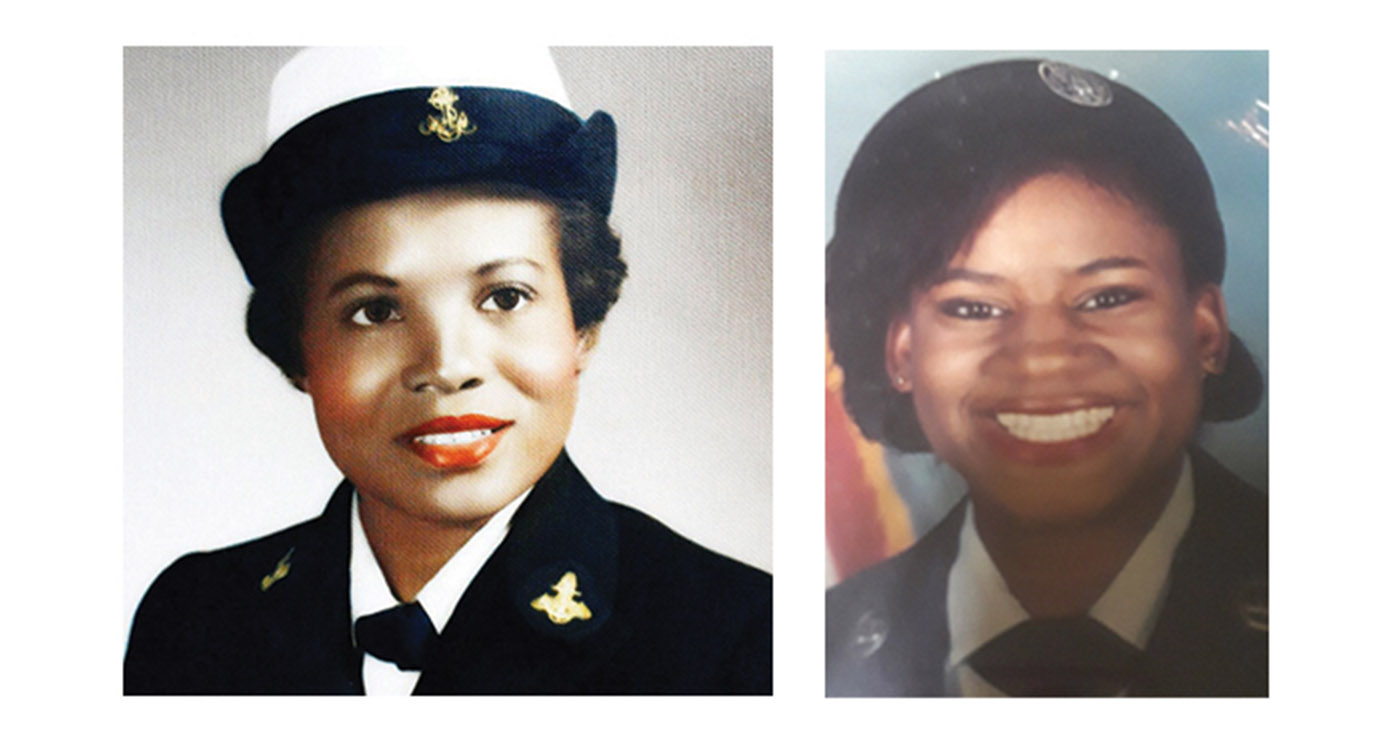
By Rosetta Miller Perry (Navy) and Ms. June (Air Force)
Veterans that have had to endure the American flag being bastardized, the national anthem being politicized, and constant disrespect has become a sad part of life. It is extremely disappointing that citizens who have never served in the military have so many opinions and have become emboldened to disrespect Veterans of yesterday, today and tomorrow.
The observance of Veterans day represents individuals with courage and enough love for their country to volunteer to put their lives on the dotted line. Outside of the draft period the military of today is truly an all-volunteer force. A force that loses dignity, goes through humiliation and degradation beyond belief in the form of basic training only to rise and become a soldier. An individual can be a doctor, a lawyer, a pastor or a pilot but unless they have served their country and worn the military uniform, then a soldier will remain as one of the most honorable and dignified jobs on the planet.
The world’s largest bully that hails from the White House is beneath the newly minted soldier without rank, the leading double triple free throw player in the NBA is nothing compared to a petite female soldier with a M-16 assault weapon and at the end of the day, not everyone can do it. But those who can and have served deserve better acknowledgement and gratitude than what the United States is serving them.
Veterans Day is a time to thank the families that gave all as their military member lies beneath a headstone in a graveyard, a time to thank the Veterans that have lost vision and arms or legs and even those so full of post traumatic stress disorder (PTSD) from military experiences they could snap anytime and kill everyone in sight. This is a time to pay it forward and check on the military widows, read to the children that has lost their military father or even buy a hot meal for a Veteran at Operation Stand Down.
It is the responsibility of every American that knows a Veteran to “thank them for their service” on Veterans day, to eliminate the politics from football and keep the knee and the police brutality issue in proper context. Other than those that die in battle, some soldiers get to retire and hang their dog tags on the mantle, some are still here but homeless on the street due to politics and closure of VA medical centers while others have thriving careers as civilians but are still soldiers to the core. One thing for sure is the fact that from the Army to the Navy, the Air Force to the Marines and the Peace Corps, soldiers don’t die, they fade away. Veterans represent freedom, values and liberties enjoyed by every American and the least one can do is say “thank you.”
This article originally appeared in The Tennessee Tribune.











Black Press
OP-ED: Washington Has a Chance to Save Veterans’ Lives
BLACKPRESSUSA NEWSWIRE — I became paralyzed watching young Marines go outside the base, thinking about their families and whether they would see them again. I began hallucinating that wounded Marines I cared for were walking toward me in the war zone. I now recognize that, alongside my own PTSD, I was carrying secondary PTSD from caring for wounded Marines.
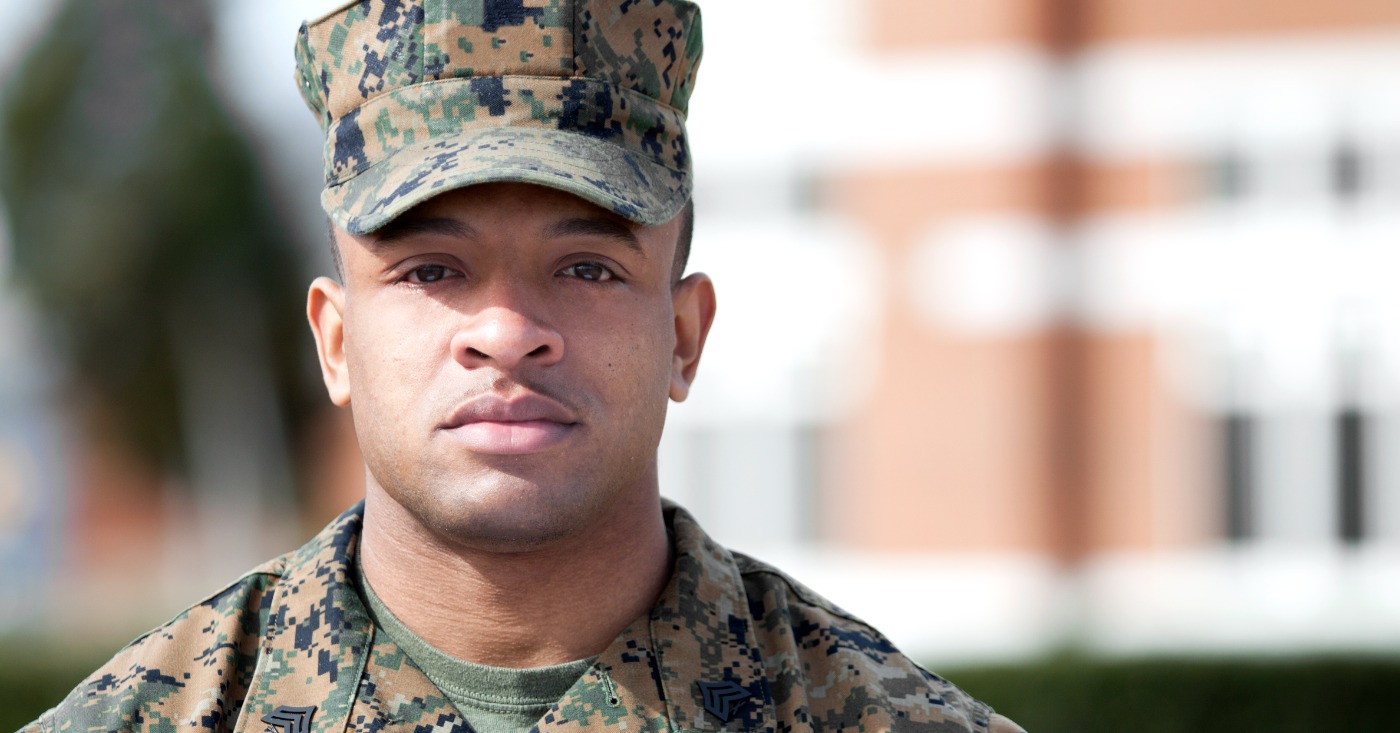
I graduated from Marine Corps boot camp a couple weeks before September 11, 2001. I had no idea how profoundly 9/11 would change the trajectory of my life.
I went on to deploy to Iraq and Afghanistan. Between deployments, I worked at the Wounded Warrior Battalion in San Diego, supporting Marines as they rebuilt their lives. What I did not understand was how deeply I was absorbing their grief and losses.
That became clearer when I later deployed to Afghanistan during one of the deadliest periods of the war for Marines. I purposefully stopped counting the flag-draped coffins as they were loaded onto planes to return home, swallowing my grief so I could return to the mission.
I became paralyzed watching young Marines go outside the base, thinking about their families and whether they would see them again. I began hallucinating that wounded Marines I cared for were walking toward me in the war zone. I now recognize that, alongside my own PTSD, I was carrying secondary PTSD from caring for wounded Marines.
With every loss, I swallowed what I felt just to keep functioning. I kept moving forward, until everything I buried became impossible to ignore.
I did not recognize what was happening until five years after returning home. I sought help. Therapy helped me feel less alone, but my symptoms continued to affect my life and relationships.
My experience is not unique. 870,000 veterans receiving VA health care were diagnosed with PTSD in 2024. Since 9/11, nearly 150,000 veterans have died by suicide. Many continue searching for relief after available treatments have failed.
That is why veterans are cautiously hopeful about psychedelic treatments.
Studies of psilocybin for treatment-resistant depression show significant reductions in depressive symptoms, with up to one-third of patients achieving remission in some trials. Research involving veterans with PTSD found that 75% were in remission one month after psilocybin treatment.
I followed the research before pursuing psilocybin treatment myself. During that experience, I was finally able to access the grief I spent decades burying. It did not erase what happened or the memories of the Marines I lost. It changed my relationship with those memories. They no longer controlled my life.
I reconnected to the self I had lost and was able to feel joy and love again.
Psychedelic medicines are not a cure-all. But veterans pursuing them are not looking for shortcuts. Many have spent years doing everything the medical system asked while continuing to search for relief.
Our government is beginning to recognize the potential of new approaches.
This year, President Trump signed an executive order to accelerate research and reduce barriers to psychedelic treatments for serious mental illness. VA is conducting clinical trials of MDMA for PTSD and psilocybin for depression. In July, FDA finalized guidance for clinical trials involving psychedelic drugs.
If these treatments receive FDA approval, the healthcare system must be ready to deliver them responsibly — through DEA action, clear safeguards, and VA facilities prepared to provide care.
Our country asks a great deal of those who serve. If evidence demonstrates that these treatments are safe and effective, veterans should not wait years longer because Washington failed to prepare for success.
Juliana Mercer is a Marine Corps veteran and executive director of Healing Breakthrough. A version of this column was published in Stars and Stripes.
Black History
The Youngest American Killed in the Vietnam War
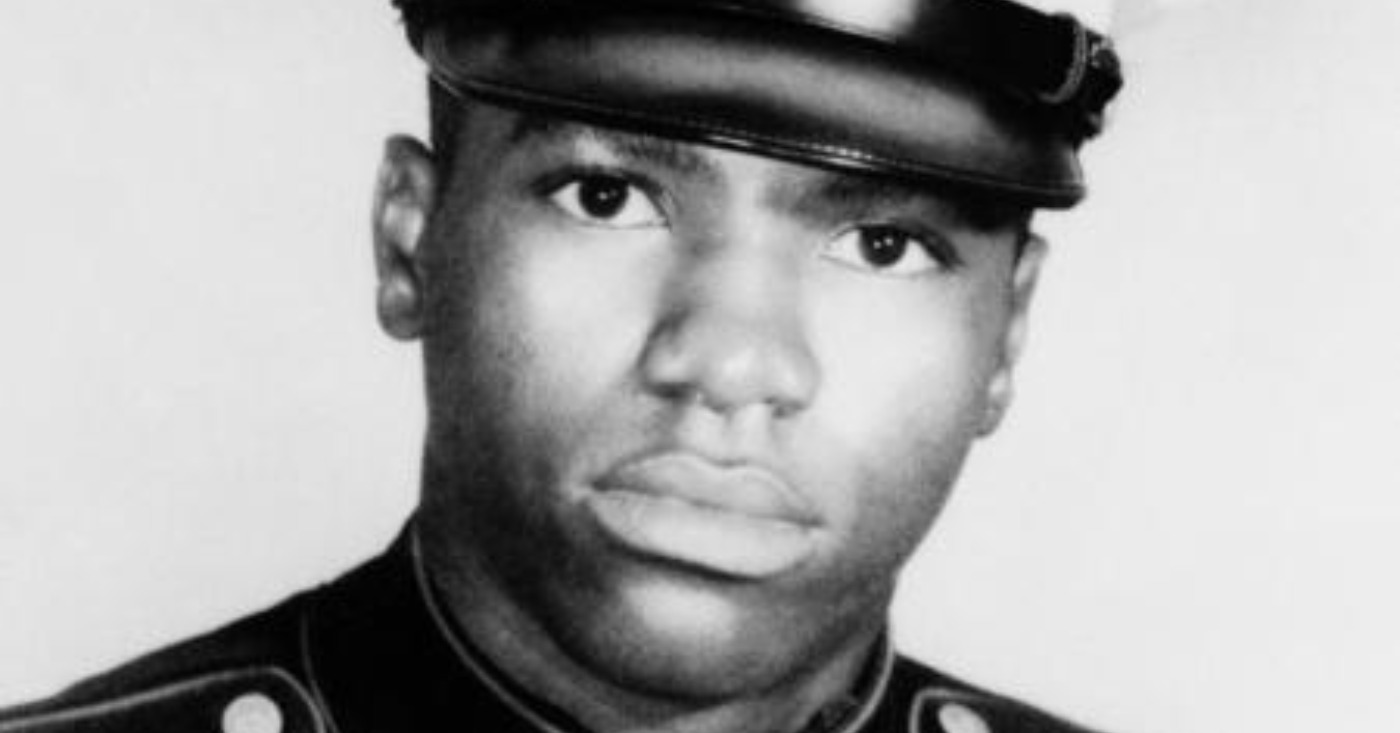
THE CAROLINIAN — Dan Bullock, a Goldsboro native, was 15 years old when he was killed in Vietnam on June 7, 1969, making him the youngest American service member to die in the conflict. Born in 1953, Bullock moved to Brooklyn after his mother’s death and sought a path forward, considering careers such as a pilot, police officer, firefighter, or Marine.
By Jordan Meadows, Staff Writer
Dan Bullock was 15 years old when he was killed in Vietnam on June 7, 1969, making the Goldsboro native the youngest American service member to die in the war.
Bullock was born Dec. 21, 1953, in Goldsboro and lived in North Carolina until he was about 12, when his mother died, and he moved to Brooklyn to live with his father.
Family members later said he’d talked about wanting to become a pilot, a police officer, a firefighter or a Marine. Unsatisfied with his living situation in New York and discouraged by the lack of opportunity he saw around him, Bullock went looking for a faster path forward—and told his father that enlisting seemed like the quickest way to get an education.
In September 1968, at 14 years old, Bullock walked into the Marine Corps recruiting station at Albee Square in downtown Brooklyn. At 5-foot-9 and roughly 160 pounds, he was big enough to pass for 18, and he had altered the year on his birth certificate from 1953 to 1949.
Recruiters never questioned it. He enlisted on Sept. 18, 1968, and his family found out only when he came home with the signed paperwork in his hand.
Bullock reported to Parris Island, South Carolina, assigned to Platoon 3039, and struggled through parts of the 13-week training regimen before fellow recruits helped pull him through. He graduated from boot camp on Dec. 10, 1968, eleven days before his 15th birthday.
Private First Class Bullock arrived in South Vietnam on May 18, 1969, assigned as a rifleman in 2nd Squad, 2nd Platoon, Fox Company, 2nd Battalion, 5th Marines, 1st Marine Division. His posting was An Hoa Combat Base in Quang Nam Province, a forward hub surrounded by some of the most contested terrain in the country. Bullock kept largely to himself, and while his fellow Marines didn’t know his real age, several sensed something was different about him.
On the evening of June 6, Bullock had been assigned cleaning duty, but took another Marine’s place on the night watch near the airstrip after that Marine was wounded. Shortly after midnight, North Vietnamese Army sappers breached the perimeter wire and launched a coordinated assault with rockets, mortars, and small arms. Accounts of exactly what happened next differ.
Fox Company accounts hold that sappers crawled beneath the wire and hurled a satchel charge through the firing slot of Bullock’s bunker, an explosion that killed Bullock; other accounts describe Bullock being killed by small arms fire on the perimeter.
Bullock’s company commander, Capt. Robert Kingrey, described the young Marine’s actions during the attack in a letter home.
“Dan immediately realized that the attack was stronger than usual and that the ammunition supply was becoming depleted,” Kingrey wrote. “He rushed to get more ammunition for his unit. He constantly exposed himself to enemy fire in order to keep the company supplied with the ammunition needed to hold off the attack.”
Bullock had been in Vietnam for 21 days.
A week after his death, the New York Times broke the story of his real age, and the Defense Department subsequently confirmed Bullock was the youngest of the roughly 58,000 Americans killed during the war.
His remains were returned to Goldsboro and buried at Elmwood Cemetery with full military honors, but no headstone marked the grave. It stayed that way for 31 years, until television talk show host Sally Jessy Raphael learned of the unmarked plot in 2000 and purchased a headstone. NYPD officers, state troopers from four states, and two veteran motorcycle groups escorted a 600-mile caravan from Brooklyn to Goldsboro for the dedication ceremony.
In 2003, the New York City Council renamed a stretch of Lee Avenue in Brooklyn—the street where Bullock had lived—as PFC Dan Bullock Way.
North Carolina dedicated a state highway historical marker near his childhood home on West Ash Street in Goldsboro, and the entrance to Elmwood Cemetery in southwest Goldsboro was also named PFC Dan Bullock Way.
His name is inscribed on Panel 23W, Line 96 of the Vietnam Veterans Memorial Wall in Washington.
Based on reporting by The Carolinian.
Black Press
Cuban President Vows to Defend the Country Against US Invasion
NEW YORK CARIB NEWS — The remarks come amid heightened rhetoric from U.S. President Donald Trump, whose administration has increased pressure on the communist-led nation. Trump recently suggested that a “takeover” of Cuba, potentially unfriendly, remains a possibility, while senior officials, including Secretary of State Marco Rubio, have called for political change on the island.


New York Carib News
Cuban President Miguel Díaz-Canel has declared that the island will defend itself against any potential military action by the United States, warning of serious regional consequences if tensions escalate further.
In an interview conducted in Havana with NBC’s Kristen Welker, Díaz-Canel emphasized that there is “no justification” for U.S. aggression against Cuba, while stressing that any invasion would provoke resistance. “If that happens, there will be fighting, and there will be a struggle, and we will defend ourselves,” he said, underscoring Cuba’s readiness to protect its sovereignty.
The remarks come amid heightened rhetoric from U.S. President Donald Trump, whose administration has increased pressure on the communist-led nation. Trump recently suggested that a “takeover” of Cuba, potentially unfriendly, remains a possibility, while senior officials, including Secretary of State Marco Rubio, have called for political change on the island.
Despite the rising tensions, Díaz-Canel insisted that Cuba’s position remains defensive, not aggressive. He reiterated a willingness to engage in dialogue but rejected U.S. demands related to political reforms, including multiparty elections and the release of individuals described internationally as political prisoners. Cuban authorities, however, deny holding such prisoners and argue that these claims are part of efforts to discredit the revolution.
The decades-old U.S. embargo remains a central point of contention. First imposed in 1962 following the Cuban Revolution led by Fidel Castro, the policy continues to shape Cuba’s economic challenges, including fuel shortages, power outages, and limited access to essential goods. Díaz-Canel described the embargo as “cruel” and a major factor behind the country’s ongoing hardships.
At the same time, the Cuban leader signaled openness to economic engagement, including potential foreign investment in the island’s energy sector, an area currently restricted for U.S. companies under existing sanctions laws.
While both Washington and Havana have acknowledged preliminary talks, deep mistrust persists. Díaz-Canel pointed to past U.S. actions in other regions as a source of skepticism, warning that negotiations conducted alongside military pressure undermine confidence.
As geopolitical tensions continue to rise, Cuba’s leadership is positioning itself firmly against external intervention while leaving the door open, albeit cautiously, to diplomatic engagement.
Black Press
COMMENTARY: Regime Change and The Roots Of U.S. Hostility With Iran
SAN DIEGO VOICE & VIEWPOINT — Those who are serious in their study of history are clear that the Cold War was a propaganda campaign to position communism and socialism as a “boogeyman” in order to justify Americans’ desire for geopolitical domination of the world. Additionally, Mosaddegh’s policy of nationalizing the oil wealth of the country was disruptive to Western oil companies that wanted unfettered access to Iran’s oil reserves.

By Dayvon Love | San Diego Voice and Viewpoint
Director of Public Policy, Leaders of a Beautiful Struggle
In 1953, the United States and other Western forces collaborated to overthrow the democratically elected president, Mohammad Mosaddegh, of Iran.
The stated rationale for pursuing regime change was based on the Cold War logic that Mosaddegh was aligning with an evil communist sphere of influence anchored by the former Union of Soviet Socialist Republics (USSR/Russia).
Those who are serious in their study of history are clear that the Cold War was a propaganda campaign to position communism and socialism as a “boogeyman” in order to justify Americans’ desire for geopolitical domination of the world. Additionally, Mosaddegh’s policy of nationalizing the oil wealth of the country was disruptive to Western oil companies that wanted unfettered access to Iran’s oil reserves.
After the overthrow of Mosaddegh, the United States installed the Shah of Iran to lead the country, which was a brutal, autocratic regime that lasted for a couple of decades. The 1979 revolution in Iran that resulted in the overthrow of the Shah and the taking of American hostages is often narrated as an act of anti-American aggression instead of a response to the U.S. imposition of a brutal regime on the people of Iran. In other words, the 1979 Iranian revolution and the anti-American sentiments expressed over the years by Iranian leadership is a response to U.S. imperialist aggression toward the sovereignty of the Iranian people and the larger Muslim world.
U.S. Secretary of State Marco Rubio gave a speech a few weeks ago in Munich, Germany, which provides a clear underlying logic for U.S. military strikes against Iran. He said:
“…For five centuries, before the end of the Second World War, the West had been expanding – its missionaries, its pilgrims, its soldiers, its explorers pouring out from its shores to cross oceans, settle new continents, build vast empires extending out across the globe,” Rubio said. “But in 1945, for the first time since the age of Columbus, it was contracting. Europe was in ruins. Half of it lived behind an Iron Curtain and the rest looked like it would soon follow. The great Western empires had entered into terminal decline, accelerated by godless communist revolutions and by anti-colonial uprisings that would transform the world and drape the red hammer and sickle across vast swaths of the map in the years to come … .”
The luxuries and quality of life that Western civilization enjoys are based on the colonial relationship it has with the so-called Third World, which is largely non-White and poor. People who are self-respecting will rise up to challenge the social order that causes its own degradation.
Additionally, in a November 1979 interview with journalist Mike Wallace, the Ayatollah Khomeini (leader of Iran) committed to (and delivered on this commitment) releasing Black and women hostages. His rationale for releasing Black hostages was that we are an oppressed group in America and not responsible for the aggression toward their people. This is a recognition of the global system of domination that bolsters White political and economic domination of the world.
It is also important to acknowledge the role that Israel has played in encouraging U.S. military aggression toward Iran.
Israel considers itself to be a cultural descendant of Western civilization. The state of Israel serves as a proxy for maintaining U.S. geopolitical domination of the muslim world and the Palestinian people have been casualties of U.S. maintenance and support of the settler colonial project of the state of Israel. Israel has been urging the U.S. to take a more aggressive stance toward Iran to advance its own military domination of the region.
The current administration’s capitulation to Israeli political leadership’s urging to enact regime change in Iran is a further acknowledgement of how important Israel is as an instrument of American imperialism. This current military strikes against Iran by the Trump administration is another example of the White nationalist political agenda of the Republican Party.
What must be acknowledged is that the military-industrial complex that funds both political parties must be directly confronted and ultimately dismantled. America currently invests $1 trillion a year of our tax dollars to maintain America’s role as the policeman of the world.
Democrats in the upcoming midterms need to be forced to engage in a radical change in American foreign policy that does not legitimize military aggression toward people defending their sovereignty. Democrats need to be forced to pursue a policy that divests from the $1 trillion military budget and puts those resources in the hands of the masses of people in this society who have been victimized by the global system of White supremacy.
Dayvon Love serves as director of public policy for Leaders of a Beautiful Struggle (LBS), a Baltimore-based grassroots think-tank.
Black History
Haiti – US Warns It Will Act if Political Moves Destabilize the Country
NEW YORK CARIB NEWS — In a statement posted on X late Wednesday, the US Embassy in Haiti said Washington would view any attempt to alter the current governing arrangement as a serious threat to national stability, particularly if such moves benefit criminal gangs.
New York Carib News
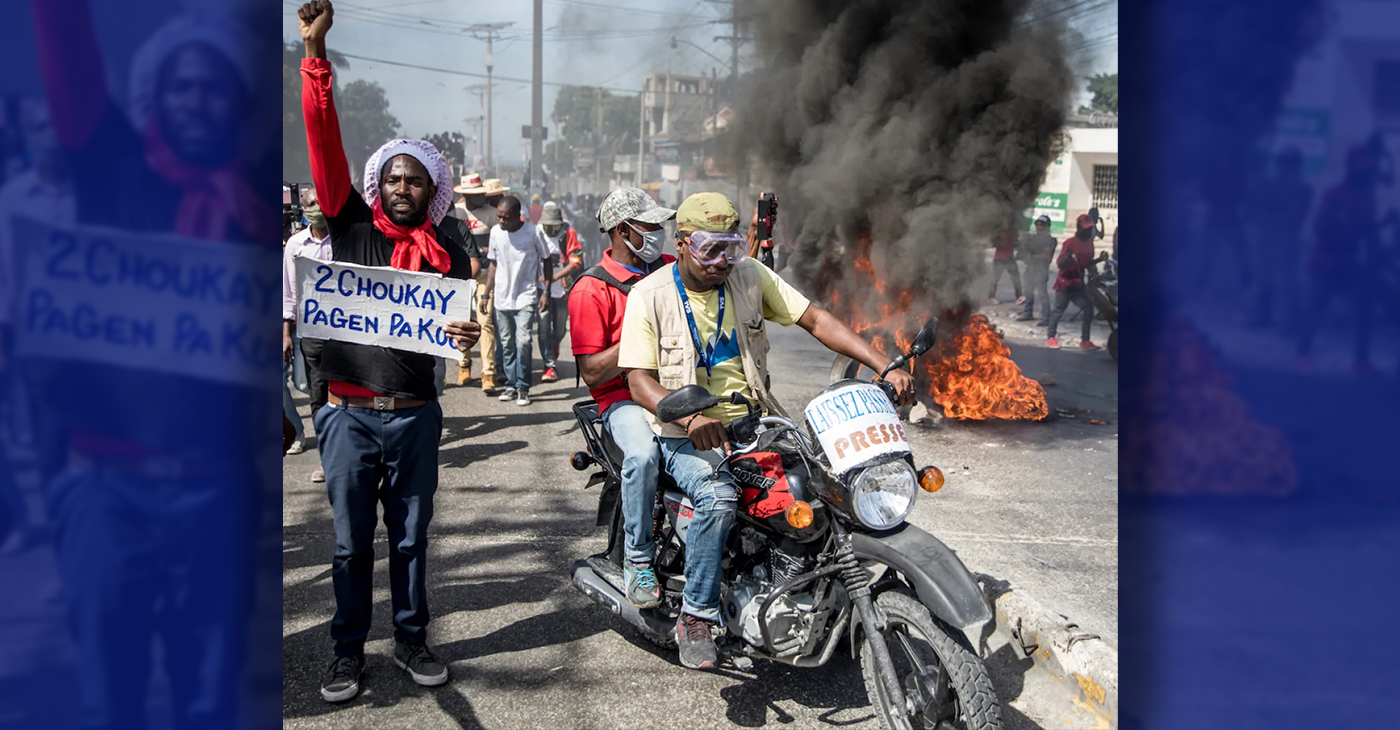
The United States has issued a firm warning to Haiti’s Transitional Presidential Council, cautioning against any political actions that could further destabilize the country as international pressure mounts for long-delayed elections.
In a statement posted on X late Wednesday, the U.S. Embassy in Haiti said Washington would view any attempt to alter the current governing arrangement as a serious threat to national stability, particularly if such moves benefit criminal gangs.
“The United States would consider that any person who supports such a destabilizing initiative, which favors the gangs, would be acting against the interests of the United States, the region, and the Haitian people, and will take appropriate measures accordingly,” the embassy stated.
The U.S. warned that any such maneuver would undermine efforts to establish a minimum level of security and stability in Haiti, where gang violence continues to escalate, and economic hardship is deepening.
The statement comes amid reports of internal divisions within the Transitional Presidential Council, with some members reportedly at odds with Prime Minister Alix Didier Fils Aimé. The precise cause of the disagreement remains unclear, but the council met behind closed doors earlier on Wednesday.
A spokesperson for the prime minister’s office said he could not comment on the situation, while the council’s seven voting members did not respond to requests for comment.
Council chairman Laurent Saint Cyr later issued a statement opposing any effort to weaken government stability at this critical juncture. He emphasized that Haiti is approaching major institutional deadlines, including February 7, when the transitional council is provisionally scheduled to step down.
“As major institutional deadlines for the nation approach, any initiative likely to fuel instability, confusion, or a breakdown of trust carries serious risks for the country,” Saint Cyr said.
He warned that unilateral decisions or short sighted political calculations could jeopardize the continuity of the state and further burden an already suffering population.
“Haiti cannot afford to make unilateral decisions or engage in short sighted political calculations that would compromise the stability and continuity of the state, as well as the well being of the already sorely tested population,” he added.
Haiti remains under intense international scrutiny as calls grow for elections to be held for the first time in nearly a decade, even as persistent violence and political uncertainty continue to complicate the path toward democratic governance.
Black Press
MN City Council Urges Walz to Pause Evictions During ICE Invasion
MINNESOTA SPOKESMAN-RECORDER — Council Member Pearll Warren called ICE’s presence “toxic.” “This does not sustain our families in the long term,” she said. “Are we bailing out property owners? This is a band-aid on a bullet wound.”

Minneapolis City Council Urges Eviction Moratorium Amid ICE Raids
By Clint Combs | The Minnesota Spokesman-Recorder
The Minneapolis City Council unanimously approved a resolution urging Gov. Tim Walz to impose a temporary eviction moratorium as ongoing ICE raids displace residents, shutter businesses, and destabilize housing across Minnesota.
All members of the Minneapolis City Council passed a resolution calling on Governor Tim Walz to impose an eviction moratorium during ongoing Immigration and Customs Enforcement (ICE) raids that have shuttered businesses, closed schools, and strained city budgets.
The resolution, sponsored by Ward 2 Council Member Robin Wonsley, urges Walz to issue an executive order that would prevent evictions for the duration of the federal immigration enforcement operations.
“ICE is creating a statewide crisis that requires our governor to step up and step in and ensure that nobody is evicted without an eviction moratorium,” Wonsley said. “Thousands of vulnerable families and residents are facing eviction as soon as February 1.”
Wonsley also criticized Minneapolis Mayor Jacob Frey and Gov. Walz for deploying police and National Guard, respectively, to respond to protesters and immigrant communities. “Governor Walz and Mayor Frey have been very clear that they are unable or unwilling to use law enforcement to protect residents at this time,” she said.
Council Member Jamal Osman emphasized that only the governor can issue an eviction moratorium. “That’s why we need leadership that stands with families, not leadership that leaves them on their own,” Osman said.
Council Member Jason Chavez praised community members assisting immigrants during the raids. “These are heroes that are literally in our communities, and they’re doing it because they love immigrants,” he said. “So while the federal government wants to demonize immigrant communities, folks in Minneapolis are saying, ‘We love our neighbors.’”
Chavez highlighted the fear facing residents. “The sad reality is that we do not know when this occupation in Minneapolis and in this state is going to end,” he said. “Our neighbors are actually not sheltering in place because they’re scared of being evicted from their rental units.”
Chavez urged Governor Walz to act. “We are calling on you, Governor, for an eviction moratorium,” he said. “I am not sure how many more people need to get shot in the leg for you to do your job. I’m not sure how many people need to get killed for you to call a state of emergency. I’m not sure how many homes need to get tear-gassed for you to call for a state of emergency.”
Council Member Lane Brown said, “We know there are solutions embedded in our community, and we know how to plant, grow and share them. But we need Governor Walz to step up and help us.”
Jess Zarik, co-executive director of Homeline, reported a surge in tenant concerns over ICE activity. “Over the last 45 days, we’ve seen a massive increase in calls from tenants specifically regarding the presence of ICE in our communities,” she said. “It’s not limited to Minneapolis or St. Paul. We’re hearing from renters across the state. The fear is widespread and growing.”
Tenants have reported that ICE agents show up in apartment complexes, and landlords allegedly assist them to grant access. “Agents are pulling fire alarms to force people out of their homes, and tenants are being threatened with deportation for asserting basic housing rights,” Zarik said.
Council Member Pearll Warren called ICE’s presence “toxic.” “This does not sustain our families in the long term,” she said. “Are we bailing out property owners? This is a band-aid on a bullet wound.”
Patrick Berry, a formerly unhoused resident now living in Stevens Square, responded to Warren, “‘Band-aid on a bullet wound’ is a poor choice of words considering that a woman is dead.”
Cecil Smith, president of the Minnesota Multi-Housing Association, supported Warren’s argument that the housing market is still recovering from Covid-era rent pauses. “Even this discussion is distracting our ability to attract resources for future development,” Smith said.
Clyde Warren, a member of the IPG Tenant Union, and fellow union members attended the rally before the Jan. 15 vote. “Whether or not people have status, a work permit, or citizenship, all immigrants are terrified right now,” he said. “This is not the story of one person. This is reality for hundreds and hundreds of our neighbors.”
Warren added, “What we’re seeing is economic harm pushed onto our people through this racist immigration enforcement while housing courts and eviction processes operate like nothing has changed.”
Dex Anderson, a disability advocate and Ward 10 resident, criticized Council Member Linea Palmisano for leaving during public comment. “Good Linea came back in time to hear this because apparently she didn’t want to hear public comment today,” he said.
Anderson emphasized the role of immigrant workers in disability care. “It’s BIPOC people helping people with disabilities with their care tasks, going to the doctor with their needs,” he said. He added that immigrant residents with disabilities are reluctant to seek medical care due to ICE activity.
Anderson described an incident involving Aliya Rahman, who was on her way to a traumatic brain injury center when she was pulled from her car by ICE agents. She ended up unconscious and was denied medical treatment while in ICE custody.
Clint Combs welcomes reader responses at [email protected].


Here is what you need to know about finding unique white elephant gift ideas that everyone wants to steal

Check out these proven ways to increase property value for commercial business locations

Lutheran North Celebrates Homecoming With 40 to 19 Win Over Westminster Christian

Luxury Car Features: Harman Kardon & More! #shorts

Tuskegee Airmen Field Reopens in The Ville, Giving St. Louis Youth a Place to Grow

2027 Chevy Bolt: Worth $29,990? Hidden Flaws Revealed! #shorts

Kia Seltos Luxury Car Tech: Prestige Package Features Explained! #shorts

Serena Williams: The Beast Narrative & Black Womanhood #shorts

Black Men Shattering Stereotypes: Intelligence Beyond Assumptions #shorts

Vegetarian Switch: My Brother’s Fasting Journey Inspired Me #shorts

Latest Massacre in Haiti Reveals Cruelty U.S. Deportations

Black Americans Have Doubts About the U.S. Food System

When Praises Go Up: SUGC Nominated for Prestigious Stellar Award.

Booked and Unbound: The Legacy of Black Women’s Literary Circles

U.S. Sole Nation to Oppose U.N. Resolution Correcting Africa’s Size on World Maps

COMMENTARY: Big Mama Said ‘Don’t Let Grief Break the Bank’

Prostate Cancer is Twice as Likely to Kill Black Men. Talking to Your Doctor Could Help Save Your Life

Outnumbered: Elbert Cox’s Equation for Greatness

Passing for White, Fighting for Black America: The Courage of Walter White

U.S. Open Influencers Spark Backlash over Ring Lights, Filming as Gauff and Osaka Speak Out
Lutheran North Celebrates Homecoming With 40 to 19 Win Over Westminster Christian
Luxury Car Features: Harman Kardon & More! #shorts
Tuskegee Airmen Field Reopens in The Ville, Giving St. Louis Youth a Place to Grow
2027 Chevy Bolt: Worth $29,990? Hidden Flaws Revealed! #shorts
Kia Seltos Luxury Car Tech: Prestige Package Features Explained! #shorts
Serena Williams: The Beast Narrative & Black Womanhood #shorts
Black Men Shattering Stereotypes: Intelligence Beyond Assumptions #shorts
Vegetarian Switch: My Brother’s Fasting Journey Inspired Me #shorts

Serena Williams: The Beast Narrative & Black Women’s Burden #shorts

Giving Back: 100 Book Bags for Twin Cities Youth #shorts
-
 Black History6 days ago
Remembering Chauncey Bailey as Student Journalists Face Threats to Truth-Telling
-

 Black Press3 days ago
OP-ED: Haiti TPS: Have We Lost Sense of Humanity?
-
 Black Press6 days ago
Poll: Becerra Widens His Lead Over Hilton; Californians Split on Wealth Tax
-
 Black History6 days ago
COMMENTARY: The Audacity of Joyce Beatty
-

 Featured1 week ago
Headlines and Hotlines 📱
-

 Black History5 days ago
Rulings Leave Questions Lingering in Nolan Wells Case
