
Business
3 Biggest Reasons to Open an IRA Today


(Courtesy of Flickr)
(The Motley Fool) – Opening an IRA can be one of the smartest financial decisions of your life. These retirement accounts have tremendous benefits, so if you don’t have one year, maybe now is the time to finally open one.
We asked three of our contributors for the best reason to open an IRA right now, and here is what they had to say.
Selena Maranjian: One of the biggest reasons to open an IRA today is because it can cost you a lot if you don’t. When it comes to your retirement, procrastination can be expensive and might even leave you eating hamburgers instead of steak. Beyond its tax advantages, one of the great benefits of an IRA (and most other investment accounts) is that it lets your investments grow over many years. That enables the magical effect of compounding.
Let’s run through an example. For simplicity’s sake, let’s assume you’re going to contribute $5,000 per year into an IRA, and that your money will grow at the stock market’s long-term average annual growth rate of about 10%.







Black History
Together Building Back Better
AFRICAN-AMERICAN NEWS AND ISSUES – DALLAS — For more than 57 years, the SHAPE Community Center has served as a cornerstone of Houston’s Third Ward, providing essential programs based on principles of unity and collective responsibility. Known as “The United Nations of The ‘Hood,” the center recently faced its most difficult challenge following a devastating electrical fire at the Nia Becnel Family Center.
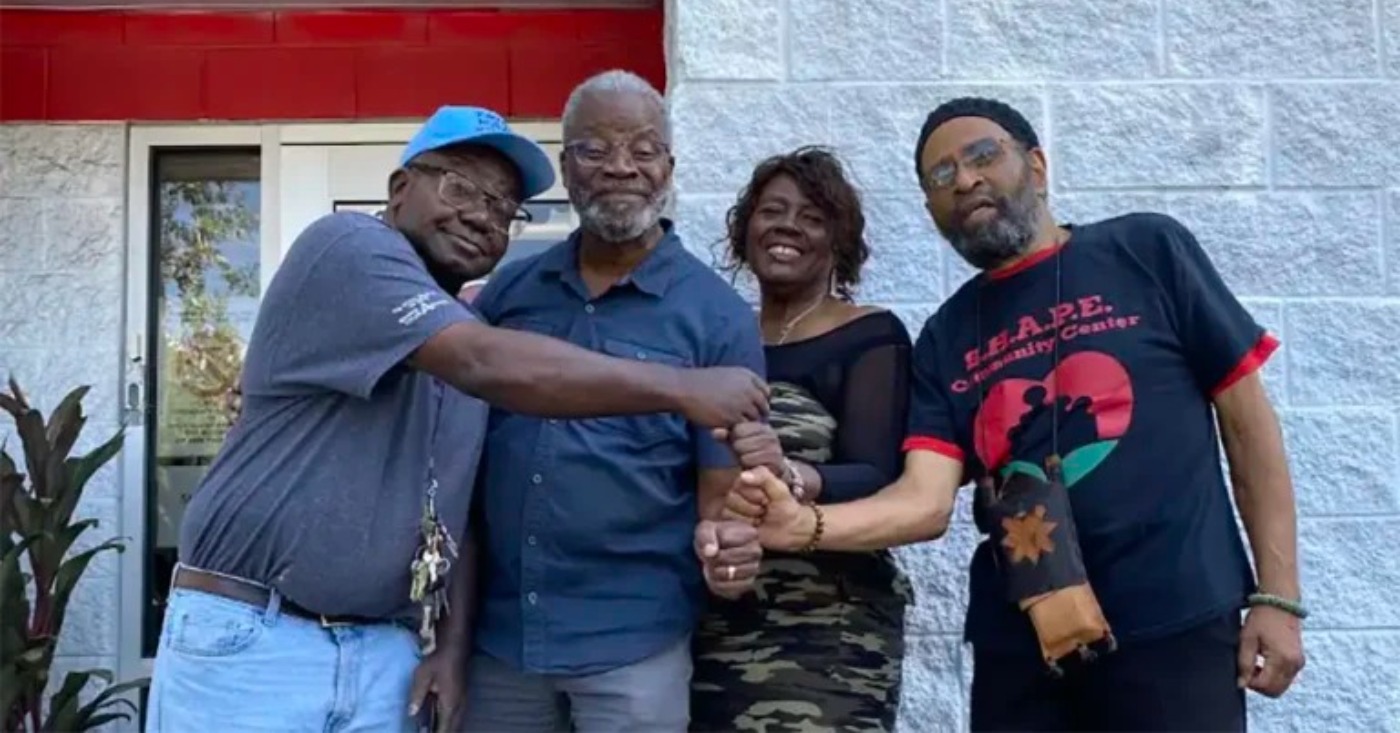
I’m going through the most challenging experience of my life with SHAPE,” said Deloyd Parker. He has served as the executive director of the historic SHAPE Community Center for over 57 years and is still energetic and driven by the love of serving the people. Known as “The United Nations of The ‘Hood,” SHAPE is a precious cornerstone of Houston’s Third Ward, serving generations of families through programs and activities, with emphasis on Unity, Self-Determination, Collective Work & Responsibility, Cooperative Economics, Purpose, Creativity, and Faith.
January 2027 will mark two years since a devastating electrical fire took place at SHAPE’s Nia Becnel Family Center, located at 3815 Live Oak. The building and priceless historical items were significantly damaged and lost. That included the “Wall of Fame” photo collection that adorned the interior walls. Nedzra Ward, President of the Board of Directors, shared how the fi rst few days aft er the fire were very trying for everyone who loved SHAPE and those who visited the sacred grounds were in shock and silence. “We knew we had to start working to get things back up,” said Ms. Ward who has been apart of SHAPE’s staff and board for decades. In the aftermath, Ms. Ward called the insurance company and then reached out to Charles Cave to be the lead project manager. They also reached out to engineers Brian Smith, Barbara Smith and Frank Brown, and other experts to formulate the group known as Together Building Back Better (TBBB).
The team met weekly at the Harambee Admin Building located at 3903 Almeda Rd. And to continue serving the people, Mr. Parker and team worked to get that building certified and operational, especially for the children. “Deloyd never stopped. He was the driving force for everything. He made sure that someone was taking care of licenses and that this place was being refigured. His whole goal was to have these kids back and in a safe environment,” said Ms. Ward. “We have served the people for 57 years and as a result of serving the people, the people are coming through,” said Mr. Parker. “It’s going to take more than a fi re to put us out.
Volunteers from the community stepped up to help at Harambee Admin Building. Many programs, events and activities have resumed including the weekly Elders Institute of Wisdom and enrollment is now open for the 2026-2027 After School Enrichment Program. Soft opening scheduled for November The desire was to reopen the gutted Live Oak location within a year but Ms. Ward and Mr. Cave described the many challenges SHAPE has faced in this rebuilding effort. The insurance did not cover everything that’s needed and tariffs
The post TOGETHER BUILDING BACK BETTER appeared first on African American News and Issues.
Based on reporting by African-American News and Issues – Dallas.
Black Press
Dallas Trinity FC Signs Kaiya Brewer to Academy Contract
THE DALLAS WEEKLY — Dallas Trinity FC has signed 15-year-old midfielder and forward Kaiya Brewer to an academy contract, allowing the Kansas City native to train and compete in the Gainbridge Super League while maintaining her collegiate eligibility. Brewer joins the professional club following a stint with Kansas City Current II and a successful youth career with the Utah Royals U19 ECNL.
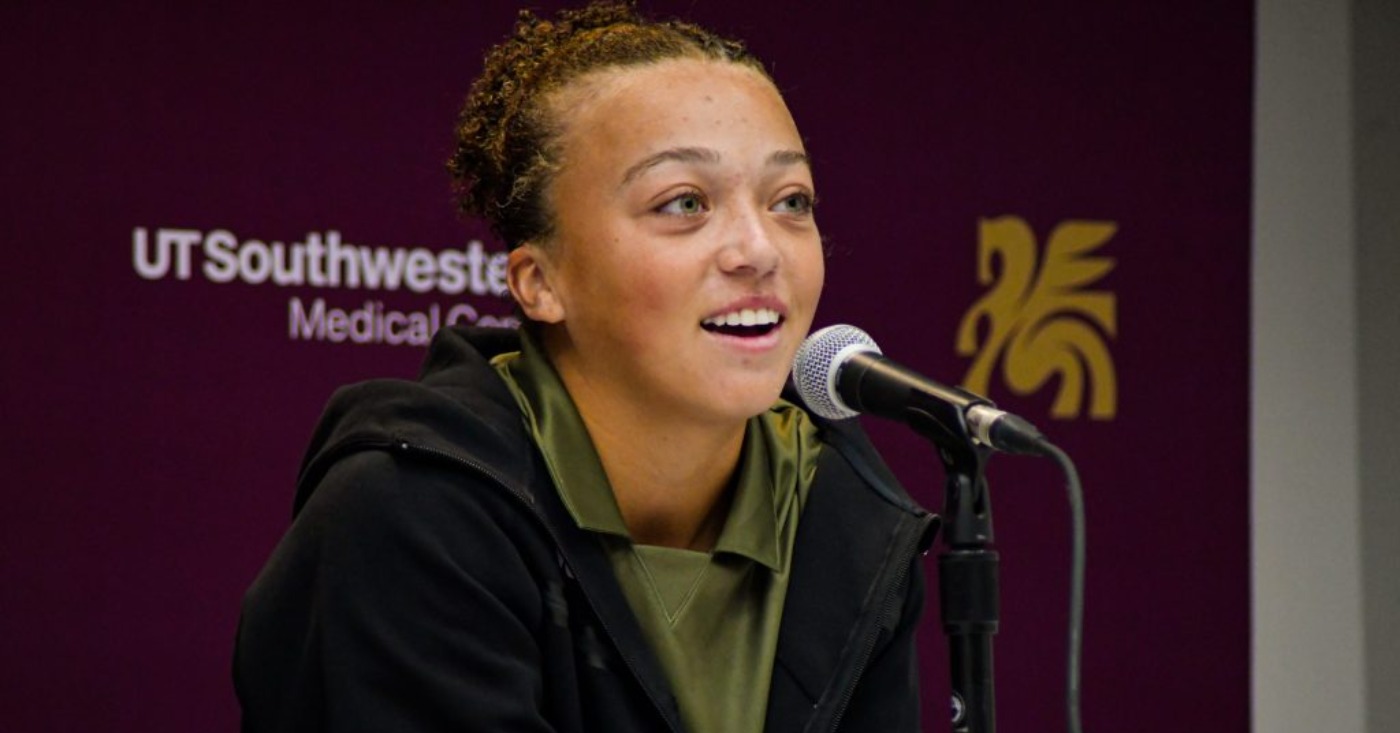
DALLAS (Oct. 21, 2026) – Dallas Trinity FC announced today that it has signed 15-year-old midfielder and forward Kaiya Brewer to an academy contract. The academy contract allows Brewer to train and compete with Dallas Trinity FC in the Gainbridge Super League while preserving her collegiate eligibility.
Brewer joins Dallas Trinity FC after competing with Kansas City Current II in the Women’s Premier Soccer League (WPSL). The Kansas City, Kansas, native also played for Utah Royals U19 ECNL, where she earned ECNL Midwest All-Conference First Team honors.
“Kaiya is an exciting young player with the opportunity to take an important next step in her development here in Dallas,” said Brian Corcoran, sporting director for Dallas Trinity FC. “Our academy pathway gives players the chance to challenge themselves in a professional environment while keeping their college options open. We look forward to supporting Kaiya as she grows within our club.”
Brewer made her first appearance for Dallas Trinity FC on Oct. 17, opening the scoring in the club’s 3-2 win over Chivas Femenil in the 2026 State Fair Clásico at Cotton Bowl Stadium. The international friendly did not count toward official league statistics.
“Kaiya brings pace, vision and a willingness to put pressure on opponents,” said Lee Nguyễn, first team manager and technical director for Dallas Trinity FC. “The Clásico was a great opportunity for her to test herself, and it was encouraging to see her take that chance and score. We’re excited to help her build on that experience and keep developing her game.”
Brewer joins her older sister, Dallas Trinity FC defender Meila Brewer, who signed with the club in September and is representing the United States at the 2026 FIFA U-17 Women’s World Cup in Morocco.
PLAYER BIO
Name: Kaiya Brewer
Pronunciation: KAY-uh BROO-er
Position: Attacker
Height: 5-7
Jersey Number: #26
Date of Birth: December 6, 2010 (15)
Hometown: Kansas City, Kansas
Nationality: United States
Previous Club: Kansas City Current II (WPSL)
TRANSACTION: Dallas Trinity FC signs midfielder and forward Kaiya Brewer to an academy contract. Terms of the transaction were not disclosed.
The post Dallas Trinity FC Signs Kaiya Brewer to Academy Contract appeared first on Dallas Weekly.
Based on reporting by The Dallas Weekly.
Black Press
Dallas Mavericks Unite Players, Legends and the Oak Cliff Community at 2026 Community Tip-Off
THE DALLAS WEEKLY — The Dallas Mavericks launched their 2026-27 season by bringing the annual Community Tip-Off directly to the residents of Southern Dallas. Held at Halperin Park in Oak Cliff, the free event attracted approximately 3,000 children and featured current stars alongside franchise legends.
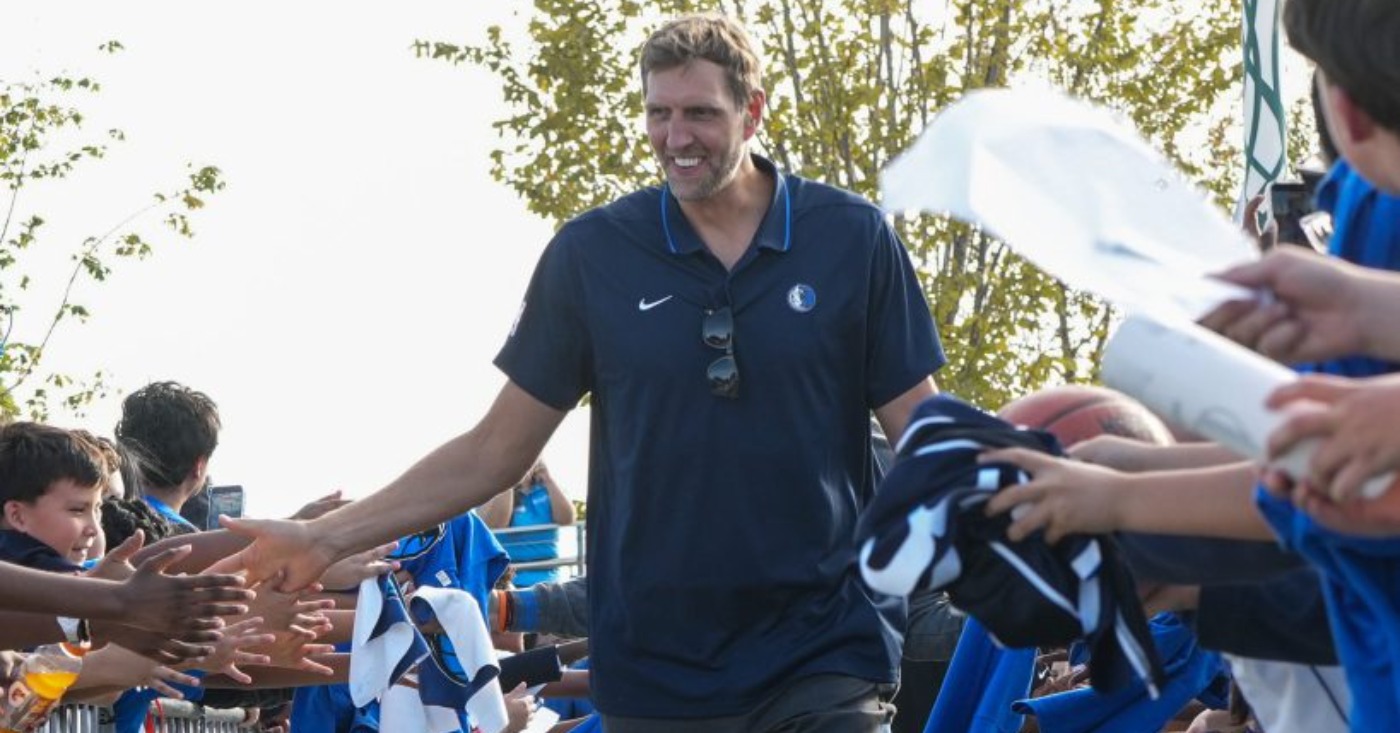
Dirk Nowitzki played 21 seasons for the Dallas Mavericks, becoming one of the most recognizable players in franchise history. However, some of the younger fans attending the team’s 2026 Community Tip-Off had a question for the Mavericks legend.
“I’m sure some of these kids didn’t know who I was because they asked,” Nowitzki said. “Some of them asked me, ‘Did you play for the Mavs?’ I think so, when your parents were around.”
It was one of many interactions that took place Monday afternoon as the Mavericks brought their 2026 Community Tip-Off directly to the people of Southern Dallas at Halperin Park in Oak Cliff.
Thousands of children had the opportunity to play basketball, enjoy festivities and spend time with their favorite Mavericks players and legends at the free community event, presented by Ticketmaster.

Mavericks president of business operations Ethan Casson spoke about the planning that went into bringing the celebration to Oak Cliff and the organization’s desire to create something different for the community.
“I think what we wanted to do for this season was really establish something that was about creating something more substantial, being very intentional with our efforts,” Casson said. “What if we showed up in a very grand way?”
That vision helped bring the Mavericks to Halperin Park, a bridge park constructed over Interstate 35E to reconnect Oak Cliff neighborhoods that had been separated by the highway for decades.
“We recognize what this park physically represents, which is connecting communities,” Casson said. “And when you’re able to visit, which we did with April and her team, the vision started to come to life.”
The park officially opened in May after years of planning, fundraising and community involvement. The Mavericks saw an opportunity to bring basketball and entertainment to a space created to strengthen relationships between neighborhoods.
April Allen, president and CEO of the Southern Gateway Public Green Foundation, appreciated the organization choosing Oak Cliff for its season-opening celebration.
“For the Mavs to come here to Oak Cliff, to spend the time, energy and resources that you see here is really a testament to their commitment to community,” Allen said. “We’re so grateful and honored that they chose us for this experience.”
The Mavs Foundation also presented a $50,000 grant to Halperin Park during the celebration, providing additional financial support for the community space.
Dallas City Manager Kimberly Bizor Tolbert attended the event and emphasized the importance of bringing celebrations and resources to Southern Dallas rather than leaving communities behind.
“We’ve got to continue to make sure that our community members are not left behind, and we’ve got to take things and be bold about going and being a part of community assets like Halperin Park,” Tolbert said.

(Roberto Hernandez/Dallas Mavericks)
The park represents an opportunity for neighborhoods to reconnect while creating a space where residents can gather and build relationships.
“I see that park as now a bridge that’s going to help us do that, even at a higher level,” Tolbert said.
Nowitzki also recognized the significance of the park and the investment that went into bringing the project to life.
“We all know what this park means to Dallas,” Nowitzki said. “Obviously, it’s been a project that’s been in the works for a long, long time.”
The Mavericks transformed Halperin Park into a gathering place filled with children playing basketball, visiting food vendors and interacting with players they had watched throughout the season.
Casson estimated approximately 3,000 children participated in the Community Tip-Off, including students from kindergarten through sixth-grade after-school programs.
Parents, teachers, local businesses and nonprofit organizations also attended, helping bring different parts of the Southern Dallas community together for the afternoon.
Approximately 200 Mavericks staff members helped organize the celebration, along with basketball operations personnel and corporate partners. Casson emphasized that bringing the entire organization together was an important part of making the event possible.
“When I say it was all hands on deck, it was all hands on deck,” Casson said. “It was really just one goal. How do we make it grand?”
Once the celebration began, the players had opportunities to interact with young fans and share messages about pursuing their dreams.
Mavericks forward Morez Johnson Jr. was among those who took the opportunity to encourage children to believe in themselves and work toward their goals.
“I think it means a lot, you know, to give these kids a lot to look up to,” Johnson said.
Johnson also reflected on messages shared with the children by his teammates, including P.J. Washington, Kyrie Irving and Cooper Flagg, about working hard and remaining focused on their dreams.
As one of the newer members of the Mavericks organization, Johnson appreciated the welcome he received and the chance to begin building relationships with the Dallas community.
“They welcomed me with open arms,” Johnson said. “I’m excited to get a chance to spend some time with these kids when I’m done with the interviews. I’m grateful to be here.”
For Casson, having players interact with children was one of the most meaningful parts of the celebration. He believes many athletes can relate to the experiences of young fans because of the coaches, teachers and mentors who helped shape their lives.
“To see your superheroes in person and know that those superheroes raised their hand and said they want to be here and be a part of it for this group is pretty special,” Casson said.
Nowitzki has experienced that relationship with Mavericks fans for more than two decades. Although some of the children were too young to remember his playing career, he appreciated the opportunity to connect with another generation.
“It’s cool to still get embraced by the city that I’ve played for for so long and now is my home,” Nowitzki said. “So definitely special. It means a lot.”
While the Community Tip-Off helped introduce the Mavericks to another generation of fans, the organization hopes to continue bringing similar celebrations to neighborhoods throughout Dallas.
Casson said the team plans to make the event an annual tradition, with future celebrations taking place in different communities.
“This is just the beginning,” Casson said. “This celebration we plan to bring to different communities, special communities throughout Dallas, year after year after year.”
The organization’s plans to visit other neighborhoods will not end its involvement in Southern Dallas. Casson emphasized that the Mavericks intend to continue supporting the community through additional programs, resources and investments.
Halperin Park was built to reconnect neighborhoods that had been separated for decades. On Monday, it also brought together generations of Mavericks fans, from those who watched Nowitzki throughout his career to children meeting him and the current team for the first time.
The Mavericks came to Oak Cliff to celebrate the beginning of the 2026-27 NBA season, but their goal extends beyond one afternoon of basketball and entertainment.
For Casson, the lasting impact of the celebration will depend on the organization’s willingness to continue showing up for the communities it serves.
“I think it’s important when you do any event, big or small, that it’s not a one-off,” Casson said. “This is about showing up again and again and again in different ways.”
The post Dallas Mavericks Unite Players, Legends and the Oak Cliff Community at 2026 Community Tip-Off appeared first on Dallas Weekly.
Based on reporting by The Dallas Weekly.
Black Press
Chase Launches Fraud & Scam Prevention Month
JPMorganChase is launching Chase Fraud & Scam Prevention Month this November to help consumers protect their personal information and finances. As the holiday season approaches, the nationwide initiative provides education on avoiding sophisticated tactics used by criminals, such as phishing and impersonation scams. The program features free workshops hosted by community managers across the lower 48 states and builds on existing financial wellness efforts that have reached over one million customers. Read more to learn how these new resources and technologies aim to stop financial crimes.

New initiative builds on Chase’s longstanding commitment to fraud and scam prevention education nationwide.
NEW YORK, Oct. 19, 2026 – Scams can happen to anyone. That’s why Chase is dedicating November to helping consumers protect themselves.
As consumers prepare for the holiday season, criminals are increasingly using sophisticated tactics to pressure people into sending money, sharing personal information and making decisions they’ll later regret.
This November, JPMorganChase is launching Chase Fraud & Scam Prevention Month, a nationwide consumer education initiative designed to help people recognize common scams, avoid in-the-moment mistakes and better protect their money and personal information during the holiday season.
The initiative builds on Chase’s longstanding efforts to help consumers navigate fraud and scams through education, awareness and community-based programming. Through its financial wellness initiatives, Chase has served more than 1 million customers and continues to host more than 1,000 fraud and scam prevention workshops annually across the country.
Throughout November, Chase Community Managers will host free educational workshops in all lower 48 states, as Chase continues to expand digital resources and consumer awareness efforts focused on helping people spot scams and take practical steps to protect themselves. Programming will address scams commonly seen during the holiday season, including impersonation scams, package delivery phishing attempts, gift card scams, fake online deals and fraudulent charity solicitations.
“Scammers are constantly adapting their tactics, making education and awareness more important than ever,” said Jennifer Roberts, CEO of Consumer Banking at Chase. “For years, JPMorganChase has invested in helping consumers recognize scams, understand warning signs and feel empowered to protect themselves. Chase Fraud & Scam Prevention Month builds on that commitment by providing practical guidance that can help people make safer decisions during the holiday season.”
Fraud and scam prevention remains a key component of Chase’s broader commitment to consumer financial wellness. Through educational workshops, local partnerships and community outreach, Chase helps communities build financial confidence and stay informed about evolving fraud and scam threats. The firm also works closely with law enforcement to share scam trends and insights and help drive more effective interventions as agencies work to combat financial crime.
Ongoing Fraud and Scam Prevention Efforts
Beyond consumer education, Chase continues to invest in technology, partnerships and customer protections designed to help prevent fraud and scams before they occur.
Scam prevention is embedded throughout the customer experience, from account opening and authentication to payments and customer service interactions. Chase continues to strengthen protections across the customer journey through targeted warnings, risk-based interventions, behavioral science-informed approaches and frontline employee training. These efforts help employees identify potential scams, recognize warning signs and better support customers who may be at risk of fraud or scams.
In addition, the firm continues to invest in next-generation security tools, including expanded use of passkeys and other authentication technologies designed to help defend against phishing, social engineering and account takeover attempts, as well as Trusted Contact Person, which allows customers to designate a trusted adult who may be notified of certain transactions to help guard against potential fraud or financial exploitation.
Earlier this year, JPMorganChase also announced nearly $14 million in philanthropic investments focused on consumer awareness, real-time prevention and victim support.
For more information about Chase’s fraud and scam prevention efforts and tips, visit Chase.com/security and attend a local fraud and scam prevention workshop.
About Chase
Chase is the U.S. consumer and commercial banking business of JPMorgan Chase & Co. (NYSE: JPM), a leading financial services firm based in the United States of America with operations worldwide, assets of $5 trillion and $375 billion in stockholders’ equity as of June 30, 2026. Chase serves more than 87 million consumers and 7.5 million small businesses with a broad range of financial services, including personal banking, credit cards, mortgages, auto financing, investment advice, small business loans and payment processing. Customers can choose how and where they want to bank: 5,100 branches in 48 states and the District of Columbia, 14,500 ATMs, mobile, online and by phone. For more information, go to chase.com.
Black Press
Fate of Bay Area Public Transit Hinges on Regional Transit Measure
Voters in five Bay Area counties will decide the fate of a regional sales tax measure on Nov. 3 that could determine the future of local public transportation. If approved, the Regional Transit Measure would implement new sales taxes in Alameda, Contra Costa, San Mateo, Santa Clara, and San Francisco counties starting in 2027. The funding aims to address massive financial deficits facing agencies like BART and Muni, providing nearly $1 billion annually to prevent station closures and service cuts. Read more.

On Nov. 3, voters in five Bay Area counties will vote on a regional sales tax measure that, if it fails, could prompt local transit agencies to close train stations and cut bus service.
If passed, the Regional Transit Measure, or RTM, will impose a half-cent sales tax in Alameda, Contra Costa, San Mateo, and Santa Clara counties as well as a one-cent sales tax in San Francisco starting April 2027.
The tax would raise an estimated $980 million annually for 14 years to fund the region’s public transit agencies, which are struggling with massive financial deficits. Revenue would go to BART, Muni, Caltrain, Alameda-Contra Costa Transit, the Santa Clara Valley Transportation Authority, the San Francisco Bay Ferry, Golden Gate Transit, and other transportation agencies operating in the five counties.
In California, a regional measure for a new sales tax would normally require a two-thirds majority approval if the state Legislature directly places it on a ballot. Transit advocates, however, chose to collect signatures to make the sales tax a citizen-initiated ballot measure that would lower the threshold to a simple majority of votes cast across the five counties.
The RTM received more than 241,000 signatures, exceeding the 186,000-signature threshold required to qualify for the ballot.
Black Press
Trader Vic’s Returns to Its Oakland Roots
Trader Vic’s, the internationally recognized brand and birthplace of the original Mai Tai, has officially returned to its roots in Oakland. Originally founded in 1934 on San Pablo Avenue before moving to Emeryville, the hospitality giant has launched Trader Vic’s Outpost at Oakland International Airport’s Terminal 2. The new full-service location offers travelers breakfast, lunch, dinner, and cocktails in a 108-seat space designed to celebrate the city’s status as a top national food destination. Visit the website to read more.
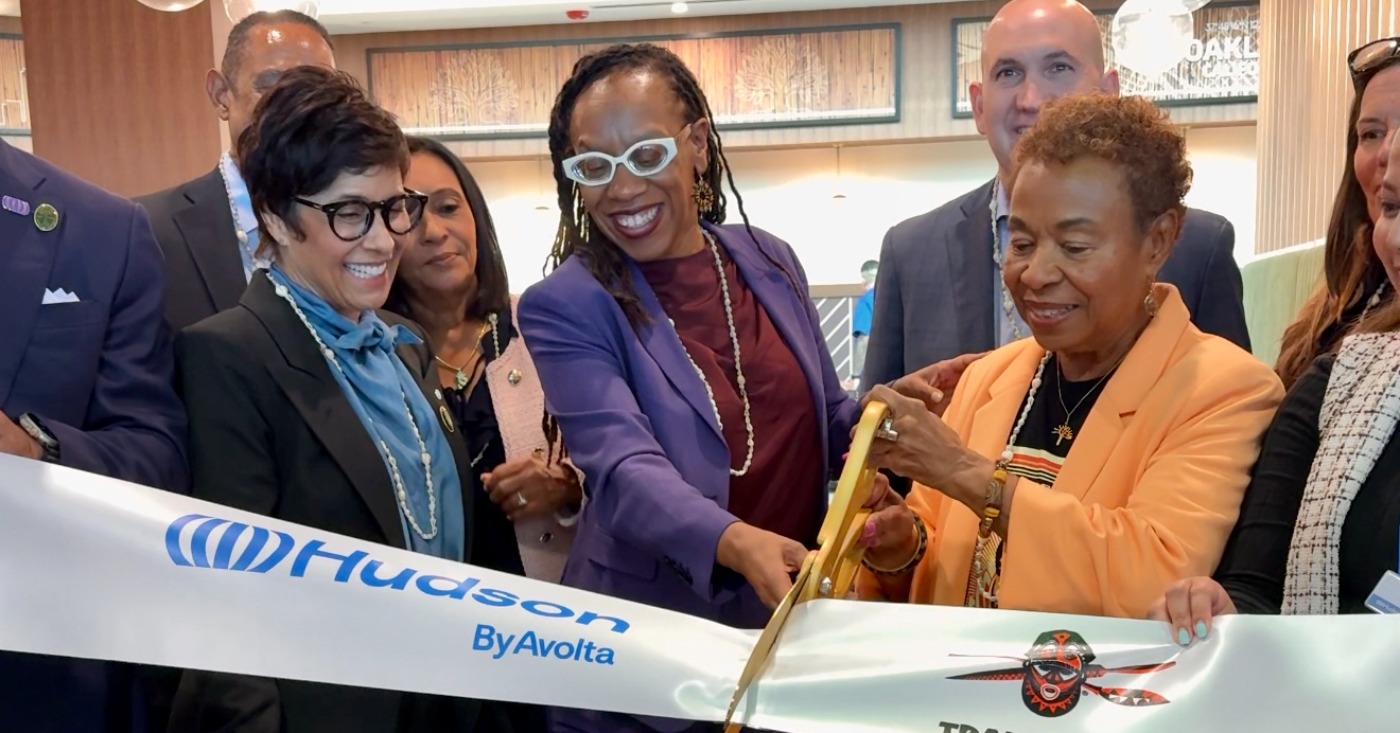
Oakland has always been a city of innovators, entrepreneurs, visionaries, and world-class hospitality. Trader Vic’s—the birthplace of the original Mai Tai – first opened in Oakland back in 1934 on San Pablo Avenue, long before becoming an internationally recognized global brand.
More than 50 years after it moved to Emeryville, Trader Vic’s is returning to its roots. Oakland Mayor Barbara Lee touts the return as another victory for Oakland.
“My administration is deeply committed to backing businesses like Trader Vic’s and Plum Market—partners who invest in our city, uplift our local workforce, and support thousands of local jobs,” Lee said.
The latest Trader Vic’s – called Trader Vic’s Outpost – is located at the Oakland International Airport in Terminal 2 near Gate 25 and had a soft opening in August.
With 108 dining seats, 28 bar seats and a counter for standing-room customers, travelers from around the world can have a full-service restaurant and bar experience or take-out for those with planes to catch.
Open from 6 a.m. to 10 p.m., breakfast, lunch, dinner, cocktails will be served.
Trader Vic’s returning to its roots confirms Condé Nast’s decision to name Oakland the #1 Food City in America two years in a row, and just earlier this month, ranked Oakland #6 on their list of Best Cities in the U.S.!
“The opening at OAK is incredibly meaningful for us,” said Rhett Rosen, CEO of Trader Vic’s Hospitality Group, according to the company website. “Trader Vic’s was born in the Bay Area, and this new location gives us the chance to welcome travelers with a taste of that original spirit before they take off. It brings together everything people love about Trader Vic’s — great cocktails, flavorful food, warm hospitality and a little sense of escape — in a place that connects Oakland to the world.”
Trader Vic’s is an Oakland institution and one of the region’s most recognizable hospitality brands, said Port of Oakland Director of Aviation Craig Simon on the web site.
“Travelers are increasingly seeking dining options that are memorable, locally rooted, and uniquely representative of the communities they are visiting. Trader Vic’s delivers all of that while providing a high-quality food and beverage experience for our guests. We are proud to welcome this hometown favorite to Terminal 2,”
The original Trader Vic’s in Oakland:
In 1934, with an investment of $500, Bergeron opened his initially small restaurant at 65th Avenue and San Pablo, serving comfort foods for lunch and dinner and beers and whiskeys. As his clientele grew, so did his restaurant, expanding space and menu options. After visiting this establishment, famed San Francisco Chronicle columnist Herb Caen proclaimed that the “best restaurant in San Francisco is in Oakland.”
There were as many as 25 franchises worldwide, including the U.S. Trader Vic’s is now headquartered in Martinez.


Together Building Back Better

Homecoming Ends in Gunfire Outside FAMU: 12 Hurt, Six of Them Children
COMMENTARY: Bring on the Positive Calvary

Retirement Triggers Doctor to Pen Book for Young Audience

Fatigue, Bloating, and Inflammation: Spotting the Subtle Signs of MASLD

Metro Detroit Faith Leaders Call out Islamophobia in Michigan Senate Race

Dallas Trinity FC Signs Kaiya Brewer to Academy Contract

Dallas Mavericks Unite Players, Legends and the Oak Cliff Community at 2026 Community Tip-Off

Brooklyn Roots and Artistic Genius

NCCU Snap Three – Game Losing Streak with Win over Delaware State University

OP-ED: Haiti TPS: Have We Lost Sense of Humanity?

Remembering Chauncey Bailey as Student Journalists Face Threats to Truth-Telling

All Skinfolk Ain’t Kinfolk

Poll: Becerra Widens His Lead Over Hilton; Californians Split on Wealth Tax

Rulings Leave Questions Lingering in Nolan Wells Case

Latinas Deserve Equal Pay. Unions Help Make It Happen.

Why Black Artists Struggle to Sell Tours

Zakiya Jendayi Arrested, Locked Out of Home by Sheriff’s Deputies

COMMENTARY: The Audacity of Joyce Beatty

A $2.1 Trillion Wellness Industry Never Built a Daily Practice for Black Children. So This Atlanta Family Did.

East Side Shoutout! Sports Talk & Guest Invite! #shorts

Black Girl Walk in the Rain at George Floyd Square | Protect Your Peace | MSR

Stop Overpaying for Car Insurance: Compare 3–5 Quotes #shorts

A $50K SUV Becomes $66K—Are the Options Worth It? #shorts

Dr. Charles Drew – Blood Banking and Preservation

15 Years Together: The Surprising Joy of Discovering Your Partner #shorts

Wala Blegay on the Future of Energy Grid Stability and Data Center Concerns

Gopher Football: Can They Rekindle 2019 Magic Or Are They Just Average? #shorts

The Conversation with Al McFarlane (10/27)

Citizen Savings Bank: Oldest Black-Owned Bank in US #shorts
-

 Black History1 week ago
OP-ED: The Black Church Writes AI’s Next Chapter
-

 Featured1 week ago
Tamiko Armstead | 2026 Lifetime Achiever in Education
-

 Black History1 week ago
Practitioners of African Traditional Spirituality Offer Ancestral Reverence Ritual Oct. 31
-
 Art1 week ago
Kickstarter CEO Everette Taylor Shares Tips on Creating and Growing a Business
-
 Black History1 week ago
Columbus’s Oldest Businesses Still Open: 10 That Have Lasted 75+ Years
-

 Black History1 week ago
COMMENTARY: BIG MAMA SAID: Don’t Throw Away the Gift Just Because It Came Wrapped Wrong
