
Commentary
2018 YEAR IN REVIEW – COMMENTARY: The Cosby Trial
NNPA NEWSWIRE — When viewed in its entirety, the 87-page civil disposition document is rich with consistent denials of wrongdoing by Cosby and explanations of events that were never reported by mass media, including that he and Andrea Constand had engaged in an ongoing consensual relationship, one which Cosby desperately hid from his wife of more than a half-century.


By Stacy M. Brown, NNPA Newswire Correspondent
@StacyBrownMedia
If it wasn’t the most read story of the year, the trial of comedian and former “America’s Dad,” Bill Cosby – along with his conviction, sentencing and appeal – likely proved the most written about.
With its coverage of the Cosby case’s unbelievably biased and mischaracterized reporting, mainstream media outlets provided clear examples of the combustible President Donald Trump’s catch phrase: “Fake News.”
When speaking with African Americans in position to potentially influence public perceptions, the Black Press found they too were misled because of heavy reliance on the coverage of mainstream.
Most Americans believe that Cosby’s civil deposition was his admission of plying women with unwanted Quaaludes and then sexually assaulting them. However, most Americans were not in the courtroom from jury selection to verdict – in both trials. And relatively few heard every bit of testimony or read Cosby’s earlier civil deposition.
When viewed in its entirety, the 87-page civil disposition document is rich with consistent denials of wrongdoing by Cosby and explanations of events that were never reported by mass media, including that he and Andrea Constand had engaged in an ongoing consensual relationship, one which Cosby desperately hid from his wife of more than a half-century.
When asked in the deposition, by Constand’s lawyer, Delores Troiani, about Quaaludes and why he received a prescription for them in the 1970s, Cosby answered:
“What was happening at that time was that that was – Quaaludes — happen to be the drug that kids, young people were using to party with and there were times when I wanted to have them just in case.”
Jimmy “JJ” Walker, the former “Good Times” star who co-starred with Cosby and screen legend Sidney Poitier on the film, “Let’s Do it Again,” said “everyone was using Quaaludes in the 1970s. Women wanted them, and men wanted them.”
Troiani next asked, “Did you ever give any of those young women the Quaaludes without their knowledge?” Cosby answered, “No.”
With headlines and newscasts leading stories with “Cosby Admits to Drugging Women,” and “Cosby Admits he Plied women with Quaaludes for Sex,” the general public continues to inaccurately believe that the fallen star admitted to secretly and repeatedly “slipping a mickey” to women in order to engage in sex with them.
However, the deposition reveals that women he offered Quaaludes to, knew what they were taking and readily accepted the drug. One woman who testified against Cosby at trial said she’d even taken a Quaalude prior to going to Cosby’s house because she, “wanted to get in the mood.”
Constand, the only Cosby accuser whose accusations have led to criminal trial, was actually never offered Quaaludes, yet testimony to the contrary was inexplicably admitted by the judge and exploited by the district attorney.
Further, and perhaps more troubling, is what’s in the deposition but was not reported by mainstream media, are the details of the night in question between Cosby and Constand.
Cosby explains to Costand attorney Troiani, that on the night in question, he and Constand engaged in consensual foreplay. They spoke of her anxiety and trouble sleeping and he offered her Benadryl to help her to relax, not Quaaludes. Afterwards, according to Cosby’s own words in the deposition, they proceeded to “have a necking session.”
They kissed passionately, she “got on top of me, and we necked,” he said – none of which was found in the heavily redacted version that Troiani and District Attorney Kevin Steele have spoken about and that the mainstream media reported. It was also redacted at trial and never heard by the jury.
Cosby told Troiani that Constand removed her hand from his penis and used her hand to shove Cosby’s hand further down her pants. “She was moaning,” Cosby said. “She did not stop me, and I want to go,” he said.
Following the encounter, Cosby prepared a blueberry muffin for Constand and her favorite red zinger tea which she bit a piece of the muffin and sipped the tea. “I feel a glow. I feel that Andrea has a glow about our sexual moment. She is now facing me and facing the living room,” Cosby said.
“I walk her out. She does not look angry. She does not say to me, don’t ever do that again. She doesn’t walk out with an attitude of a huff … And, she went out the door and went to the car. I said to Andrea, call me when you get home.”
Contrary to what’s been reported and what Constand testified at trial, she never went to sleep and was never unconscious. Further, Cosby discussed the various times he and Constand, without the use of a Benadryl tablet, had engaged in kissing and petting.
In describing the relationship, Cosby told Constand’s attorney how her client wanted “to do something about her – I say behind – but she says, butt. She wanted to tighten up her butt and have a great butt… we were able to talk about exercises and things like that.”
When asked whether he thought Constand had “grandfatherly feelings” toward him, Cosby said no.
When Troiani asked why not, Cosby responded:
“She didn’t ask for a quarter or to sit on my lap. I have no idea what you’re talking about. You don’t grab your grandfather’s penis and massage it.”
Bob Law of the National Black Leadership Alliance appealed to African Americans not to be hood-winked by Cosby’s conviction.
“Before you rush to judgment on Bill Cosby be aware of the American Standard of Justice that is rooted in white supremacy and white privilege. The news accounts that he confessed were fake. Actually, according to spectators in the court room, there were so many contradictions, suppressed testimony as well as breach of process in jury selection, including the prohibited opening of a sealed deposition; that in reality there was no trial,” Law said in a letter signed and endorsed by the alliance and other civil rights activists.
“Bill Cosby was tried and convicted without any actual evidence that his ‘crimes’ had ever been committed, no police reports, no medical records, no collaborating witnesses, just the accusations of white women recalling events that occurred 30 years in the past. And that is in opposition to the legal principle that the accuser cannot bring the action and also be the witness without any collaborating evidence,” Law said.
Since the conviction and subsequent sentencing in September, Cosby’s wife Camille has written two op-eds for BlackPressUSA.com, one calling on African Americans to get to vote in the midterm election and the other about racism, hate groups and voting rights.
In each, she condemned her husband’s prosecutors and the judge.
“Our ancestors fought for the right to [vote]. They were jailed, were beaten, were killed for fighting for our right to vote. Yet, too often, we do not exercise that most important right. We overlook the mid-term elections because we forget how greatly they can impact our lives,” Camille Cosby said.
“But, as I learned from [Montgomery County District Attorney] Kevin Steele’s election in 2015, a corrupt politician at any level is a danger to the American people, and even more so when that politician has promised to act in service of his own toxic ambitions and racial hatred,” she said.












Black Press
Campus Accountability: Universities Must Do More to Address Sexual Assault
SOUTHERN UNIVERSITY – SOUTHERNDIGEST — Colleges and universities are meant to be safe environments for learning and personal growth, yet recurring reports of sexual assault continue to challenge the effectiveness of institutional protections.

College campuses are supposed to be places where students can learn, grow and feel safe. However, reports of sexual assault at universities across the country continue to raise questions about whether institutions are doing enough to protect their students and hold individuals accountable.
From Louisiana State University to Harvard University and Cornell University, campus sexual assault cases have brought renewed attention to how colleges investigate allegations, discipline students and support survivors. For many, the concern is not only the actions of students accused of sexual misconduct but also how university administrators respond when these situations occur.
At LSU, recent reporting has raised questions about the effectiveness of the university’s Title IX process. According to WBRZ, more than 300 sexual assault reports were made through LSU’s Title IX process between 2022 and 2025, with three resulting in disciplinary action. Although not every report results in a finding of responsibility, the numbers raise important questions about how institutions communicate outcomes and address reports of misconduct.
Cornell University has also faced scrutiny following allegations involving seven students and an alleged sexual assault at a fraternity house in 2024. The university’s investigation resulted in different disciplinary actions, including expulsions and suspensions. However, questions about one student’s return to campus and housing arrangements have continued to draw criticism.
These cases highlight a larger issue: University accountability cannot stop at having a Title IX office or publishing policies in a student handbook.
Title IX prohibits sex-based discrimination in federally funded education programs and addresses sexual harassment and sexual violence. Universities must have procedures for responding to complaints, conducting investigations and providing supportive measures. However, having policies in place means little if students do not understand them or believe reports will be handled appropriately.
Students who are found responsible for sexual misconduct should face consequences that reflect the seriousness of their actions. Universities should also examine whether their investigative procedures are timely, whether survivors receive adequate support and whether disciplinary decisions are consistently enforced.
Accountability must also include university administrators. Institutions should be transparent about their procedures, provide clear reporting options and regularly review whether their policies are working.
At the same time, every student involved in a disciplinary proceeding deserves a fair investigation and an opportunity to respond to allegations. Protecting survivors and respecting due process should not be treated as competing priorities.
Ultimately, universities have a responsibility that extends beyond academics and athletics. Students deserve to know that their safety matters and that misconduct will be taken seriously. A university’s commitment to student safety should be measured not only by the policies it publishes but also by the actions it takes when those policies are tested.
Based on reporting by Southern University – SouthernDIGEST.
Black History
COMMENTARY: Big Mama Said: Don’t Just Remember the Village When You Need Votes!
TEXAS METRO NEWS — With the conclusion of Election Day, political campaign signs have disappeared and the frequent visits from candidates to local churches, barbershops, and community centers have come to an abrupt halt.
Big Mama used to say, “Baby, don’t come knocking on my door only when you need something. Come see about me when you need something, too!” And if you knew my Big Mama, you knew that wasn’t a suggestion. That was a standard!
Well, Election Day has come and gone. The campaign signs are coming down, the political commercials have disappeared, and some politicians have already forgotten the roads leading into our neighborhoods. Isn’t it amazing how quickly folks can find our churches, barbershops, restaurants, and community centers when they need our votes? They shake hands, hug babies, take pictures, and some even learn a gospel song! But Big Mama would ask, “Baby, now that they’ve counted our votes, who’s counting our needs?”
Where are they when our schools need resources, seniors need assistance, Black-owned businesses need contracts, and young people need mentors and jobs? Big Mama would remind us, “You can’t eat a handshake, and a photograph won’t pay the light bill!”
But here’s where the village must accept some responsibility. We cannot keep building election machines that disappear after Election Day. We need an ecosystem, connecting our churches, businesses, nonprofits, fraternities, sororities, educators, and community leaders into a year-round network of opportunity, accountability, and collective progress.
Imagine turning voter mobilization into economic mobilization. Imagine churches connecting families to resources, businesses opening doors for young entrepreneurs, and elected officials reporting measurable results instead of delivering another campaign speech. That’s how we turn political influence into community investment.
And let’s stop measuring success by how many politicians attend our events. Let’s count jobs created, contracts awarded, young people mentored, and promises kept. Accountability isn’t partisan. It’s personal, and it belongs to the entire village.
Now, I’m asking you, my readers: Send me the name of an organization, business, or community initiative we should invest in and support. Let’s connect our resources and build an ecosystem that strengthens the entire village! I have two organizations I’d like to add to the conversation: Don’t Believe the Hype, which focuses on scholarships and educational opportunities, and City Men Cook, which provides mentoring, leadership development, and opportunities to invest in the next generation of young men. Both are about more than talking about change. They’re about putting resources, relationships, and opportunities into action.
Big Mama understood that relationships require reciprocity. You cannot keep withdrawing from a community without making deposits. So whether your candidate won or lost, our responsibility remains. The election determines who holds office, but the village determines what accountability looks like.
Big Mama said, “Baby, if they know the road to your house when they need your vote, make sure they know the road back when you need results!”
The election is over. Now let’s build something that outlives the campaign!
Based on reporting by Texas Metro News.
Black Press
The Jerk Man Partners with Top Chef Alum Nelson German for Thanksgiving Campaign
THE BALTIMORE TIMES — The campaign invites families to bring a new flavor to their Thanksgiving tables with The Jerk Man’s signature jerk turkey recipe, accompanied by Chef Nelson German’s cocktail and mocktail pairings. Balanced for heat, flavor, and spice, The Jerk Man offers a bold new take on a holiday classic.
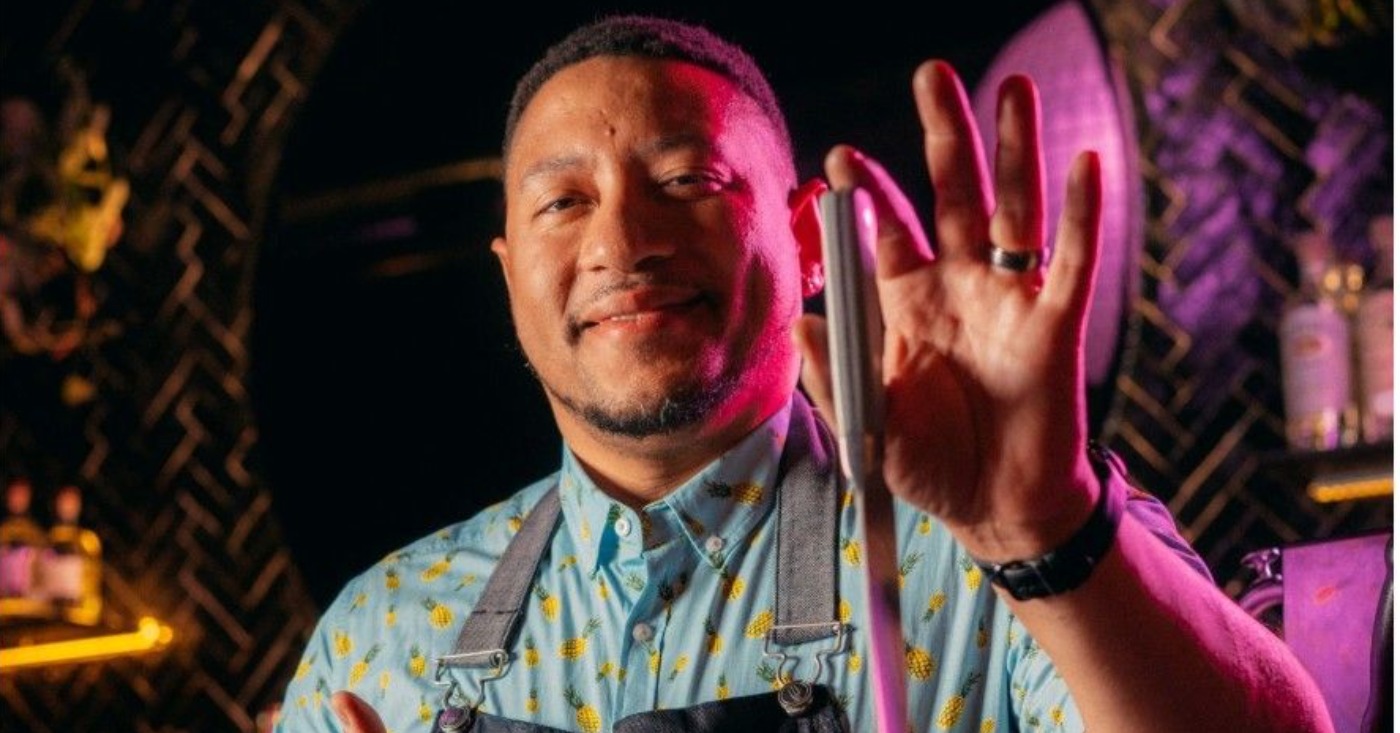
“Bring the Jerk to Thanksgiving” puts a real Jamaican spin on the holiday table with a signature jerk turkey recipe and cocktail and mocktail pairings.
Chicago, IL – The Jerk Man, a Jamaican jerk dry rub made in Jamaica, has partnered with Chef Nelson German, Top Chef alumnus, restaurateur, and author, for its first-ever “Bring the Jerk to Thanksgiving” campaign.
The campaign invites families to bring a new flavor to their Thanksgiving tables with The Jerk Man’s signature jerk turkey recipe, accompanied by Chef Nelson German’s cocktail and mocktail pairings. Balanced for heat, flavor, and spice, The Jerk Man offers a bold new take on a holiday classic.
Thanksgiving is about the people, stories, and traditions that bring families and friends together. “Bring the Jerk to Thanksgiving” celebrates that spirit, inviting home cooks to give the turkey its own place among the most-loved dishes on the table.
A Top Chef’s Guide to Thanksgiving with Flavor
Named one of TIME’s 2026 Latino Leaders, Chef Nelson German is known for his Afro-Latino culinary perspective and restaurants including alaMar Kitchen & Bar, Sobre Mesa, and Meski. He recently released the cookbook Caribbean Cocktails: Drinks and Bites from the Afro-Latino Diaspora.
“Food is how I bring people together and share a little of who I am,” said Chef German. “My Dominican roots and Caribbean heritage are always part of that, especially around the holidays. I love using Jerk Man Jerk Seasoning on my Thanksgiving turkey because it brings that authentic Jamaican flavor, with bold spices and beautiful heat that make every bite even more delicious than the last. It’s my way of bringing Island culture to a holiday classic and giving everybody at the table a reason to come back for more.”
The idea is simple: honor the traditions everyone loves, and give them another reason to ask for seconds.
Real Jamaican Jerk, Made in Jamaica. Your Way.
The Jerk Man Jamaican Jerk Dry Rub is made in Jamaica with allspice (pimento) and Scotch bonnet, the heart of real jerk, and balanced for heat, flavor, and spice so you taste the jerk, not just the burn. It comes in two heat levels, Spicy and Mild, and because it’s a dry rub, you’re in control: use a little for a gentle kick or more for full jerk. It’s made for the holiday table and stays by the stove all year.
Home cooks can use it to bring real Jamaican jerk to season:
The turkey: a real Jamaican jerk kick for the star of the holiday table.
Sweet potatoes: a savory, spice-filled makeover for a classic side.
Roasted vegetables: everyday vegetables turned into crowd-pleasers.
Holiday leftovers: a jerk twist on the day-after turkey sandwich.
The campaign also features “The Toast,” pairing jerk turkey with Caribbean-inspired holiday cocktails and mocktails, inspired by Chef German’s new book, Caribbean Cocktails: Drinks and Bites from the Afro-Latino Diaspora. Published by Ten Speed Press in June 2026 and written with Andréa Lawson Gray, a James Beard Award-winning author, Caribbean Cocktails includes more than 40 drink recipes and 20 food recipes.
Recipes for The Jerk Man 24-hour Jamaican Jerk Turkey and Two Signature cocktails below:
THE JERK MAN 24-HOUR JAMAICAN JERK TURKEY (For a 12–14 lb whole turkey)
3/4 cup The Jerk Man Spicy Dry Rub
6 scallions, roughly chopped
1 medium yellow onion, chopped
6 cloves garlic
2–3 Scotch bonnet peppers
1½ tablespoons fresh thyme leaves
1 tablespoon freshly grated ginger
2 tablespoons ground Jamaican pimento (allspice)
1 teaspoon ground cinnamon
1/2 teaspoon ground nutmeg
1 teaspoon freshly ground black pepper
2 tablespoons dark brown sugar
1/4 cup soy sauce
¼ cup fresh lime juice
1 tablespoon Jamaican Browning
2 tablespoons white vinegar
3 tablespoons neutral oil
2 tablespoons water, as needed for blending
JERK MAN SIGNATURE COCKTAILS BY CHEF NELSON GERMAN
Pineapple Old Fashioned
Doctor Bird pineapple rum, Pasión añejo t
Black History
COMMENTARY: We’ve Got Some Difficult Days Ahead
GARY CRUSADER — The present administration and those driving a malicious agenda of anti-human policies driven by greed will likely ratchet up the rhetoric of ruin against safety-net programs. These are the very programs that support the people who actually do the living and dying in this country.
On April 3, 1968, at Mason Temple in Memphis, Dr. Martin Luther King Jr. delivered his famous “I’ve Been to the Mountaintop” sermon.
As he prepared to close, he told the overflowing crowd: “We’ve got some difficult days ahead.”
Those words ring just as true today as they did nearly six decades ago. We, too, have some difficult days ahead.
By the time this article hits the newsstands (I’m dating myself), the midterm elections will be over. Regardless of the outcome, the fight for justice and humanity will continue with full force.
We’ve got some difficult days ahead.
The present administration and those driving a malicious agenda of anti-human policies driven by greed will likely ratchet up the rhetoric of ruin against safety-net programs. These are the very programs that support the people who actually do the living and dying in this country.
We’ve got some difficult days ahead.
Following the midterms, people who believe in the sacredness of humanity must turn their attention to holding elected officials accountable. Senators and representatives promised to protect the people’s agenda: health care for all, quality education for all, and ensuring billionaires pay their fair share of taxes to fund programs for “the least of these.”
If sober, principled leaders are not elected, and the hounds of hell break through the gates of Congress, then those who believe that every person has inherent dignity, regardless of race, ethnicity, gender, sexuality, age, or economic status, will have to redouble their efforts. We must resist the fanatical intent of those who believe one race is superior to others.
We’ve got some difficult days ahead.
Churches must stand in the tradition of the prophet Amos. They must declare to wannabe kings and sycophants who trade human principles for profit that God says: “Let justice roll down like waters, and righteousness like an ever-flowing stream.”
Black churches in particular must make a Sankofa move, reaching back to reclaim the lessons of ancestors who waged heroic battles against white supremacy and settler colonialism, forcing this country to make drastic changes for the better.
We’ve got some difficult days ahead.
Black churches and people of goodwill must reclaim the narrative. We must prevent the masses, often captivated by social media talking heads who lack the bandwidth for deep theology, ideology, or political literacy, from falling under the influence of rampant ignorance online.
We’ve got some difficult days ahead.
Those who have always wondered what they would have done during the Civil Rights Movement will soon confront a hard truth: what they are doing right now is exactly what they would have done back then. For many, that means doing nothing but talking. Others will realize they are the kind of people Harriet Tubman would have left behind, because they did nothing but get in the way.
We must answer the question Dr. King posed in the title of his final book: Where Do We Go from Here: Chaos or Community?
We’ve got some difficult days ahead.
That sentiment reflects the words Jesus left with His disciples, hours before He was executed by the Roman Empire on a cross. In John 16:33, Jesus told them: “I have told you these things, so that in me you may have peace. In this world you will have trouble. But take heart! I have overcome the world.”
Yes, we have difficult days ahead, but we have truth on our side. We have justice on our side. We have our ancestors on our side. We have history on our side.
And for those of us who follow that barefoot preacher from the northeast African region of biblical Palestine, Jesus of Nazareth, we know that victory ultimately triumphs over defeat, because resurrection is a living reality.
Be vigilant, be authentic, and stay woke. Uhuru Sasa!
The Rev. Dr. John E. Jackson, Sr. Senior Pastor of Trinity United Church of Christ-Gary, 1276 W. 20th Ave. Gary, IN. Contact the church at [email protected] or by phone at 219-944-0500.
Based on reporting by Gary Crusader.
Black History
THE RELIGION CORNER: We Stand on Their Shoulders — the Sacred Duty of the Ballot Box
WASHINGTON INFORMER — As millions of citizens reflect on the results of the recent election, the weight of history and the tension of a divided nation remain prevalent. For Black Americans and marginalized communities, the act of voting is far more than a political calculation; it is a sacred inheritance paid for through the blood and sacrifice of ancestors who refused to accept second-class citizenship.
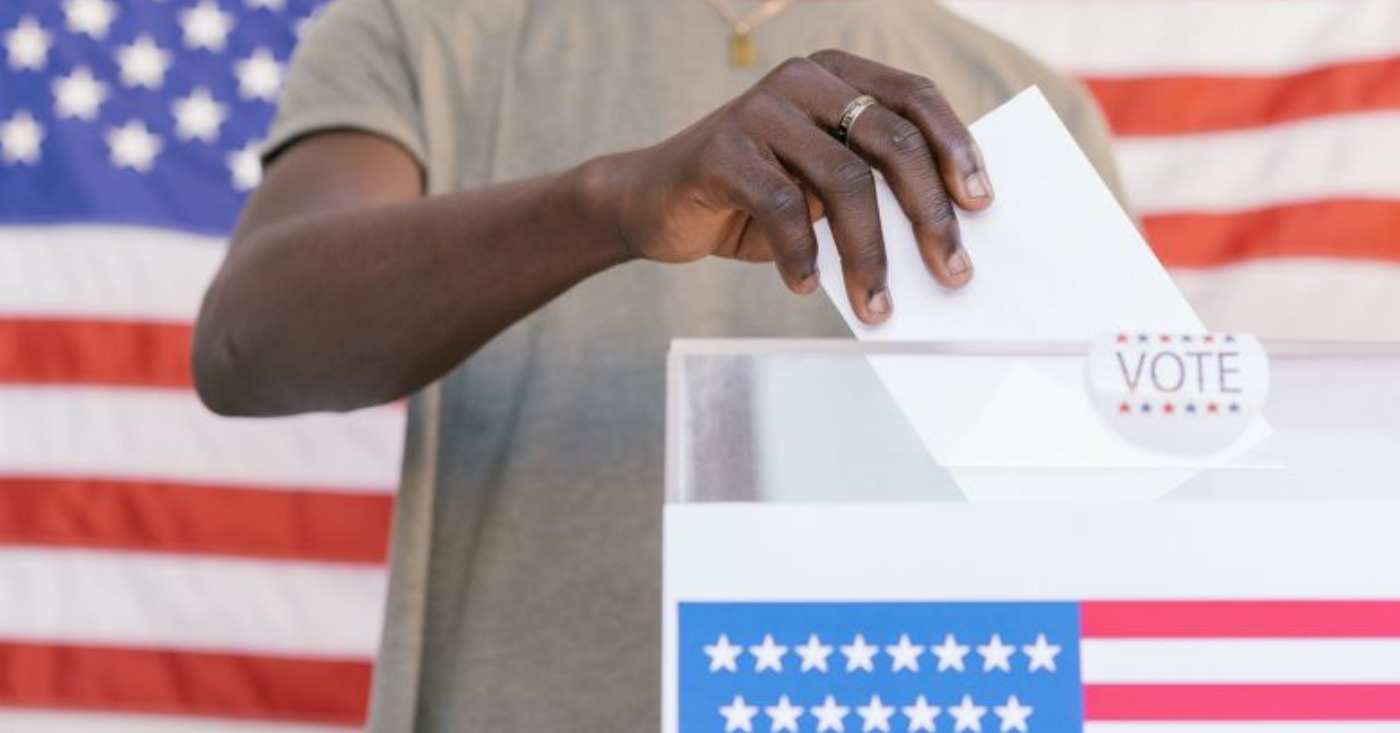
As this edition of The Washington Informer hits the stands, millions of citizens have cast their ballots, made their voices heard, and begun reflecting on the election’s outcome. The atmosphere this election season has been heavy. We feel the weight of history, the tension of a divided nation, and anxiety about tomorrow. In this issue, I remind Gen Z voters of the past struggles that secured this right.
I voted early, which reminded me that votingisn’t a mere political calculation. For people of faith, it is a profound act of stewardship, a tool for community survival and an expression of our deepest moral values.
For Black Americans, low-income families and marginalized communities, the ballot is a sacred inheritance. The right to vote was not a gift; it was paid for in blood, sacrifice, and the determination of people whorefused toaccept second-class citizenship. We must never forget that for decades, our ancestors faced systemic terror just to register. They were met with violent police dogs, high-pressure fire hoses, mandatory literacy tests designed to make them fail, and the constant threat of white supremacist violence.
Historians estimate that dozens of documented freedom fighters were murdered during the voting rights campaigns of the 1950s and 1960s, with countless other deaths unrecorded or unpunished. Millions more endured brutal beatings and dehumanizing jail cells. The protections we rely on today were forged in the heat of protest, through the 1961 Freedom Rides, the dangerous 1964 Freedom Summer registration drives, and the brutal crossing of the Edmund Pettus Bridge during the Selma-to-Montgomery march on “Bloody Sunday” in 1965.
Today, we stand on the broad shoulders of giants who put their lives on the line so we could walk into a voting booth with our heads held high.
We remember Fannie Lou Hamer, asharecropper’s daughter who was brutally beaten in a Mississippi jail for her voting rights activism and famously declared that she was “sick and tired of being sick and tired.”
We remember John Lewis, who, as a student leader, had his skull fractured by police batons in Selma and spent his life protecting what he called the most powerful nonviolent tool we have.”
We honor Jimmie Lee Jackson, a 26-year-old church deacon and veteran who was shotand killedby an Alabama state trooper while protecting his family during a peaceful march.
We honor Medgar Evers, the NAACP field secretary who was assassinated in his driveway for his civil rights and voter registration work.
Lastly, we honor Viola Liuzzo, a mother of five who traveled from Detroit to Alabama to shuttle Selma marchers before she was targeted and killed by Ku Klux Klan members.
When we view the ballot box through the lens of history and faith, the narrative shifts from partisan warfare to spiritual responsibility. Voting becomes a tangible way to love our neighbors as ourselves.
The policies shaped by our votes directly affect the vulnerable, the poor, and the stranger. InMicah6:8, we are asked: “What does the Lord require of you but to do justice, and to love kindness, and to walk humbly with your God?”Notice the action words. We are commanded to do justice. Castinga ballot with the collectivecommunity in mind helps fulfill that requirement. Similarly, Proverbs 29:2teaches, “When the righteous are in authority, the people rejoice.”Righteousness in public policy is about fairness, equity, and protecting human dignity.
No matter what the election results show, our assignment remains unchanged. If your candidate won, your job now is to hold them accountable to justice and mercy. If your candidate lost, your job is to remain resilient, keeping your hands on the plow to protect the vulnerable and speak truth to power. Our ultimate hope does not rest in any political party or elected official.
If you have already voted, I commend you for honoring the ancestors. If you did not cast your ballot,I urge you to reflect on this election not with fear or cynicism, but as a reminder of our ongoing sacred responsibility.
For information on local election results and future voting opportunities, consult your official local election authorities. Continue to engage in the democratic process with a heart centered on love for your community, carry the names of those who died for your right to be there, and let us resolve to bind up our nation’s wounds together.
Please do not think this inhumane treatment is over. Though this column reminds readers of the past, everything is not perfect yet.
According to civil rights groups and a report by the organization JULIAN, which documentedmore than70 cases of suspected modern-daylynchings across seven Southern states between2000 and 2025, systemic violence persists. Furthermore, independent tracking by groups such as Black Lives Matter of Atlanta reportedly recorded a recent uptick between March 2025and August 2026, finding at least22 Blackindividuals dead under suspicious or unusual hanging circumstances across the country.
Each vote helps bring about the necessary change, and that change begins at the ballot box. Make that change!
Lyndia Grant is a speaker/writer living in the D.C. area. Her radio show, “Think on These Things,” airs Fridays at 6 p.m. on 1340 AM (WYCB), a Radio One station. To reach Grant, go to her website, www.lyndiagrant.com, email [email protected] or call 240-602-6295. Follow her on X @LyndiaGrant and on Facebook.
Based on reporting by Washington Informer.
Black History
Christianity’s Racial History
THE POSITIVE COMMUNITY — Historian and author Jemar Tisby is challenging the traditional narratives of American religious history through his acclaimed work, The Color of Compromise. His research provides a comprehensive examination of how Christian institutions have historically participated in, accommodated, or resisted racial injustice from the colonial era to the present day.
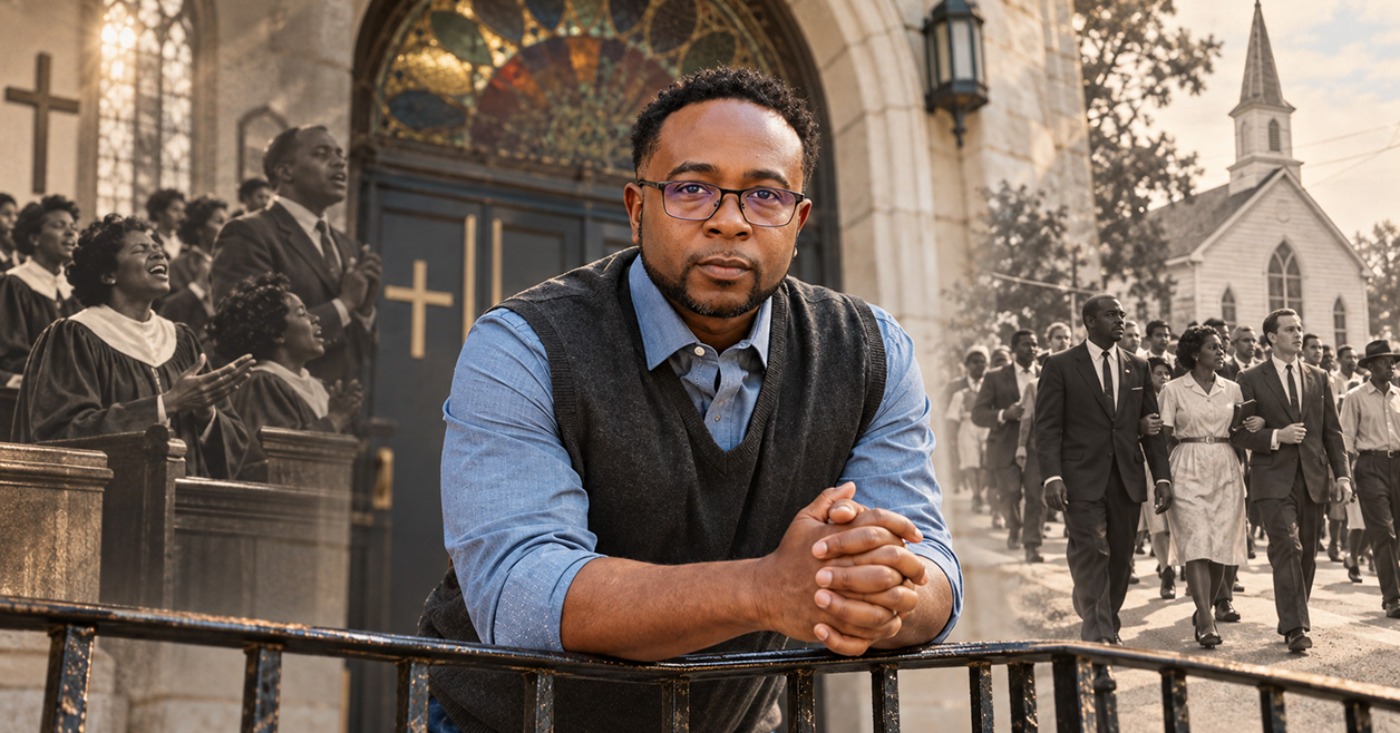
Jemar Tisby is a historian, author, and public speaker whose work examines the relationship between Christianity, racism, and American history. Through his writing, he challenges readers to reconsider the role religious institutions have played in shaping racial attitudes and social structures. His widely recognized book, The Color of Compromise: The Truth About the American Church’s Complicity in Racism, explores how Christian churches have participated in, accommodated, and sometimes resisted racial injustice throughout American history. Tisby’s work encourages readers to examine the past honestly and consider what meaningful change requires today.
One of the central arguments in The Color of Compromise is that racism in America cannot be understood without examining the influence of religious institutions. Christianity has often been associated with messages of love, justice, compassion, and equality. Yet churches and Christian leaders have sometimes supported systems that denied African Americans their freedom and dignity. Tisby examines this contradiction, demonstrating how religious beliefs and institutions could be used to justify racial oppression rather than challenge it.
The book takes readers back to the era of European colonization and slavery, when religious arguments were frequently used to defend the enslavement of Africans. Some Christian leaders claimed that slavery was compatible with biblical teachings, while others used Christianity to encourage resistance to the institution. Enslaved Africans developed their own spiritual traditions, drawing strength from their faith while enduring violence, separation from family, and the denial of basic human rights. Tisby highlights the importance of understanding how Christianity became intertwined with the development of American slavery.
Tisby also explores the role of churches during the Civil War and Reconstruction. Although emancipation ended legal slavery, it did not eliminate racial prejudice or the struggle for equal citizenship. Some religious communities supported efforts to educate formerly enslaved people and establish independent Black institutions. Others tolerated or defended segregation and white supremacy. The period demonstrates how Christian institutions faced a choice between challenging racial injustice and preserving existing social arrangements.
Another important subject in the book is the relationship between Christianity and Jim Crow segregation. During the late nineteenth and early twentieth centuries, racial segregation became deeply embedded in American society. Many churches reflected the same divisions, maintaining separate congregations and unequal opportunities for worship and leadership. Tisby argues that compromise occurred not only when Christians openly defended racism but also when they remained silent or accepted discriminatory practices to avoid conflict. This distinction is essential to understanding the book’s central message.
The civil rights movement provides another significant chapter in this history. Black churches played a vital role in organizing demonstrations, supporting community leadership, and providing spiritual encouragement to people fighting racial discrimination. Figures such as the Reverend Dr. Martin Luther King Jr. drew upon Christian teachings to challenge segregation and demand equal rights. However, not all white Christian congregations supported the movement. Tisby examines the difference between those who actively opposed racism and those who hesitated to challenge the racial status quo.
A major strength of Tisby’s writing is his attention to the difference between individual prejudice and institutional racism. A person may believe in treating others fairly while participating in organizations or traditions that produce unequal outcomes. Similarly, a church may preach love and acceptance while failing to confront discriminatory practices within its own community. Tisby encourages Christians to look beyond personal intentions and examine the consequences of their actions, their institutional policies, and their willingness to address injustice.
The book also challenges contemporary Christians to consider how the legacy of racial compromise continues to affect American religious life. Questions about church leadership, worship communities, racial representation, education, and public policy remain important. Tisby argues that acknowledging historical wrongdoing is not about assigning personal guilt to every modern Christian. Rather, it is about understanding how past decisions shaped the present and recognizing the responsibility to pursue greater fairness, accountability, and inclusion.
Tisby’s work has become an important contribution to conversations about race and religion because it asks readers to move beyond comfortable narratives about American Christianity. His historical approach encourages people to examine uncomfortable evidence, listen to the experiences of African Americans, and recognize the difference between professing moral principles and practicing them. The book also raises questions about what genuine reconciliation requires, emphasizing that meaningful progress involves more than expressions of goodwill. It requires a willingness to confront injustice and make changes that reflect the values Christians claim to uphold.
Ultimately, The Color of Compromise is a call for historical honesty, moral reflection, and meaningful action. Jemar Tisby challenges churches and individual believers to understand how Christianity has been used both to support oppression and to inspire resistance against it. His message is especially relevant in a society still wrestling with racial inequality and the consequences of its history. By examining the past with courage and integrity, readers can better understand the responsibilities of faith in the present. The book reminds us that the true test of religious conviction is not simply what people profess to believe, but whether their actions reflect justice, compassion, and respect for the dignity of every human being.
Based on reporting by The Positive Community.


San Diego Supervisors’ Power Grab & Discretionary Funds

How Restaurant Apprenticeships Taught Me to Run a Business #shorts

Documenting History: Why Today’s Stories Matter Tomorrow #shorts

Planning to Buy an EV? Check Charging Before You Buy #shorts

A Black Culture Café Rooted in Community and Connection #shorts
The Mission to Cultivate Black Leadership

Black Music Awards: The Fight to Recognize Prince and Black Artists #shorts

The Black Entrepreneurs Building the EV Green Book #shorts

Shaunie Grigsby on Building Flava Cafe, a Social Enterprise in St. Paul | On The Radar | MSR

Chevy Bolt RS Charging Specs: 65 kWh Battery and 150 kW Fast Charging #shorts

All Skinfolk Ain’t Kinfolk

Practitioners of African Traditional Spirituality Offer Ancestral Reverence Ritual Oct. 31

Tamiko Armstead | 2026 Lifetime Achiever in Education

Oakland Awarded More than $14 Million in State Funding

HISTORY MADE: Keisha Lance Bottoms Becomes First Black Woman Elected Governor in American History

OP-ED: The Black Church Writes AI’s Next Chapter

Inside 820 S. Michigan: New Book Captures the Lost World of Ebony and Jet

Jendayi Arrest Raises Community Concerns Regarding Sheriff’s Chain of Command

OP-ED: If the ‘Cornell 7’ Were Black Men at an HBCU — America Wouldn’t Be This Sympathetic

Kickstarter CEO Everette Taylor Shares Tips on Creating and Growing a Business
San Diego Supervisors’ Power Grab & Discretionary Funds
How Restaurant Apprenticeships Taught Me to Run a Business #shorts
Documenting History: Why Today’s Stories Matter Tomorrow #shorts
Planning to Buy an EV? Check Charging Before You Buy #shorts
A Black Culture Café Rooted in Community and Connection #shorts
Black Music Awards: The Fight to Recognize Prince and Black Artists #shorts
The Black Entrepreneurs Building the EV Green Book #shorts
Shaunie Grigsby on Building Flava Cafe, a Social Enterprise in St. Paul | On The Radar | MSR
Chevy Bolt RS Charging Specs: 65 kWh Battery and 150 kW Fast Charging #shorts

L I V E | Mississippi Senate Race UPDATE
-
 Black History5 days ago
HISTORY MADE: Keisha Lance Bottoms Becomes First Black Woman Elected Governor in American History
-
 Featured1 week ago
Multi-Faith Leaders Representing 10 Million People Launch National Anti-Authoritarian Initiative
-
 Black History7 days ago
Christianity’s Racial History
-
 Black History7 days ago
Michael Shiner: The Enslaved Man Who Wrote His Way into American History
-
 Black History7 days ago
Five Hospitals Said No! Who Will Help Annette Henry Recover?
-
 Black History6 days ago
Hundreds of Black Christian Leaders Arriving in Israel for Martin Luther King-Inspired Mission
